Islamic Manners & Adab for Kids
Teach Islamic manners without shame—salam for toddlers, Bismillah and right-hand eating, toilet manners and taharah, age-by-age chores, and masjid adab.
Adab—good manners and etiquette—is one of the most visible ways children carry Islam into the world. A toddler who says salam at the door, begins a meal with Bismillah, washes after the toilet, and helps clear the table is living the Sunnah in small, daily ways. This topic guide collects our articles on Islamic manners for young children, from the first greeting to the first masjid visit.
The approach in every guide is dignity-centered coaching. Manners taught through shame tend to disappear the moment a parent leaves the room. Manners taught through modeling, playful practice, and specific praise become part of who a child is. So you will find role-play games, short scripts, sticker charts used lightly, and plenty of “good enough for this age” reality checks.
The everyday manners
- Teach toddlers to say salam walks you through a seven-day plan—mirror games, doorway role-play, stuffed-animal guests—so the Islamic greeting becomes natural rather than a performance for adults.
- Islamic table manners for toddlers focuses on two core habits first, Bismillah before eating and the right hand for food, then layers on Alhamdulillah, sharing, and guest practice.
- Islamic potty training combines readiness signs with toilet manners, simple bathroom duas, and gentle taharah (cleanliness) habits, without turning accidents into a moral issue.
Manners that build responsibility
- Islamic chores for kids offers an age-by-age chart and frames helping at home as part of good character, following the example of the Prophet ﷺ, who helped in his household.
- The first-time toddler masjid plan rehearses masjid adab at home—shoes off, soft voices, staying close—so the real visit feels familiar.
Making manners stick
Pick one habit at a time and attach it to something that already happens every day: salam at the front door, Bismillah at breakfast, a two-minute tidy before Maghrib. Model it yourself, invite once, and celebrate tries—including mumbles and waves. Correct privately and briefly, and repair out loud when you lose your own temper; children learn that adab includes making things right.
Remember that development matters. A two-year-old will spill, forget, and grab with the wrong hand. That is not failure; it is the normal starting line. These guides share parenting practice rather than rulings, so adapt the details of purity and etiquette to your family’s scholars and tradition.
All Islamic Manners & Adab guides
5 practical guides in this topic.
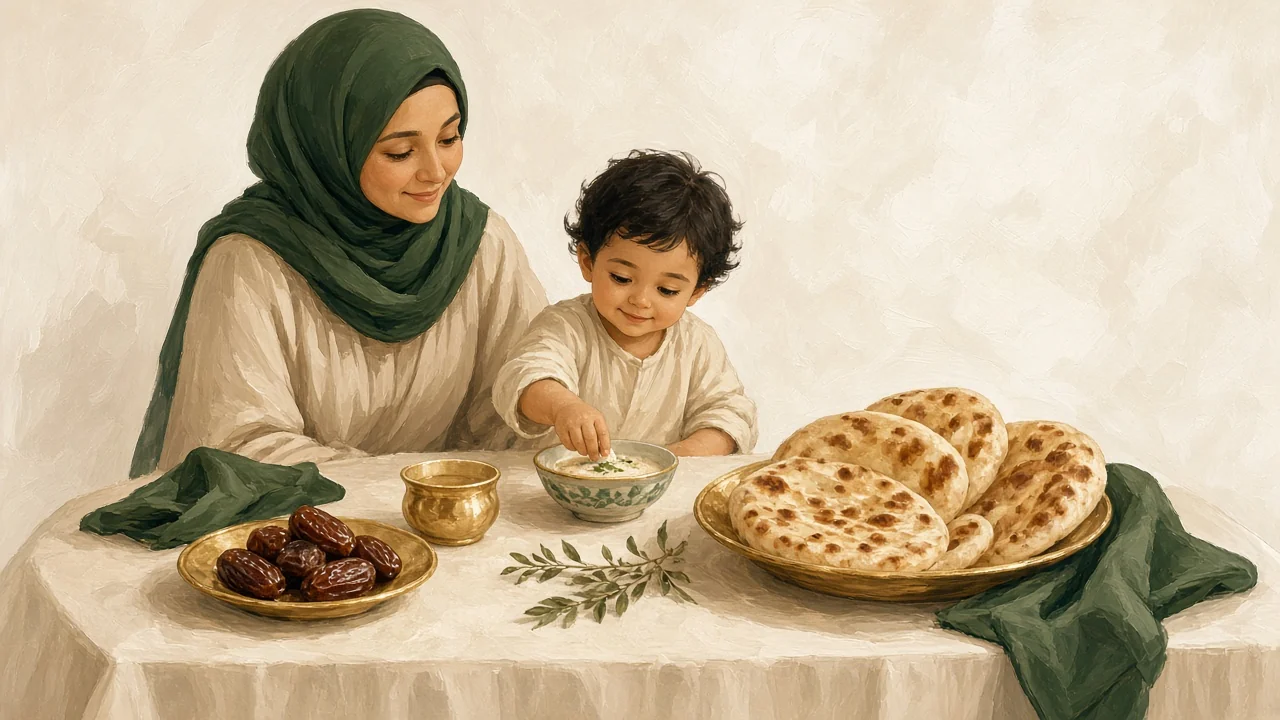
Islamic Table Manners for Toddlers: A 7-Day Bismillah & Right-Hand Plan
Teach Islamic table manners for toddlers with a 7-day Bismillah and right-hand plan—meal scripts, age tips, guest/restaurant edge cases, and a gentle sticker chart.
Read guide →
How to Teach Toddlers to Say Salam (A 7-Day Practice Plan)
Teach toddlers to say salam with a 7-day practice plan—door role-play, smile & eye contact, scripts, and age tips. Gentle Islamic manners for Muslim homes.
Read guide →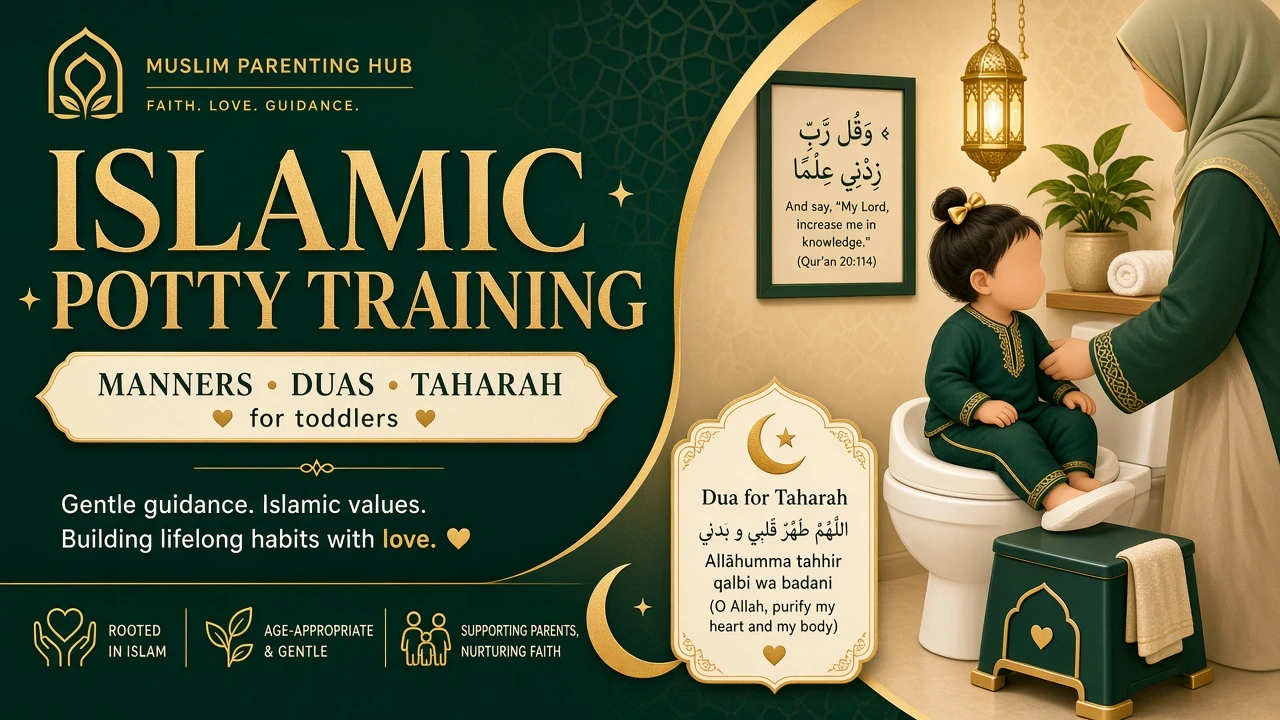
Islamic Potty Training: Toilet Manners, Duas & Taharah Tips for Toddlers
Calm Islamic potty training for Muslim toddlers—toilet manners, istinja basics, bathroom duas, age bands, tonight scripts, and shame-free taharah tips.
Read guide →
Islamic Chores for Kids: Age-by-Age Responsibility Chart for Muslim Homes
Age-by-age Islamic chores chart for Muslim kids—Prophetic helping-at-home framing, tonight scripts, sticker-free tips, and responsibility without shame.
Read guide →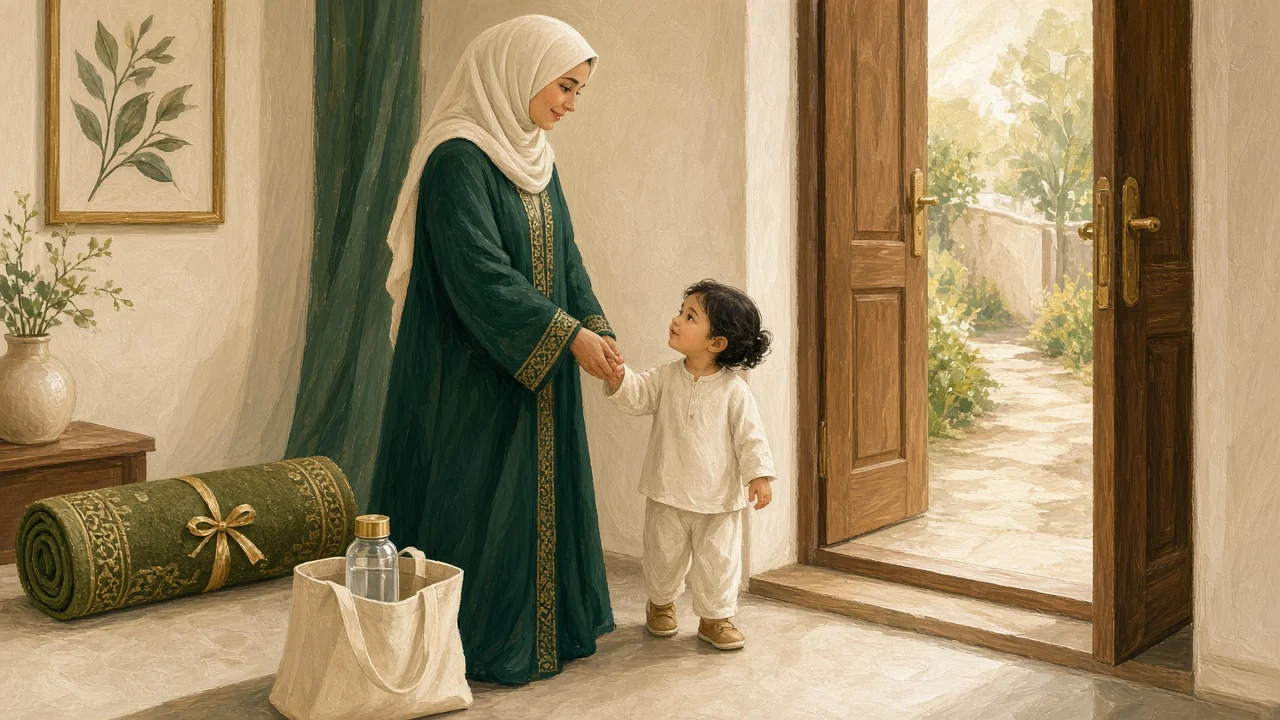
First Time Taking Your Toddler to the Masjid: A Calm Home Practice Plan
Prepare your toddler for the first masjid visit with a 7-day home practice plan, quiet-voice scripts, bag checklist, and a shame-free exit strategy. Soft Muslim parenting.
Read guide →