
How to Teach Kids to Help Their Parents in Islam: Birr al-Walidayn for Ages 3–12
You ask for help carrying the groceries in, and you hear “in a minute” from three different rooms. Or your seven-year-old helps beautifully at Grandma’s house but acts like the dishwasher is a stranger at home. Every parent has been there.
In Islam, helping parents is not just a chore system. It is part of a bigger idea called birr al-walidayn, which means goodness and kindness toward parents. Allah mentions it right after worshipping Him, and the Prophet ﷺ called it one of the deeds most beloved to Allah. When kids understand that carrying a bag or setting the table is a way of pleasing Allah, helping starts to mean something.
This guide explains birr al-walidayn in kid-sized words, gives you helper jobs by age, scripts for the “I don’t want to” moments and a seven-day plan to get started. If you’re looking for a full list of household jobs, pair it with our Islamic chores for kids age chart.
What Is Birr al-Walidayn? (Kid-Sized Explanation)
Birr means goodness, kindness and doing more than you have to. Al-walidayn means the two parents. Put together, it means being extra good to your mom and dad.
You can explain it like this:
“Mom and Dad take care of you every day. Allah loves it when you take care of us back, with kind words and helping hands. That’s called birr al-walidayn, and it’s one of the best things a Muslim can do.”
Birr includes three things kids can practice:
- Kind words: a soft voice, “please” and “JazakAllahu khayran,” and no eye-rolling.
- Helping hands: pitching in at home, especially before being asked.
- Dua for parents: asking Allah to have mercy on them.
What the Quran and Sunnah Teach About Helping Parents
You don’t need to give a lecture, but knowing these texts helps you speak with confidence.
1. Allah puts it right after worshipping Him. “Your Lord has decreed that you worship none but Him, and that you be kind to parents… do not say to them ‘uff’ and do not scold them, but speak to them a noble word” (Quran 17:23). Kids love learning that even “uff” (a small annoyed sound) is mentioned in the Quran. It turns “ugh, fine” into a teachable moment.
2. A dua kids can memorize. The next verse teaches us to lower the wing of humility out of mercy and say: “Rabbi irhamhuma kama rabbayani saghira”, “My Lord, have mercy on them as they raised me when I was small” (Quran 17:24). This is the perfect dua to say together after salah.
3. One of the most beloved deeds. Abdullah ibn Mas’ud asked the Prophet ﷺ which deed is most beloved to Allah. He said, “Prayer on time.” Then? “Kindness to parents” (Bukhari, Muslim). Helping at home is part of that kindness.
4. The Prophet ﷺ helped at home too. When Aisha was asked what the Prophet ﷺ did at home, she said he used to help his family, and when it was time for prayer he went out to pray (Bukhari). This is powerful for children: helping at home is a Sunnah, not something that is “just for moms.”
5. Gratitude to parents is linked to gratitude to Allah. “Be grateful to Me and to your parents” (Quran 31:14). Saying thank you to parents and helping them are two sides of the same habit, the same idea behind our 14-day shukr gratitude plan.
Helper Jobs by Age
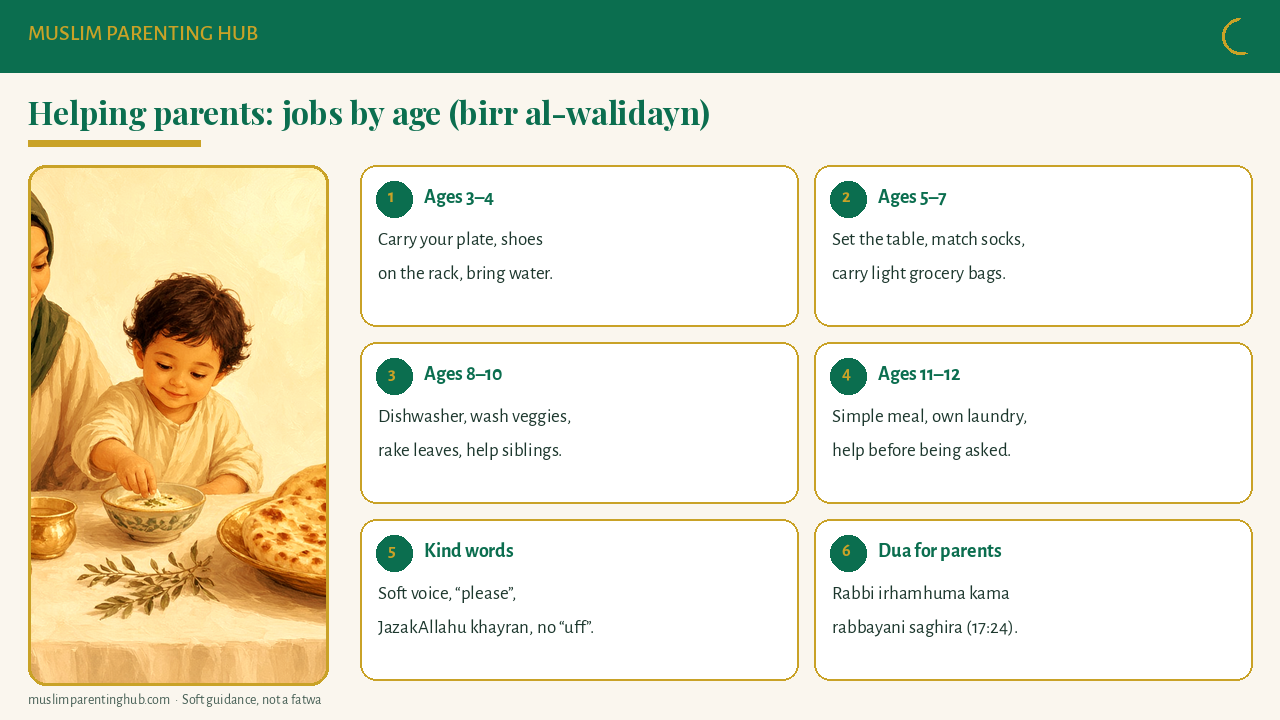
Start with what your child can do successfully, then add one job at a time.
Ages 3–4 (little helpers): - Carry their own plate to the counter. - Put shoes on the rack when coming home. - Bring Mom or Dad a glass of water (with both hands). - Help put toys back with a timer.
Ages 5–7 (real helpers): - Set the table and say Bismillah for everyone. - Match socks from the laundry basket. Our laundry chores by age guide has more ideas. - Carry light grocery bags in from the car. - Make their bed before school.
Ages 8–10 (family team members): - Load or unload the dishwasher. - Help with simple cooking jobs like washing vegetables or stirring. See age-by-age kitchen jobs. - Rake leaves or take out the recycling. - Help a younger sibling get ready.
Ages 11–12 (stepping up): - Make a simple meal or snack for the family. - Fold and put away their own laundry. - Notice what needs doing and do it without being asked. - Bring tea to a tired parent after work, just because.
The goal by age 12 is not perfect chores. It’s a child who notices when a parent needs help. That noticing is the heart of birr.
Scripts That Work (Without Nagging)
When your child says “I don’t want to”:
“I hear you. It’s not fun. You can do it grumpy or do it happy, but we do it. And Allah sees every little bit of help, even the grumpy kind.”
When they help without being asked:
“You saw I was busy and you helped. That is birr al-walidayn. JazakAllahu khayran, that made my heart happy.”
Specific praise works much better than “good job.” Name the action and connect it to Allah.
When they say “uff” or roll their eyes:
“Remember, Allah even mentions ‘uff’ in the Quran. Let’s try that again with a kind voice.”
Keep it light. The aim is a reset, not a punishment. If words got hurtful, use the steps in our guide to teaching kids to apologize.
When siblings argue about who does more:
“This isn’t a race against your brother. It’s between you and Allah. Every bit you do is written for you.”
A Seven-Day Helper Week Plan
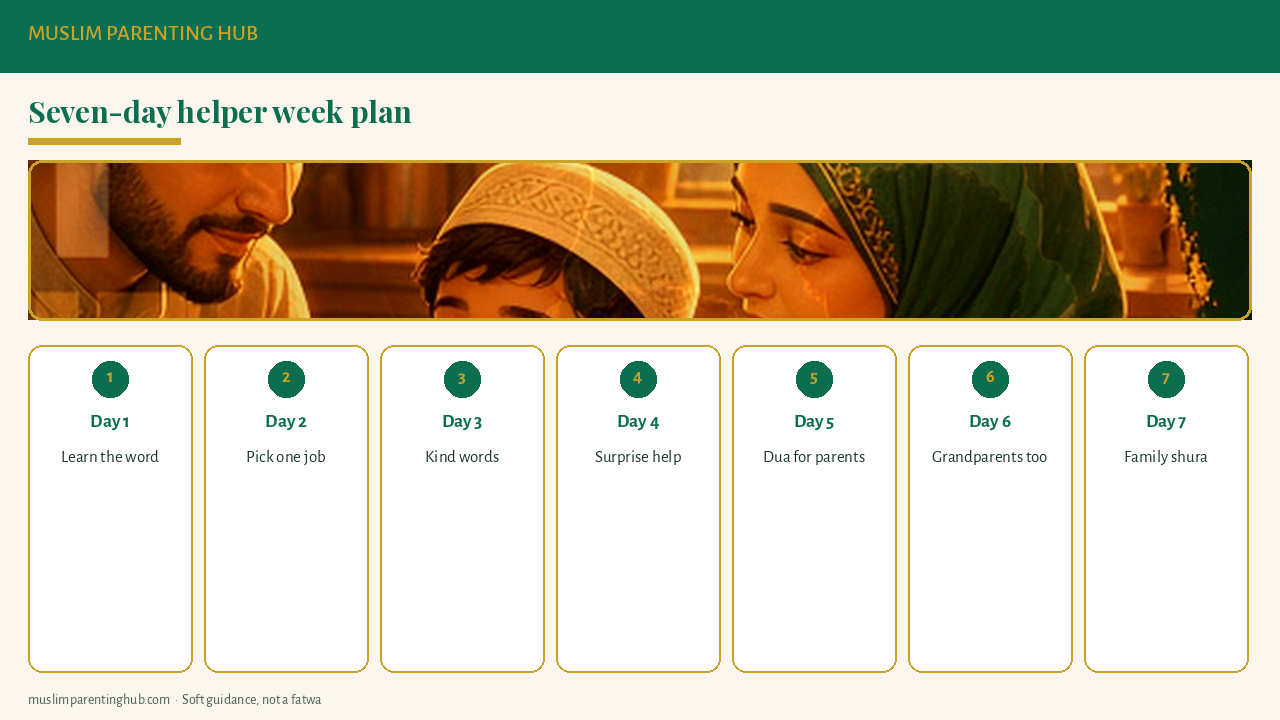
Try this for one week to build the habit. Keep each day small.
- Day 1 – Learn the word. Explain birr al-walidayn and read Quran 17:23–24 together.
- Day 2 – Pick one job. Let your child choose a daily helper job from their age list.
- Day 3 – Kind words day. Practice soft voices, “please,” “JazakAllahu khayran,” and no “uff.”
- Day 4 – Surprise help. Challenge them to do one helpful thing without being asked.
- Day 5 – The parent dua. Teach “Rabbi irhamhuma kama rabbayani saghira” after one prayer.
- Day 6 – Grandparents too. Call or visit a grandparent and help them in some small way.
- Day 7 – Family shura. Talk about how the week went and keep one job going.
Day 7 fits naturally into a weekly family meeting, where kids can pick next week’s helper job themselves.
Should You Pay Kids for Helping?
Many Muslim families separate family help from paid extra jobs. Daily help like setting the table is part of birr: we do it because we’re a family and because Allah loves it. Bigger extra jobs, like washing the car, can earn money if you choose. Our guide on allowance for chores walks through the options, including sadaqah and saving.
The important part is not to pay for kindness itself. If a child only helps when there’s a reward, they miss the beautiful idea that Allah rewards every bit of help.
Beyond Chores: Respect Is Part of Helping
Birr is not only about tasks. It’s also how children speak to and treat their parents:
- Answering when called (“Yes, Mama?”) instead of ignoring.
- Not interrupting when a parent is talking. Our guide on teaching kids not to interrupt has a simple hand-on-arm trick.
- Greeting parents with salam when they come home.
- Keeping promises made to parents.
Many of these overlap with respecting elders in Islam, so you can practice them all at once.
A Thanksgiving Break Idea
The long Thanksgiving weekend is a great time to practice. Kids are home, there’s cooking to help with and often grandparents to visit. Make a “helper of the day” card for each child and let them pick jobs: setting the table, serving water to guests or helping clean up. It turns a busy family holiday into a week of birr.
Common Mistakes to Avoid
- Only noticing what’s not done. Catch kids helping and praise it.
- Redoing their work in front of them. A crooked table setting is fine. Fixing it right away tells them their help doesn’t count.
- Using guilt. “After everything I do for you” can make help feel heavy. Keep it about love and Allah’s reward.
- Giving too many jobs at once. One job done well beats five done with tears.
- Forgetting to model it. Let kids see you help your own parents, call Grandma and make dua for her.
FAQ
What is birr al-walidayn in simple words for kids?
Birr al-walidayn means being extra good and kind to your mom and dad. It includes kind words, helping at home and making dua for them. Allah mentions it right after worshipping Him in the Quran (17:23), so it is very important in Islam.
At what age should Muslim kids start helping their parents?
Children can start small helping jobs around age 3, like carrying their plate or putting shoes away. By 5–7 they can set the table and carry light bags, and by 10–12 they can cook simple meals and notice what needs doing without being asked.
What dua can kids make for their parents?
The Quran teaches: “Rabbi irhamhuma kama rabbayani saghira,” which means “My Lord, have mercy on them as they raised me when I was small” (Quran 17:24). It is short and easy for kids to say after salah or at bedtime.
Did the Prophet ﷺ help with housework?
Yes. Aisha said the Prophet ﷺ used to help his family at home, and when the time for prayer came he went out to pray (Bukhari). This teaches children that helping at home is a Sunnah for everyone, boys and girls alike.
How do I get my child to help without nagging?
Give one clear daily job, use a short reminder instead of a lecture and praise specific actions (“You carried the bags without being asked. That’s birr!”). Linking help to Allah’s reward works better than threats or bribes.
Should I pay my kids for helping around the house?
Many Muslim families keep everyday family help unpaid, because it is part of kindness to parents, and offer money only for bigger extra jobs. This keeps the focus on pleasing Allah while still teaching kids about earning and saving.
Related guides
- Islamic chores for kids: age-by-age chart
- How to teach kids to respect elders in Islam
- Kids in the kitchen: cooking jobs by age
- Get kids to clean their room without yelling
- Before-school chores checklist
Closing
Helping parents is one of the first ways children can serve Allah with their own hands. Start small: one job, one kind word, one short dua. Over time, those little acts grow into a grown-up child who still carries the groceries, still calls home and still says, “Rabbi irhamhuma kama rabbayani saghira.”
Quick steps
Seven-day helper week plan for Muslim kids. One small step a day to help children practice birr al-walidayn, kindness and help toward their parents.
- Day 1 – Learn the word — Explain birr al-walidayn and read Quran 17:23–24 together.
- Day 2 – Pick one job — Let your child choose one daily helper job from their age list.
- Day 3 – Kind words day — Practice a soft voice, please, JazakAllahu khayran and no “uff.”
- Day 4 – Surprise help — Challenge your child to do one helpful thing without being asked.
- Day 5 – The parent dua — Teach Rabbi irhamhuma kama rabbayani saghira after one prayer.
- Day 6 – Grandparents too — Call or visit a grandparent and help them in a small way.
- Day 7 – Family shura — Talk about the week in a family meeting and keep one job going.
Related articles
Should Muslim Kids Get an Allowance for Chores? Allowance, Sadaqah and Saving Explained
Should Muslim kids get an allowance for chores? US guide to khidmah vs paid extras, three jars (spend, save, sadaqah), and what never to pay for.
Read guide →
Islamic Chores for Kids: Age-by-Age Responsibility Chart for Muslim Homes
Age-by-age Islamic chores chart for Muslim kids—Prophetic helping-at-home framing, tonight scripts, sticker-free tips, and responsibility without shame.
Read guide →
Kids in the Kitchen: Age-by-Age Cooking Jobs for Muslim Kids (Ages 2–12)
Age-by-age kitchen jobs for Muslim kids 2–12: safe tasks, Bismillah and clean-hands habits, a weekly cooking night, and Thanksgiving-week prep ideas.
Read guide →
How to Teach Kids to Respect Elders in Islam: Greetings, Words and 10 Daily Habits
Teach Muslim kids to respect elders with 10 simple habits: salam first, letting elders speak, offering a seat and kind words to grandparents, with hadith.
Read guide →