

Bedwetting in Muslim Kids: Calm Nighttime Tips, Taharah Basics and No-Shame Scripts
It’s 2:47 a.m. A small voice at your door: “Mama… my bed is wet.” Or you discover it at Fajr—damp pajamas, a tearful child, a pile of sheets, and a quiet worry in your chest. Is this normal? Did I do something wrong? How do I clean this properly so we can pray?
If your child is fully potty trained in the daytime but still wets the bed at night, you are in very good company. Nighttime dryness develops on its own timeline, often years after daytime training. For Muslim families, there’s an extra layer: we care about taharah (purity), and we want our children to grow up loving cleanliness without ever feeling ashamed of their bodies.
This guide covers what’s typical by age, why bedwetting happens, a calm nighttime routine, a simple wet-night reset, taharah basics for sheets, mattresses, and Fajr, scripts that protect your child’s dignity, sleepovers and camps, and when to talk to your pediatrician. It’s soft guidance, not medical advice or a fatwa.
Is Bedwetting Normal?
Yes—very. Pediatricians generally don’t consider bedwetting a concern before about age 5 to 7, and many children who wet the bed at five are dry by the time they’re older, often without any treatment.
Common reasons include: - A bladder that’s still maturing. It may not yet signal the brain strongly enough at night. - Deep sleep. Some kids sleep so soundly they don’t wake to the signal. - Extra urine at night. The body’s night-time hormone that reduces urine may still be developing. - Family history. Bedwetting often runs in families—ask the grandparents! - Constipation. A full bowel can press on the bladder.
What it is not: laziness, defiance, a lack of faith, or bad parenting. Your child isn’t doing this on purpose, and they can’t simply “decide” to stop.
If you’re still in the daytime stage, our calm Islamic potty training plan covers readiness, bathroom duas, and simple istinja. And if daytime progress has stalled, see our guide on what to do when Islamic potty training stalls.
The Prophet’s Gentleness With Accidents
There’s a beautiful hadith that sets the tone for every wet night.
A Bedouin man once urinated inside the masjid. The companions jumped up to stop him, but the Prophet ﷺ said, “Leave him,” and asked for a bucket of water to be poured over the spot. Then he explained, “You have been sent to make things easy, not to make them difficult” (Bukhari).
Think about that: in the most sacred place, with an adult, the Prophet ﷺ responded to urine with calm, practical cleanup and gentle teaching. If that’s how he handled it, we can certainly handle our five-year-old’s wet sheets with a soft voice.
A Calm Nighttime Routine That Helps
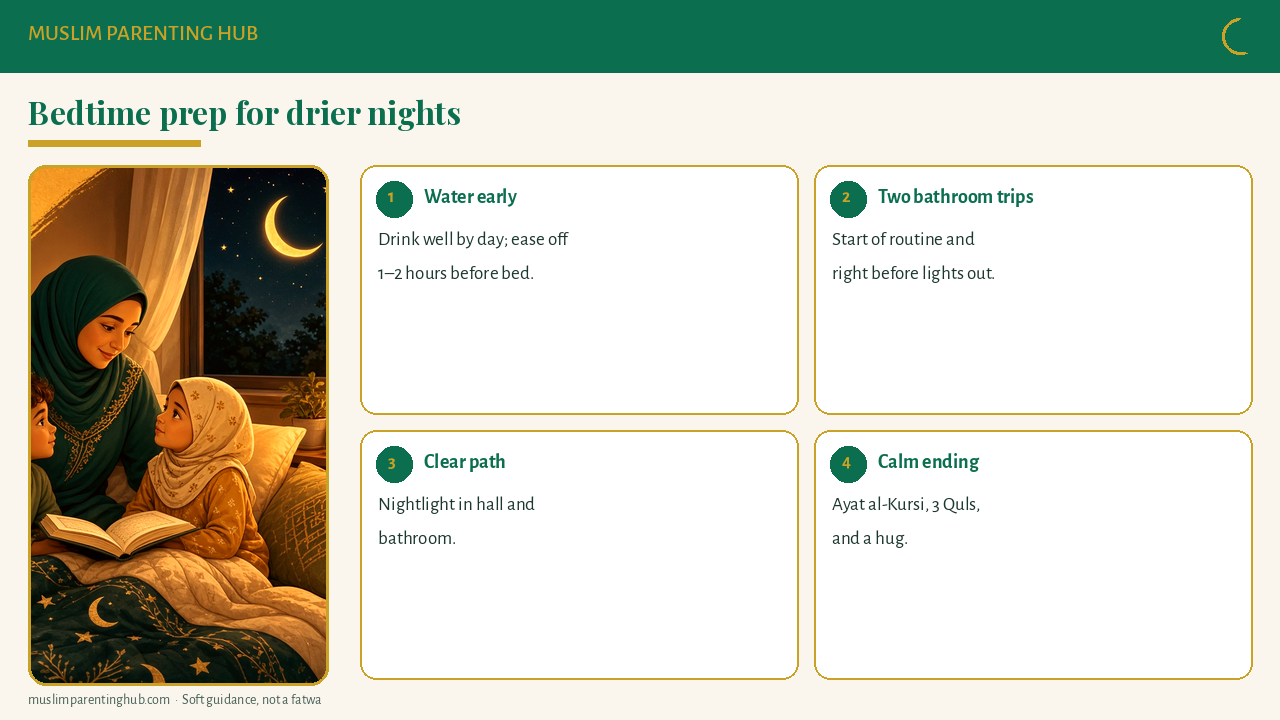
No routine guarantees a dry night, but these habits support your child’s body:
- Drink well during the day. Encourage water at breakfast, lunch, and after school, so your child isn’t extra thirsty at night.
- Ease off drinks in the last hour or two before bed. A few sips are fine; avoid big cups, juice, and caffeinated or fizzy drinks in the evening.
- Two bathroom trips. One at the start of the bedtime routine, and one right before lights out (“double voiding”).
- Bathroom duas and adab. Enter with the left foot and the dua, leave with the right and “Ghufranak.” Keeping the bathroom routine familiar makes it calm, not stressful.
- Easy access. A nightlight in the hallway and bathroom; a clear path from bed.
- Watch for constipation. Fiber, fruit, water, and regular bathroom times help.
- End with comfort. Ayat al-Kursi, the three Quls, and a hug. Our 7-night bedtime duas plan builds this into a gentle habit.
If bedtime itself is a struggle, our calm Sunnah-based fixes for toddlers who fight bedtime can help you get to a steadier evening routine first.
The Wet-Night Reset (Quiet, Quick, Kind)
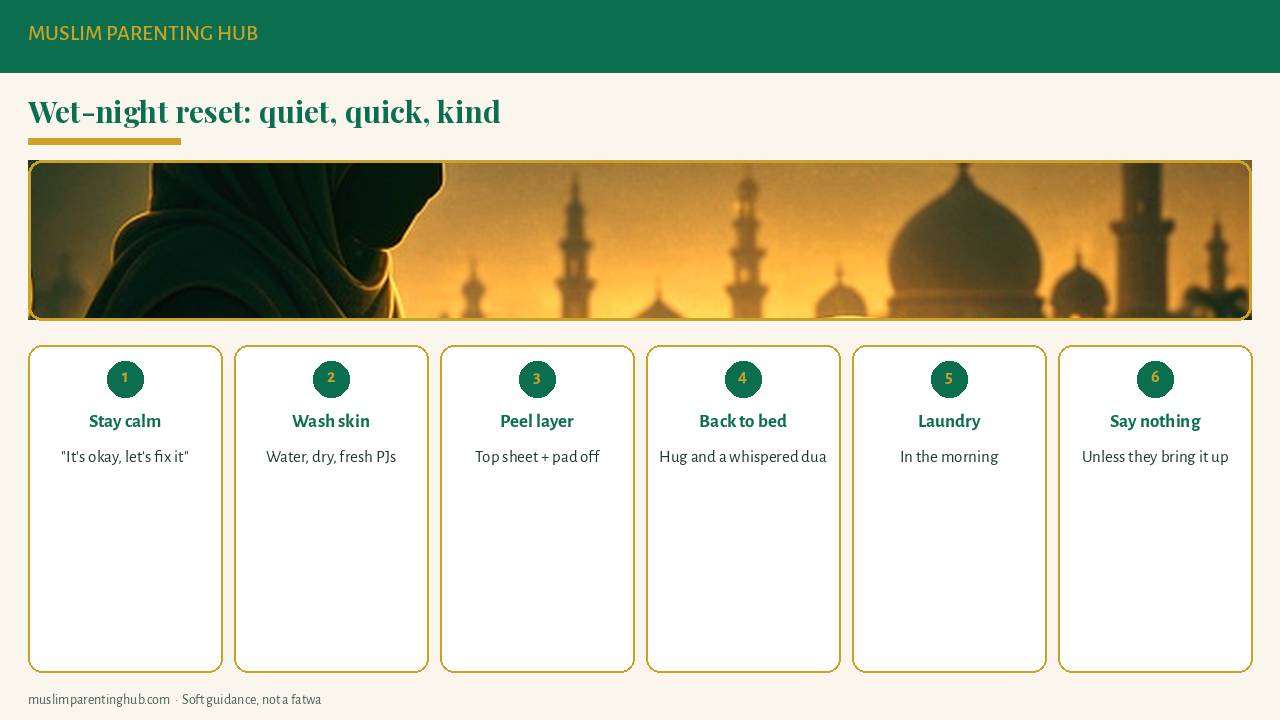
When it happens, your goal is to get everyone back to sleep with dignity intact.
- Stay calm and quiet. A soft “It’s okay, let’s fix it” is enough. No sighs or lectures at 3 a.m.
- Clean the body. Help your child wash the affected skin with water (a quick rinse in the bathroom or a wet washcloth), dry off, and change into fresh pajamas and underwear.
- Strip the top layer. A layered bed (see below) makes this a one-minute job.
- Back to bed. A quick hug, a whispered dua, lights out.
- Handle laundry in the morning. Put wet items in a dedicated bin or bag.
- Say nothing more about it at breakfast unless your child brings it up.
The layered-bed trick: Put a waterproof mattress protector on the mattress, then a fitted sheet, then a second waterproof pad and a second fitted sheet on top. On wet nights, peel off the top two layers and the bed underneath is ready.
Older kids can learn to do some of this themselves—with a towel and spare pajamas on a hook by the bed—which builds independence and protects their privacy.
Taharah Basics: Sheets, Mattress, and Fajr
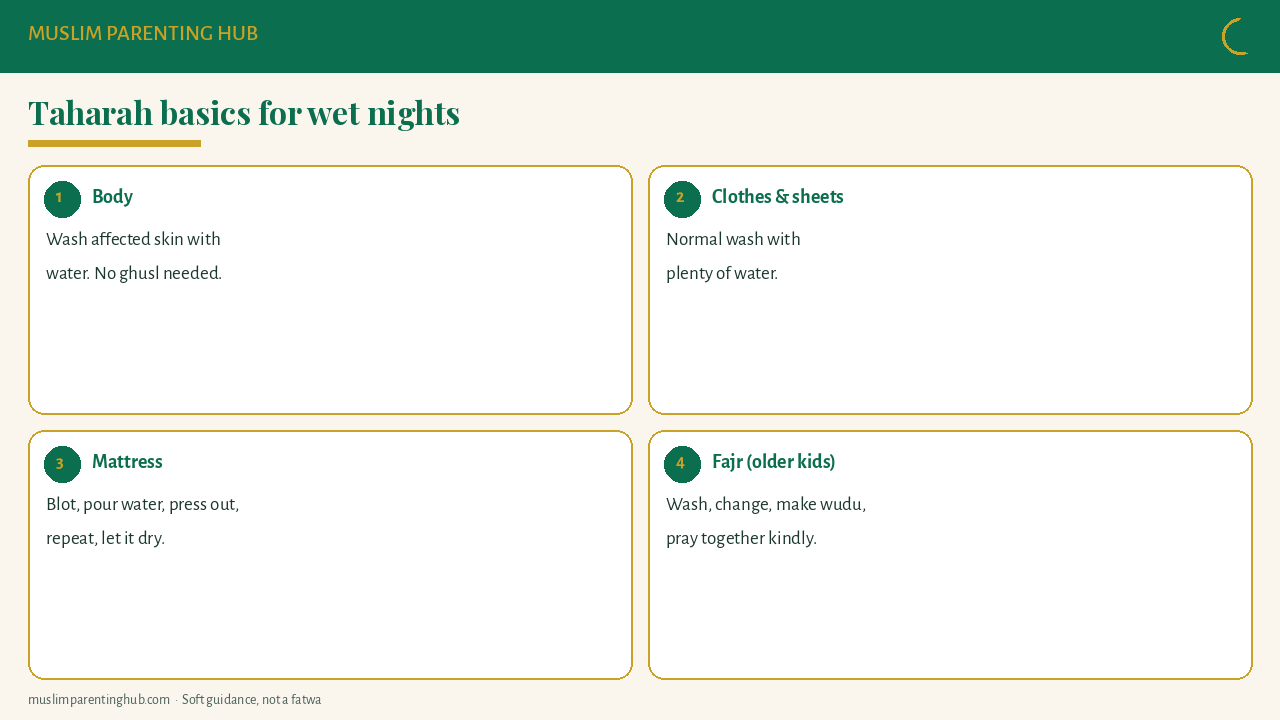
Urine is impure (najis), so families naturally want to clean it properly. The good news: it’s simple. These are common, widely taught basics—ask a scholar you trust about your school of thought or special situations.
Body
Wash the affected skin with water until the urine is gone. A shower is fine but not required for urine alone.
Clothes and sheets
Wash them with water as part of your normal laundry. Many scholars note that a regular washing machine cycle with plenty of water cleans them.
Mattress or carpet
You can’t throw a mattress in the washer. A common method: blot up as much as you can, pour clean water over the spot, then press it out with towels (or a wet-vac), and repeat a couple of times. Let it dry fully. A waterproof protector saves you from this most nights.
Fajr and salah
- Children under about seven aren’t required to pray; for them, the focus is gentle cleaning and getting back to sleep.
- For older children who are practicing Fajr, wash the affected skin, change into clean clothes, and make wudu (sleep breaks wudu anyway, so they’d need it regardless). Urine does not require ghusl.
- Don’t make Fajr feel like a punishment on wet mornings. “Let’s freshen up and pray together” keeps salah tied to love, not embarrassment.
If your child is learning the full prayer, our step-by-step salah and wudu guide for kids has a simple wudu order they can follow on their own.
No-Shame Scripts
Words at these moments shape how a child feels about their body for years.
In the moment:
“It’s okay. Bodies are still learning at night. Let’s get you clean and cozy.”
When they feel embarrassed:
“Lots of kids your age still wet the bed—even some kids in your class. You’re not in trouble. Your body will learn, insha’Allah.”
When a sibling teases:
“In our family, we never laugh at someone’s body. How would you feel?” (Then, privately, a firm reminder about kindness. The Quran tells us not to mock one another—Quran 49:11.)
When they ask, “Am I dirty? Is Allah upset?”
“No, habibi. Allah made your body, and He knows you didn’t choose this. We wash with water and we’re clean again. Allah loves people who keep clean.”
What to avoid: - Punishments, taking away privileges, or making them wash sheets as a consequence. - Comparing them to siblings or cousins. - Telling relatives in front of them. - Rewards charts for dry nights—kids can’t fully control this, so missed rewards can feel like failure. If you use charts, reward the habits they can control: drinking water at lunch, two bathroom trips, putting wet clothes in the bin.
Sleepovers, Camp, and School Trips
Many US kids go to overnight camp or a 5th-grade outdoor-education trip. Bedwetting can make these feel scary. Some families skip sleepovers for other reasons; either way, plan quietly for the trips your child does take:
- Talk to the trip nurse or counselor privately. They’ve handled this many times and can be discreet.
- Pack disposable sleep underwear that looks like regular underwear, plus a plastic bag for used ones, tucked inside the sleeping bag.
- Choose dark pajamas and a dark sleeping bag.
- Practice at home so your child can manage on their own.
- Remind them: “Lots of kids on this trip are dealing with something private. You’re not alone.”
When to Call the Pediatrician
Bedwetting is usually just development, but check with your doctor if:
- Your child is 7 or older and it’s bothering them.
- They were dry for six months or more and started wetting again.
- There’s pain or burning, pink or cloudy urine, or a strong smell.
- They’re very thirsty or urinating a lot during the day.
- There are daytime accidents in an older child, constipation, or loud snoring.
- There’s been a big stressor—a move, new sibling, loss in the family, or trouble at school.
Doctors can check for simple causes and may suggest options such as bedwetting alarms for older kids. You’re not overreacting by asking.
A Note for Parents: Patience Is Worship Too
Washing sheets at 3 a.m. for the fourth time this week is exhausting. Your patience in those moments is not wasted. Every load of laundry done with a soft heart is an act of care, and care for children is beloved to Allah. Make a short dua for your child and for yourself—“Rabbi yassir wa la tu’assir” (My Lord, make it easy and don’t make it hard)—and remember that this season ends.
FAQ
At what age should a child stop wetting the bed?
Many children are dry at night by 5 to 7, but plenty take longer. Pediatricians usually don’t treat bedwetting before about age 5–7. Talk to your doctor if your child is 7 or older and bothered, or if wetting starts again after months of dry nights.
Is bedwetting a sign of weak faith or bad parenting?
No. Bedwetting is usually a normal developmental stage linked to bladder maturity, deep sleep, or family history. It has nothing to do with faith or discipline.
How do I clean urine from a mattress Islamically?
Blot up as much as possible, pour clean water over the spot, press it out with towels or a wet-vac, and repeat a couple of times. Let it dry. A waterproof protector prevents most of this work.
Does my child need ghusl after wetting the bed?
No. For urine, washing the affected skin and changing into clean clothes is enough. If they’re praying Fajr, they make wudu as usual.
Should I wake my child at night to use the bathroom?
Some families find a sleepy bathroom trip before the parents’ own bedtime helps; others find it disrupts sleep without helping long-term. Try it for a week and see. For older kids, ask your pediatrician about bedwetting alarms.
Should I limit my child’s water?
Don’t restrict water overall. Encourage plenty of water earlier in the day and ease off big drinks in the last hour or two before bed.
Related guides
- Islamic potty training: a calm 7-day plan
- When Islamic potty training stalls
- Bedtime duas for kids: a 7-night plan
- When your toddler fights bedtime
Closing: Clean Sheets, Clean Hearts
Your child will not remember every wet night. They will remember how you made them feel: safe, clean, and loved. Layer the bed tonight, put spare pajamas by the door, and practice your soft “It’s okay, let’s fix it.” Bodies learn in their own time. Until then, you’re teaching something even more important—that in your home, mistakes are met with water, mercy, and a hug.
Related articles

When Islamic Potty Training Stalls: Soft Patience Scripts & Taharah Without Pressure
Islamic potty training stalled? Soft scripts, taharah habits without pressure, regressing toddlers, and calm US-family tips that keep dignity intact.
Read guide →
Islamic Potty Training: A Calm 7-Day Plan, Bathroom Duas & Toilet Manners for Toddlers
Potty training a Muslim toddler? Get a calm 7-day plan, easy bathroom duas with meaning, simple istinja steps, and fridge checklists—no shame, no battles.
Read guide →
When Your Muslim Toddler Fights Bedtime: Calm Sunnah-Based Fixes
Calm Sunnah-based fixes when your Muslim toddler fights bedtime—stalling, fear, separation, dua, boundaries, and age tips. Soft routines that actually stick.
Read guide →
Bedtime Duas for Kids: What to Recite Before Sleep (With a 7-Night Plan)
Bedtime duas for kids made simple: the sleeping dua, the 3 Quls, Ayat al-Kursi and a calm Sunnah sequence, with meanings, age bands and a 7-night plan.
Read guide →