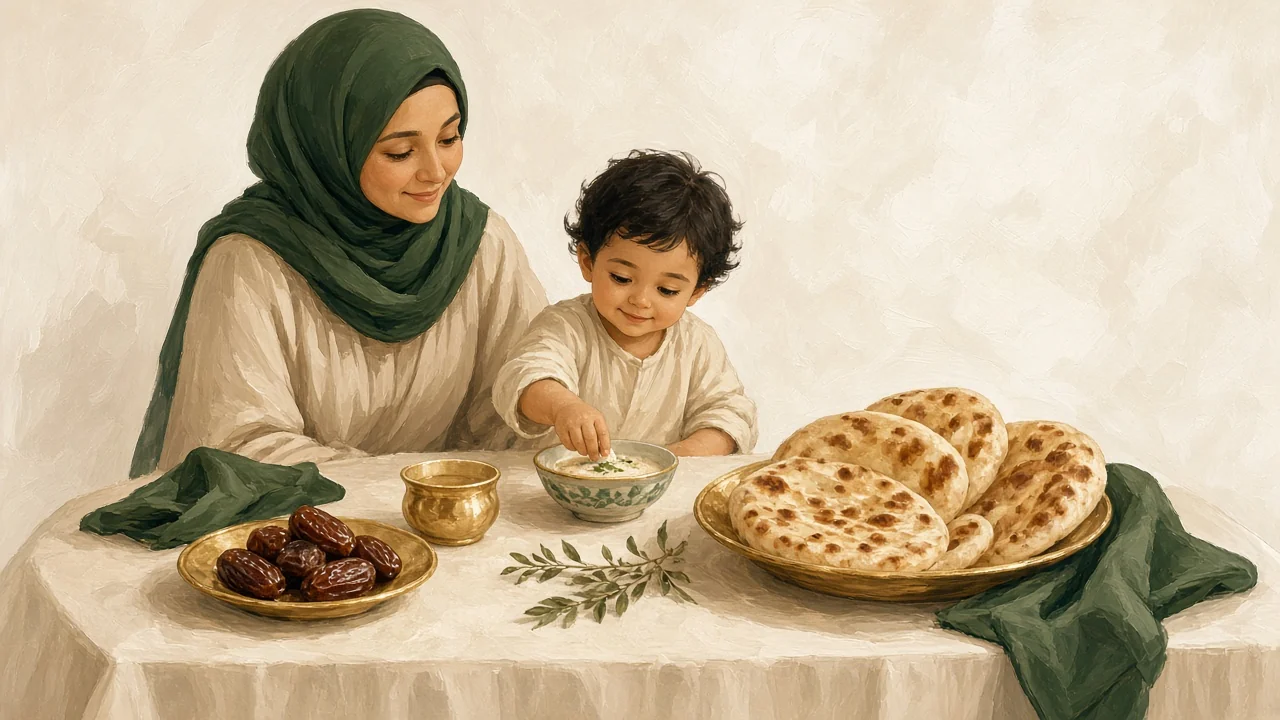
Islamic Table Manners for Toddlers: A 7-Day Bismillah & Right-Hand Plan
Dinner is on the table. Your toddler’s left hand is already in the rice. Someone forgets Bismillah. Someone else announces they are “full” after two bites and then raids the fruit bowl. You wonder how other Muslim families make meal adab look easy.
They don’t. They practice in short, messy reps.
This guide gives you a 7-day Bismillah and right-hand plan for toddlers—scripts, age bands, a simple sticker chart, and edge cases for guests and restaurants. Soft Sunnah parenting, not a fatwa. Adapt to your child’s development and any medical/OT needs (hand preference included).
Why Meal Manners Matter Early (Without Turning Dinner Into a Courtroom)
Islamic eating manners are an act of remembering Allah in ordinary life:
- Beginning with Bismillah
- Using the right hand when able
- Eating with humility and gratitude (Alhamdulillah)
- Not wasting, not grabbing harshly, sharing when possible
For toddlers, the goal is cues and warmth, not restaurant etiquette. If mealtime becomes a nightly fight, the Sunnah lesson gets lost in cortisol.
What “Good Enough” Looks Like by Age
~12–24 months
- You say Bismillah for them; they may babble along.
- Hand use is messy—guide the right hand gently when you can; do not shame the left.
- Success = sitting for a few bites with you present.
~2–3 years
- Can attempt “Bismillah” (even a cute short version).
- Can accept a soft hand reminder: “Right hand, habibi.”
- Can practice one bite at a time without a lecture.
~4–5 years
- Can lead Bismillah for the family sometimes.
- Can understand “we don’t waste food” in toddler language.
- Can practice guest manners in tiny doses.
If your child is left-hand dominant, keep coaching warm and practical; many parents guide right-hand eating for Sunnah while staying medically sensible. Ask a trusted teacher if you need nuance for your home.
The Two Core Habits (Master These Before Fancy Rules)
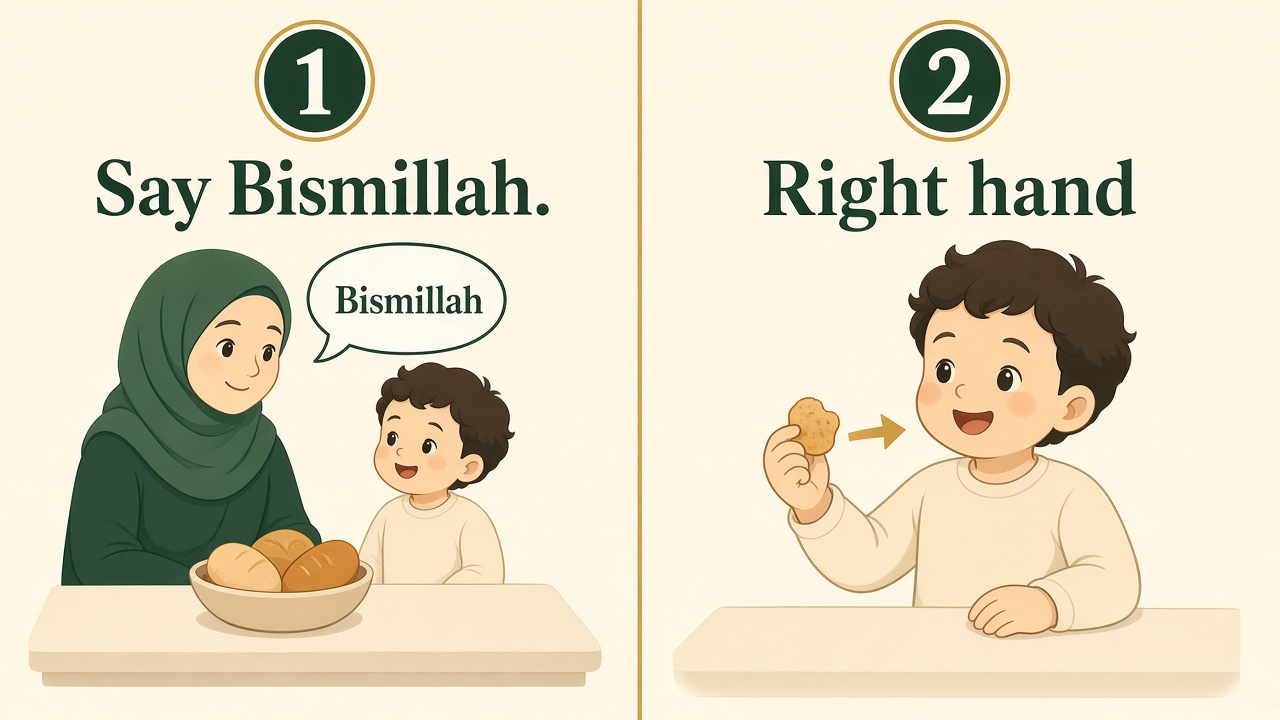
Habit A — Bismillah before the first bite
Make it a family door chime for meals:
- Food down
- Eyes soft / hands still for one second
- “Bismillah” together
- Then eat
Habit B — Right hand for eating (gentle)
Place the spoon or finger-food nearer the right side. Light tap on the right hand: “This is our eating hand.” Smile. Reset. No yanking food away in anger.
Everything else—chewing with mouth less open, waiting turns, saying Alhamdulillah—layers on later.
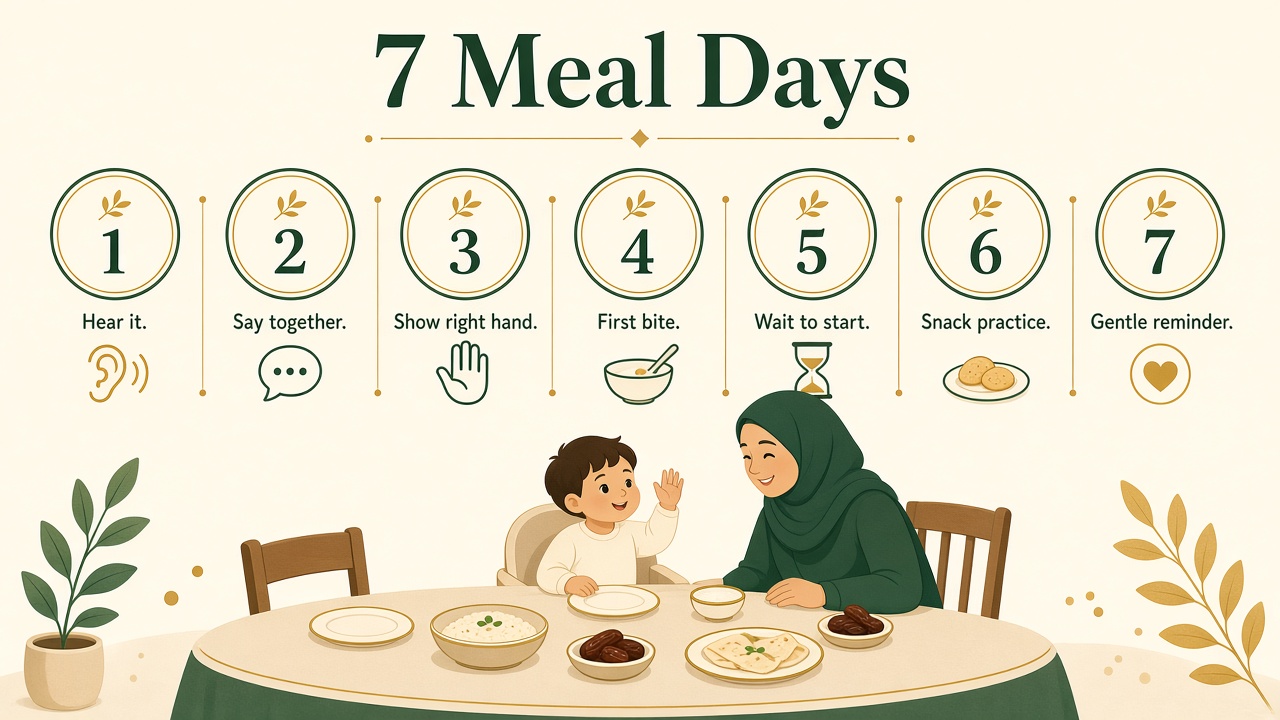
The 7-Day Progressive Plan
Day 1 — Parent models only
You say Bismillah clearly at breakfast, lunch, and snack. No corrections of the child yet. Toddlers copy what is boringly consistent.
Script:
“Bismillah—we start with Allah’s name.”
Day 2 — Invite echo
Pause one second and invite:
“Your turn: Bi… smil… lah. Beautiful try!”
Celebrate mumble versions.
Day 3 — Right-hand setup
Before the meal, place utensils/food to favor the right hand. One calm reminder mid-meal max.
“Right hand helper. I’ll move the spoon here for you.”
Day 4 — Alhamdulillah closing
When they finish (or when you end the meal), model:
“Alhamdulillah for this food. Thank You, Allah.”
Tie to your longer shukr plan if you want a gratitude arc beyond the table.
Day 5 — One plate focus
Practice “we eat from our area/plate” to reduce grabbing. Use toddler language:
“Your mountain. My mountain. We don’t knock mountains.”
Pair with Islamic chores by giving a wipe-the-table helper job after eating.
Day 6 — Sharing micro-skill
Offer one share moment: “Would you like to give Baba a date?” Sharing is rahma training—see also rahma activities.
Day 7 — Guest / “fancy” practice at home
Set a slightly nicer plate. Practice: Bismillah → right hand → soft “Alhamdulillah.” Keep it under 15 minutes of “special.” Then return to normal.
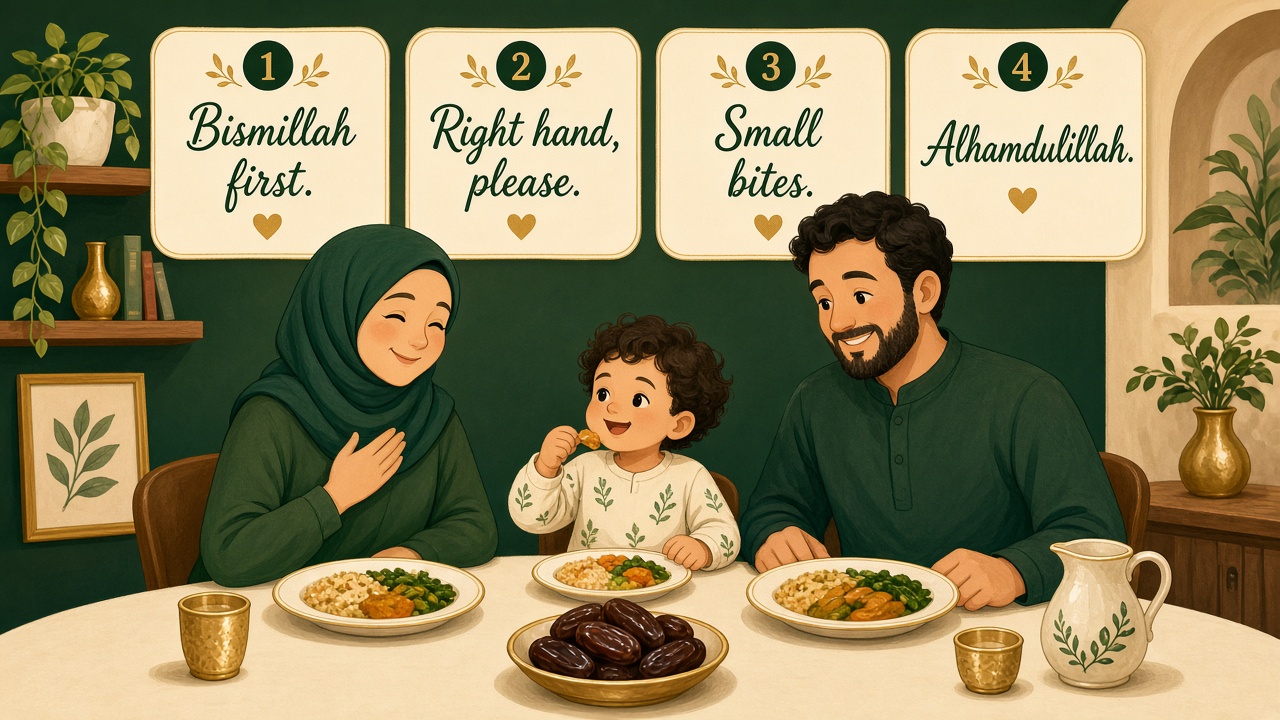
Tonight Scripts (Copy-Paste Parenting)
Start
“Food is ready. Hands resting… Bismillah.”
Mid-meal grabby hands
“Ask first: ‘Can I have more please?’ Then we share.”
Left hand reminder
“Switch to your right hand—like a little Sunnah hero. I’ll help.”
Food throwing
“Food stays on the plate. Throwing means meal pause.” (Follow through calmly.)
Refusal to say Bismillah
“I’ll say it for us today. You can join when your mouth feels ready.” (Then model. Avoid forcing.)
End
“Alhamdulillah. Belly says thank you to Allah.”
A Gentle Sticker Chart (That Doesn’t Bribe Faith Away)
Use stickers for effort cues, not for proving iman:
- Said/attempted Bismillah
- Tried right hand after one reminder
- Helped wipe one spill
- Said Alhamdulillah at the end
Three stickers = choose the bedtime story or pick tomorrow’s fruit. Keep rewards light so the habit stays about Allah and family rhythm, not a candy economy.
Edge Cases: Guests, Restaurants, and Picky Phases
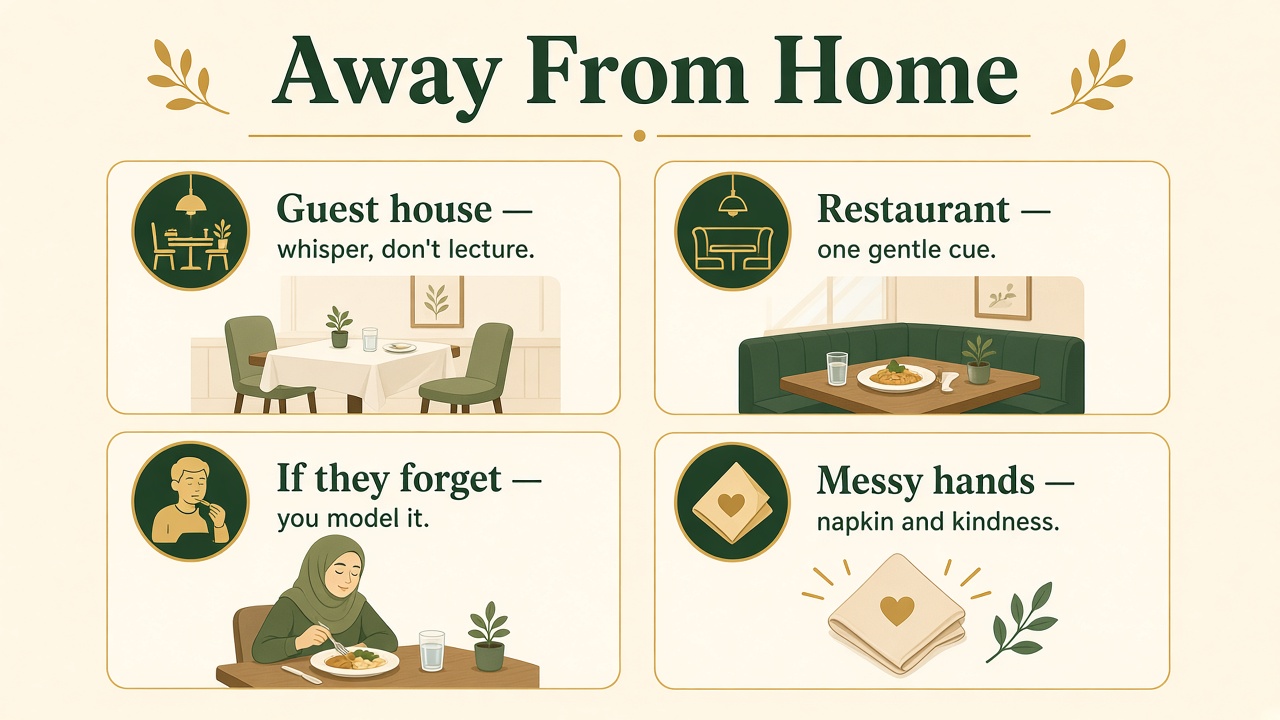
Guests at home
Brief your toddler before the doorbell:
“When food comes, we wait for Bismillah. Soft hands.”
If they melt down, feed them earlier or later—don’t stage a manners show for guests at the cost of everyone’s peace.
Restaurant / others’ homes
Prioritize: Bismillah + not climbing on the table. Right-hand coaching can be quieter. Public correction should be almost invisible.
“They only want snacks / milk”
Offer the Sunnah cues on whatever they do eat. Waiting for a perfect dinner plate delays adab forever.
Sensory / neurodiverse eaters
Protect regulation first. A whisper Bismillah from you while they touch a safe food is still a seed. Occupational needs outrank Instagram Sunnah aesthetics.
Choking awareness
Right-hand finger foods should still be age-safe. Manners never override safety.
Soft Sunnah Notes (Non-Fatwa)
Muslims are encouraged to mention Allah’s name before eating, to eat with the right hand, and to avoid waste and arrogance with food. Teach these as love habits, the way you teach salam. Exact fiqh details (utensils, buffet etiquette, etc.) follow your scholars.
Weekly Review: Keep What Works
After Day 7, ask:
- Which meal is easiest for Bismillah? (Repeat the cue there daily.)
- Which reminder tone works—playful or quiet?
- Do we need an earlier dinner to reduce meltdowns?
Then keep two habits forever: Bismillah start + Alhamdulillah end. Right-hand coaching stays gentle in the background.
Sample Day Menu of Cues (Busy Parent Version)
You do not need a perfect week. You need anchors.
| Meal | 20-second cue |
|---|---|
| Breakfast | “Bismillah—right hand on the spoon.” |
| Snack | “Bismillah for apple bites.” |
| Lunch | “Soft sits. Bismillah. Chew, then talk.” |
| Dinner | Family Bismillah + one gratitude round |
If only dinner is realistic, protect dinner. Consistency at one meal beats chaos at four.
Repair Scripts When You Snap at the Table
Parents get hungry and sharp too. Repair teaches more than a perfect tone.
“I used a loud voice about the spoon. I’m sorry. Let’s try again softly: right hand, Bismillah.”
Children learn that manners include making things right—the same spirit as apology work at home.
Common Mistakes That Backfire
- Correcting every bite — children tune out; pick one cue per meal.
- Comparing siblings — “Your sister said Bismillah” breeds resentment, not adab.
- Withholding food as punishment for forgetting Bismillah — dangerous and confusing.
- Saving manners only for guests — kids smell the performance. Practice on normal Tuesdays.
- Shame language — “Are you a bad Muslim?” has no place at a toddler table.
Making Alhamdulillah Feel Real (Not Robotic)
Sometimes swap the Arabic close for a meaning line your toddler understands, then return to Alhamdulillah:
“Allah gave us this bread. Alhamdulillah.”
“Our hands can hold food. Alhamdulillah.”
“We ate together. Alhamdulillah.”
Gratitude grows when it points to something concrete they can see.
When Relatives Push Harder Than Your Plan
Grandparents may want instant perfection. You can agree on the destination and disagree on the speed:
“We’re practicing Bismillah every meal. Forcing a full speech makes him freeze—can you model with us?”
You are the parent. Warm boundaries protect the Sunnah from becoming fear.
Mini Role-Play for Picky Weeks
Even if dinner is only yogurt and dates some nights, the cues still apply:
- Place food
- Soft pause
- Bismillah
- Right-hand attempt
- Alhamdulillah
You are training a ritual, not a menu. Rituals survive picky phases; complicated rules do not.
Linking Meals to Wider Adab
Table manners are one room in a larger house: salam at the door, soft voice at Maghrib, shukr at bedtime. When you correct eating, connect it:
“This is how we remember Allah in small places.”
That single line keeps the plan from feeling like etiquette school.
Seven-Day Sticker Chart Example
| Day | Focus | Sticker if… |
|---|---|---|
| 1 | Parent models Bismillah | Child listened at start |
| 2 | Echo Bismillah | Any attempt |
| 3 | Right-hand setup | One successful switch |
| 4 | Alhamdulillah close | Said or repeated with you |
| 5 | Own plate focus | Less grabbing after one cue |
| 6 | Share one item | Offered or accepted share |
| 7 | Guest practice at home | Completed special short meal |
Three stickers can unlock choosing tomorrow fruit or a short extra story—keep rewards light.
FAQ
How do I teach Islamic table manners to a toddler?
Start with two cues only: Bismillah before eating and a gentle right-hand reminder. Practice for a week with short scripts and celebration of attempts.
What if my toddler refuses to say Bismillah?
Say it for them cheerfully and invite—don’t force. Forced words teach pressure, not remembrance.
Is eating with the left hand haram for kids?
Parents often teach right-hand eating as Sunnah. For toddlers, guide kindly and consider development or medical needs. Ask a trusted scholar for your situation if you are unsure.
How do we handle food wasting?
Use small portions, allow stopping when full, and teach “we save leftovers” instead of shaming. Model gratitude with Alhamdulillah.
What about restaurants?
Keep expectations tiny: Bismillah, staying mostly seated, soft voice. Save advanced manners for home practice.
Can stickers be used for Sunnah habits?
Yes, if they reward effort and stay light. The heart of the habit should remain remembering Allah, not only earning prizes.
Related guides
- Teach Shukr: 14-Day Gratitude Plan
- Islamic Chores for Kids (Age Chart)
- Rahma Activities to Teach Kindness
- Teach Toddlers to Say Salam
Meal adab is not about perfect elbows. It is about a child who grows up hearing Allah’s name at the table and feeling that food is a mercy. Start tonight: one Bismillah, one soft right-hand cue, one Alhamdulillah. That is a Muslim table already becoming itself.
FAQs
How do I teach Islamic table manners to a toddler?
Start with two cues only: Bismillah before eating and a gentle right-hand reminder. Practice for a week with short scripts and celebration of attempts.
What if my toddler refuses to say Bismillah?
Say it for them cheerfully and invite—do not force. Forced words teach pressure, not remembrance.
Is eating with the left hand haram for kids?
Parents often teach right-hand eating as Sunnah. For toddlers, guide kindly and consider development or medical needs. Ask a trusted scholar if unsure.
How do we handle food wasting?
Use small portions, allow stopping when full, and teach saving leftovers instead of shaming. Model gratitude with Alhamdulillah.
What about restaurants?
Keep expectations tiny: Bismillah, staying mostly seated, soft voice. Save advanced manners for home practice.
Can stickers be used for Sunnah habits?
Yes, if they reward effort and stay light. The heart of the habit should remain remembering Allah, not only earning prizes.