
Before-School Chores for Muslim Kids: A 10-Minute Morning Checklist
7:42 a.m. The bus comes at 7:55. One shoe is missing, the cereal bowl is still on the table, the bed looks like a storm hit it, and nobody has said salam to anyone yet.
US school mornings are tight. That’s exactly why a small, fixed set of chores helps: kids who know their four jobs move faster, argue less, and leave the house calmer. And in Islam, helping at home isn’t just “chores” — it’s khidma (service), responsibility, and the Sunnah of the Prophet ﷺ, who mended his own clothes and helped his family.
This guide gives you a 10-minute before-school checklist by age, a simple order that works around Fajr and breakfast, and scripts for slow mornings. It’s a morning add-on to our full Islamic chores for kids age chart — use that for the whole week, and this one for the 7 a.m. rush.
Why Morning Chores (Not Just Evening)
- Kids are fresh. Small jobs are easier at 7 a.m. than after a long school day.
- It builds an amanah habit. “This is my job” is the root of responsibility.
- It keeps evenings free for homework, salah, and family time.
- It starts the day with barakah. A made bed and a kind salam set the tone before the bus.
The key is small. Morning chores should take 10 minutes total, not 30.
The 10-Minute Checklist by Age
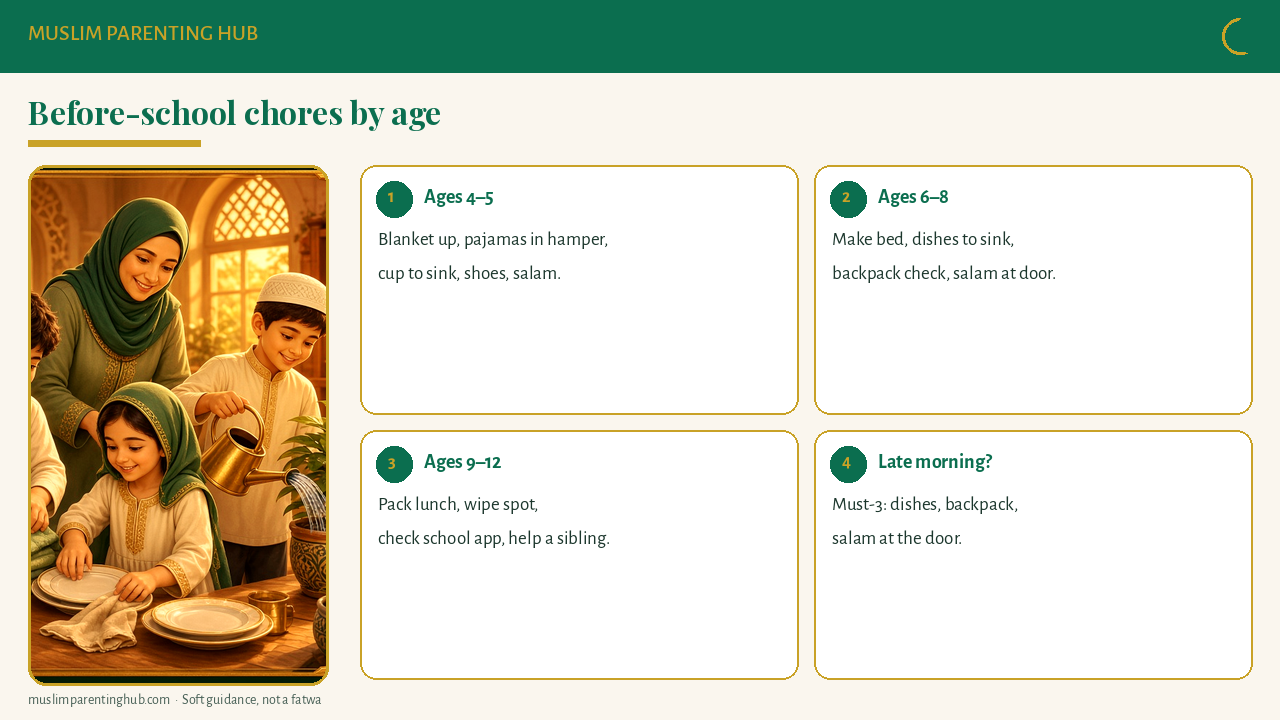
Ages 4–5 (Pre-K and kindergarten)
- Pull up the blanket (doesn’t need to be perfect).
- Put pajamas in the hamper.
- Carry their cup or bowl to the sink.
- Put shoes on by the door.
- Say salam to everyone before leaving.
Ages 6–8 (Grades 1–3)
- Make the bed.
- Pajamas folded or in the hamper.
- Clear breakfast dishes to the sink or dishwasher.
- Check backpack: folder, lunchbox, water bottle.
- Shoes and jacket on, salam at the door.
Ages 9–12 (Grades 4–6)
- Make the bed and open the curtains.
- Pack their own lunch (or pack snacks).
- Load their breakfast dishes into the dishwasher and wipe their spot.
- Pack backpack and check the school folder or app.
- Help a younger sibling with one job — shoes, backpack, or salam.
Laundry and room cleaning belong in the afternoon or weekend. For those, see laundry chores for Muslim kids by age and how to get kids to clean their room.
A Simple Morning Order That Works
Most US school mornings look something like this:
- Fajr (if your family wakes for it) — then back to rest or start the day.
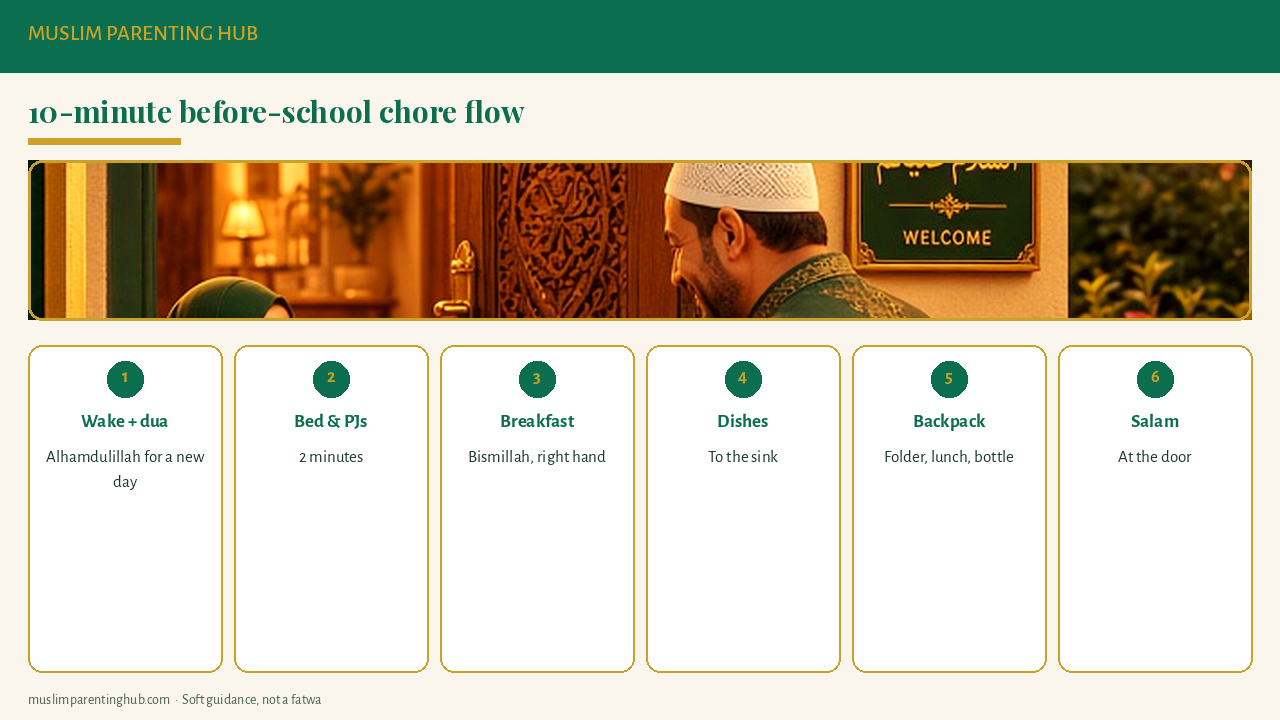
- Wake up → morning dua: Alhamdulillahil-ladhi ahyana ba’da ma amatana wa ilayhin-nushur.
- Bathroom, wudu-ready habits, get dressed.
- Bed and pajamas (2 minutes).
- Breakfast — Bismillah, eat with the right hand.
- Dishes to the sink (1 minute).
- Backpack check (2 minutes).
- Shoes, jacket, salam at the door, travel dua in the car or on the walk.
No screens until the checklist is done. Our deen before screen morning routine shows how to keep tablets off until the morning basics are finished.
Salam at the Door: The Last Chore
Leaving the house is a perfect manners moment. Make “Assalamu alaikum” at the door part of the checklist, not an extra. Kids say it to whoever is home, and the parent replies warmly.
If your little one is still learning, our 7-day plan to teach toddlers to say salam builds the habit with games. For shy kids, a wave plus a whispered salam counts.
Make It Visual
- A picture checklist on the fridge or bedroom door (pictures for non-readers).
- A magnet or clip that moves from “To do” to “Done.”
- One color per child if you have siblings.
- A 10-minute timer with a nasheed playing — when the song ends, chores should be done.
Scripts for Slow Mornings
When your child dawdles
“Show me your checklist. Which one is next?”
Point to the chart instead of nagging. The chart is the boss; you’re the coach.
When they say “It’s not my job!”
“In our family, everyone helps. The Prophet ﷺ helped at home too. This one is yours.”
When they do it badly
“Thank you for doing it! Tomorrow let’s smooth the blanket corners too.”
Praise first, correct one thing, move on. Perfect beds don’t matter at 7:45 a.m.
When you’re running late
Drop to the “must-3”: dishes to sink, backpack, salam. Everything else can wait. A calm late morning beats a perfect angry one.
Should Morning Chores Be Paid?
Most families keep basic morning jobs unpaid — they’re part of living in a family. If you use an allowance for extra jobs, see our guide to allowance for chores in Muslim families.
FAQ
What chores should kids do before school?
Keep it to 4–5 quick jobs: make the bed, pajamas in the hamper, breakfast dishes to the sink, backpack check, and shoes on with salam at the door. Older kids can add packing lunch.
How long should morning chores take?
About 10 minutes total. If it takes longer, the list is too long for school days. Move bigger jobs to after school or weekends.
At what age can kids start morning chores?
Around 3–4 with very simple jobs like putting pajamas in the hamper and carrying a cup to the sink. Add jobs as they grow.
How do I get my child to do chores without nagging?
Use a picture checklist and point to it instead of repeating instructions. Keep the same order every day and praise effort.
Is helping at home part of Islam?
Yes. The Prophet ﷺ helped his family, mended his clothes, and served at home. Kids learn responsibility (amanah) and kindness through small daily jobs.
What if we have no time in the morning?
Use the “must-3”: dishes to the sink, backpack check, and salam at the door. Even three jobs keep the habit alive.
Related guides
- Islamic chores for kids: age chart
- Teach toddlers to say salam: 7-day plan
- Laundry chores for kids by age
- Deen before screen morning routine
Closing
You don’t need a perfect morning. You need four small jobs, a picture chart, and a salam at the door. Do it the same way for two weeks and your kids will start the day with responsibility and kindness, and the bus will be a little less stressful for everyone.
Related articles

Islamic Chores for Kids: Age-by-Age Responsibility Chart for Muslim Homes
Age-by-age Islamic chores chart for Muslim kids—Prophetic helping-at-home framing, tonight scripts, sticker-free tips, and responsibility without shame.
Read guide →
Laundry Chores for Muslim Kids by Age: Folding, Sorting and a Weekly Habit
Laundry chores for Muslim kids by age: sorting lights and darks, folding, putting away, and a 15-minute Sunday reset—tied to amanah and clean clothes for salah.
Read guide →
How to Teach Toddlers to Say Salam: A Playful 7-Day Plan
Teach your toddler to say Assalamu alaikum in 7 playful days: mirror games, doorway role-play, shy-child scripts and age tips. Start today, no forcing.
Read guide →
Deen Before Screen: A Realistic Morning Sunnah Routine for Kids
A realistic “deen before screen” morning Sunnah routine for Muslim kids—wake dua, Fajr, short dhikr, breakfast, then screens. Age tips & scripts that stick.
Read guide →