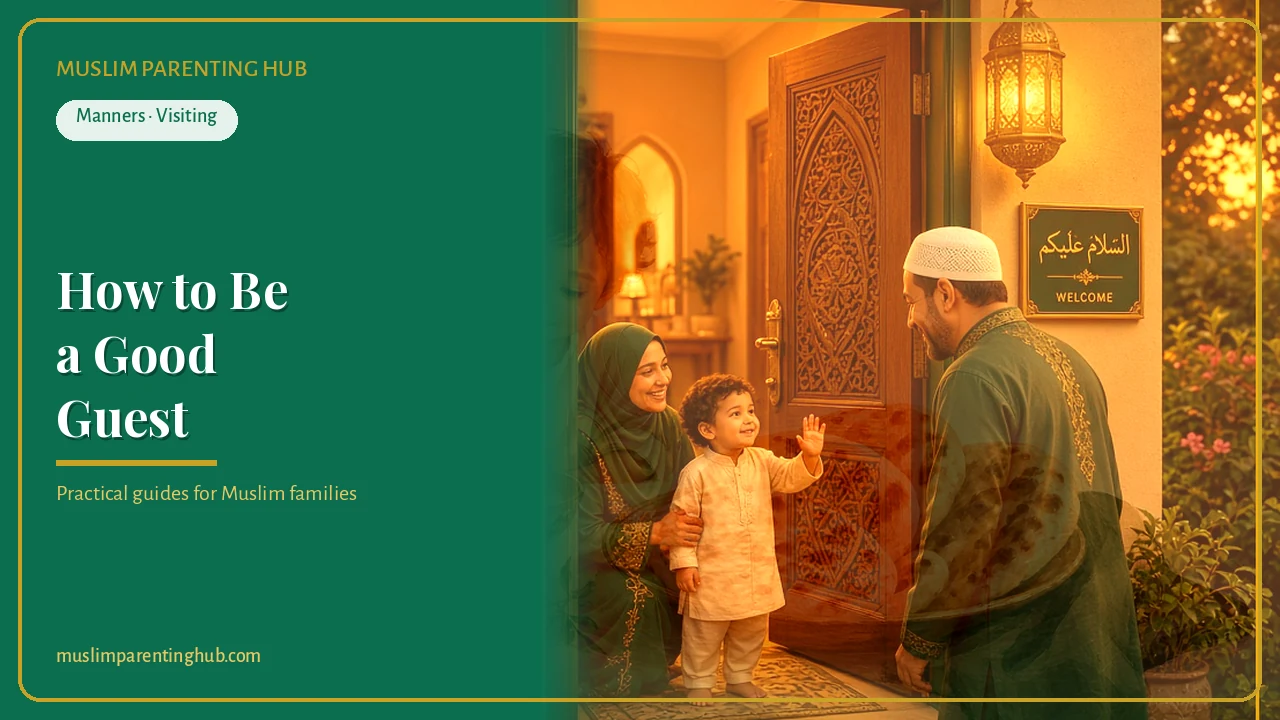
How to Be a Good Guest: Islamic Manners for Kids Visiting Other People’s Homes
The holiday visiting season is starting. There will be Thanksgiving at a relative’s house, play dates, dinners with friends from the masjid and maybe a visit to a non-Muslim neighbor. And every parent knows the moment: your child walks into someone else’s home and immediately opens the fridge, flops on the host’s bed or announces loudly, “I don’t like this food.”
Being a good guest is a big part of Islamic adab. The Quran and Sunnah have clear, beautiful guidance on how to arrive, how to behave and how to leave, and children can learn almost all of it before age eight.
This guide covers the manners of visiting step by step, with kid-friendly scripts, the dua to make for your host and a five-step visit plan you can practice at home. It builds on our guide to teaching toddlers to say salam, because every good visit starts with the salam at the door. If you are the one hosting, see our companion guide to guest manners when hosting at home.
Why Visiting Manners Matter in Islam
Visiting family and friends is part of keeping ties and spreading love. The Prophet ﷺ said: “Whoever believes in Allah and the Last Day, let him honor his guest” (Bukhari, Muslim). If hosts are told to honor guests, guests have a role too: to make the visit easy, pleasant and respectful for the people who opened their home.
For kids, keep it simple:
“When we visit, we are guests in someone’s home. We make them happy they invited us. That’s good adab, and Allah loves it.”
Before You Leave Home
A good visit starts in the car or at the door of your own house.
- Talk about the plan. Who are we visiting? Who will be there? How long will we stay?
- Agree on two or three rules. For example: “We ask before we touch,” “We say Bismillah and thank you,” and “When I say it’s time to go, we go.”
- Use the bathroom first. It saves many awkward moments.
- Pack a quiet activity for younger kids: a book or crayons, not a tablet if you can help it.
- Bring a small gift if you can. The Prophet ﷺ said, “Give gifts to one another and you will love one another” (Al-Adab Al-Mufrad). Let your child carry and hand it over.
- Say the leaving-home dua together. Our guide to duas for leaving and entering the home has the words.
At the Door: Knock, Wait and Give Salam
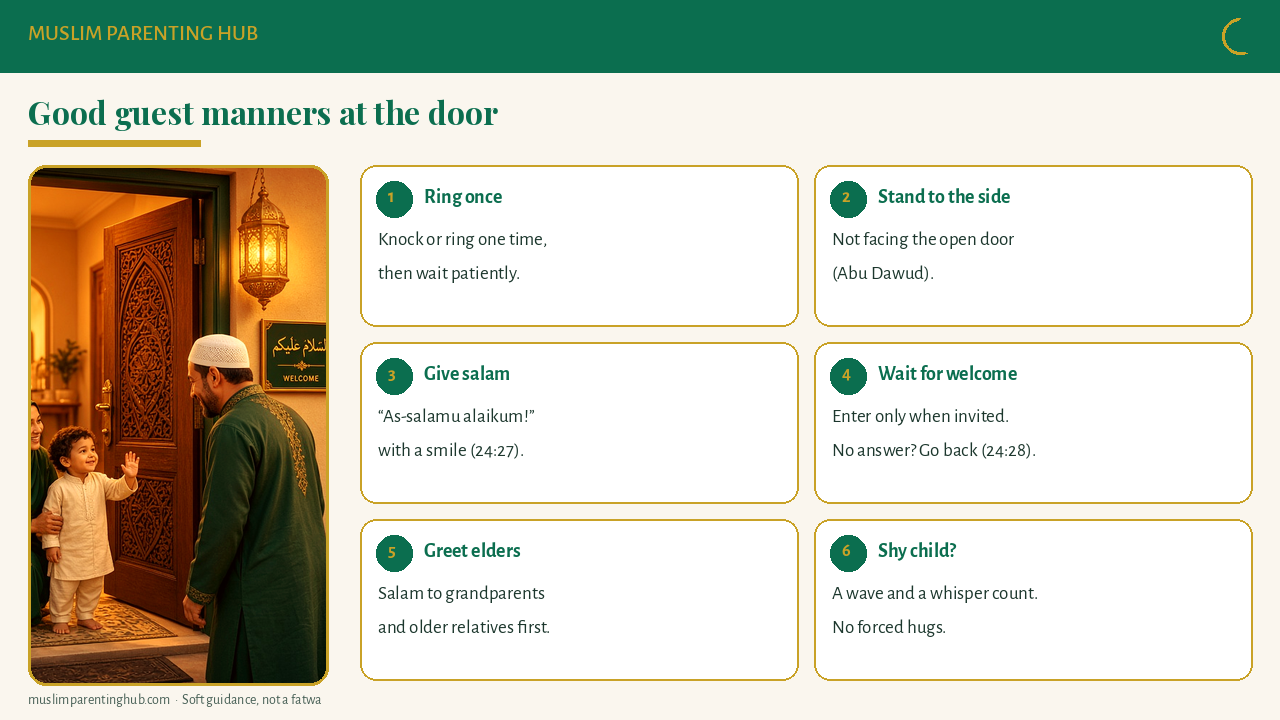
Allah gives clear instructions: “O you who have believed, do not enter houses other than your own houses until you ascertain welcome and greet their inhabitants” (Quran 24:27).
Teach kids these door habits:
- Ring or knock once, then wait. No repeated ringing. The Prophet ﷺ taught that permission is asked up to three times, and if no answer comes, you go back (Bukhari, Muslim).
- Stand to the side, not facing the open door. When the Prophet ﷺ came to someone’s door, he did not stand facing it directly but stood to the right or left side and gave salam (Abu Dawud). That protects the family’s privacy as the door opens.
- Give salam with a smile. “As-salamu alaikum!” Our guide to the full salam and reply for kids teaches the longer version.
- Wait to be invited in. Don’t push past the host.
Our guide to teaching kids to knock and ask permission has practice games for this.
For shy children: A wave and a whispered salam count. Don’t force hugs or kisses; let them warm up. See our tips for shy kids who struggle to return salam.
Inside the Home
- Shoes: Follow the host’s house rule. Many homes are shoes-off; some aren’t.
- Greet the elders first. Walk over to grandparents or older relatives and say salam. Our guide to teaching kids to respect elders in Islam has ten easy daily habits.
- Stay in the shared rooms. Bedrooms, closets, drawers and the fridge are private. Script: “In someone else’s house, we only open doors when they invite us.”
- Sit where you’re invited to sit. Don’t climb on furniture or beds.
- Use indoor voices. Running and shouting belong outside or in the play area the host shows you.
- Ask before using things. Phone chargers, games, the TV remote — ask first.
Food and Drinks
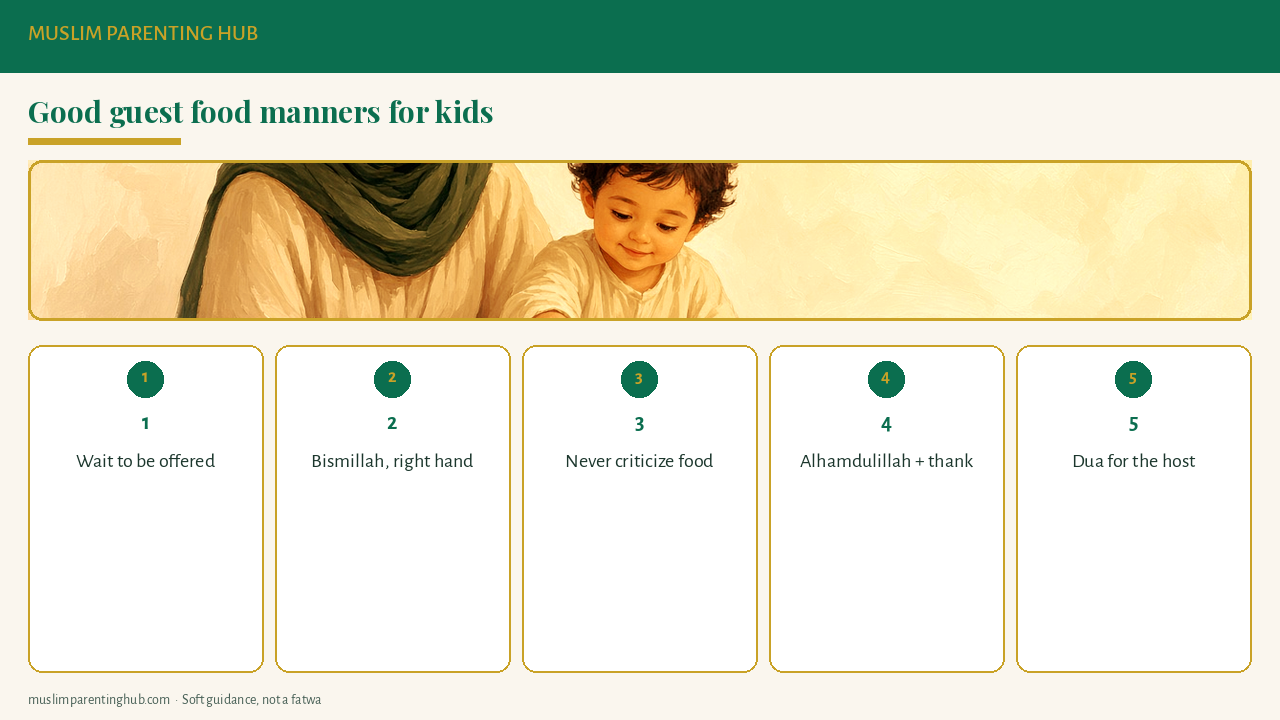
Mealtimes are where guest manners are most noticed.
- Wait to be offered. Don’t ask for snacks or open the pantry.
- Say Bismillah and eat with the right hand. Our Islamic eating manners for toddlers guide covers the basics.
- Take small portions first. Seconds are fine if offered.
- Never criticize the food. The Prophet ﷺ never criticized food: if he liked it he ate it, and if he disliked it he left it (Bukhari, Muslim). Teach kids to simply leave what they don’t like, quietly.
- Polite refusal script: “No thank you, I’m okay.” Short, kind and done.
- At non-Muslim homes: If you’re not sure the meat is halal, teach a friendly line: “No thank you, we only eat halal meat, but these potatoes look delicious!” This is especially useful at Thanksgiving. See our guide to Thanksgiving with non-Muslim family.
- Say Alhamdulillah after eating, and thank the person who cooked.
Playing With the Host’s Kids and Toys
- Ask before playing with toys. “Can I play with this?”
- Share, and take turns. Our guide to teaching kids to share toys has scripts for the hard moments.
- Leave it how you found it. Before leaving, kids help tidy what they played with. This one habit makes hosts invite you back.
- No “That’s mine now!” Gently remind: “These belong to them. We’re borrowing for today.”
- Pets: Ask before touching. Some children are scared of dogs; some families keep dogs outside of prayer areas. Teach kids to ask the owner first and wash hands afterward.
Using the Bathroom at Someone Else’s House
Kids should ask: “May I use your bathroom, please?” Then the same adab as at home applies: dua at the door, left foot in, wash with water, flush, wash hands and leave it clean. Many US homes don’t have a bidet or lota, so a small travel bottle in your bag helps. Our Islamic toilet manners for kids covers all twelve rules.
Leaving at the Right Time
Good guests don’t overstay. In the Quran, believers invited for a meal were told not to linger for long conversation afterward, because it made the host uncomfortable even though he was too shy to say so (Quran 33:53). The lesson for us is to notice when the visit is winding down.
- Give kids a warning: “Five more minutes, then we tidy and say goodbye.”
- Tidy up together and put toys back.
- Thank the host by name: “Thank you for having us, Aunty Sara!” The Prophet ﷺ said, “Whoever does not thank people has not thanked Allah” (Abu Dawud, Tirmidhi). Our guide to teaching kids to say JazakAllah khair helps.
- Give salam when leaving, not just when arriving.
The Dua for the Host
Teach your child one of these Sunnah duas for the people who fed you. Hosts are always touched to hear a child say them.
- Allahumma at’im man at’amani, wasqi man saqani. “O Allah, feed the one who fed me, and give drink to the one who gave me drink” (Muslim).
- Allahumma barik lahum fima razaqtahum, waghfir lahum warhamhum. “O Allah, bless them in what You have provided for them, forgive them and have mercy on them” (Muslim).
Younger kids can simply say: “JazakAllahu khayran. May Allah bless your home.”
The Five-Step Visit Plan (Practice at Home)
Practice a pretend visit at home before a big holiday visit. One parent is the host; the kids are the guests. Make it fun.
- Get ready: Bathroom, gift and the leaving-home dua.
- At the door: One ring, stand to the side, salam, wait to be invited in.
- Inside: Shoes, greet elders, stay in shared rooms and ask before touching.
- At the table: Bismillah, small portions, no complaining and Alhamdulillah.
- Goodbye: Tidy up, thank the host by name, make the host dua and give salam.
Do it twice before Thanksgiving week and once more on the drive there. For a broader view of everyday manners, our Islamic manners for kids: 30-habit adab checklist covers the full picture.
FAQ
What Islamic manners should kids learn before visiting someone?
Knock or ring once and wait, stand to the side of the door, give salam, enter only when invited, greet elders, stay in shared rooms, say Bismillah before eating, never criticize food, tidy up, thank the host and make dua for them.
What does the Quran say about visiting other people’s homes?
Allah says: “Do not enter houses other than your own until you ascertain welcome and greet their inhabitants” (Quran 24:27). If you aren’t admitted, you go back without fuss (24:28). Guests also shouldn’t overstay (33:53).
What dua should kids make for the host?
“Allahumma at’im man at’amani, wasqi man saqani” — O Allah, feed the one who fed me and give drink to the one who gave me drink (Muslim). Younger kids can say “JazakAllahu khayran, may Allah bless your home.”
What should my child say if they don’t like the food?
Nothing negative. The Prophet ﷺ never criticized food; he left what he disliked (Bukhari, Muslim). Teach a quiet “No thank you, I’m okay,” and let them eat what they do like without comment.
How do Muslim kids politely refuse non-halal food at a friend’s house?
Teach a kind, short line: “No thank you, we only eat halal meat, but this looks great!” Then fill up on the vegetables, bread or dessert. Parents can mention it to the host in advance to avoid awkwardness.
How do I stop my child from going into rooms or opening the fridge?
Set the rule before you arrive: “In someone else’s house, we only open doors when they invite us.” Practice with a pretend visit at home, praise them during the visit and calmly redirect if they forget.
Related guides
- How to teach toddlers salam: 7 playful days
- Guest manners when hosting at home
- Teach kids to knock and ask permission
- Teach kids to respect elders in Islam
- Thanksgiving with non-Muslim family
Closing
Children who visit with good adab make their families proud and make hosts glad they opened their door. Start with the salam at the door, add one habit at a time and practice with a pretend visit before the holidays. When your child says “Allahumma at’im man at’amani” at the end of a meal, you’ll see the host’s face light up, and that is Islamic manners doing exactly what they’re meant to do.
Quick steps
Five-step visit plan for Muslim kids. A pretend-visit routine to practice Islamic guest manners at home before a real visit.
- Get ready — Use the bathroom, carry the gift and say the leaving-home dua.
- At the door — Ring once, stand to the side, give salam and wait to be invited in.
- Inside — Follow the shoe rule, greet elders, stay in shared rooms and ask before touching.
- At the table — Say Bismillah, take small portions, never complain about food and say Alhamdulillah.
- Goodbye — Tidy up, thank the host by name, make the host dua and give salam.
Related articles
Guest Manners for Muslim Kids: Hosting at Home with Islamic Adab
Teach kids Islamic hospitality when guests visit: greeting at the door, serving food and drinks, guest privacy, toys and kid hosting jobs. Simple scripts by age.
Read guide →
How to Teach Toddlers to Say Salam: A Playful 7-Day Plan
Teach your toddler to say Assalamu alaikum in 7 playful days: mirror games, doorway role-play, shy-child scripts and age tips. Start today, no forcing.
Read guide →
Teach Kids to Knock and Ask Permission: The Islamic Adab of Isti'dhan at Home
Teach kids the Islamic adab of asking permission: knock, say salam, give your name, accept "not now". Quran-based privacy times, scripts and a 7-day plan.
Read guide →
How to Teach Kids to Respect Elders in Islam: Greetings, Words and 10 Daily Habits
Teach Muslim kids to respect elders with 10 simple habits: salam first, letting elders speak, offering a seat and kind words to grandparents, with hadith.
Read guide →