

Teach Shy Kids to Return the Salam: A Gentle 7-Day Plan
Your child can whisper “Assalamu alaikum” to stuffed animals all day—and freeze when Auntie walks through the door. Or they start the greeting fine at home, then go silent when a classmate’s dad says salaam at pickup. Returning the salam is a different skill from starting it.
If you already practiced how to teach toddlers to say salam, this guide is the next step: helping quiet, cautious, or socially anxious kids answer the greeting with dignity, not pressure.
US Muslim families feel this most at school drop-off, masjid hallways, playdates, and neighbors’ doorways. Soft guidance for parenting—not a fatwa.
Why Returning Salam Matters (Especially for Shy Kids)
In Islam, returning the greeting is emphasized. When someone offers peace, answering with equal or better peace is a beautiful habit. For children, it also teaches:
- Respect without performance. They learn to acknowledge people without becoming the “show kid.”
- Belonging in Muslim spaces. Masjid uncles, Sunday school teachers, and family friends feel seen when a child replies.
- Social bravery in tiny doses. A three-word reply is a manageable stretch for a shy nervous system.
- Bridge manners with non-Muslim friends. Kids can still smile and say “hi” while keeping salam for Muslim settings—and that clarity reduces confusion.
Shyness is not a character flaw. Many thoughtful, observant children need slower warm-ups. Our job is to coach, not corner them in front of an audience.
What “Good Enough” Looks Like by Age
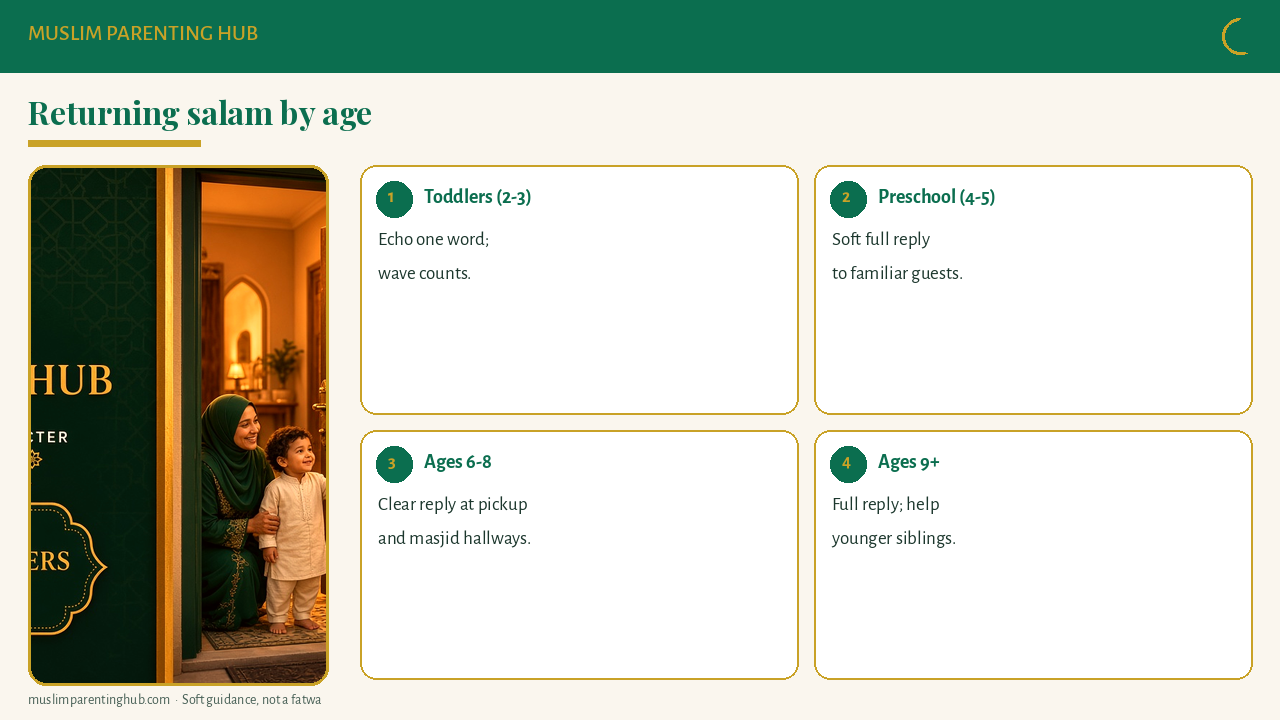
Toddlers (2–3): Echo one word—“Waalaikum”—after you. Wave plus eye contact counts as a win. Do not demand a full phrase for guests.
Preschool (4–5): Soft “Wa alaikum assalam” (or the shortened form your family uses) to familiar people at the door. Allowed to clutch your sleeve while they try.
Early school-age (6–8): Clear reply to Muslim adults and peers at school pickup, carpool, and masjid—without you prompting every time. Whispered replies still count.
Older kids (9+): Full reply, sometimes adding “wa rahmatullah.” They can also start teaching younger siblings the return.
If speech delay or selective mutism is in the picture, celebrate any safe acknowledgment (hand on heart, small wave, nodding) while you loop in professionals you trust.
The Soft Method: Hear → Echo → Own Reply
- Hear it often. You return salam out loud when your phone rings with a Muslim relative, when the neighbor says salaam over the fence, when the imam greets the kids’ class.
- Echo together. At home, you say the full reply slowly; they shadow the last syllables.
- Own reply in low-stakes spots. Doorway with a stuffed animal “guest,” then a real sibling, then Grandma on video, then a real visitor.
Never yank a chin toward a guest and bark “Say it!” Public shame teaches avoidance, not adab.
A 7-Day Plan to Practice Returning Salam
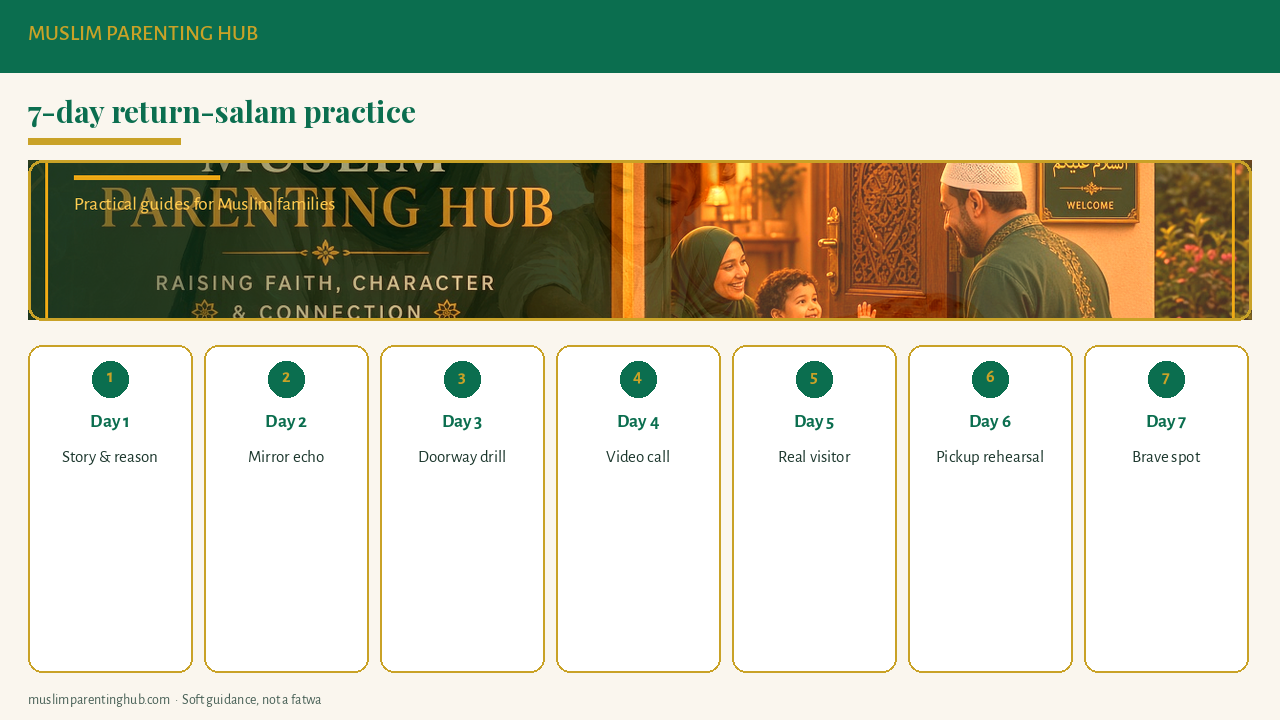
Day 1 — Story & reason. Explain: “When someone gives us peace, we give peace back. It makes hearts feel safe.” Keep it under two minutes.
Day 2 — Mirror echo. Face each other. You say “Assalamu alaikum.” They practice only the return. Swap roles.
Day 3 — Doorway doll drill. Knock, you play the visitor with salam, they reply from “inside,” then open. Pair with knock and ask permission so the whole door routine feels familiar.
Day 4 — Video call practice. Ask a trusted relative to open with salam and wait patiently for the child’s reply—no teasing if it takes ten seconds.
Day 5 — Real door, soft stakes. When a familiar Muslim friend visits, stand beside your child. Soft prompt: “Your turn for the reply.” Celebrate whatever comes out.
Day 6 — School-edge rehearsal. In the car before pickup, role-play a classmate’s parent saying salaam. Practice one calm reply. Mentally connect it to guest manners at home so hospitality and greetings feel like one skill family.
Day 7 — Review & choose a “brave spot.” Pick one recurring place (Sunday school lobby, neighbor’s driveway) where they will try an unprompted return this week. Debrief kindly afterward.
Scripts That Protect Shy Kids
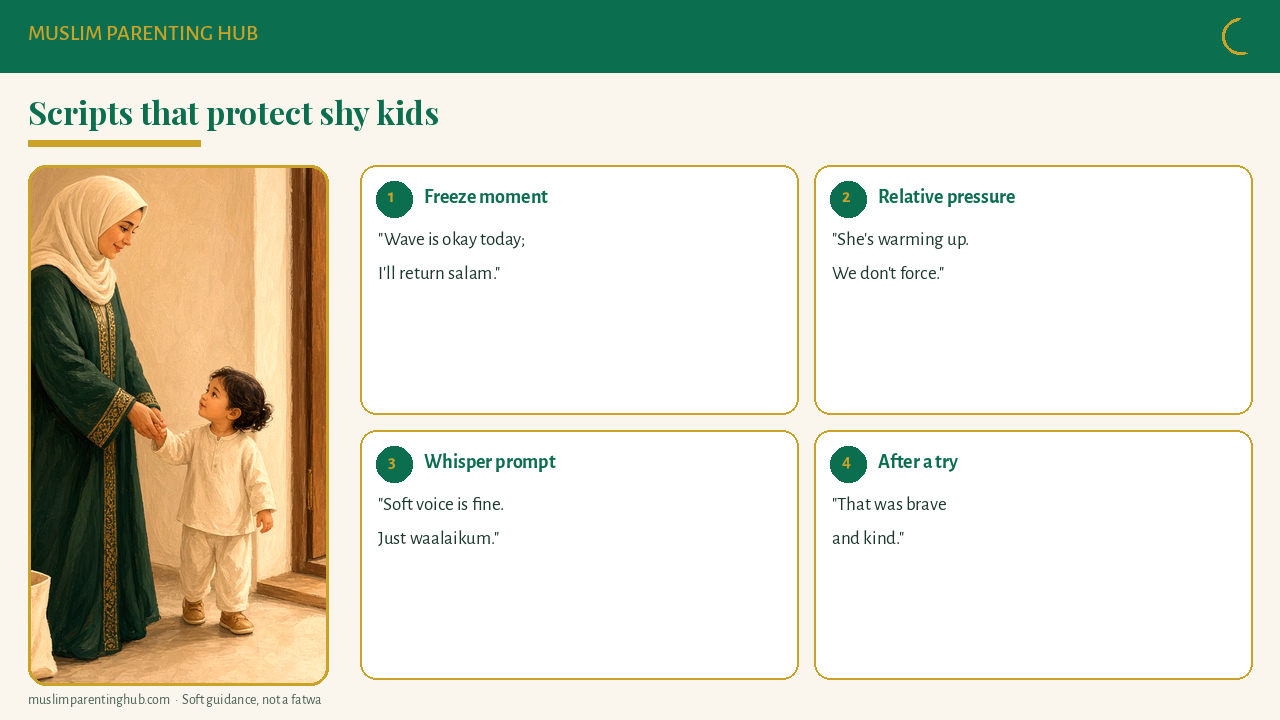
When they freeze in front of a guest:
“It’s okay. You can wave, and I’ll return the salam for both of us today. We’ll practice later.”
When a relative says “Why is she so quiet?”:
“She’s warming up. We don’t force greetings. She hears you and cares.”
Whisper prompt only they can hear:
“Soft voice is fine. Just ‘waalaikum’ is enough.”
After a successful tiny reply:
“I noticed you answered. That was brave and kind.”
For non-Muslim classmates who say hi:
“Smile and say hi back. Salam is our special Muslim greeting—we use it with Muslims and when it fits.”
School, Carpool, and Public Spaces (US Context)
Public school hallways are loud. A shy child may not project. Teach a close-range reply: step slightly nearer, speak to the person who greeted them, then rejoin the flow to class. No need to boom across the cafeteria.
At after-school pickup, if another Muslim parent offers salam while your child is overloaded from the day, allow a delayed reply in the car: “When your body feels ready, we can practice what you’ll say next time.” Tie evening decompressing to your after-school Maghrib routine so salam practice never piles onto meltdown minutes.
Carpool mornings: one practice round in the driveway beats three lectures at the curb.
Common Mistakes (Easy to Fix)
- Forcing on the spot. Swap for “We’ll try next time” plus private practice.
- Comparing siblings. “Your brother always says it” shuts the quiet one down.
- Only rehearsing starting salam. Returning needs its own reps.
- Correcting pronunciation mid-guest. Fix later, gently, at home.
- Using food or toys as bribes for every greeting. Occasional celebration is fine; constant payment makes faith feel transactional.
Linking Return-Salam to Wider Adab
Greeting well sits next to other home manners: how we treat neighbors, how we enter rooms, how we host. Point kids toward neighbor kindness practice so salaam feels like part of caring for people on your street—not a performance for adults in the living room.
When Anxiety Runs Deeper
If your child cannot speak in many social settings, avoids eye contact with distress, or has panic around groups, treat return-salam as optional coaching and seek guidance from a pediatrician, speech therapist, or counselor who respects your values. Faith habits should never become a battleground for untreated anxiety.
Multilingual and Mixed-Faith Homes
Many US Muslim homes juggle Arabic greetings, English everyday speech, and relatives who prefer Urdu, Somali, Turkish, or another language. Keep one family default for returning salam (the Arabic reply you actually use), and allow affectionate translations at home during practice. Consistency of meaning beats perfection of accent.
When grandparents insist on a louder, “proper” performance, thank them for caring about deen, then protect the child’s pace: “We’re building the habit first. Clarity comes with reps.”
If one parent is a revert and still learning pronunciation, model learning together. Kids relax when adults are allowed to be beginners too.
Masjid Hallway Micro-Practice
Masjid spaces can overwhelm shy kids: shoes everywhere, loud uncles, sudden hugs. Before you exit the car, preview: “If Brother Ahmed says salam, you can reply softly. I’ll be right beside you.” After salah, do not stage a greeting tour of the whole lobby. One successful return is enough for the day.
If someone reaches for a handshake or hug your child does not want, combine greeting adab with body consent: return the verbal salam, step slightly behind you, and you complete the adult greeting. Peace and boundaries can travel together.
Tracking Progress Without Pressure
A simple fridge note for one week:
- Heard a salam and noticed it (checkmark)
- Returned with any sound or wave (star)
- Returned without a prompt (double star)
No punishments for blank days. Review on Day 7 with curiosity: “What made it easier? What felt hard?” Adjust the brave spot if needed.
Pairing With Evening Calm
Overtired kids rarely produce new social skills. Park return-salam drills away from homework meltdown hour. A two-minute mirror game after a snack, or during the calm stretch of your Maghrib reset, works better than grilling them at bedtime.
A Note on “Rude” Labels
US culture often equates eye contact and booming hellos with respect. Islamic adab values the greeting itself and sincerity. A soft reply with lowered eyes can still be excellent manners. Translate for teachers or relatives when needed: “In our home, a quiet wa alaikum assalam is how she shows respect while she builds confidence.”
That framing protects your child from unfair “rude” labels and keeps the focus on growth.
FAQ
My child starts salam but never returns it. Why?
Starting is often practiced more at home (you prompt “Say salam to Grandma”). Returning requires listening, processing, and answering under mild social load. Separate practice for the reply usually fixes the gap within a couple of weeks.
Is a whispered reply okay?
Yes. Volume can grow later. The sunnah spirit is returning peace, not winning a public speaking contest.
What if relatives keep pressuring my shy child?
Calm boundary: “We’re teaching gently. Please don’t corner them.” Then change the subject. Protect the child in the moment; debrief relatives later if needed.
Should shy kids still learn to start salam?
Yes, on a parallel track with less pressure. Use the playful starter plan first, then weave in return practice so both directions feel natural.
Can they reply in English sometimes?
Many US families teach Arabic greeting phrases and allow English kindness words with non-Muslim peers. Be clear which settings use which habit so kids aren’t confused.
What if my child has a speech delay?
Any sincere acknowledgment counts. Work with their therapists on sounds they can manage. Allah knows their effort.
Closing: Peace Returned, Softly
Shy kids often become the most thoughtful hosts and friends—once they trust that greetings will not become a stage. Practice the return in tiny, safe loops. Celebrate whispers. Stand between your child and anyone who mistakes quiet for rudeness.
One soft “wa alaikum assalam” at the doorway is a whole lesson in courage, adab, and peace.
Quick steps
7-day plan to help shy kids return the salam. A gentle week of echo games, doorway drills, and low-stakes real greetings so shy children learn to answer Assalamu alaikum.
- Day 1 — Story and reason — Explain that when someone gives peace, we give peace back, in under two minutes.
- Day 2 — Mirror echo — Practice only the return phrase face-to-face, then swap roles.
- Day 3 — Doorway doll drill — Role-play a visitor's salam at a closed door and have the child reply from inside.
- Day 4 — Video call practice — Ask a trusted relative to open with salam and wait patiently for the reply.
- Day 5 — Real door, soft stakes — Stand beside your child for a familiar visitor and offer a soft prompt only.
- Day 6 — School-edge rehearsal — Role-play a pickup greeting in the car before a real school-edge moment.
- Day 7 — Brave spot review — Choose one recurring place for an unprompted return and debrief kindly.
Related articles
How to Teach Toddlers to Say Salam: A Playful 7-Day Plan
Teach your toddler to say Assalamu alaikum in 7 playful days: mirror games, doorway role-play, shy-child scripts and age tips. Start today, no forcing.
Read guide →
Guest Manners for Muslim Kids: Hosting at Home with Islamic Adab
Teach Muslim kids guest manners for hosting at home—shoes, greetings, serving, privacy, and soft scripts. Islamic adab parents can practice tonight.
Read guide →
Teach Kids to Knock and Ask Permission: The Islamic Adab of Isti'dhan at Home
Teach kids the Islamic adab of asking permission: knock, say salam, give your name, accept "not now". Quran-based privacy times, scripts and a 7-day plan.
Read guide →
Neighbor Kindness for Muslim Kids: A Gentle 7-Day Practice Plan
A gentle 7-day plan to teach Muslim kids neighbor kindness—scripts for Muslim and non-Muslim neighbors, quiet hours, food sharing tips, and safety.
Read guide →