Potty Training While Traveling: A Muslim Family Guide for Road Trips, Flights and Grandma’s House
Your toddler finally made it through a whole week dry. Then you look at the calendar: a five-hour drive to Grandma’s for Thanksgiving, or a flight to see cousins over winter break. Suddenly you’re wondering whether to put the diapers back on, how to do istinja at a gas station, and what happens if there’s an accident in the car seat.
Breathe. Travel is the most common time for potty progress to wobble, and it is also completely manageable. This guide walks US Muslim parents through a simple travel istinja kit, a road-trip rhythm, airport and airplane tips, settling in at a relative’s house, and a calm plan for accidents, all with gentle taharah habits and zero shame.
It is practical home guidance, not a fatwa. If you are just starting out, begin with our main Islamic potty training guide for readiness signs and bathroom duas, then come back here before you pack.
First: Should You Pause Potty Training for a Trip?
Most families don’t need to pause. A good rule of thumb:
- Under two weeks into training, and the trip is long? It’s okay to use pull-ups for the travel day only, then go back to underwear at your destination. Call them “travel pants,” not “baby diapers.”
- More than two weeks in, mostly dry? Keep underwear on and plan extra stops. Your child’s confidence matters more than a perfect record.
- Child is anxious or constipated? Lower the pressure. Progress can resume once you’re home.
Whatever you choose, say it positively: “On the plane we wear travel pants. At Nani’s house we’re big kids in underwear again.”
Pack a Travel Istinja Kit
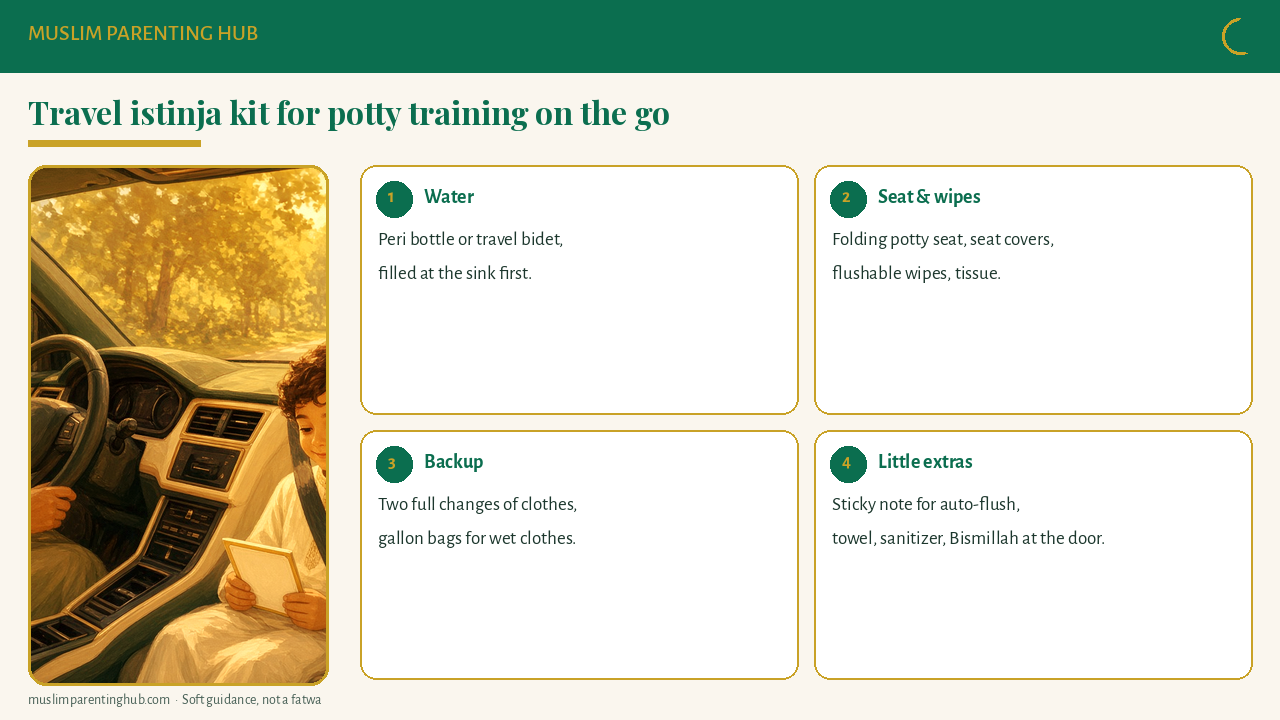
Many American public restrooms have no water near the toilet, so Muslim families get creative. A small kit in a zipper pouch keeps taharah easy anywhere:
- Peri bottle or travel bidet (a squeeze bottle with an angled spout). Fill it at the sink before your child sits down.
- Folding travel potty seat that fits over adult toilets, plus a few disposable seat covers.
- Flushable wipes and toilet paper for wiping first.
- Two full changes of clothes, including socks, in a gallon bag.
- Empty gallon bags for wet clothes.
- Small towel or paper towels to pat dry.
- Hand sanitizer for when the sink is far away, though soap and water is still best.
- Sticky notes for automatic-flush toilets. Covering the sensor stops the loud surprise flush that scares many toddlers.
Practice with the kit at home two or three times before the trip, so the peri bottle feels familiar. Our step-by-step guide to teach kids istinja shows the full wipe-then-wash routine.
The Road-Trip Rhythm
On long drives, predictable stops beat emergency stops.
- Go right before you leave, even if they “don’t need to.” Make it part of the routine, just like the car travel dua.
- Stop every 1.5 to 2 hours for newly trained toddlers. Plan stops around gas, food or prayer times so they don’t feel like extra.
- Use the family restroom when you can find one. They often have a sink close to the toilet, which makes istinja much easier.
- Say the bathroom dua at the door. Before entering, say “Bismillah, Allahumma inni a’udhu bika minal khubuthi wal khaba’ith.” In shared public restrooms, saying it just before you walk in is enough.
- Left foot in, right foot out, and “Ghufranaka” on the way out. These little habits travel well.
- Carry a potty in the trunk for rural highways with long gaps between exits. A portable potty with liners can save the day on the shoulder of a quiet road.
Praying on the road, too? Our guide to praying Maghrib on the go with kids pairs nicely with your bathroom stops.
Airports and Airplanes
- Before security: One bathroom trip, every time.
- At the gate: Another trip about 20 minutes before boarding. Airport family restrooms are usually near the gates.
- On the plane: Airplane lavatories are tiny and loud. Tell your child ahead of time: “The airplane toilet makes a big WHOOSH. We’ll cover our ears together.” Fill the peri bottle from the little sink before they sit.
- During takeoff and landing: Seatbelt signs make bathroom trips impossible, so a quick visit right before takeoff helps.
- Pull-ups are fine for flights if your child is still new. Taharah is about cleaning after, not about never using a backup.
At Grandma’s House (or Any New Bathroom)
A new bathroom can stop a confident toddler cold. On the first day:
- Give a bathroom tour. Show the light switch, the step stool, the toilet and where the water bottle sits.
- Bring your step stool or use a sturdy box so little feet aren’t dangling.
- Leave a peri bottle by the toilet and quietly explain it to hosts who aren’t Muslim: “It’s how we wash after the bathroom. It’s like a bidet.” Most relatives think it’s clever.
- Keep your home words. If you say “potty,” “wash-wash” and “Bismillah” at home, say the same words there.
Visiting non-Muslim relatives for the holidays? Our guide to Thanksgiving with non-Muslim family covers food, prayer and kind scripts for the rest of the visit.
When an Accident Happens
Accidents during travel are normal. They are not failure, and they are never a reason for shame.
Your calm script:
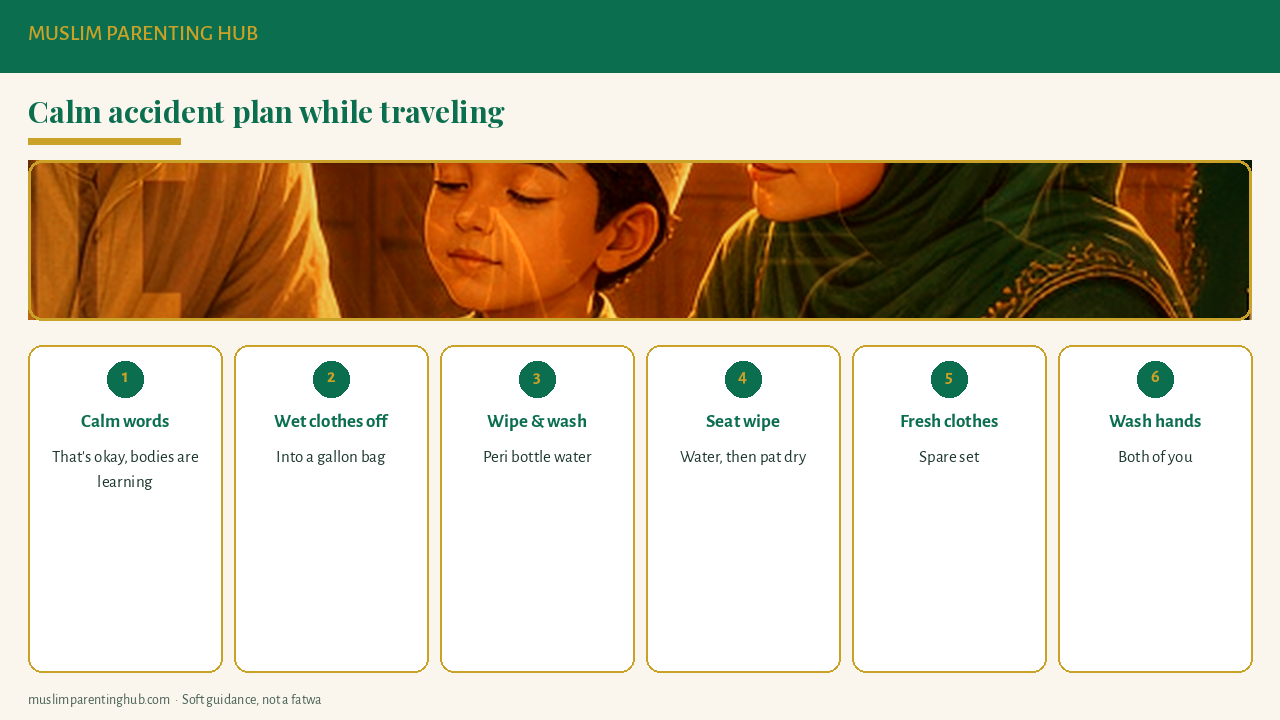
“Oops, accident. That’s okay. Our bodies are still learning. Let’s get clean and dry.”
Then the taharah steps:
- Take off wet clothes and place them in a bag.
- Wipe, then wash the private area with water from the peri bottle.
- Wipe any urine from the car seat or skin with water and wipes. A damp cloth and a towel are enough; you can deep-clean the cover later.
- Put on fresh clothes.
- Wash your hands and your child’s hands.
Young children are not yet required to pray, so you don’t need to stress about every drop. You’re building habits, not passing an inspection. If accidents keep happening once you’re home, our guide for when Islamic potty training stalls has patient next steps.
Keep Your Own Calm
Holiday travel is already stressful: traffic, packing, relatives, schedules. Your child reads your face before your words. A few things that help:
- Lower the bar. The goal for a trip is “mostly fine,” not “perfect.”
- Praise effort, not dryness. “You told me you needed to go! That was so smart.”
- Ask Allah for ease. “Rabbi yassir wa la tu’assir” (My Lord, make it easy and don’t make it hard) is a great quiet dua for parents at a crowded rest stop.
- Expect a short wobble at home. A few accidents in the first days back are common and usually pass quickly.
FAQ
Should I put my potty-trained toddler back in diapers for a trip?
Not necessarily. If your child is newly trained and the travel day is long, pull-ups for that day are fine. Call them “travel pants” and go back to underwear when you arrive. If your child has been dry for a few weeks, keep underwear on and plan frequent stops.
How do Muslim kids do istinja in public restrooms without water?
Pack a peri bottle or travel bidet and fill it at the sink before your child sits down. If water truly isn’t available, wiping well with tissue (istijmar) is valid, and you can wash with water at the next chance.
How often should we stop for bathroom breaks on a road trip?
For newly trained toddlers, every 1.5 to 2 hours is a good rhythm. Also go right before leaving and any time you stop for gas, food or prayer.
What if my child is scared of automatic-flush or airplane toilets?
Cover the sensor with a sticky note so it doesn’t flush suddenly, and warn your child about the loud airplane “whoosh” ahead of time. Covering ears together turns the scary part into a game.
How do I clean urine from a car seat for taharah?
Remove what you can, then wipe the area with water and pat dry. You can wash the cover fully when you arrive. Keep your words calm; accidents are part of learning.
What bathroom dua should we say at a public restroom?
Say “Bismillah, Allahumma inni a’udhu bika minal khubuthi wal khaba’ith” just before entering, and “Ghufranaka” when leaving. Saying it at the door is enough.
Related guides
- Islamic potty training guide
- Teach kids istinja step by step
- Islamic bathroom manners at school
- Bathroom accidents at school
Closing
Travel tests every new skill, and potty training is no exception. Pack the peri bottle, plan your stops, say Bismillah at the door, and meet every accident with a calm “That’s okay.” Your child will remember feeling safe far longer than they remember any wet pants on the way to Grandma’s.
Related articles
When Islamic Potty Training Stalls: Soft Patience Scripts & Taharah Without Pressure
Islamic potty training stalled? Soft scripts, taharah habits without pressure, regressing toddlers, and calm US-family tips that keep dignity intact.
Read guide →
Islamic Potty Training Without Shame: Readiness, Bathroom Duas & Taharah
Ready for Islamic potty training? Spot readiness signs, teach bathroom duas and gentle istinja, and coach toilet manners with zero shame—start tonight.
Read guide →
How to Teach Kids Istinja: Simple Washing Steps for US Bathrooms
Teach your child istinja without shame: easy wiping and washing steps, left-hand rules, peri bottle and bidet tips for US bathrooms, and a 7-day practice plan.
Read guide →
The Car Dua Routine Muslim Kids Actually Remember (School Run to Road Trip)
Build a car travel dua routine Muslim kids remember—ignition trigger, call-and-response, school-run vs road-trip versions, and printable card placement tips. Soft and practical.
Read guide →