
First Time Taking Your Toddler to the Masjid: A Calm Home Practice Plan
You picture a peaceful first visit: your toddler’s tiny hand in yours, soft carpet under bare feet, the adhan settling the room. Then reality whispers: snacks, sudden volume, a sprint toward the shoe rack, and the fear that everyone is watching.
If that mix of hope and nerves is you, you are a normal Muslim parent preparing a normal toddler for a sacred place.
This guide gives you a calm home practice plan before the first (or next) masjid visit—seven days of tiny rehearsals, quiet-voice scripts, a bag checklist, age bands, and an exit strategy that protects dignity. Soft parenting guidance, not a fatwa. Follow the scholars and masjid guidelines you trust.
Why Home Practice Beats a Surprise Trip
Toddlers do not fail masjid manners. They fail surprise expectations.
The masjid asks for stillness, soft voices, shoes off, and staying near you. Home asks for motion, snacks, and volume. Bridging those worlds with one “big day” is hard. Bridging them with short daily practice is kind.
Goals for a first visit:
- Belonging — “This is our place with Allah.” (Everyday Allah talk for toddlers lays the groundwork.)
- Safety — you know exits, bathrooms, and your toddler’s limits.
- Short success — leave while it is still mostly okay.
- No shame — meltdowns are data, not character grades.
Age Bands: What “Good Enough” Looks Like
~12–24 months
- Presence on your lap or hip is the win.
- Short visit (10–20 minutes) is excellent.
- Expect wandering interest; bring a quiet soft item if your masjid allows.
~2–3 years
- Can practice “shoes off,” “quiet voice,” and sitting near you for short stretches.
- May copy a few prayer movements at home; at the masjid, copying parts is enough.
- Whisper salams and “Allah” talk count as success.
~4–5 years (bonus if you have a preschooler sibling)
- Can hold a short “masjid job”: carry their socks bag, sit on the rug corner, whisper ameen.
- Still need a leave-early plan.
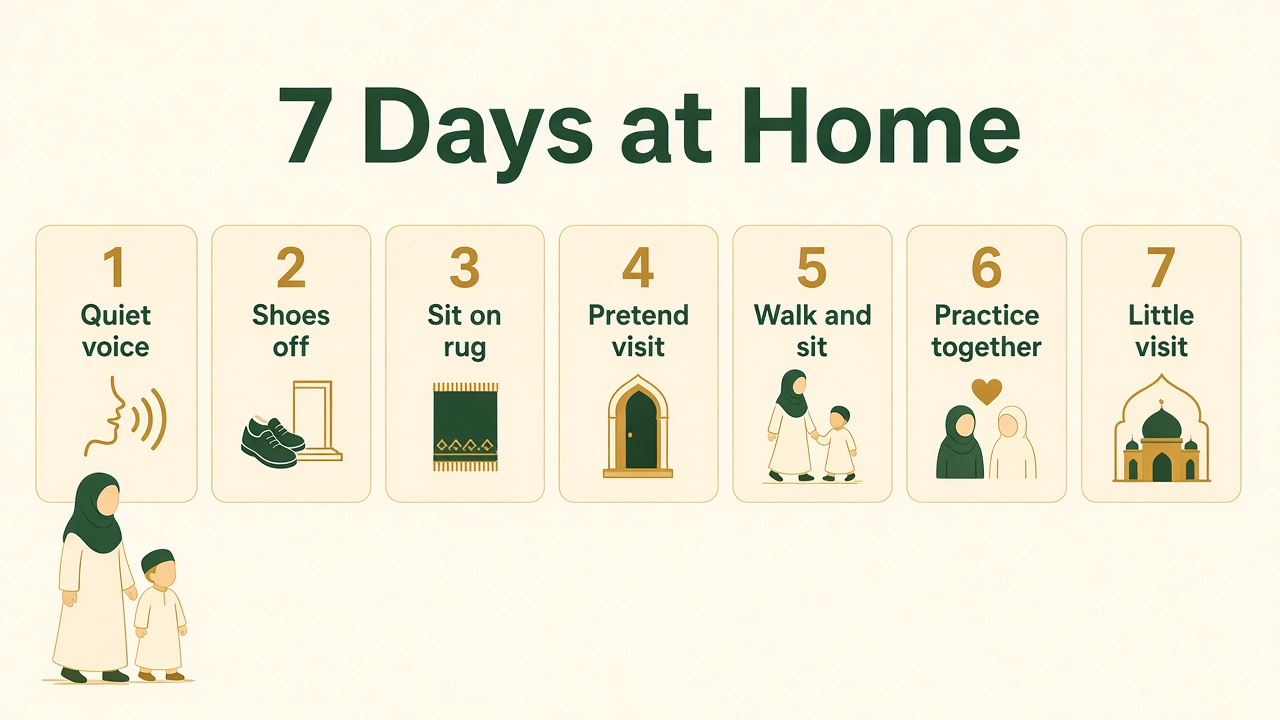
The 7-Day Home Practice Plan
Practice 5–10 minutes a day. Do not announce a lecture. Play it.
Day 1 — Name the place with love
Show a simple photo of your local masjid (exterior is fine). Say:
“This is the masjid. People go there to remember Allah. We will go together soon. You will stay close to me.”
Let them “wave salam” to the photo. Keep it warm.
Day 2 — Shoes-off game
At home, mark a “shoe mat.” Practice: arrive → shoes off → socks stay on → walk softly to a towel “carpet.”
Tonight script:
“Masjid feet are soft feet. Shoes sleep on the mat. We walk like quiet cats.”
Day 3 — Quiet voice meter
Use a playful meter: whisper / soft / outside voice. Practice only whisper and soft in the “masjid corner.”
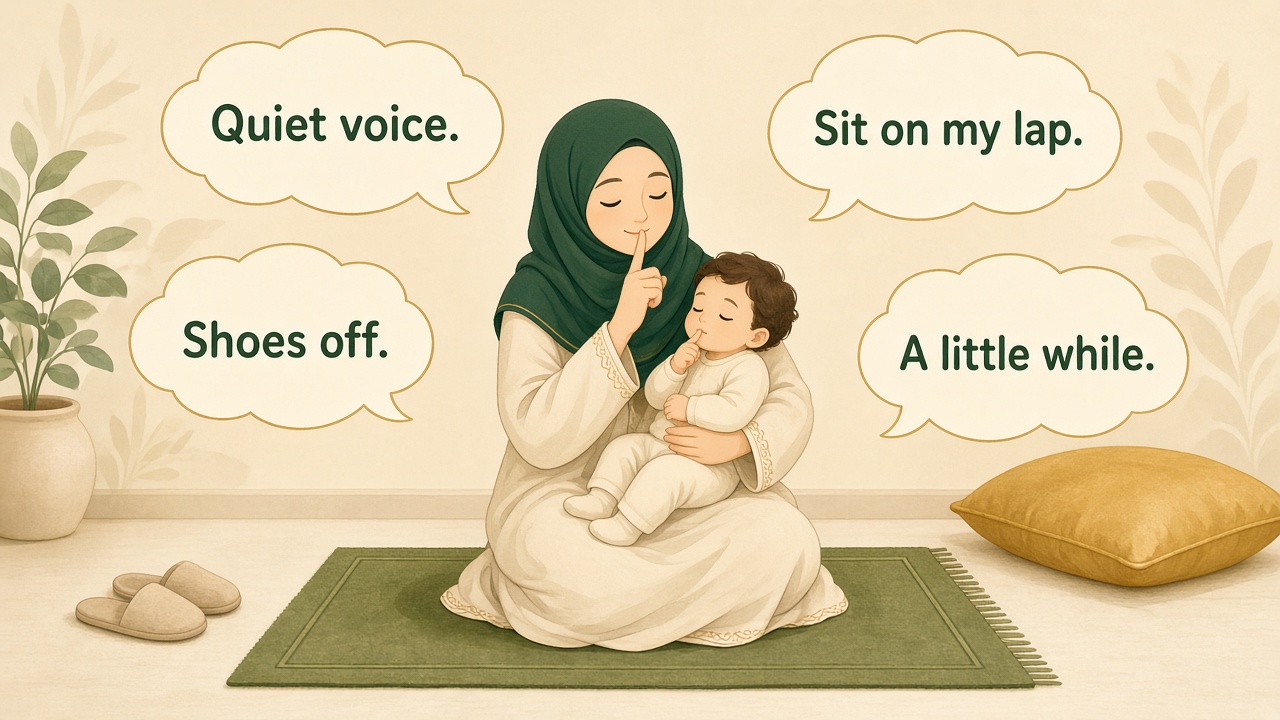
Script:
“In the masjid we use our soft voice so hearts can listen. Let’s practice soft: Assalamu alaikum.”
Link this to your salam practice plan if you are already building greeting habits.
Day 4 — Mini prayer corner (2 minutes)
Lay a small rug. Make a gentle wudu play (hands and face if that matches your approach), then stand for a tiny pretend Maghrib or two rakahs of calm standing/bowing—presence over perfection. Pair with your playful wudu steps and after-school Maghrib routine.
Script:
“We face the qiblah. We are quiet with Allah. You can stand, sit, or stay by my knee.”
Hearing a gentle recitation at home beforehand also makes the masjid sound familiar—our Quran listening guide for infants and toddlers has simple timing ideas.
Day 5 — Bag rehearsal
Pack the real bag together. Let your toddler put in one item (soft book or socks). Practice carrying it to the door and back.
Day 6 — Dress rehearsal walk
Put on masjid-ready clothes for 10 minutes at home. Walk to the car or front gate, say the travel intention, return. No pressure to go further.
Optional: add a short car dua habit so the ride itself feels like part of worship.
Day 7 — Short real visit (or dry run)
Choose a low-pressure window: after a familiar prayer, a quiet corner of the women’s/family area if available, or a time your masjid is calmer. Stay short. Leave on a win.
Masjid Bag Checklist (Toddler Edition)
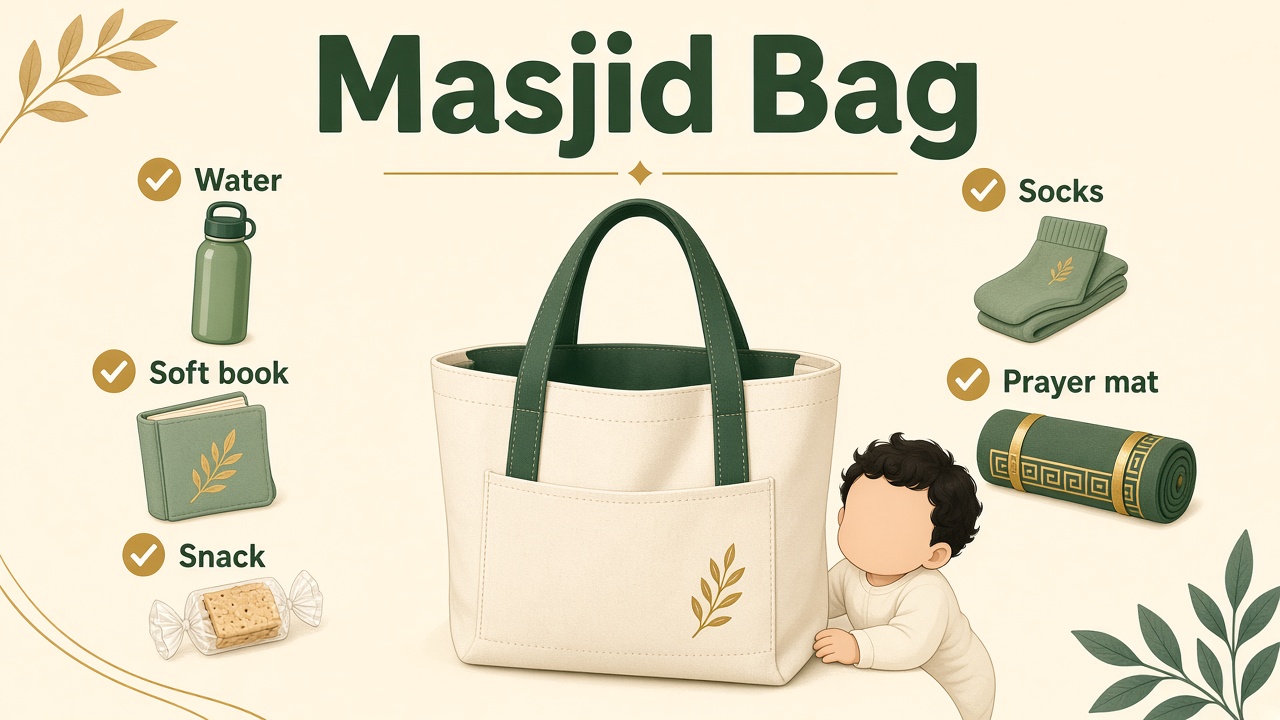
Pack light. Heavy bags make stressed parents.
Always useful
- Water bottle (spill-resistant)
- 1 small quiet snack (if allowed; check your masjid culture)
- Soft cloth book or quiet fidget (masjid-appropriate)
- Extra socks
- Light sweater / covering layer
- Pack of tissues / wipes
- Small plastic bag for dirty socks or trash
- Your phone on silent in a deep pocket—not a toddler entertainment plan mid-salah if you can help it
Optional
- Folded mini prayer mat corner for practice at home (leave bulky mats unless needed)
- Change of pants for toilet surprises (still potty training? our Islamic potty training plan covers bathroom manners away from home)
- Ear-friendly adhan recording for home only—not for blasting in the musalla
Label the bag “Masjid bag” so it becomes a cue, like a school backpack.
Tonight Scripts You Can Actually Say
Before leaving home
“We’re going to Allah’s house for a short visit. Soft voice, stay by Mama/Baba, then we go home for a snack.”
At the shoe rack
“Shoes off—nice job. Socks on. Hold my hand.”
If they get loud
“Soft voice reset. Whisper with me: Alhamdulillah.”
If they want to run
“Running feet stay outside. Inside we use walking feet by my side.”
After a good stretch (even 5 minutes)
“You did a beautiful first try. Allah loves that we came. We’re going home while our hearts are still calm.”
During the Visit: Parent Ops That Reduce Chaos
- Arrive with a buffer — not sprinting in as iqamah starts if this is visit one.
- Claim an edge seat/spot near an exit when possible.
- One caregiver focuses on the toddler; the other joins salah if you are two adults.
- Narrate softly — “People are standing for prayer now.”
- Do not stack corrections — pick one cue (hand-hold or soft voice), not five.
If your toddler only lasts through the adhan and one standing, that can still be a seed of love. Pair later at home with dua from the heart so the visit becomes “we talked to Allah,” not “we got shushed.”
Exit Without Shame (Your Most Important Skill)
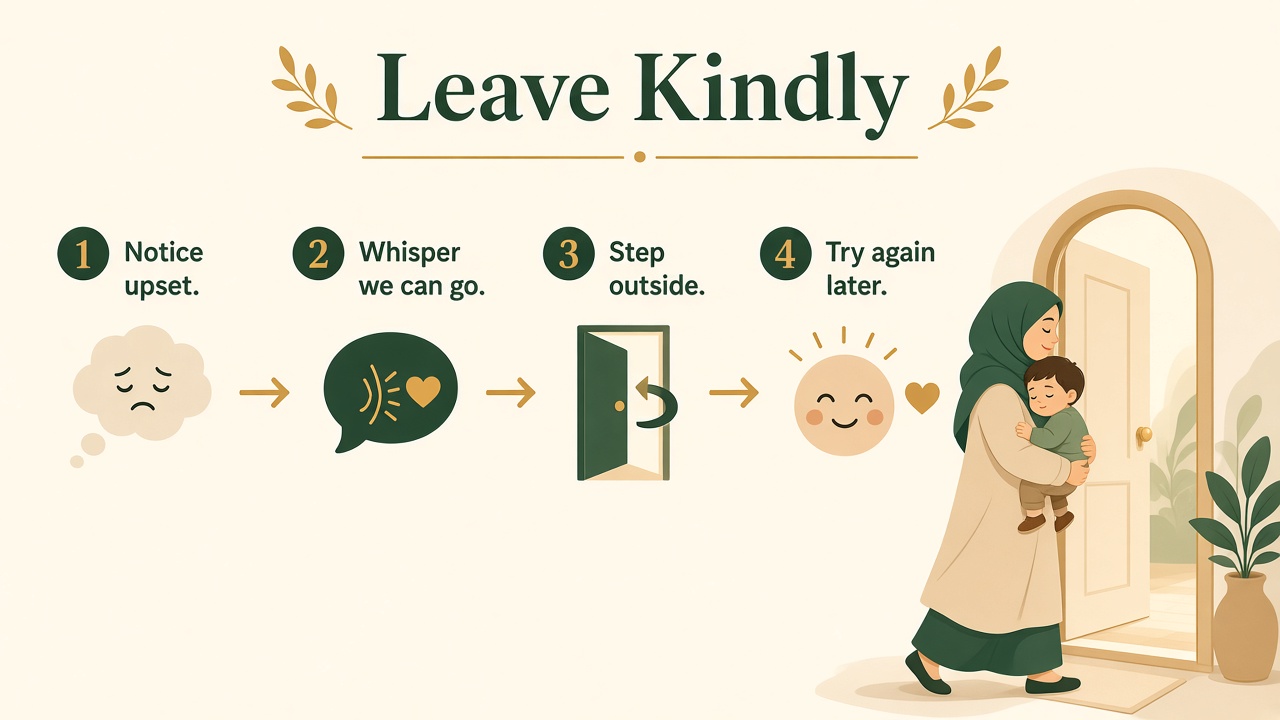
Leaving early is not failure. Leaving early is strategy.
Exit when:
- Volume is rising and co-regulation is not working
- They are hungry/tired past the point of learning
- You feel rage or humiliation building (your nervous system matters)
Exit script (for you and for eavesdroppers in your head):
“We’re taking a calm break. We’ll try again another day. Learning the masjid is a marathon of mercy.”
In the car:
“You got overwhelmed. That’s okay. I still love coming with you. Next time we’ll stay an even shorter time.”
Never: “You embarrassed me.” Forever: “We’ll practice more at home.”
Edge Cases Parents Ask About
“People stared / someone corrected my child harshly.”
Protect your child first. A brief “JazakAllah khair, we’re learning” is enough. Debrief at home with rahma, not revenge storytelling. Your child’s association with the masjid should be safety beside you.
“My toddler only wants the water fountain / shoe area.”
Use a micro-tour: fountain → two minutes on the carpet holding your hand → home. Expand later.
“Should I bring snacks into the prayer hall?”
Follow your masjid’s norms. Many families keep food for the lobby or car. Practice “snack after masjid” at home on Day 5–6.
“What if my child is autistic / sensory-sensitive?”
Shorten further. Noise-reducing options if appropriate for your child, edge seating, and leaving before overload are wisdom. You know your child best.
Soft Sunnah Anchors (Non-Fatwa)
- The masjid is beloved in our tradition as a place of gathering for Allah. A short Jumu‘ah visit pairs well with a cosy Friday night family routine at home. When you are ready for a weekly habit, try our calm Friday plan for taking kids to Jumu‘ah.
- Teaching children with gentleness reflects prophetic mercy.
- Coming to prayer—and bringing children near prayer—is a long game of love, not a one-day performance. The practice pays off on busy days too, like the Eid prayer (see our calm Eid morning checklist).
Adapt rulings on purity, women’s spaces, and children’s areas to your trusted teachers and local masjid policy.
A Simple First-Visit Scorecard (Celebrate Tiny Wins)
Tick any three and call it a win:
- [ ] Soft greeting or calm entry
- [ ] Shoes off with help
- [ ] 2+ minutes near you during salah/adhan
- [ ] Soft voice reminder worked once
- [ ] Left without a shame spiral
- [ ] Spoke about Allah kindly on the way home
Practice at home makes the first visit easier: a small prayer corner for kids at home and praying in jama‘ah at home with kids help toddlers learn to stand in a row. When they’re ready for a bigger gathering, see taking kids to Jumu‘ah prayer.
FAQ
How do I prepare my toddler for the first masjid visit?
Practice at home for a week: shoes off, quiet voice, a tiny prayer corner, and packing a simple bag. Keep the real first visit short and leave while it is still mostly calm.
What should I pack in a mosque bag for kids?
Water, tissues/wipes, extra socks, a quiet soft item if allowed, a light layer, and a small snack for after if needed. Keep it light so you can leave quickly.
What if my toddler cries in the masjid?
Co-regulate first. If they cannot settle, exit kindly. Practice more at home and try a shorter visit later. Crying is not a moral failure.
How long should a toddler’s first masjid visit be?
Often 10–20 minutes is plenty. Some children manage only the adhan. Success is a warm memory, not a full congregational prayer.
Should toddlers be forced to sit still for the whole salah?
No. Invite presence. Hold them, let them watch, and protect the people around you with an edge seat and an exit plan. Stillness grows with age and practice.
How can I teach masjid manners without scaring my child?
Use play at home, soft scripts, and celebration of attempts. Save firmness for safety (running into paths, harming others), not for perfect piety.
At what age can I take my child to the masjid?
There is no fixed age. Children came to the masjid in the Prophet’s ﷺ time, and he would shorten the prayer when he heard a baby crying, out of mercy for the mother (Bukhari). Start with short visits outside busy prayer times and follow your masjid’s rules for young children.
Is it okay to bring a toddler to Jumu‘ah?
Many families do, but Jumu‘ah is the most crowded prayer of the week. Practice with a quieter weekday prayer first, sit near the back or an exit, and bring a small bag of quiet activities.
Related guides on Muslim Parenting Hub
- The After-School Maghrib Routine That Actually Works
- How to Teach Wudu to a Preschooler
- Teach Toddlers to Say Salam (7-Day Plan)
- Teach Kids Dua From the Heart
- The Car Dua Routine Muslim Kids Actually Remember
You do not need a perfect toddler to begin a masjid life. You need a merciful plan, a short visit, and the courage to try again. May Allah make the masjid a place of love in your child’s heart—one calm practice at a time.
Quick steps
7-day home practice plan before a toddler's first masjid visit. Five to ten minutes of playful practice a day so the first masjid visit is short, calm, and shame-free.
- Day 1 — Name the place with love — Show a photo of your local masjid and explain warmly that people go there to remember Allah and that your child will stay close to you.
- Day 2 — Shoes-off game — Mark a shoe mat at home and practice arriving, taking shoes off, and walking softly.
- Day 3 — Quiet voice meter — Use a whisper / soft / outside voice meter and practice only whisper and soft voices in a “masjid corner.”
- Day 4 — Mini prayer corner — Lay a small rug, do gentle wudu play, then stand for a tiny, calm pretend prayer.
- Day 5 — Bag rehearsal — Pack the real masjid bag together, let your toddler add one item, and practice carrying it to the door.
- Day 6 — Dress rehearsal walk — Put on masjid clothes for ten minutes and walk to the car or gate and back.
- Day 7 — Short real visit — Choose a calm, low-pressure time, keep the visit short, and leave on a win.
Related articles
Teach Kids to Answer the Adhan at Home: Pause Game & 7-Day Plan
Kids talking over the adhan? Use a playful pause game, short reply lines by age, and a 7-day home plan so Muslim kids answer the call to prayer with love.
Read guide →
How to Teach Your Child to Call the Adhan at Home: A 2-Week Plan for Young Muezzins
No adhan in your US neighborhood? Teach your child to call the adhan at home: the words, how to stand, a gentle 2-week plan and confidence tips for shy kids.
Read guide →
How to Set Up a Prayer Corner for Kids at Home: A Small Space That Builds a Big Salah Habit
Set up a kid-friendly prayer corner at home in 6 easy steps: finding the qiblah, rugs, a prayer basket, a salah chart and age-by-age jobs that make salah stick.
Read guide →
When Kids Ignore the Adhan: Calm Scripts That Actually Work
Calm scripts for when kids ignore the Maghrib adhan for screens, LEGO or games. A 5-day pause-play plan for US Muslim homes—no yelling required.
Read guide →