How to Teach Kids Istinja: Simple Washing Steps for US Bathrooms
Potty training is done. Your child uses the toilet. And then you realize: they are wiping with half a roll of paper, skipping water completely, or flooding the floor with the lota.
In most US homes the bathroom wasn’t designed with istinja in mind. There’s no hand shower, the school has only paper, and grandma’s lota lives in one bathroom. So kids need a clear, simple routine they can do on their own, at home and away.
This guide gives US Muslim parents a step-by-step way to teach istinja (cleaning after using the toilet) for ages 3–8: what to say, which tools help, a no-shame 7-day practice plan, and what to do at school. It builds on our main Islamic potty training guide with bathroom duas, so start there if your child is still in diapers or pull-ups.
Soft home guidance, not a fatwa. If you follow a particular madhhab for details, keep your teacher’s wording.
What Istinja Means (In Kid Words)
Istinja is cleaning our private parts after we pee or poop, so our body and clothes stay clean (tahir) and ready for salah. Islam teaches that cleanliness is part of faith, and the Prophet ﷺ taught his companions even small bathroom manners.
For a child, say:
“After the toilet, we clean with water so we are fresh and ready to pray. Allah loves people who keep clean.”
The basics most families teach:
- Water is best. Wiping with tissue first, then washing with water, is the most thorough.
- Tissue alone is allowed when water isn’t available (this is called istijmar). That matters at school.
- Use the left hand for cleaning; keep the right hand for eating and greeting.
- Front to back for girls, always.
- Wash hands with soap afterwards.
Tools That Make It Easier in US Bathrooms
You do not need a renovation. Pick one that fits your home:
- Peri bottle (a squeeze bottle with an angled tip, sold for postpartum care) — the easiest tool for small hands. Under $10 at Target, Walmart, or Amazon.
- Lota or watering-can style jug — classic and cheap; teach your child to fill it only halfway so it’s light.
- Bidet attachment — clips under the seat and connects to the toilet water line. Great for families, but show kids how to turn the knob gently.
- Handheld sprayer (shattaf) — powerful; better for ages 6+.
- Flushable wipes — fine as a backup when traveling, but don’t flush many in older plumbing.
Keep a small towel or a stack of paper towels within reach for drying. A dark-colored bath mat hides splashes and saves arguments.
Step-by-Step Istinja for Kids
Teach these as a short chant. Kids love a script they can say out loud:
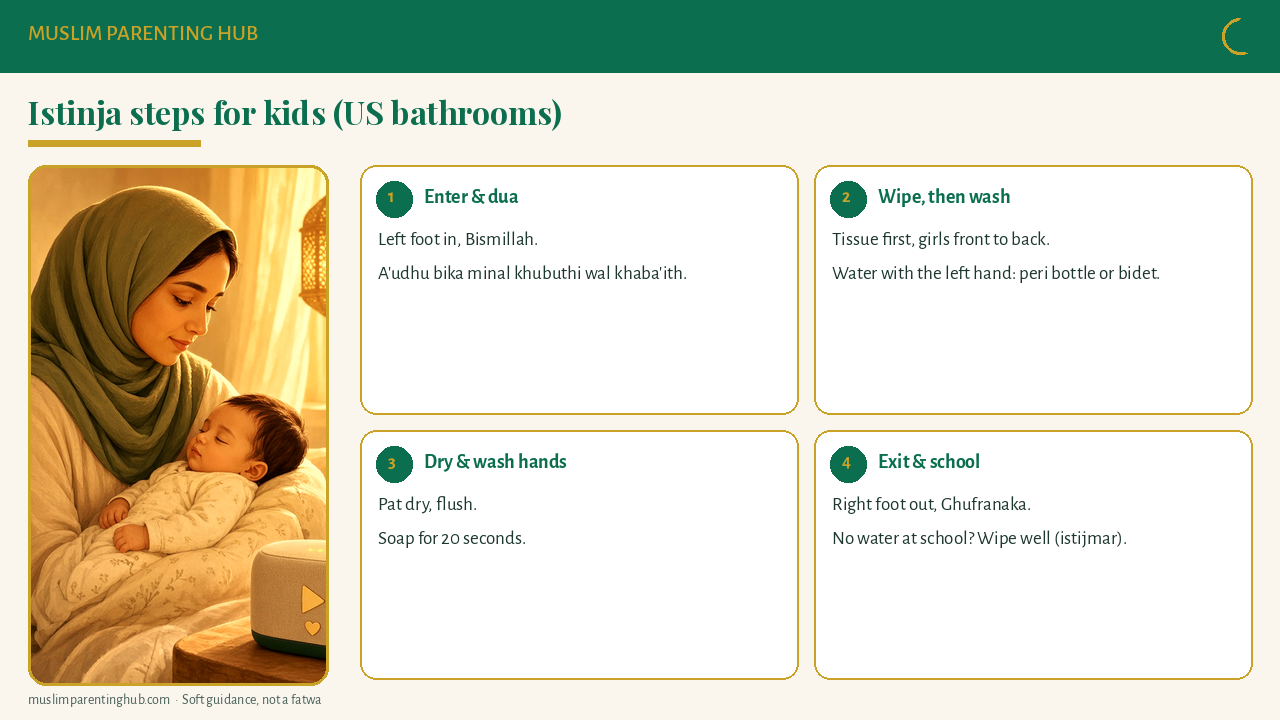
- Enter left foot first and say the bathroom dua: Bismillah. Allahumma inni a’udhu bika minal khubuthi wal khaba’ith (“O Allah, I seek refuge in You from all evil”). For little ones, “Bismillah” is enough to start.
- Sit all the way down and take your time. No rushing, no standing pee on clothes.
- Wipe first with a little toilet paper — girls front to back.
- Wash with water using the left hand and the peri bottle, lota, or bidet. Pour, rub gently, pour again.
- Pat dry with toilet paper or a cloth.
- Flush, then wash hands with soap for 20 seconds (two “Alhamdulillah” songs long).
- Step out right foot first and say Ghufranaka (“I ask for Your forgiveness”).
Ages 3–4 will need you nearby for weeks. Ages 5–6 can usually do steps 1–7 with a reminder card on the wall. Ages 7–8 should be independent — and old enough to understand that clean istinja is part of getting ready for salah.
Boys and girls learn the same core steps. For details specific to each, see potty training Muslim boys: sitting vs standing and potty training Muslim girls with taharah in mind.
No-Shame Language That Works
Kids pick up our faces more than our words. Try:
- “Your body is an amana — a trust from Allah. We take care of it.”
- “Wet floor? No problem. Let’s fix it together.”
- “Good job remembering the water!”
Avoid:
- “Dirty!” or “Gross!” about their body.
- Threats like “Allah won’t accept your prayer” to a five-year-old. Small children are still learning. Keep salah talk hopeful: “Now you’re ready to pray with me.”
- Checking over and over in front of siblings. Privacy is part of Islamic manners too.
Istinja at School, Camp, and Public Restrooms
Most US public schools have no water in the stall. That’s okay. Teach your child:
- Tissue-only (istijmar) is allowed when water isn’t available. Wipe well, at least three times, until clean.
- A small water bottle in the backpack is an option for older kids who want it; show them how to use it discreetly over the toilet.
- Wash hands well at the sink.
- Ask the teacher kindly if they need extra time.
Our guide to Islamic bathroom manners at school and public restrooms has scripts for teachers and crowded stalls, and if a mishap happens, see what to do about bathroom accidents at school.
A 7-Day Istinja Practice Plan
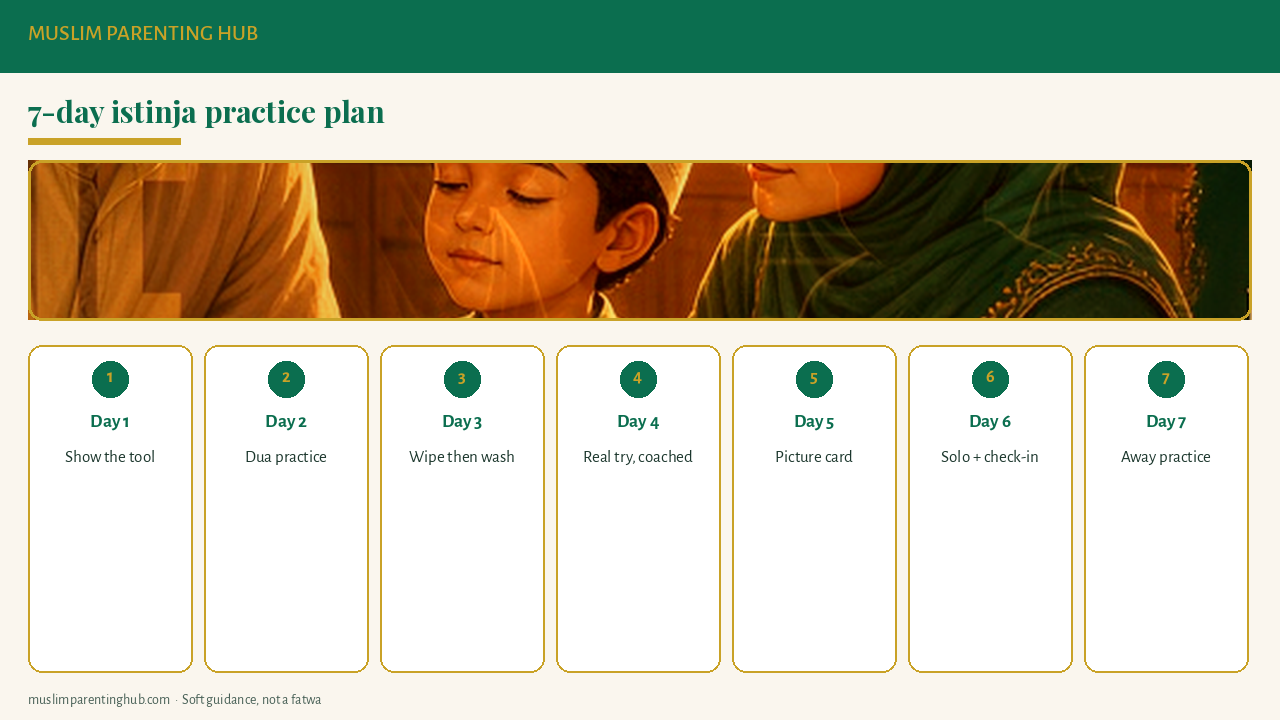
- Day 1 — Show the tool. Let your child squeeze the peri bottle into the sink and laugh. Fun first.
- Day 2 — Dua practice. Practice the entering and leaving duas at the bathroom door, with no toilet involved.
- Day 3 — Wipe then wash. Walk through steps 3–5 with you guiding hands (fully clothed rehearsal at the toilet works).
- Day 4 — Real try with help. Child does it; you stand at the door and coach by voice.
- Day 5 — Picture card. Tape a simple 7-step card at kid eye level.
- Day 6 — Solo with a check-in. “Did you remember the water?” Thumbs up and done.
- Day 7 — Away practice. Practice tissue-only (istijmar) at home so school feels familiar.
Expect setbacks. Tired evenings, new bathrooms, and travel all cause slips. Go back one step and keep it light.
FAQ
At what age should kids learn istinja?
Start as soon as potty training is steady, usually around 3–4. Most kids can do it alone by 6–7 with a picture card and gentle reminders.
Is wiping with toilet paper enough for kids?
When water isn’t available, such as at most US schools, wiping well until clean (istijmar) is accepted. At home, wiping first and then washing with water is best.
What is the easiest istinja tool for small children?
A peri bottle. It’s light, easy to squeeze, cheap, and works with any toilet. A bidet attachment is a great family upgrade.
Which hand should kids use for istinja?
The left hand for cleaning and the right hand for eating, greeting, and giving. If your child is left-handed, teach the habit gently; there is no need for stress.
What dua do kids say when entering the bathroom?
Bismillah, then Allahumma inni a’udhu bika minal khubuthi wal khaba’ith. When leaving, Ghufranaka. Start with Bismillah alone for preschoolers.
What if my child refuses to use water?
Some kids dislike cold water. Use room-temperature water, let them control the bottle, and praise any try. Keep it playful, not a power struggle.
Related guides
- Islamic potty training: duas and taharah
- Bathroom manners at school and public restrooms
- Bedwetting without shame
- Teach wudu to preschoolers
Closing
Istinja is one of the first acts of worship a child can do completely alone. That deserves a little celebration. Keep a peri bottle in reach, a picture card on the wall, and a smile on your face, and within a few weeks this will just be how your kids use the bathroom.
Quick steps
7-day plan to teach kids istinja. A short daily plan from first seeing the water tool to doing istinja alone and at school.
- Day 1 — Show the tool — Let your child squeeze the peri bottle into the sink so the tool feels fun.
- Day 2 — Dua practice — Practice the entering and leaving bathroom duas at the door.
- Day 3 — Wipe then wash — Walk through wiping, washing with the left hand and drying with you guiding.
- Day 4 — Real try with help — Your child does it while you coach by voice from the door.
- Day 5 — Picture card — Tape a simple 7-step card at kid eye level.
- Day 6 — Solo with a check-in — Your child does it alone; ask once if they remembered the water.
- Day 7 — Away practice — Practice tissue-only wiping (istijmar) at home so school feels familiar.
Related articles
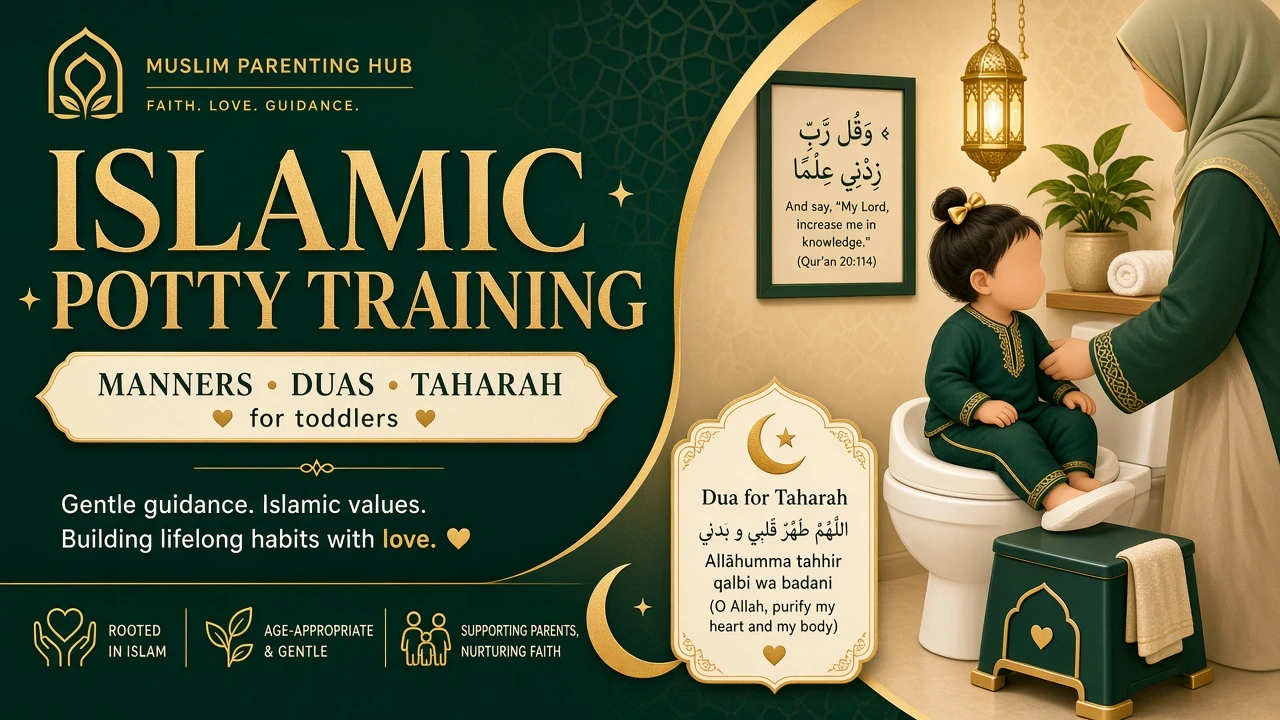
Islamic Potty Training Without Shame: Readiness, Bathroom Duas & Taharah
Ready for Islamic potty training? Spot readiness signs, teach bathroom duas and gentle istinja, and coach toilet manners with zero shame—start tonight.
Read guide →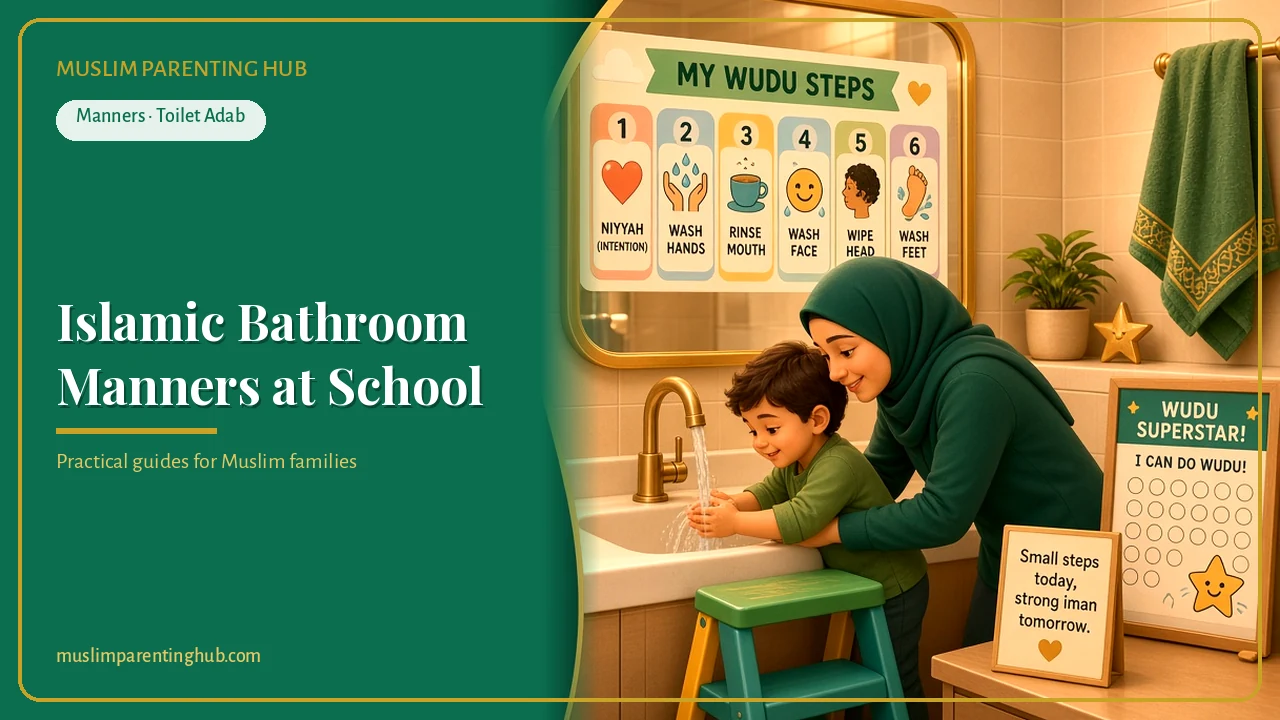
Islamic Bathroom Manners at School: A Kid-Friendly Guide to Public Restrooms
Help your child keep Islamic toilet manners at school and in public restrooms: duas, privacy, istinja without a lota, and calm scripts for teachers.
Read guide →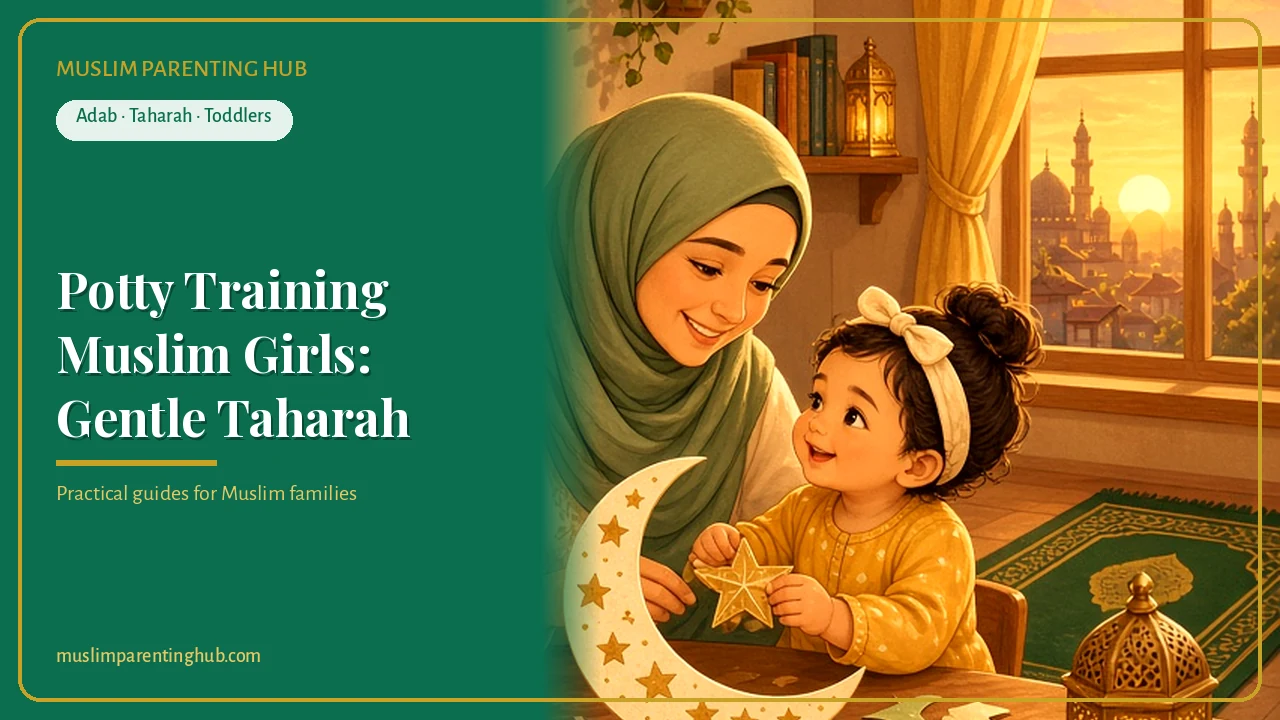
Potty Training Muslim Girls: Front-to-Back Wiping, Istinja and Gentle Taharah Tips
Potty training a Muslim girl? Front-to-back wiping and washing, easy istinja with a peri bottle, how to sit, modesty, public restrooms and calm scripts.
Read guide →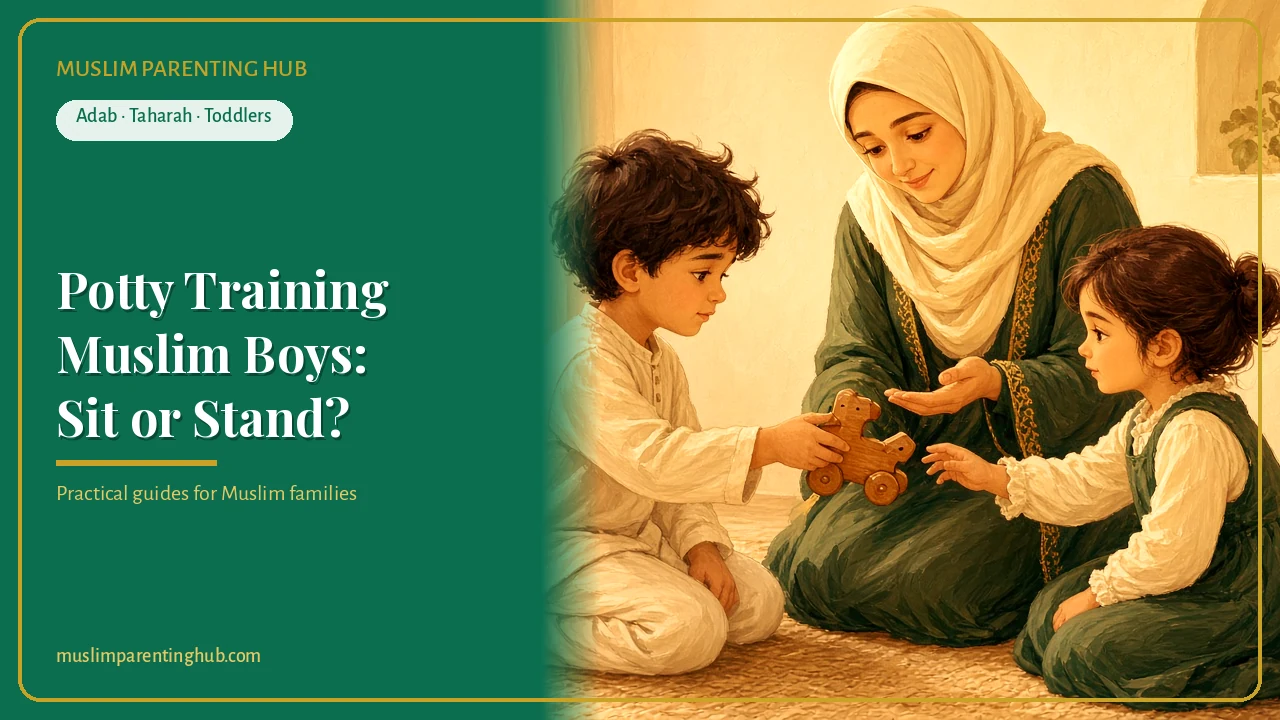
Potty Training Muslim Boys: Sitting vs Standing, Splash Control and Taharah Tips
Potty training a Muslim boy? Why sitting first works, what the Sunnah says about standing, splash control, gentle istinja steps, public restrooms and calm scripts.
Read guide →