

Sleepovers and Muslim Kids: How to Decide, What to Say and Fun Alternatives (Like Late-Overs)
It usually starts around third grade. Your daughter comes home waving a sparkly invitation: “It’s a sleepover birthday party! Everyone’s going! Can I go? Please?”
And suddenly you’re doing the mental math every Muslim parent in America knows: Who else will be there? Will there be a movie? What about Isha and Fajr? Older siblings? What will they eat? And if I say no, will she be the only one left out again?
There’s no single “Muslim rule” every family follows on sleepovers. Some families never do them, some allow them only with close Muslim friends or cousins, and some decide case by case. What matters is that you decide calmly, consistently and with your child’s heart in mind.
This guide gives you a simple way to think it through, questions to ask other parents, kind scripts for yes and for no, and fun alternatives your kids will actually be excited about.
Is There an Islamic Ruling on Sleepovers?
There’s no verse or hadith that mentions sleepovers by name. Instead, families look at general Islamic principles and apply them to their own situation. A few that come up often:
- Protecting children is a trust (amanah). The Prophet ﷺ said, “Each of you is a shepherd, and each of you is responsible for his flock” (Sahih al-Bukhari 893).
- Privacy at night is part of Islamic adab. The Quran teaches children to ask permission before entering rooms at three times, including after Isha (An-Nur 24:58). Nighttime is treated as private family time.
- Separate sleeping spaces as kids grow. The Prophet ﷺ instructed parents to separate children in their beds by age ten (Sunan Abi Dawud 495).
- Friends shape us. “A person is upon the religion of his close friend, so let each of you look at whom he befriends” (Sunan Abi Dawud 4833).
Many scholars and Muslim parenting educators advise caution with sleepovers because of these principles, while others say it depends on the family and the setting. Either way, this is a parenting decision where you know your child and community best. If you want a firm ruling for your family, ask a scholar you trust.
Why Many Parents (Muslim or Not) Are Cautious
You’re not alone in hesitating. Plenty of non-Muslim parents and child-safety experts have the same concerns:
- Supervision gaps. Adults go to bed; kids stay up.
- Older siblings, cousins or visitors in the house you don’t know.
- Unfiltered screens. Movies, phones, YouTube and video games that are far outside your family’s limits.
- Firearms. The American Academy of Pediatrics encourages parents to ask whether there are guns in any home their child visits and how they’re stored.
- Food and prayer. Pepperoni pizza, gelatin candy, and no quiet space for Isha or Fajr.
- Tiredness. Kids often come home exhausted and cranky, and the next day is a write-off.
None of this means other families are bad. It means a night away is a big step, and it’s reasonable to decide it carefully.
Four Questions Before You Say Yes or No
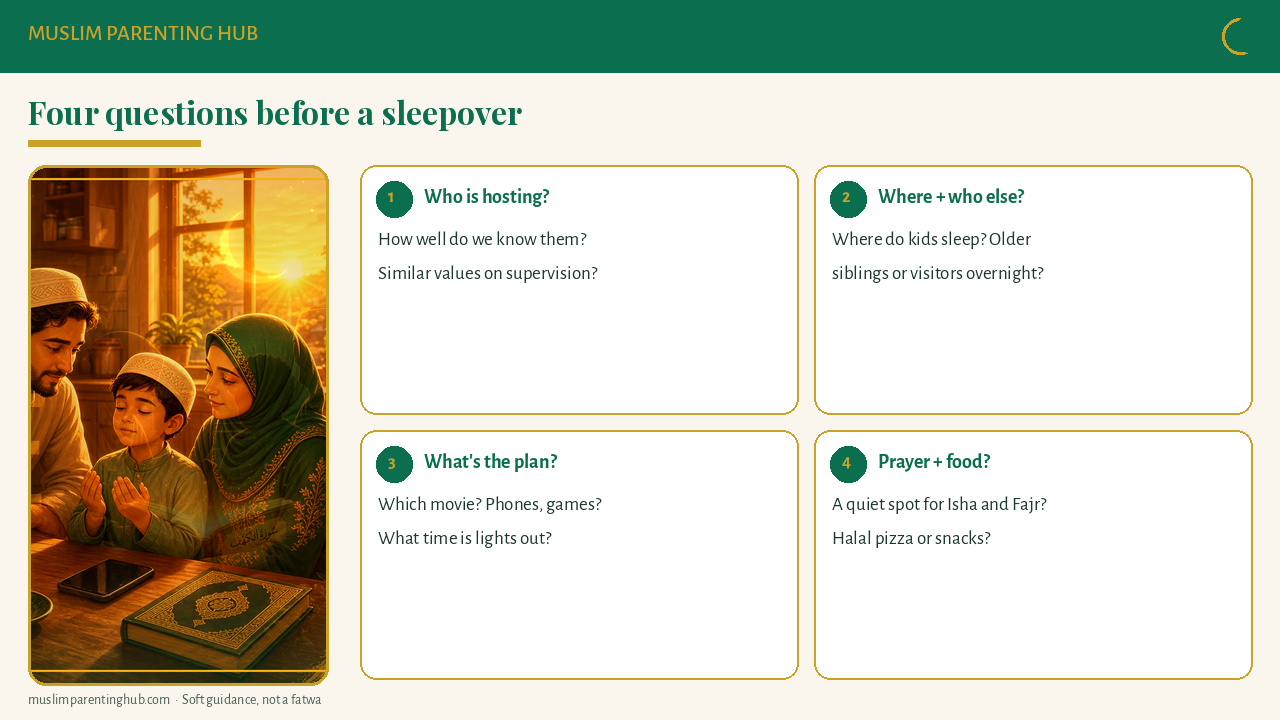
If your family is open to sleepovers in some cases, these four questions help you decide each invitation.
1. Who is hosting? How well do you know the parents? Have you spent time in their home? Do you share similar values about supervision and screens?
2. Where will kids sleep, and who else is in the house? Will kids sleep in a shared family room or in bedrooms? Are there older siblings, cousins, or other adults staying over?
3. What’s the plan? Movie? Which one? Phones and tablets allowed? Video games? What time is lights out?
4. Can my child pray and eat comfortably? Is there a quiet spot for Isha and Fajr? Will they serve pizza or snacks your child can eat? Would they mind if you send a halal option?
If any answer leaves you uneasy, it’s okay to say no or suggest an alternative. “Yes” should feel like peace, not pressure.
How to Ask Other Parents Without Sounding Judgmental
Most parents appreciate a friendly, direct message. Try something like:
“Thanks so much for inviting Maryam! She’s so excited. Can I ask a few quick questions so I can plan? Who’ll be there overnight, what are the kids planning to watch, and is there a quiet corner where she can pray for a few minutes before bed? Also, we keep halal, so I’m happy to send her own pizza.”
And if you want to ask about safety:
“One more thing I ask every family, just so I don’t forget: are there any guns in the house, and are they locked up?”
Asking every family the same questions keeps it from feeling personal.
Scripts for Your Child: Saying No Kindly
If you decide not to allow the sleepover, how you explain it matters more than the decision itself. Kids handle “no” much better when it’s calm, clear and paired with something positive.
For younger kids (5–8):
“In our family, we sleep at home. But you can go to the party and stay for the fun part! I’ll pick you up before bedtime so you can sleep in your own bed.”
For older kids (9–12):
“I know this feels really unfair, and I understand why you want to go. In our family we don’t do sleepovers because nighttime is family time and I want to make sure you’re safe and comfortable. You can go for the party, and let’s plan something special at our house too.”
If they say “Everyone else is going!”:
“That might be true. Different families have different rules, and that’s okay. Our rules come from loving you. Let’s find a way you can still have fun with your friends.”
Kids feeling left out is real pain. If your child keeps missing parties or feels like the odd one out, our guide on what to do when your Muslim child is left out of birthday parties has scripts that protect their heart.
Fun Alternatives Kids Actually Love
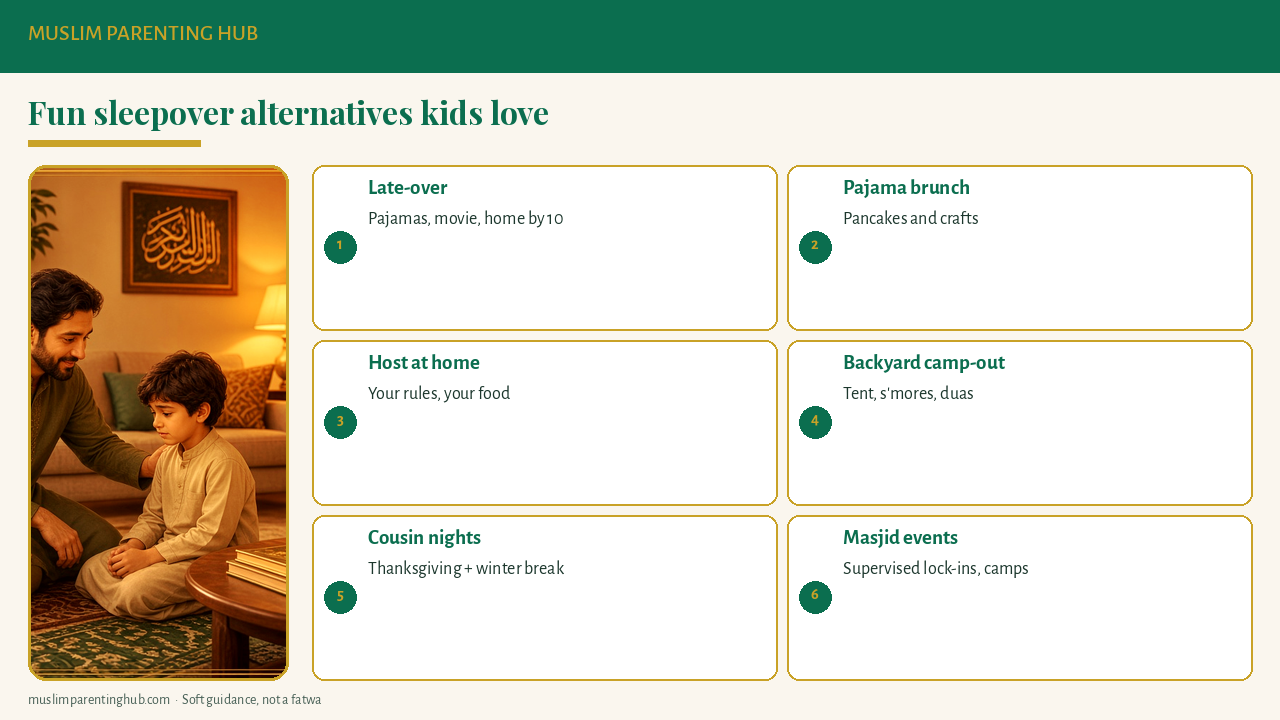
The goal isn’t to take fun away; it’s to keep the fun and drop the parts you’re uncomfortable with.
The late-over. Your child goes to the sleepover in pajamas, enjoys the movie, pizza and games, and you pick them up at 9:30 or 10 p.m. Many American families do this, so your child won’t stand out much.
Pajama brunch. Invite friends over in the morning in their pajamas for pancakes, cartoons and crafts. It has the same cozy feel with none of the nighttime concerns.
Host it at your house. If you’re comfortable, host friends for an evening at your home, with your rules, your food, and Maghrib together if your guests want to watch or join. Our guide to guest manners for Muslim kids hosting at home helps kids be gracious hosts.
Backyard or living room camp-out. Set up a tent or fort at home for your own kids and maybe a cousin or two. Flashlights, s’mores, a story, and bedtime duas.
Cousin nights. Many Muslim families feel comfortable with sleepovers at grandparents’ or close relatives’ homes. Thanksgiving weekend and winter break are perfect times.
Masjid or youth group events. Some masjids and Islamic schools host supervised overnight events, lock-ins or family camping trips.
If You Do Allow a Sleepover
Some families decide yes for certain friends or relatives. A few tips to make it smoother:
- Pack a small prayer kit: travel prayer mat, a qiblah app if your child has a device, and a reminder card for Isha and Fajr.
- Send halal snacks or a pizza your child can eat.
- Agree on a phone check-in and a code word your child can text if they want to come home, no questions asked.
- Review bedtime duas together before they go. Our bedtime duas for kids with a 7-night plan has short, portable ones.
- Plan an easy next day. Expect a tired kid.
If your child struggles with nighttime worries, scary dreams, or bedwetting, a night away can be stressful. Our guides on scary dreams and nighttime fear and bedwetting in Muslim kids have gentle ways to prepare.
Keep Friendships Strong Either Way
Whatever you decide about sleepovers, your child still needs good friends. Saying no to one thing works best when you’re saying yes to others: daytime playdates, park meetups, inviting friends to Eid, or carpooling to the same activities.
Our guide to helping your Muslim child make friends at school has ideas for building friendships around your family’s values. And if you’re deciding whether to invite the whole class to your own child’s party, see birthday invitations without leaving anyone out.
Age-by-Age Guide
Ages 4–7. Most kids this age aren’t ready for a night away anyway. Late-overs, family-only stays and daytime parties work well.
Ages 8–10. Sleepover invites peak. Keep your answer consistent and offer a fun alternative every time.
Ages 11–13. Explain your reasons more fully. Ask what they think. Older kids accept limits better when they feel heard, even if the answer stays the same.
Teens. Overnight school trips, sports tournaments, and youth group retreats come up. Talk through each one, focusing on supervision, values and trust.
FAQ
Are sleepovers allowed in Islam?
There’s no verse or hadith about sleepovers specifically. Many scholars and Muslim parents are cautious because of Islamic principles about protecting children, nighttime privacy and good company, while others allow them case by case with trusted families. Ask a scholar you trust if you want a firm ruling.
What is a late-over?
A late-over is when your child joins a sleepover party in pajamas for the movie, food and games, and you pick them up before bedtime, usually around 9:30 or 10 p.m. It’s a popular compromise in many American families.
How do I tell my child no to a sleepover without making them feel left out?
Explain calmly that your family sleeps at home, acknowledge their feelings, and always offer a fun alternative, such as staying for the party and leaving before bedtime, or hosting friends at your house.
What should I ask before letting my child go to a sleepover?
Ask who’s hosting, who else will be in the house overnight, what the kids will watch and do, where they’ll sleep, whether there are firearms and how they’re stored, and whether your child can pray and eat halal food comfortably.
Are sleepovers with cousins okay?
Many Muslim families feel comfortable with sleepovers at grandparents’ or close relatives’ homes because they know the setting and values well. Use the same questions about supervision, sleeping spaces and screens.
What can my child do instead of a sleepover?
Try a late-over, a pajama brunch, hosting friends at your home for an evening, a backyard camp-out, cousin nights, or supervised overnight events at your masjid.
Related guides
- When your Muslim child is left out of birthday parties
- Helping your Muslim child make friends at school
- Should Muslim kids invite the whole class?
- Guest manners for Muslim kids
Soft guidance, not a fatwa. For detailed questions, please ask a trusted local scholar or your masjid’s imam.
Related articles

Helping Your Muslim Child Make Friends at School: Scripts, Playdates and Good Companions
Is your Muslim child lonely at school? Friendship scripts, halal playdate ideas, what to say when "no one plays with me," and the Sunnah of good friends.
Read guide →
When Your Muslim Child Is Left Out of Birthday Parties: Scripts That Protect Their Heart
Soft scripts when Muslim kids are left out of birthday parties—validate feelings, protect identity without shaming others, and build warm family alternatives.
Read guide →
Should Muslim Kids Invite the Whole Class? Birthday Invitations Without Leaving Anyone Out
Whole class or a few friends? Birthday invitations for Muslim kids: US school rules, Islamic manners, halal-friendly party tips, and not leaving kids out.
Read guide →
Guest Manners for Muslim Kids: Hosting at Home with Islamic Adab
Teach Muslim kids guest manners for hosting at home—shoes, greetings, serving, privacy, and soft scripts. Islamic adab parents can practice tonight.
Read guide →