

When Islamic Potty Training Stalls: Soft Patience Scripts & Taharah Without Pressure
You followed the cute chart. You bought the step stool. You practiced the entering dua. Then… accidents returned, the toddler refused the potty for a week, or preschool started and everything slid backward.
A stall does not mean you failed Islamic potty training. It usually means a nervous system, a schedule change, or a power struggle needs softer handling—while you gently keep the taharah habits that matter long-term.
This guide supports families who already started with our Islamic potty training plan. Soft parenting guidance, not a ruling on purity.
What a “Stall” Usually Looks Like
- Accidents after weeks of success
- Sudden fear of the flush, public restrooms, or the potty seat
- Holding pee/poop until meltdown
- Refusal to use water for cleaning after previously cooperating
- Nighttime wetness returning while daytime stays mostly dry
- Regression after a new sibling, travel, illness, or starting daycare/preschool
None of these erase the duas and manners you already planted. Skills go underground and resurface when pressure drops.
First: Rule Out Body and Schedule Issues
Before you frame it as “attitude,” check basics:
- Constipation or pain with poop (very common; ask your pediatrician)
- UTI symptoms
- New medications or diet changes
- Too few bathroom offers during long preschool stretches
- Overfull days with rare calm toilet visits at home
If something medical is plausible, pause intensive training drills and get care. Faith habits wait kindly for healing bodies.
The Soft Goal During a Stall
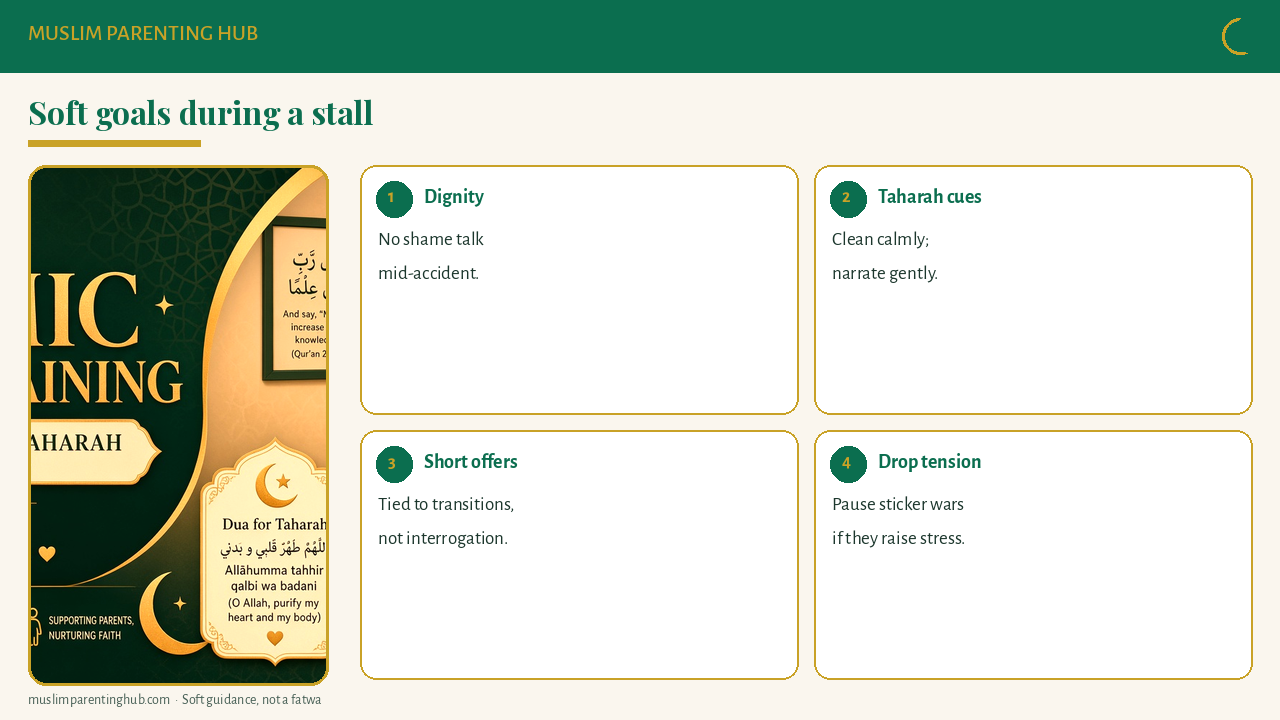
Keep three anchors—even on hard days:
- Dignity. No shaming language, no “big kids don’t…” lectures mid-accident.
- Simple taharah cues. Wipe/wash what you can; narrate calmly: “We clean so salah and play feel fresh.”
- Short, predictable offers. “Potty check after snack” beats constant interrogation.
Drop the sticker wars if they raise tension. You can rebuild structure later.
Patience Scripts You Can Copy
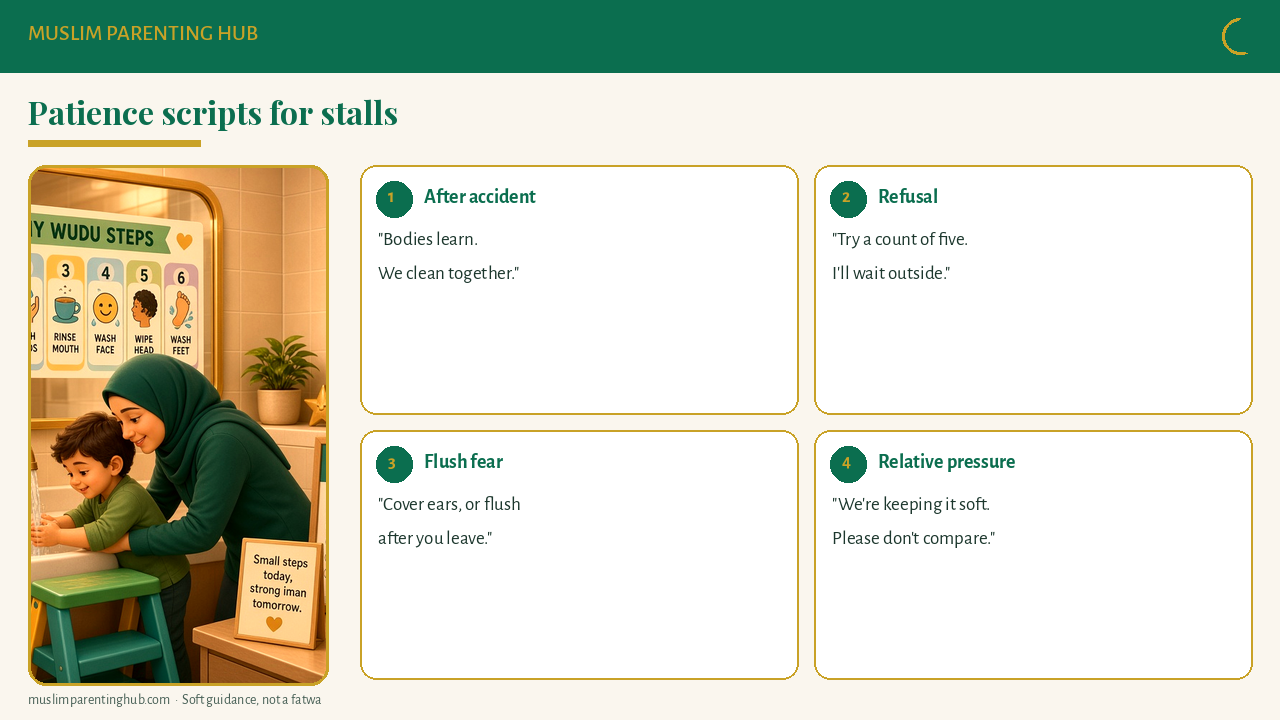
After an accident:
“Accidents happen while bodies learn. Let’s clean up together. Next time we’ll try sooner.”
When they refuse the potty:
“You don’t have to sit long. Just try for a slow count of five. I’ll wait outside the door.”
When they fear the loud flush:
“You can cover your ears, or we flush after you leave the room. You’re safe.”
When relatives pressure you:
“We’re keeping manners soft right now. Success will come back. Please don’t compare her to cousins.”
When you feel your own frustration rising:
(Said to yourself first) “This is a season, not a verdict.” Then to your child: “I need one quiet minute, then I’ll help.”
Keep Taharah Habits Without Turning Them Into Battles
Islamic toilet manners are a lifelong skill, not a toddler trophy. During a stall:
- Keep the left-hand / cleaning conversation gentle and age-right.
- Offer a small squeeze bottle or cup of water when they accept help; skip forcing if they are mid-meltdown—clean thoroughly yourself and try again tomorrow.
- Keep entering/leaving bathroom phrases light: you say them; they echo when ready.
- Practice the same calm flow you will later need at school, as in Islamic bathroom manners at school.
If water cleanup is the specific battle, temporarily prioritize getting pee/poop into the toilet, then reintroduce water as a “helper rinse” game once trust returns.
Regression After Preschool or Daycare Starts
US public preschool bathrooms are busy, noisy, and sometimes short on privacy. Kids who were confident at home may hold it all morning, then have accidents in the car.
Try:
- A bathroom visit at home right before leaving
- A note to teachers: extra reminder after snack/recess if appropriate
- Practicing stall privacy and flushing fears on calm weekends
- An after-school reset that includes a no-rush bathroom stop before homework—pair with your evening rhythm if you use a Maghrib routine
Avoid punishing school accidents. Investigate whether they felt rushed, teased, or unsure how to ask.
Night Wetting vs Daytime Stalls
Night dryness often lags months behind daytime control. That is developmental for many kids, not spiritual failure. Use waterproof sheets, calm changes, and skip shame. Keep daytime coaching separate from nighttime logistics so bedtime stays peaceful—especially if you are also navigating Muslim toddler bedtime struggles.
A 5-Day Soft Reset (Not a Restart From Zero)

Day 1 — Lower the temperature. Remove charts that cause tears. Apologize if you scolded. Read a short silly potty book together.
Day 2 — Body check. Offer water regularly; note constipation signs; schedule pediatric advice if needed.
Day 3 — Predictable offers only. Four calm invitations tied to transitions (wake, after breakfast, after nap, before bath). No hovering.
Day 4 — One skill spotlight. Choose either sitting willingly or simple cleaning help—not both. Celebrate micro-wins.
Day 5 — Reattach a dua or phrase lightly. You recite the entering phrase; invite an echo. No quiz.
Then return to your longer potty guide’s flow only as much as peace allows.
When Power Struggles Are the Real Stall
Some stalls are about control: the potty became the one place the child can say no. Your move is to offer tiny choices, not bigger lectures.
- “Blue seat or regular seat?”
- “I stay in the hall or by the sink?”
- “Count to five or sing one line?”
Choices inside the boundary (“we will try after lunch”) reduce the need to refuse everything.
Connecting Cleanliness to Wudu—Gently
Older toddlers sometimes enjoy watching wudu. A soft link—“clean hands help us get ready to talk to Allah”—can motivate without pressure. Keep it optional and playful; see teaching wudu to preschoolers when they show interest, not when you need leverage mid-accident.
What Not to Do
- Do not withhold love, stories, or Maghrib cuddles after accidents
- Do not announce accidents to guests for laughs
- Do not force long sits that create fear
- Do not compare siblings in front of anyone
- Do not treat every stall as laziness
Travel, Holidays, and Weekend Chaos
Road trips, Eid visits, and Thanksgiving-week travel (or any long family drive across state lines) regularly undo potty progress. New bathrooms smell different. Flushing sounds differ. Relatives hover.
Before you leave:
- Pack a small familiar stool or seat insert if it travels well
- Bring the same squeeze bottle or wipes your child trusts
- Preview: “New bathrooms can feel funny. I’ll stay close.”
During travel, prioritize peace over dry-streak pride. Resume your home rhythm the day after you return—not the hour you walk in the door.
Poop-Specific Stalls
Pee may stay on track while poop becomes a battlefield. Kids often fear pain or the sensation of letting go. Soft approaches:
- More fiber and water after you check with a clinician if needed
- Books or quiet songs only during poop tries (not screens as bribes every time)
- Permission to poop in a pull-up while sitting on the toilet as a bridge for fearful kids—some pediatricians endorse this bridge; ask yours
- Never punish withholding
Narrate body trust: “Your body knows how. We give it unhurried time.”
Sibling Eyes and Bathroom Privacy
Older siblings who tease about accidents can prolong a stall more than the accidents themselves. Private cleanup, private coaching, and a clear family rule—“We don’t joke about bathroom learning”—protects the younger child. Teach siblings that covering someone’s fault is also rahma.
Measuring Progress Differently
During a stall, track calm moments instead of only dry days:
- Willing to walk to the bathroom when invited
- Allowed help with cleaning without screaming
- Used a public restroom once with support
- Recovered emotionally within five minutes after an accident
Those are real Islamic manners wins, even if the chart looks empty.
A Closing Pep Talk for Parents
You are allowed to be tired of laundry. You are still a good Muslim parent when the week is wet. The Prophet’s ﷺ mercy toward children is your north star: ease, not harshness, grows lasting habits. Keep the bathroom a place of help, and the stall will pass.
Friday Night Softness
If stalls collide with a busy Jumu’ah or family Friday night, do not stack intensive potty drills onto an already full evening. Keep offers gentle, celebrate any cooperation, and save skill spotlight work for a quieter Saturday morning. Rhythm beats intensity.
If you remember only one line from this guide, let it be this: during a stall, protect dignity first, keep cleaning calm, and trust that skills return when fear leaves the bathroom.
Masjid Restrooms During a Stall
Weekend masjid trips add unfamiliar bathrooms. Preview the space, bring your familiar wipe/water kit, and skip performance pressure in front of relatives. A successful calm visit matters more than practicing every dua phrase that day.
FAQ
How long do potty training stalls usually last?
Many last days to a few weeks after a change (school start, travel, illness). Longer stalls with pain, constipation, or extreme fear deserve a pediatric check-in.
Should I put diapers back on?
Some families use pull-ups for outings during a rough patch to lower stress, while keeping underwear at home for practice. Choose the option that preserves dignity and your capacity—not ideology.
My child used to say the bathroom dua and now refuses. Is that a problem?
No. You can carry the phrase for them. Echo returns when the bathroom feels safe again.
What if daycare staff push a different method?
Share your soft priorities (no shame, reminders, privacy). Collaborate on practical reminders. Major method fights in front of the child usually backfire.
Does Islam require toddlers to master istinja perfectly?
Children grow into taharah gradually. Parents help with cleaning until kids can manage. Focus on calm teaching over perfection timelines; ask scholars you trust for detailed rulings.
How do I stay patient when I’m exhausted?
Tag-team with another adult when possible, simplify evenings, and remember stalls are common. Your tone teaches more than any chart.
Closing: Patience Is Part of the Training
Islamic potty training is not only about dry pants. It is about dignity, cleanliness, and trust. When progress stalls, soften the drills, protect the relationship, keep a few taharah cues alive, and wait for the child’s body and heart to catch up.
You have not lost the work you already did. You are gardening in a cloudy week—still watering, just not yanking the plant.
Related articles

Islamic Potty Training: A 7-Day Plan, Toilet Duas & Manners for Toddlers
Start Islamic potty training calmly: readiness signs, a 7-day plan, toilet duas kids can learn, and gentle istinja tips. No shame. Begin tonight.
Read guide →
Islamic Bathroom Manners at School: A Kid-Friendly Guide to Public Restrooms
Help your child keep Islamic toilet manners at school and in public restrooms: duas, privacy, istinja without a lota, and calm scripts for teachers.
Read guide →
When Your Muslim Toddler Fights Bedtime: Calm Sunnah-Based Fixes
Calm Sunnah-based fixes when your Muslim toddler fights bedtime—stalling, fear, separation, dua, boundaries, and age tips. Soft routines that actually stick.
Read guide →
How to Teach Wudu to a Preschooler (Playful Steps Parents Can Use Tonight)
Teach wudu to preschoolers with playful steps—sink poster, doll practice, sticker chart, age tips, and tonight scripts. Gentle Muslim parenting for ages 3–5. Soft, practical.
Read guide →