
Potty Training Muslim Girls: Front-to-Back Wiping, Istinja and Gentle Taharah Tips
Your daughter has been dry at preschool for three days straight. You’re thrilled. Then you peek into the bathroom and realize she’s wiping back to front, standing up halfway through, and splashing water everywhere except where it needs to go.
Potty training girls has its own small details, and for Muslim families, istinja (cleaning with water after using the toilet) adds one more step to teach. The good news: girls often pick up the routine quickly once it’s simple, consistent and shame-free.
This guide covers how girls should sit, front-to-back wiping and washing, an easy istinja routine with a peri bottle, modesty and privacy, public restrooms, and what to do when things go sideways.
Start With the Basics: Readiness and Mindset
Most girls show signs of readiness somewhere between about 18 months and 3 years: staying dry for a couple of hours, telling you when they’re wet, hiding to go in a diaper, or showing interest in the toilet. Many girls finish a little earlier than boys, but every child is different.
If you haven’t started yet, our calm 7-day Islamic potty training plan walks you through the whole process from diapers to the bathroom duas. This article focuses on the details that are specific to girls.
Before anything else, remember one key point: toddlers are not accountable for perfect taharah. Your job is to build the habit gently so it’s natural by the time salah becomes an obligation. Small mistakes now are just learning.
How Girls Should Sit on the Toilet
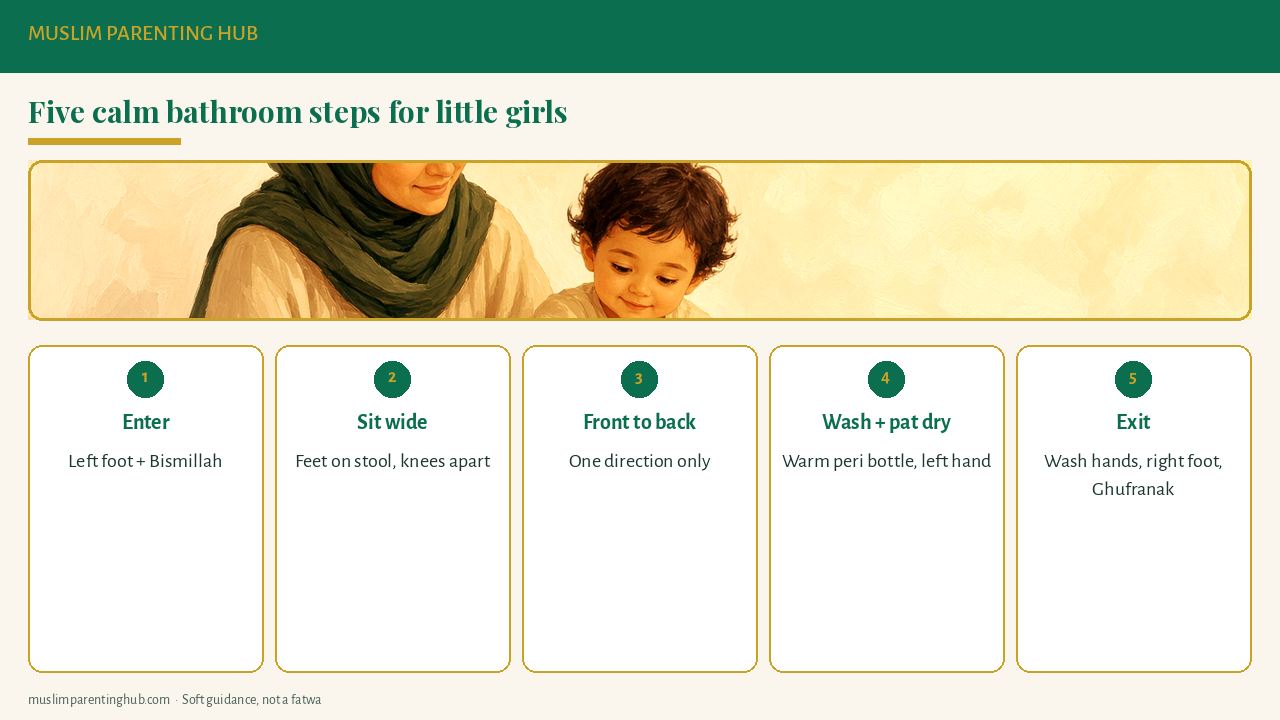
How a girl sits affects both comfort and cleanliness.
- Feet flat on a step stool. Dangling feet make it hard to relax. A sturdy stool lets her push gently and sit steady.
- Knees apart, leaning slightly forward. Many pediatricians recommend this position because it helps urine flow out fully instead of pooling, which can lower the chance of irritation and urinary tract infections (UTIs).
- Use a seat reducer on adult toilets. A small ring keeps her from feeling like she’ll fall in, which is a surprisingly common fear.
- No rushing. Teach her to wait a few extra seconds after she thinks she’s done. “Count to five, then wipe.”
A simple line to say: “Feet on the stool, knees open like a book, lean forward a little, and take your time.”
Front to Back: The Most Important Habit
This is the single biggest girl-specific rule. Always wipe and wash from front to back, away from the urethra, so bacteria from the bottom don’t move forward. Wiping back to front is one of the most common causes of UTIs in little girls.
How to teach it:
- Show, don’t just tell. Use a doll or simply demonstrate the hand motion over clothes: “From the front, toward the back.”
- One direction only. No back-and-forth scrubbing. Each wipe goes front to back, then into the toilet.
- Separate wipes for pee and poop. After a bowel movement, she wipes the bottom area separately, still moving toward the back.
- Use a phrase she can remember. “Front to back, keep it clean.” Some families make up a little rhyme.
It takes many repetitions, so expect to guide her hand for weeks. That’s normal.
Istinja for Girls: A Simple Water Routine
Istinja means cleaning the private parts with water after using the toilet. The Prophet ﷺ used water for this (Sahih al-Bukhari 150), and it’s part of the taharah children will need for wudu and salah.
For little girls, the easiest setup is a peri bottle (a small squeeze bottle) or a lota (a small water jug). Here’s a routine that works:
- Finish and wait a few seconds.
- Use the left hand for cleaning, as the Prophet ﷺ taught (Sahih Muslim 262).
- Pour or squeeze water from front to back while leaning slightly forward.
- Pat dry with toilet paper or a small cloth, still front to back.
- Wash hands with soap, then step out.
Tips that make it easier:
- Warm water helps. Cold water can make toddlers jump and refuse. Fill the bottle from the warm tap before she sits.
- Let her squeeze the bottle. Ownership helps independence. You can guide her hand at first.
- Don’t worry about drips. If a few drops get on her underwear, change it or rinse the spot. That’s all.
- Keep a towel nearby. Little girls often hate feeling damp, and a quick pat dry prevents complaints.
If water cleanup has become a battle, it’s fine to take a short break and focus on just getting pee and poop into the toilet. Our guide on what to do when Islamic potty training stalls explains how to reintroduce water gently once your daughter is calm again.
Bathroom Duas and Manners (Kid-Sized)
Keep the Islamic manners simple and positive:
- Enter with the left foot and say the dua: Allahumma innee a’oodhu bika minal-khubuthi wal-khabaa’ith (“O Allah, I seek refuge in You from all evil and evil-doers”) (Sahih al-Bukhari 142). For toddlers, “Bismillah” is a great start.
- Don’t face or turn your back to the qiblah when using the toilet, if your bathroom layout allows (Sahih al-Bukhari 144).
- Exit with the right foot and say Ghufraanak (“I ask Your forgiveness”) (Sunan Abi Dawud 30).
These are habits to grow into, not rules to enforce harshly. If your little one forgets the dua, just say it together next time.
Modesty, Privacy and Body Safety
Potty training is a natural time to start teaching modesty and body safety in age-appropriate ways.
- Close the door. Even toddlers can learn: “We close the door for privacy.” Allah loves modesty, and the Prophet ﷺ said “modesty is part of faith” (Sahih al-Bukhari 24).
- Use correct, calm words. Pick simple names for private parts and use them without embarrassment. Kids who have clear words can tell you if something hurts or feels wrong.
- Explain who can help. “Only Mommy, Baba, or your teacher can help you in the bathroom, and only when you need help.” This is a simple body-safety rule pediatricians recommend.
- Sibling privacy matters. Older brothers and sisters should knock and wait. Our guide on teaching kids to knock and ask permission shows how to build that habit at home.
Clothes That Make Potty Training Easier
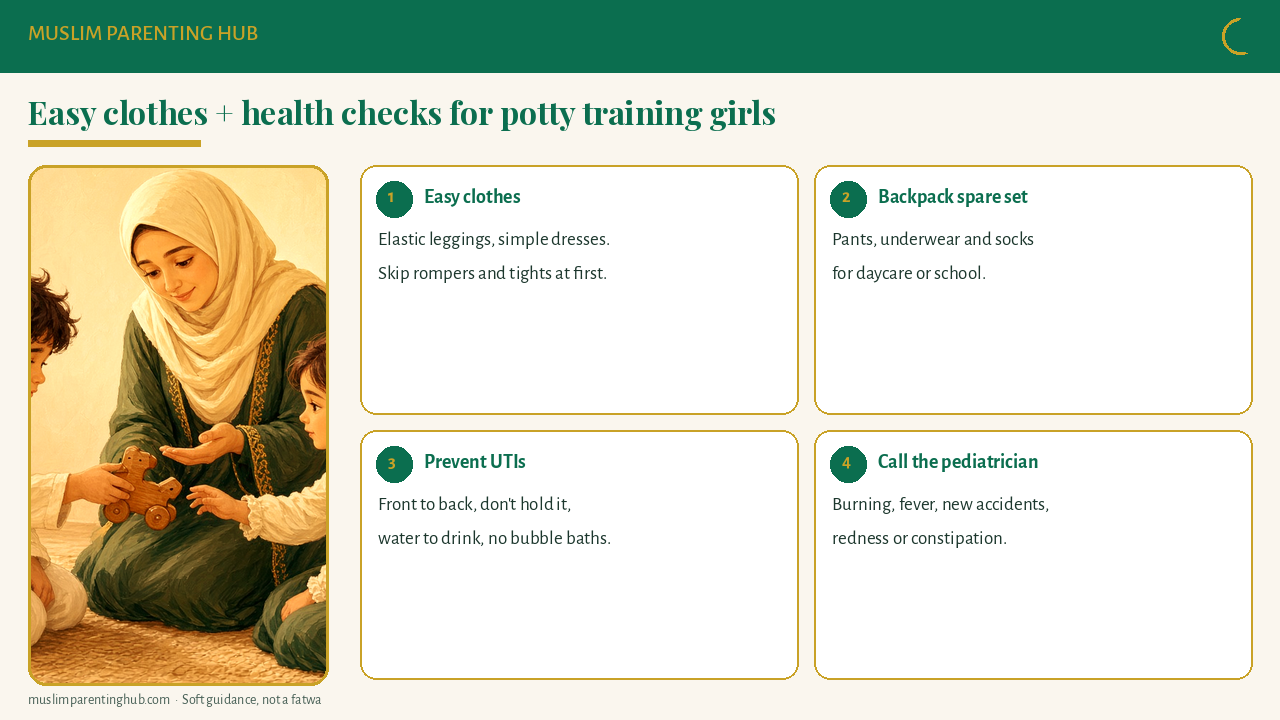
What your daughter wears can make or break a rushed bathroom trip.
- Elastic-waist leggings or pants she can pull down herself.
- Simple dresses over leggings, a favorite for many Muslim families who prefer modest layers.
- Avoid jumpsuits, rompers and tights during the first weeks; they’re hard for small hands.
- Pack a spare set in her backpack for daycare or school, including socks.
- Keep it modest but practical. As she grows, longer tops and dresses fit both modesty and easy bathroom trips.
Public Restrooms: Stores, the Masjid and School
Public bathrooms are where many girls get nervous. A little planning helps:
- Carry a travel peri bottle in your diaper bag or purse. Fill it at a sink before going into the stall.
- Use the family restroom when available. Many big stores, airports and sports complexes have one.
- Bring seat covers or wipe the seat. And a travel seat reducer if she’s very small.
- Warn her about auto-flush toilets. Covering the sensor with a sticky note or your hand prevents the loud surprise that can make kids refuse.
- Masjid bathrooms are great practice. Water is usually available, and the setting is familiar.
For older girls heading into kindergarten and elementary school, our guide on Islamic bathroom manners at school and in public restrooms covers what to do when there’s no water in the stall and how to talk to teachers.
When Accidents Happen
Accidents are part of potty training, even weeks after it seems “done.” Stay calm:
- Say little, stay kind. “Oops, your body wasn’t ready. Let’s get clean.” No sighs, no shame.
- Clean the spot with water. Rinse the clothes and the floor. That’s all taharah requires.
- Change and move on. Don’t lecture.
If accidents start happening at preschool or school, our guide to handling bathroom accidents at school with calm Islamic responses has scripts for your child and for teachers. If nighttime wetting is the issue, see our gentle guide to bedwetting in Muslim kids.
Health Signs to Watch For
Most girls potty train without any medical issues, but call your pediatrician if you notice:
- Burning or pain when she pees
- Suddenly needing to go much more often, or having new accidents after being dry for a while
- Redness, itching or irritation that doesn’t clear up
- Fever with any urinary symptoms
- Constipation, hard poop, or holding poop for days
Little girls are more prone to UTIs than boys because of their anatomy. Front-to-back wiping, not “holding it” too long, plenty of water, and avoiding bubble baths can all help.
What If She’s Watching Her Brother?
If you’re training a boy and a girl at the same time, or a younger daughter is watching her older brother, keep it simple: “In our house, everyone sits.” Sitting is the Sunnah way for most toileting, and it keeps things clean for everyone. Our guide to potty training Muslim boys explains the sitting-versus-standing question in more detail.
FAQ
How do I teach my daughter to wipe front to back?
Demonstrate the motion with a doll or over clothes, use a short phrase like “front to back, keep it clean,” and guide her hand for the first few weeks. Each wipe goes in one direction only, from front to back, then into the toilet.
How do Muslim girls do istinja?
After using the toilet, she leans slightly forward and uses her left hand to pour or squeeze water from front to back, then pats dry and washes her hands. A small peri bottle with warm water makes this easy for toddlers.
What is the best way for a girl to sit on the potty?
Feet flat on a step stool, knees apart, and leaning slightly forward. This helps her relax and empty her bladder fully, which can reduce irritation and urinary tract infections.
Can wiping back to front cause a UTI?
Yes. Wiping back to front can move bacteria toward the urethra, and it’s one of the most common causes of UTIs in young girls. Front-to-back wiping and washing helps prevent this.
How do I handle public restrooms with a potty-training girl?
Carry a travel peri bottle, use family restrooms when available, bring seat covers or a travel seat reducer, and cover auto-flush sensors to prevent scary surprises.
Is my daughter sinful if she doesn’t do istinja properly?
No. Young children are not accountable for perfect taharah. Teach the routine gently and consistently, rinse any spots with water, and trust that the habit will be solid by the time she starts praying regularly.
Related guides
- Islamic potty training: a calm 7-day plan
- When Islamic potty training stalls
- Potty training Muslim boys: sitting vs standing
- Islamic bathroom manners at school
Soft guidance, not a fatwa or medical advice. For health concerns, talk to your pediatrician. For detailed religious questions, please ask a trusted local scholar or your masjid’s imam.
Related articles
When Islamic Potty Training Stalls: Soft Patience Scripts & Taharah Without Pressure
Islamic potty training stalled? Soft scripts, taharah habits without pressure, regressing toddlers, and calm US-family tips that keep dignity intact.
Read guide →
Potty Training Muslim Boys: Sitting vs Standing, Splash Control and Taharah Tips
Potty training a Muslim boy? Why sitting first works, what the Sunnah says about standing, splash control, gentle istinja steps, public restrooms and calm scripts.
Read guide →
Islamic Potty Training: A Calm 7-Day Plan, Bathroom Duas & Toilet Manners for Toddlers
Potty training a Muslim toddler? Get a calm 7-day plan, easy bathroom duas with meaning, simple istinja steps, and fridge checklists—no shame, no battles.
Read guide →
Islamic Bathroom Manners at School: A Kid-Friendly Guide to Public Restrooms
Help your child keep Islamic toilet manners at school and in public restrooms: duas, privacy, istinja without a lota, and calm scripts for teachers.
Read guide →