How to Teach Kids Ghusl: Simple Steps, the Friday Bath Sunnah and When It Becomes Required
Most Muslim parents teach wudu early. Ghusl, the full Islamic bath, often gets left until a rushed, awkward talk at age eleven or twelve. That is a missed chance, because young children already take baths every week. With a little planning, bath time becomes the place where ghusl feels normal, easy and even a little special long before it is ever required.
This guide is for US Muslim families with kids roughly 4 to 12. It covers what ghusl is in kid-friendly words, the simple steps, how to turn the Friday bath into a Sunnah habit, when ghusl actually becomes required, and a four-week plan that fits normal bath nights. It is gentle home guidance, not a fatwa. Families follow different schools, so if your teacher or imam teaches a particular order or detail, follow that.
If you’re still in the early taharah years, our main guide to Islamic potty training without shame is where the cleanliness journey starts. Ghusl is the next step on the same path.
What Is Ghusl? (Words Kids Understand)
“Wudu is when we wash some parts of our body before salah. Ghusl is when we wash all of our body in a special way, so we are completely clean for Allah. It’s like wudu, but for the whole body.”
Three simple facts are enough for young kids:
- Allah loves cleanliness. “Indeed, Allah loves those who turn to Him often and loves those who keep themselves clean” (Quran 2:222).
- Ghusl is a full-body wash with a Bismillah and a plan. Same water, same soap, just done in a Sunnah order.
- Muslims do a special ghusl on Friday. The Prophet ﷺ encouraged washing on Friday before the Jumu’ah prayer (Bukhari, Muslim).
You don’t need to explain the adult reasons for ghusl to a five-year-old. Teach the how now, and the when when they are ready for it.
The Simple Ghusl Steps for Kids
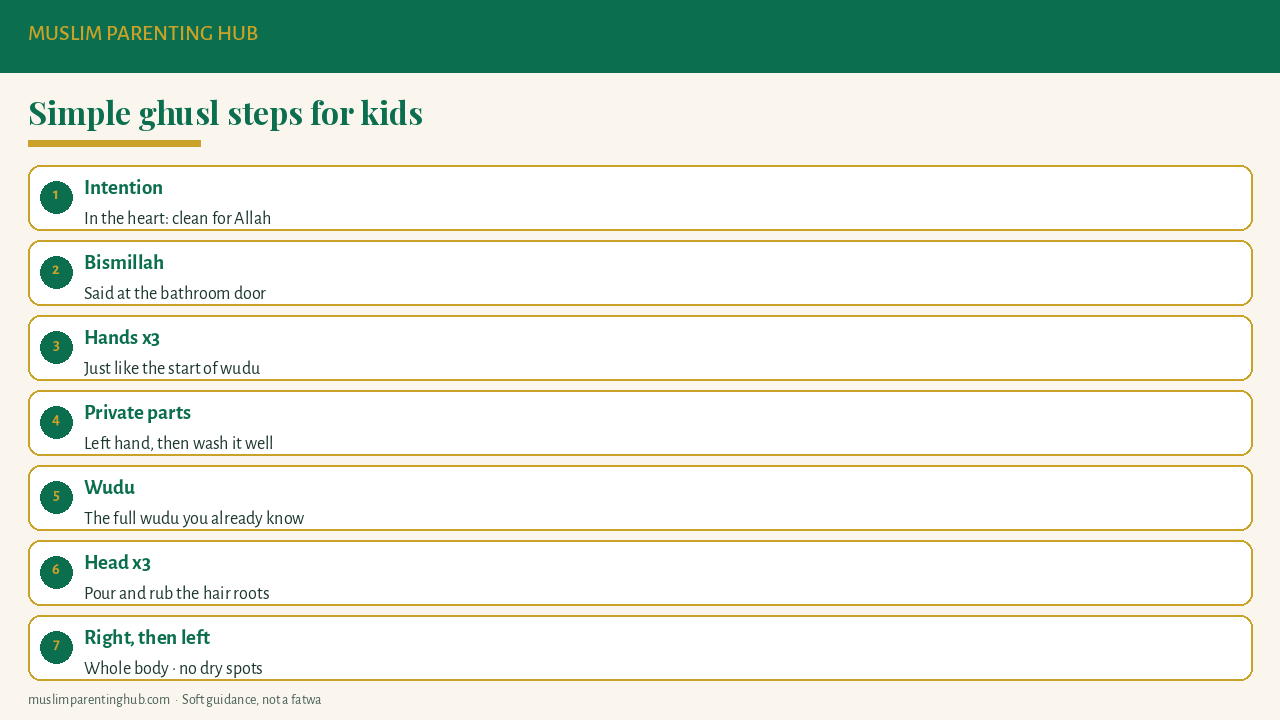
Here is a kid-friendly version of the Sunnah way of ghusl, based on how the Prophet ﷺ bathed as described by Aisha and Maymunah (Bukhari, Muslim). Keep the words short and repeat them every bath.
- Intention. In the heart: “I’m doing ghusl to be clean for Allah.” No need to say it out loud.
- Bismillah. Say it before getting in the water (ideally just outside the bathroom door, as with other bathroom adab).
- Wash both hands three times. Just like the start of wudu.
- Wash the private parts with the left hand. Then wash the left hand well with soap.
- Make wudu. The full wudu your child already knows, including rinsing the mouth and nose.
- Pour water over the head three times. Rub the roots of the hair so water reaches the scalp.
- Wash the whole body, right side first, then left. Make sure water reaches everywhere: behind the ears, under the arms, belly button, between the toes.
The two things that make a ghusl valid in all the main schools are simple: the intention, and water reaching the whole body (with mouth and nose rinsed in some schools). Everything else is the beautiful Sunnah way. For a young child, that means “no dry spots” is the main rule to teach.
If your child is still learning wudu, start with our playful guide to teaching wudu to a preschooler. Ghusl is much easier once wudu is automatic.
Make the Friday Bath a Sunnah Habit
The easiest way to teach ghusl is to attach it to something that already happens. For most families, that is the Friday bath.
The Prophet ﷺ said: “Whoever bathes on Friday, purifies himself as much as he can, oils his hair, puts on perfume, then goes out [to Jumu’ah]… his sins between that Friday and the next will be forgiven” (Bukhari). That is a lovely, motivating picture for kids.
How families do it:
- Thursday night bath for little ones. Many families with young kids do the “Friday bath” on Thursday night, so Friday morning stays calm before school. (For adults the Sunnah ghusl is after Fajr on Friday; for practice with young kids, the night before is a gentle start.)
- Friday clothes laid out. Clean clothes, a little perfume or scented lotion for boys going to the masjid, hair oil or a nice comb.
- A Friday playlist. Play Surah Al-Kahf while they bathe or get dressed.
- Say it out loud. “This is our Friday ghusl, like the Prophet ﷺ taught.”
If your family already has a Friday night routine, add the ghusl as step one. Kids who do a Sunnah bath every week will know the steps by heart long before puberty. For the masjid side of Friday, see our plan for taking kids to Jumu’ah.
When Does Ghusl Become Required?
Before puberty, children are not obligated to do ghusl, so every ghusl they do is practice and Sunnah. That is exactly why it is the perfect time to learn.
Ghusl becomes required (fard) at certain times once a child reaches puberty, such as after wet dreams for boys, and after a period ends for girls. Converts to Islam also do ghusl. Explaining this is part of the puberty talk, usually around ages 9–12. Keep that talk:
- Private and one-on-one, ideally with the same-gender parent.
- Matter-of-fact. “When your body starts growing up, there are times you’ll need ghusl before you pray. It’s normal, and you already know how.”
- Shame-free. These are normal parts of growing up that Allah created. Nothing to be embarrassed about.
Important: Urine does not require ghusl. A child who wets the bed needs to wash the affected skin and change, not do a full ghusl. Our guide on bedwetting and taharah without shame covers this.
Ghusl in an American Bathroom
Most US homes have a shower-tub combo, which works well. A few practical tips:
- Use a cup or handheld shower head for the three pours over the head. Kids love being in charge of the cup.
- Keep a small bottle by the tub for washing private parts, the same way you do for istinja.
- Say Bismillah before entering. Many scholars recommend not saying Allah’s name inside the bathroom, so make it a doorway habit.
- Save water. The Prophet ﷺ used about one sa’ of water for ghusl (roughly 3 liters, Bukhari). Kids can learn that you don’t need a full tub to be clean. Turn the water off while scrubbing.
- Long hair: For girls with long hair, the main thing is that water reaches the scalp. Loose braids are fine to keep for regular practice.
And finish with the Sunnah of handwashing the right way whenever they’ve used the toilet before bath time.
A Four-Week Bath-Night Practice Plan
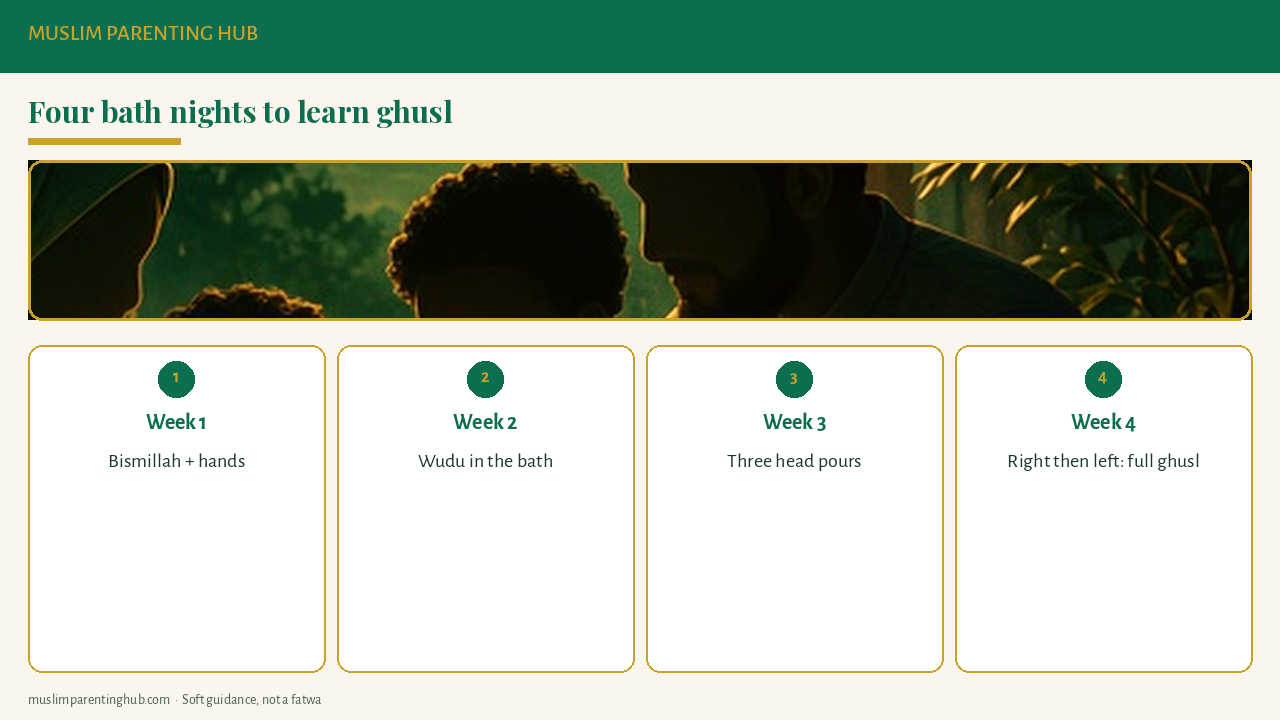
Use one bath night a week (or Friday baths) to build the steps slowly. No quizzes, no pressure.
- Week 1 — Bismillah and hands. Say Bismillah at the door, wash hands three times in the tub. That’s it.
- Week 2 — Wudu in the bath. Add a full wudu before the rest of the bath. Praise every step.
- Week 3 — Three head pours. Your child pours water over their head three times with a cup, rubbing the hair roots.
- Week 4 — Right then left. Wash the right side of the body first, then the left, checking for “dry spots.” Call it their first full practice ghusl and celebrate with a Friday treat.
After week 4, simply say “Ghusl time!” on Fridays and let them lead. Step in only for safety or missed spots.
Common Mistakes (and Gentle Fixes)
- Making it scary. “If you miss a spot your prayer won’t count” is not helpful for a child who isn’t yet required to pray. Say, “Let’s check for dry spots together.”
- Teaching only at puberty. Waiting makes it awkward. Teach the steps early as a Friday Sunnah, and the puberty talk becomes a short add-on.
- Over-explaining with young kids. A five-year-old needs “wash all of you, the Sunnah way.” Save the details for later.
- Turning the bath into a lecture. Keep it playful: count the pours, sing the steps, let them choose the Friday soap.
FAQ
What are the steps of ghusl for kids?
Make the intention, say Bismillah, wash hands three times, wash private parts with the left hand, make wudu, pour water over the head three times rubbing the scalp, then wash the whole body right side first, then left, with no dry spots.
At what age should I teach my child ghusl?
You can start the Friday Sunnah bath steps around ages 4–6, when children already know some wudu. By 8–9, most kids can do a full practice ghusl themselves. Add the puberty details privately around 9–12.
Is ghusl required for children before puberty?
No. Ghusl becomes required only after puberty in specific situations. Before that, every ghusl is practice and a Sunnah, like the Friday bath, which makes it an ideal, pressure-free time to learn.
Is Friday ghusl Sunnah for kids?
The Friday bath is a strongly encouraged Sunnah for those attending Jumu’ah, and many families teach kids to do it every week as practice. Some families do the children’s Friday bath on Thursday night to keep school mornings calm.
Does bedwetting require ghusl?
No. Urine only requires washing the affected skin and changing clothes and sheets. A child who wets the bed does not need a full ghusl. Keep the clean-up calm and shame-free.
What is the minimum for a valid ghusl?
The intention and making sure water reaches the whole body, including the hair roots; many schools also require rinsing the mouth and nose. The rest of the steps are the Sunnah way, which is best to teach kids from the start.
Related guides
- Islamic potty training without shame
- How to teach kids istinja
- Teach wudu to a preschooler
- Friday night Muslim family routine
- Sunnah handwashing for kids
Closing
Ghusl doesn’t have to be a nervous talk at age twelve. When it starts as a cozy Friday bath with a Bismillah, three pours over the head and “no dry spots,” your child grows up knowing exactly how to be clean for Allah. By the time it becomes required, it will already feel like home.
Quick steps
Four-week bath-night plan to teach kids ghusl. Build the Sunnah ghusl one step a week during normal bath nights or the Friday bath.
- Week 1 — Bismillah and hands — Say Bismillah at the door and wash hands three times in the tub.
- Week 2 — Wudu in the bath — Add a full wudu before the rest of the bath.
- Week 3 — Three head pours — Pour water over the head three times with a cup, rubbing the hair roots.
- Week 4 — Right then left — Wash the right side then the left, check for dry spots and celebrate the first full practice ghusl.
Related articles
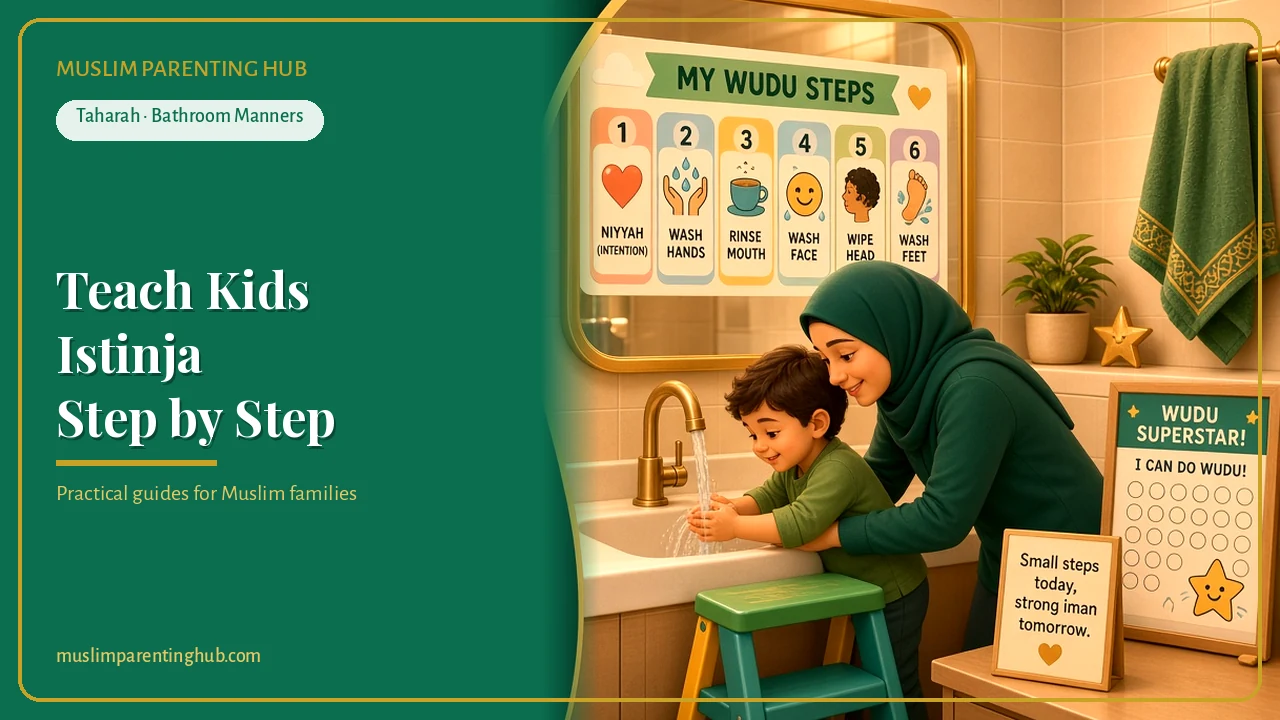
How to Teach Kids Istinja: Simple Washing Steps for US Bathrooms
Teach your child istinja without shame: easy wiping and washing steps, left-hand rules, peri bottle and bidet tips for US bathrooms, and a 7-day practice plan.
Read guide →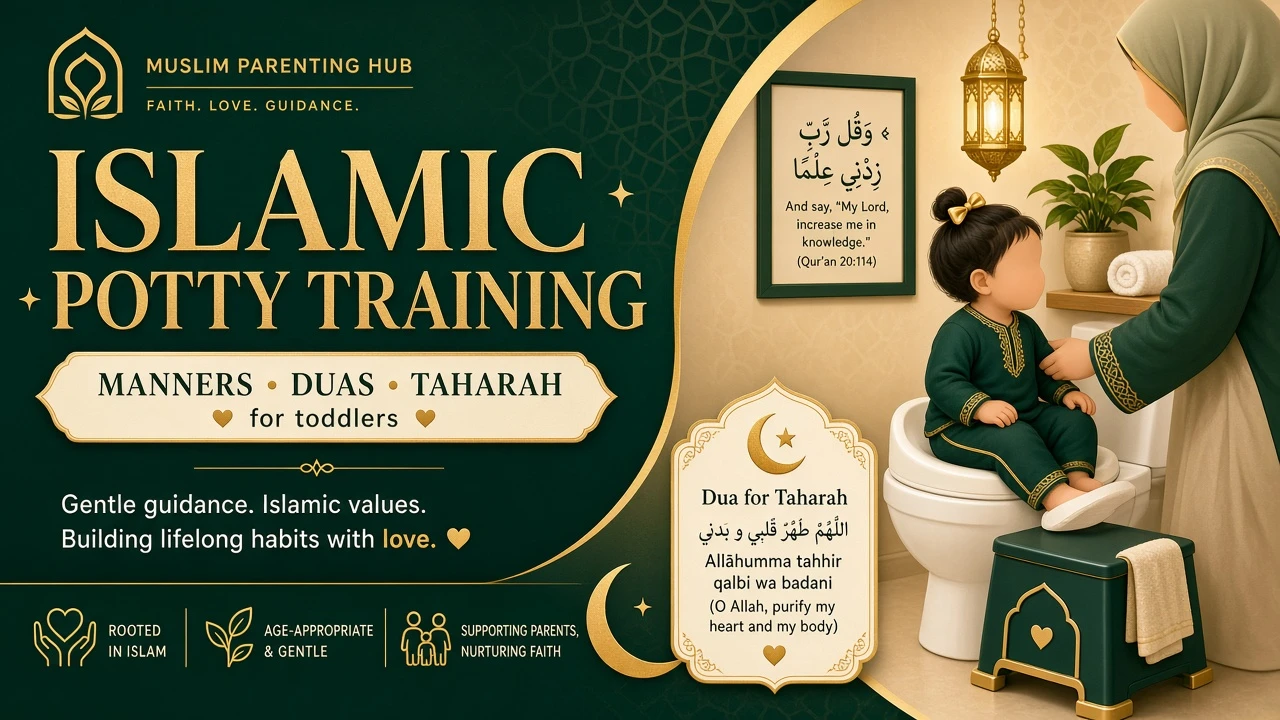
Islamic Potty Training Without Shame: Readiness, Bathroom Duas & Taharah
Ready for Islamic potty training? Spot readiness signs, teach bathroom duas and gentle istinja, and coach toilet manners with zero shame—start tonight.
Read guide →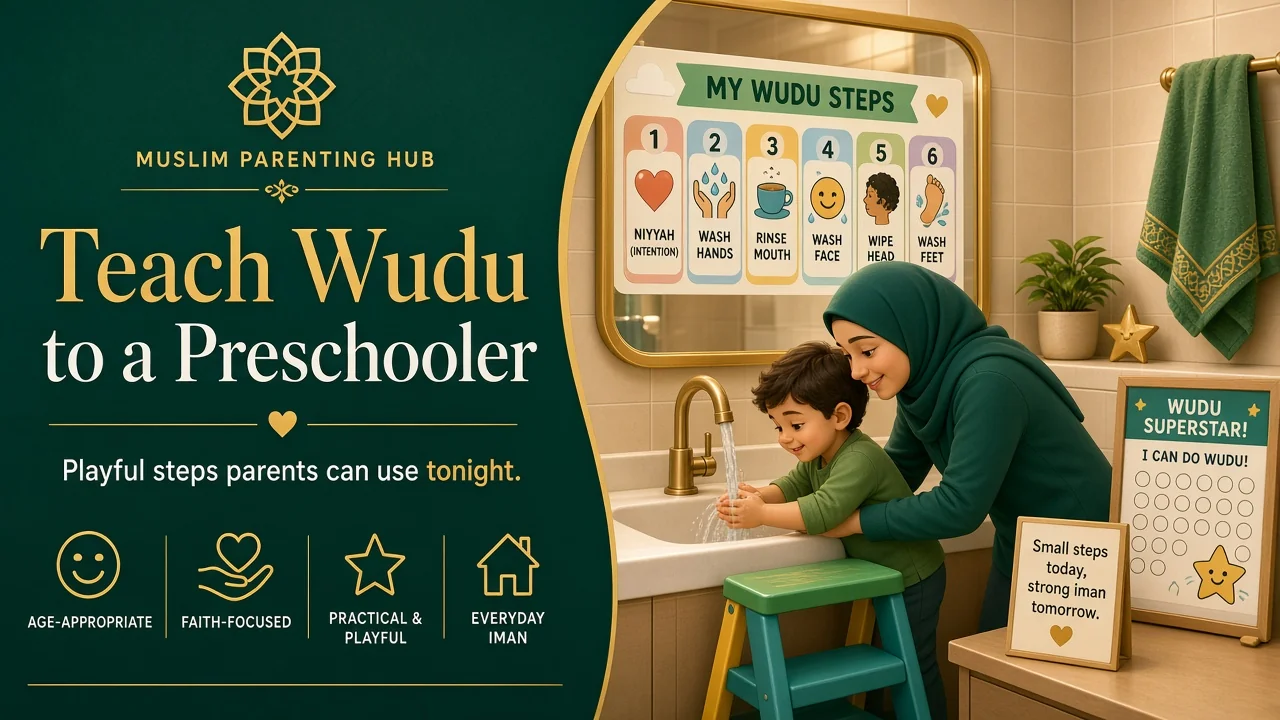
How to Teach Wudu to a Preschooler (Playful Steps Parents Can Use Tonight)
Teach wudu to preschoolers with playful steps—sink poster, doll practice, sticker chart, age tips, and tonight scripts. Gentle Muslim parenting for ages 3–5. Soft, practical.
Read guide →
Friday Night Muslim Family Routine: 5 Simple Steps Kids Look Forward To
Make Jumuah special at home: a 60–90 minute Friday night routine with Maghrib, kid-sized Surah Al-Kahf, a family joy block and dua. Try it this week.
Read guide →