
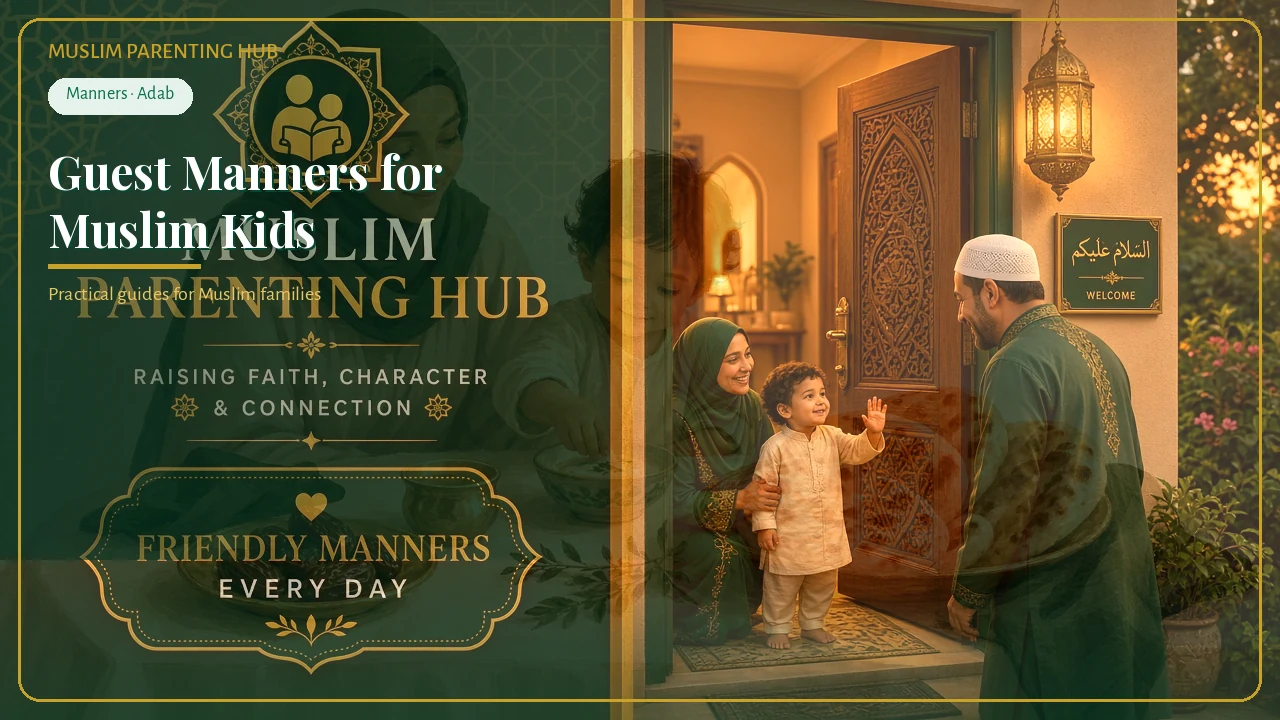
Guest Manners for Muslim Kids: Hosting at Home with Islamic Adab
The doorbell rings. Your child sprints, screams the guest’s name, grabs their bag, and announces what is for dinner. You love their enthusiasm. You also wish for a little more adab.
Islamic hospitality is not stiff perfection. It is warmth with boundaries: greet well, serve kindly, protect privacy, and make guests feel safe. This guide gives guest manners for Muslim kids when you are hosting at home—shoes, greetings, serving, noise, and “whose room is private.” Soft guidance, not a fatwa.
Why Guest Adab Is Character Training
Hosting is a live classroom for:
- Salam and smiling faces (teach toddlers to say salam)
- Serving others before grabbing the best snack
- Lowering the gaze and voices around guests’ belongings
- Sibling teamwork instead of competition for attention
It also protects your child’s sense of home. Guests are honored—and kids still need a calm corner that remains theirs.
The Hosting Checklist (Kid Jobs)
Give age-fit jobs so manners feel like belonging, not nagging.
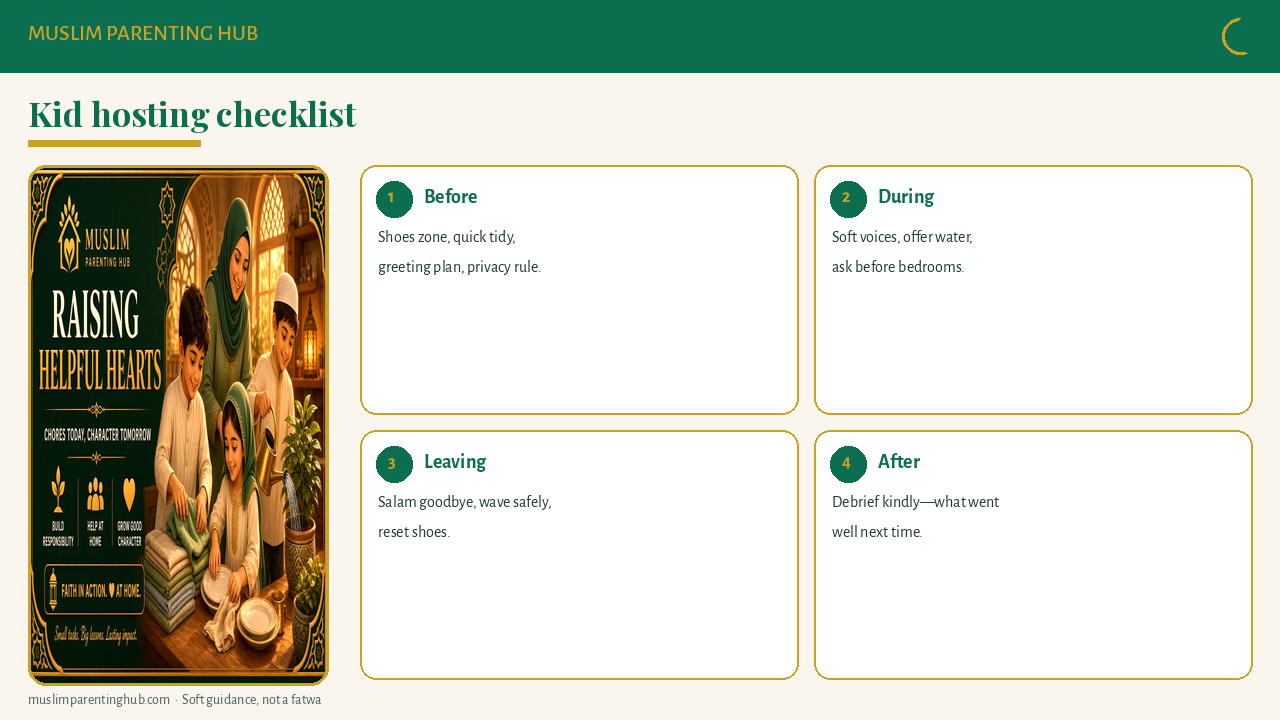
Before guests arrive (10 minutes)
- Shoes zone — clear a path; place a basket or mat by the door
- Quick tidy — toys into one bin (not a full deep clean)
- Greeting plan — who opens, who says salam, who takes coats if able
- Privacy reminder — “Guest bags and phones are not toys”
- Snack helper — wash hands; set cups/napkins
While guests are here
- Soft walking near elders
- Offer water once (with a parent if young)
- Use indoor voices unless play is invited outdoors
- Ask before showing a bedroom
When guests leave
- Salam and “Fi amanillah” / “Allah protect you” in your family’s words
- Wave from a safe spot
- Help put shoes back in order
Shoes, Doorway, and First Thirty Seconds
The doorway sets the tone.
Script for kids:
“Assalamu alaikum! Welcome. Shoes can go here.”
If they are shy, standing beside you with a smile counts. Do not force a hug. Consent matters even in hospitality—especially with relatives who adore cheek-pinching.
Shoes adab
- Guests may keep shoes if that is their need or culture in your context; teach kids not to shame anyone
- Kids do not throw guest shoes into a pile
- Wet umbrellas get a designated spot
Pair doorway manners with your salam practice so the greeting is muscle memory, not a performance.
Serving Food and Drinks (Without Chaos)
Serving is sunnah-flavored generosity kids can feel.
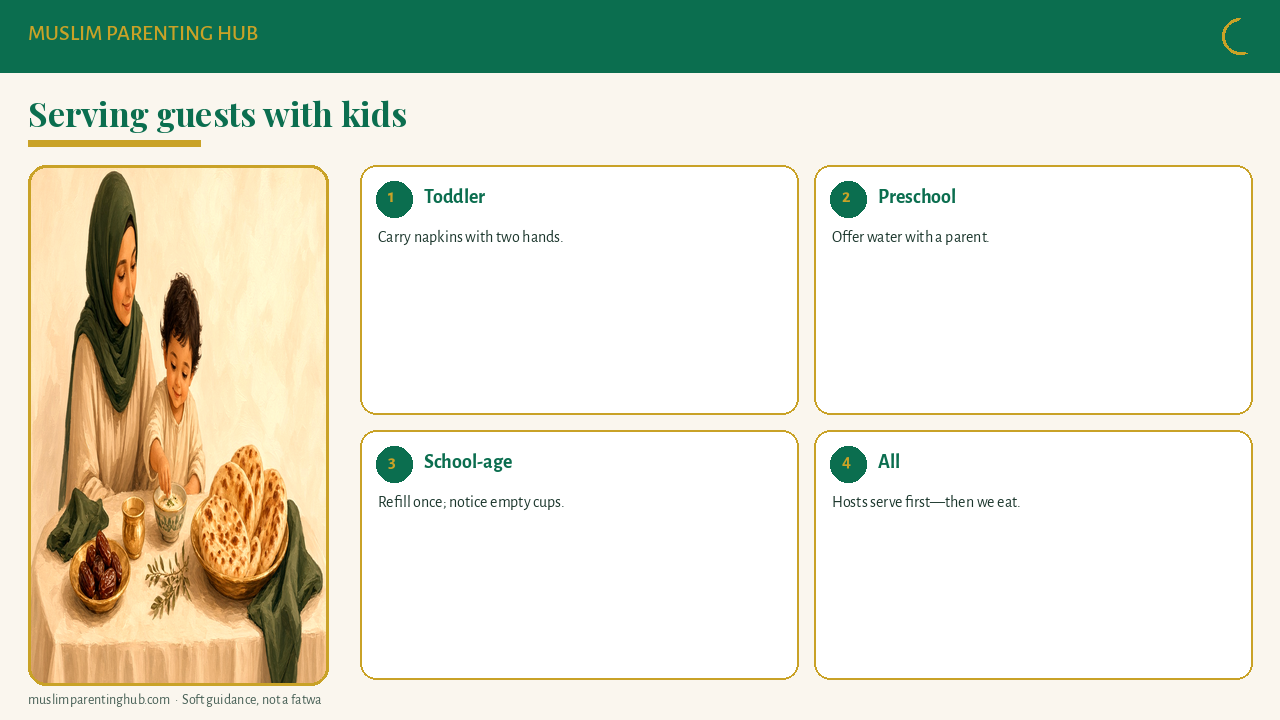
Toddler
- Carry napkins with two hands
- Point to the water pitcher while you pour
Preschool
- Offer one plate of dates/fruit with a parent nearby
- Practice: “Would you like water?”
School-age
- Refill once without being asked
- Notice if a guest has an empty cup
- Do not comment on how much someone eats
Script when kids want the best piece first
“Hosts serve guests first. Then we eat. That is a gift we give.”
This links beautifully to Islamic table manners for toddlers and later to sadaqah habits—giving is a lifestyle, not a speech.
Privacy, Rooms, and Guest Belongings
Kids are curious. Curiosity needs fences.
House rules to say out loud before guests arrive:
- We do not open guest bags or purses
- We knock before entering any room where a guest is resting
- We ask before showing our bedroom
- We do not repeat private adult conversation we overhear
- Phones and wallets are not toys
If a child already peeked
“Guest privacy is amanah—a trust. Let’s put it back and apologize. Next time we ask.”
Use a short repair script similar to how you teach apologizing with istighfar.
Noise, Siblings, and Showing Off
Hosting often triggers sibling jealousy: who sits near the guest, who tells the story, who gets praised.
Prep script:
“Tonight we take turns talking. If you feel left out, squeeze my hand—I’ll make space for you.”
If jealousy spikes, borrow fairness language from sibling jealousy scripts. Guests should not become a competition stage.
Showing toys
- One “show and share” window is enough
- Guests are not required to play every game
- Kids may retreat to a quiet corner with a book if overwhelmed
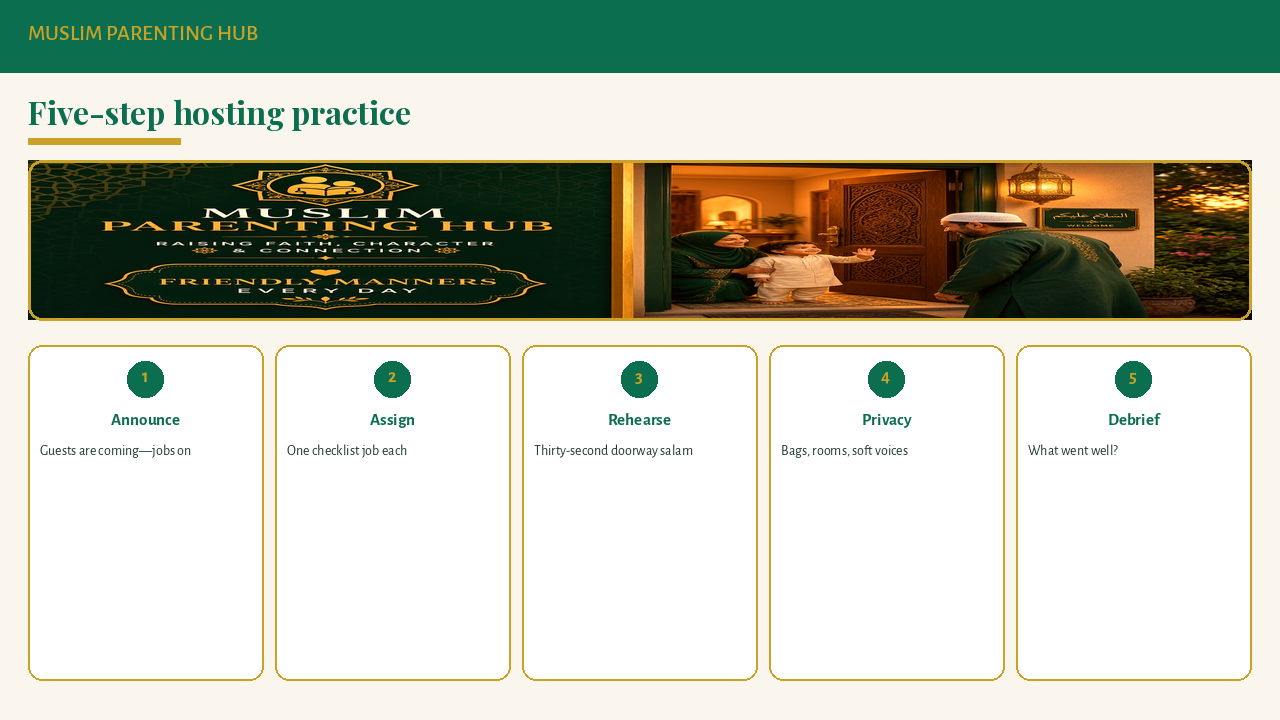
A Simple Hosting Practice Plan (5 Steps)
Use this whenever guests are coming—even for a short visit.
- Announce — “Guests after Maghrib. Hosting jobs!”
- Assign — each child one job from the checklist
- Rehearse salam — thirty seconds at the door
- Privacy reminder — bags, rooms, voices
- Debrief after — “What went well? What do we try next time?”
No scorecards. Just reflection.
Scripts for Awkward Moments
Child interrupts adults
“Hold that thought on your fingers—two minutes, then your turn.”
Child asks a rude question about a guest’s body, money, or accent
“We don’t ask that. People are not curiosities. Let’s ask about their trip instead.”
Child refuses to greet
“You can wave or stand with me. You don’t have to hug. Salam can be quiet.”
Spill or broken cup
“Accidents happen. Get a towel—we repair together. Guests care more about kindness than perfection.”
Guests overstay past bedtime
Protect sleep with your usual toddler bedtime sunnah fixes energy: gentle, firm, no shaming the guest in front of kids. Whisper a plan with your spouse.
Age Bands
| Age | Realistic wins |
|---|---|
| 2–3 | Wave/salam attempt; help put shoes on mat |
| 4–5 | Offer napkins; soft voice reminders stick sometimes |
| 6–8 | Serve water; privacy rules mostly held |
| 9+ | Co-host: tidy, refill, include younger siblings |
Special Cases
Overnight guests
Teach hallway quiet after Isha, bathroom turns, and “knock first.” Give kids a small flashlight job for nighttime water so they do not wake guests.
Masjid guests / study circle at home
Extra soft voices during Quran. Connect to first-time masjid practice so public and home adab feel like one path.
When you are the guest elsewhere
Practice reverse manners: greet, shoes, don’t open cabinets, thank the host. Role-play in the car before you arrive.
Tonight You Can Do This (Even Without Guests)
Role-play with stuffed animals:
- Doorbell sound
- Salam
- Shoes mat
- Offer “tea” (water)
- Privacy rule
- Goodbye salam
Five minutes. Huge return.
Parent Heart Check
Hospitality in Islam is generous—and so is mercy toward your own kids. A child who forgot salam but offered their favorite cookie still practiced rahma. Name the good you saw.
Linking Hospitality to Everyday Chores
Guest days go smoother when weekday chores already exist. A child who regularly clears cups will not melt down when asked to serve water. Use your Islamic chores age chart so hosting jobs feel like a special edition of normal responsibility—not a sudden performance.
Try a weekly “micro-host drill” every Sunday:
- One child sets two cups
- One child practices salam at the door
- Everyone practices the privacy sentence once
Seven minutes. No guests required.
Food Allergies, Preferences, and Kind Speech
Kids notice everything. Teach:
“We don’t say ‘ew’ about a guest’s food. If you don’t want some, quiet ‘no thank you’ is enough.”
If your child has allergies, let them practice a clear, polite line so adults can help keep them safe without drama.
Gratitude After Guests Leave
When the door closes, do a sixty-second shukr circle:
“Alhamdulillah for visitors. One kind thing someone did today was…”
This trains kids to see people as gifts, not interruptions—and softens the post-guest mess mood while you tidy together.
Phone Photos and Guest Privacy
Kids love to film. Teach:
“We ask before taking photos of guests. Some people don’t want pictures online.”
This is modern adab. It protects dignity and teaches that hospitality includes digital manners.
When Relatives Correct Your Child Harshly
If a guest scolds your child in a way that shames them, you can protect your child without drama:
“JazakAllah khair—we’re practicing gently at home. Come help me in the kitchen, sweetheart.”
Later, privately affirm your child and, if needed, set a boundary with the adult. Kids should not become the battlefield of adult opinions.
Practice Card for the Fridge
Write this where kids can see it:
- Salam and smile
- Shoes on the mat
- Soft voices
- Guests first
- Privacy is amanah
- Kind goodbye
Read it once before every visit. Rituals reduce nagging.
FAQ
How do I teach Muslim kids manners when guests come over?
Give clear kid jobs before the doorbell: shoes zone, salam plan, one serving task, and privacy rules. Rehearse for sixty seconds, then debrief kindly after guests leave.
What Islamic manners should kids learn for hosting?
Warm salam, welcoming body language, serving guests first, protecting privacy and belongings, soft voices, and a respectful goodbye. Keep it age-fit and shame-free.
What if my child is very shy with guests?
Allow a wave, standing beside you, or a written “Welcome” card. Never force hugs. Shy kids can still be excellent hosts through helping jobs.
How do I stop kids from going through guest bags?
State the rule before arrival, place bags in a parent-only zone if needed, and use a calm repair script if they peek. Curiosity plus clear amanah language works better than yelling.
Should kids always give up their bedroom for guests?
Not always. Teaching generosity matters, and so does a child’s sense of safety. Offer alternatives (couch, shared space) when giving up a room would deeply unsettle a sensitive child.
How can siblings avoid fighting for guest attention?
Pre-assign turns and a secret hand-squeeze signal for “I feel left out.” Praise teamwork more than clever stories.
What if guests’ parenting rules differ from ours (screens, snacks)?
Hold your house basics politely without debating in front of kids. Later, explain your family values at home in a calm chat.
Related guides
- Teach Toddlers to Say Salam
- Islamic Table Manners
- Teach Kids to Apologize
- Sibling Jealousy Scripts
- Islamic Chores Age Chart
Quick steps
Five-step hosting practice for Muslim kids. A simple pre-guest routine that assigns jobs, rehearses salam, and protects privacy.
- Announce — Tell kids guests are coming and that hosting jobs are starting.
- Assign — Give each child one checklist job such as shoes zone or napkins.
- Rehearse salam — Practice a thirty-second doorway greeting without forcing hugs.
- Privacy reminder — Review rules about bags, rooms, and soft voices.
- Debrief after — Ask what went well and what to try next time, without scorecards.
Related articles
How to Teach Toddlers to Say Salam (A 7-Day Practice Plan)
Teach toddlers to say salam with a 7-day practice plan—door role-play, smile & eye contact, scripts, and age tips. Gentle Islamic manners for Muslim homes.
Read guide →
Islamic Chores for Kids: Age-by-Age Responsibility Chart for Muslim Homes
Age-by-age Islamic chores chart for Muslim kids—Prophetic helping-at-home framing, tonight scripts, sticker-free tips, and responsibility without shame.
Read guide →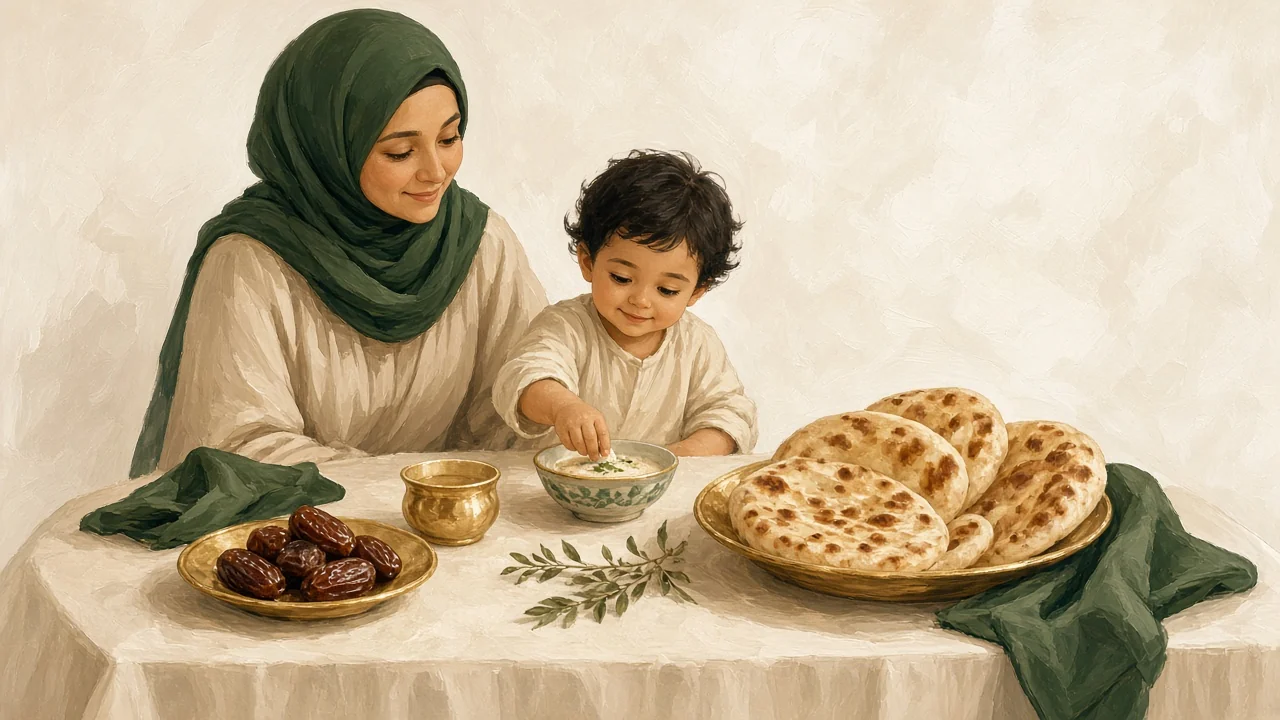
Islamic Table Manners for Toddlers: A 7-Day Bismillah & Right-Hand Plan
Teach Islamic table manners for toddlers with a 7-day Bismillah and right-hand plan—meal scripts, age tips, guest/restaurant edge cases, and a gentle sticker chart.
Read guide →
Teach Kids to Apologize with Heart: Islamic Repair Scripts (Plus Soft Istighfar)
Teach kids to apologize with Islamic repair scripts—pause, name the hurt, make it right—plus soft istighfar without shame. Age bands, what not to force, sibling tips.
Read guide →