
Helping Your Muslim Child Make Friends at School: Scripts, Playdates and Good Companions
It’s October. The back-to-school excitement has worn off, and you ask the after-school question: “Who did you play with today?” Your child shrugs. “Nobody.” Or, “Everyone already has friends.” Or the one that stings most: “They said I’m weird because I don’t eat their snacks.”
Friendship is one of the biggest parts of a child’s school life, and for Muslim kids in US public schools it can carry extra layers—different food, different holidays, a hijab, leaving for Jumu’ah, not going to every party. Those differences don’t have to mean loneliness. With some coaching, a few playdates, and a lot of warmth at home, most children find their people.
This guide covers what Islam teaches about friendship, how to tell normal ups and downs from real loneliness, scripts kids can use on the playground, halal-friendly playdate ideas, how to choose good companions, and what to do when your child feels left out.
What Islam Teaches About Friends
Islam takes friendship seriously, because friends shape who we become.
- Choose friends carefully. The Prophet ﷺ said, “A person is upon the way of his close friend, so let each of you look at whom he befriends” (Abu Dawud, Tirmidhi).
- The perfume seller and the blacksmith. He compared a good friend to a perfume seller—you either get some perfume or at least smell something lovely—and a bad friend to a blacksmith’s bellows, which might burn your clothes or leave you smelling smoke (Bukhari, Muslim).
- Spread salam. “Shall I not tell you something that, if you do it, you will love one another? Spread salam among yourselves” (Muslim).
- Smile. “Your smile in the face of your brother is charity” (Tirmidhi).
- Be good to everyone. Allah does not forbid us from being kind and fair to people of other faiths who live peacefully with us (Quran 60:8).
For kids, put it simply:
“Allah wants us to be kind to everyone. And for our closest friends, we choose kids who are kind, honest, and help us be our best.”
That frame lets your child have warm friendships with classmates of every background while understanding that “best friends” are chosen with care.
Is It Normal Friendship Ups and Downs—or Real Loneliness?
Many kids say “nobody plays with me” after one bad recess. Before you worry, gather a little information over a week or two:
- Does your child mention any names, even occasionally?
- Do they look forward to school, or dread it?
- Are they invited to anything—group projects, lunch tables, birthday parties?
- Has a teacher noticed them alone?
Normal ups and downs: a fight with one friend, a shifting group, a week of feeling left out, a hard first month at a new school.
Signs to dig deeper: weeks of eating alone, regular teasing about faith or appearance, tummy aches before school, or a child who has stopped talking about classmates at all.
If you’re seeing the second list, talk to the teacher soon. Our guide to parent-teacher conferences for Muslim parents includes a gentle way to ask, “Does my child seem to belong here?”
Friendship Skills You Can Teach at Home
Some children make friends effortlessly. Others need the skills spelled out and practiced—just like reading or riding a bike. Role-play these at dinner or in the car.
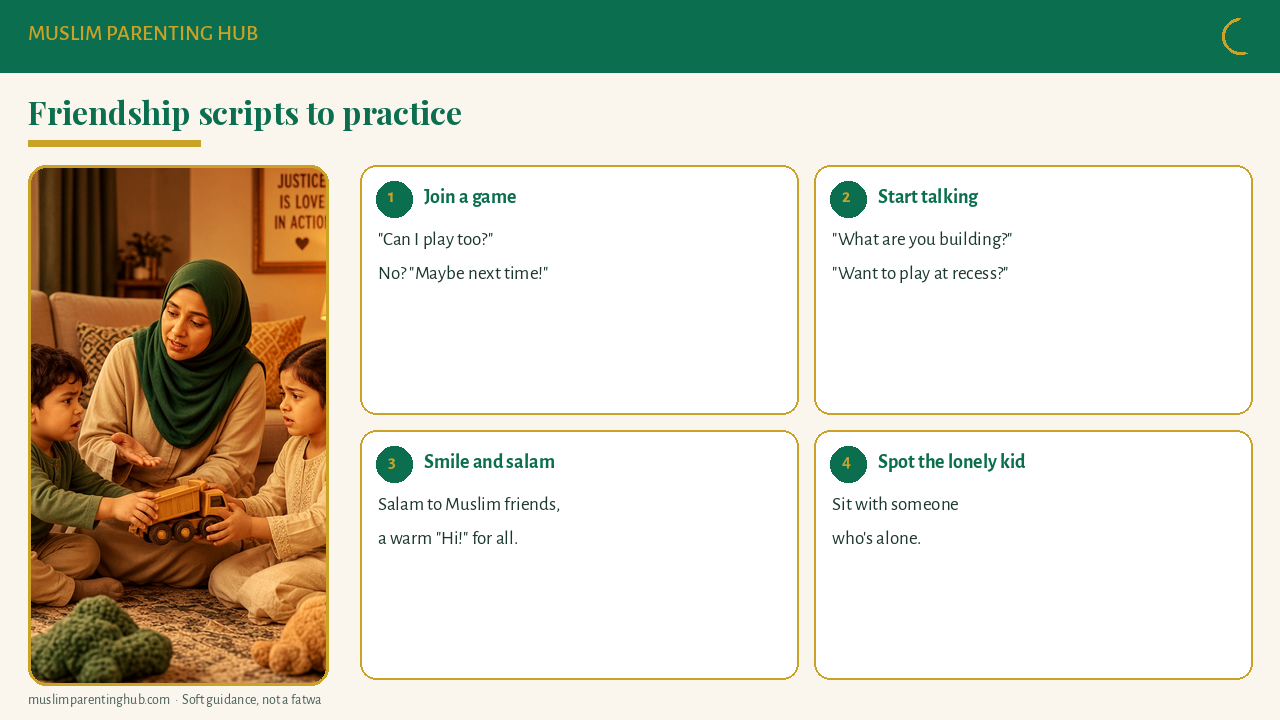
1. Joining a game
Kids often stand at the edge waiting to be invited. Teach them to watch for a moment, then ask:
“Can I play too?” or “Can I be on your team?”
If the answer is no: “Okay, maybe next time!”—and try another group. Practice hearing “no” at home so it doesn’t feel crushing.
2. Starting a conversation
Give them three easy openers:
“I like your backpack. Where did you get it?” “What are you building?” “Do you like soccer? Want to play at recess?”
3. Showing interest
Friendship grows when kids ask about the other person: “What’s your favorite game?” “Do you have a dog?” Remind them to listen to the answer.
4. Smiling and saying hi
Saying hi with a smile is Sunnah—and it’s the start of most friendships. Muslim friends get “Assalamu alaikum”; everyone gets a friendly “Hi!” with a smile.
5. Being a good sport
Kids notice who gets angry when they lose. Fall recess and after-school sports are big friendship builders, so practice saying “Good game!” and cheering for teammates at home.
6. Noticing someone else who’s alone
The fastest way to find a friend is often to be one. Encourage your child to look for another kid sitting alone. Our rahma scripts for comforting a sad classmate give kids exact words to use.
When Being Muslim Feels Like the Barrier
Sometimes children feel their faith is what keeps them apart. A few common moments:
“They asked why I don’t eat pepperoni.”
Kids who have short, confident answers feel less awkward. “I’m Muslim—we don’t eat pork. But I love cheese pizza!” Practice a few lines together. Our guide to kind answers when classmates ask about Islam has scripts for food, hijab, prayer and holidays.
“Everyone’s talking about Halloween.”
October is full of costume talk. Your child can still join many conversations—favorite candy, fall festivals, pumpkins—while following your family’s choices. Families differ on how they approach Halloween; follow your family’s practice and ask a trusted scholar if you’re unsure.
“I wasn’t invited to the party”—or “I can’t go.”
Being left out of birthday parties, or having to skip some, can hurt. Our guide for when your Muslim child is left out of birthday parties has scripts to protect their heart and ideas to host your own gatherings.
“They made fun of my hijab / my name / my lunch.”
Teasing is different from curiosity. Teach your child to say a firm “Please stop,” walk away, and tell an adult. Then follow up with the teacher yourself. Never tell your child to “just ignore it” when it keeps happening.
Remind your child often: being Muslim is a gift, not a problem to hide. The right friends will like them as they are.
Halal-Friendly Playdates That Build Friendships
Most deep school friendships grow outside school. A few one-on-one playdates can turn a classmate into a friend.
How to set one up
- Ask your child: “Who’s someone you’d like to play with?”
- Contact the parent: Class apps, pickup line, or a quick note: “Our kids seem to get along—would your child like to come over Saturday afternoon?”
- Keep it short: 90 minutes to 2 hours is perfect for the first one.
Easy playdate ideas
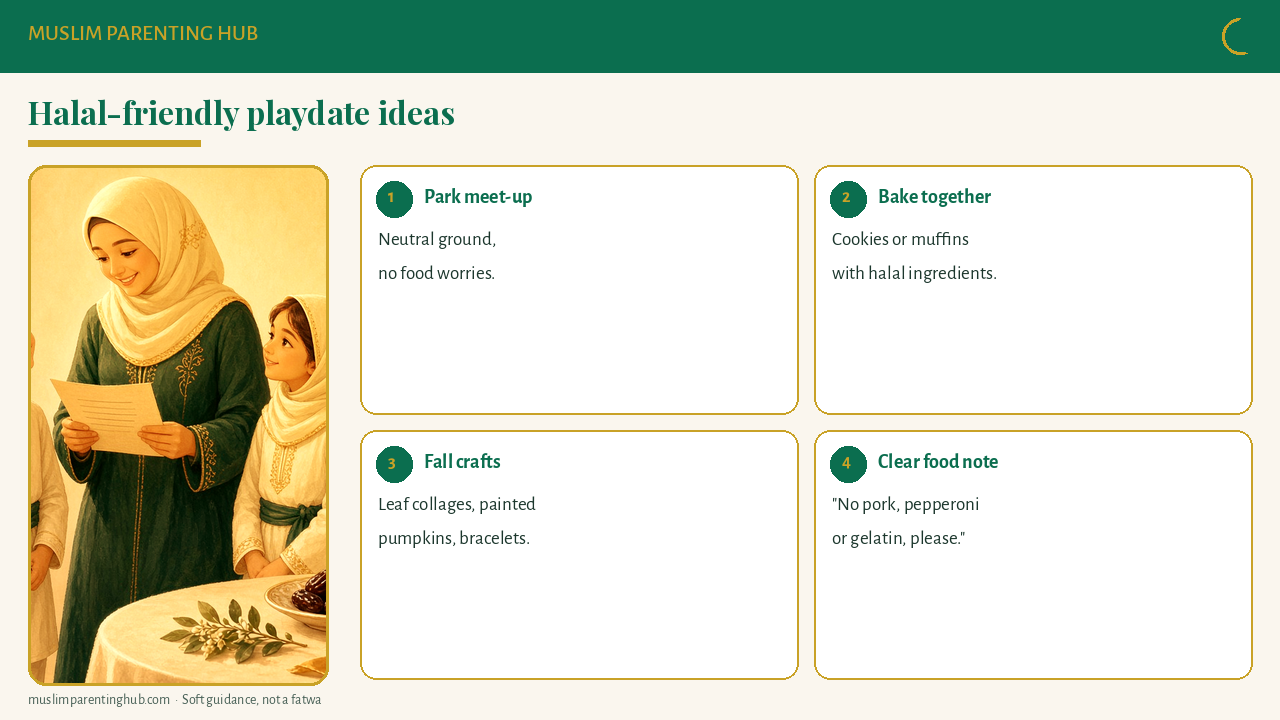
- Park meet-up: Neutral ground, no food worries, easy for any family.
- Baking session: Cookies or muffins together, with all-halal ingredients.
- Craft afternoon: Fall leaf collages, painting pumpkins, or friendship bracelets.
- Backyard games: Soccer, tag, bubbles, chalk.
- Library story time or a local fall festival.
Food and prayer during playdates
- Serve simple, clearly halal snacks—fruit, popcorn, cheese and crackers, homemade treats.
- If a prayer time falls during the visit, pray calmly while kids play in view, or invite the curious child to watch quietly. Many children find it fascinating, not strange.
- If your child visits a friend’s house, give the other parent a short, friendly food note: “We eat halal—no pork, pepperoni, or gelatin. Fruit, chips and cheese pizza are all great!”
Family rules
Families differ on things like sleepovers, unsupervised visits, and screens at friends’ houses. Decide your rules calmly and explain them simply: “In our family, we do day playdates, not sleepovers.” Your child will cope much better with a clear rule than with uncertainty.
Muslim Friends Matter Too
Children benefit enormously from having at least one or two Muslim friends—kids who also fast in Ramadan, celebrate Eid, and pray. These friendships make faith feel normal and joyful.
Ideas to build them: - Weekend Islamic school or Quran class - Masjid youth programs and family nights - Muslim scout troops or sports leagues - Regular family visits with other Muslim families - Eid parties and Ramadan iftars with kids’ activities
Many families find that the combination of good school friends and a circle of Muslim friends helps children feel secure in both worlds.
How to Support Your Child at Home
- Be their safe place. Listen to the hard days without rushing to fix. “That sounds really lonely. I’m glad you told me.”
- Don’t over-question. Instead of “Did anyone play with you?” try “What was the best part of recess today?”
- Make dua together. “Ya Allah, give me a good friend who helps me be good.” Children love that Allah hears even this kind of dua.
- Share your own stories. “When I was in third grade, I didn’t have friends for a while too…”
- Build confidence outside school. Sports, art, Quran class—places where your child feels capable carry into the classroom.
- Practice kindness at home. Children who practice sharing, taking turns, and gentle words with siblings bring those skills to school. Our 10 rahma activities to teach kindness are a fun place to start.
FAQ
What does Islam say about choosing friends?
The Prophet ﷺ taught that a person follows the way of their close friend, so we should choose friends carefully. He compared a good friend to a perfume seller and a bad friend to a blacksmith’s bellows. Islam also teaches kindness and fairness toward everyone, including people of other faiths.
Can Muslim kids be friends with non-Muslim classmates?
Yes. Islam encourages kindness and fairness toward peaceful people of all faiths (Quran 60:8). Many families teach kids to be warm friends with classmates of every background while choosing close friends who are kind and honest.
What should I do if my child says nobody plays with them?
Listen calmly, gather information for a week or two, teach simple joining scripts, set up a one-on-one playdate, and talk to the teacher if your child seems alone often.
How do I handle playdates as a Muslim family?
Start with short daytime playdates at a park or your home, serve clearly halal snacks, give other parents a friendly food note when your child visits, and explain your family’s rules on things like sleepovers simply and calmly.
What if my child is teased for being Muslim?
Teach them to say “Please stop,” walk away, and tell an adult. Then follow up with the teacher yourself. Repeated teasing should always be addressed, not ignored.
How can I help my child find Muslim friends?
Try weekend Islamic school, masjid youth programs, Muslim sports leagues or scouts, Ramadan iftars and Eid events, and regular visits with other Muslim families.
Related guides
- When your Muslim child is left out of birthday parties
- Kind answers when classmates ask about Islam
- Teach kids to comfort a sad classmate
- 10 rahma activities to teach kindness
Closing: Friends Are a Gift From Allah
Friendship isn’t something you can force, but it’s something you can prepare your child for—and make dua for. Teach the skills, open your home, stay close on the lonely days, and remind your child that the kindest thing they can do is often the first step: a smile, a “Can I play too?”, or noticing the kid sitting alone. Tonight at bedtime, make the dua together: “Ya Allah, bless me with good friends, and make me a good friend too.”
Related articles
"Why Don't You Eat Pepperoni?" Kind Answers Muslim Kids Can Give When Classmates Ask About Islam
Hijab, halal lunch, prayer, Ramadan, holidays: short, kind answers Muslim kids can give when US classmates ask "Why do you…?"—plus a role-play plan for home.
Read guide →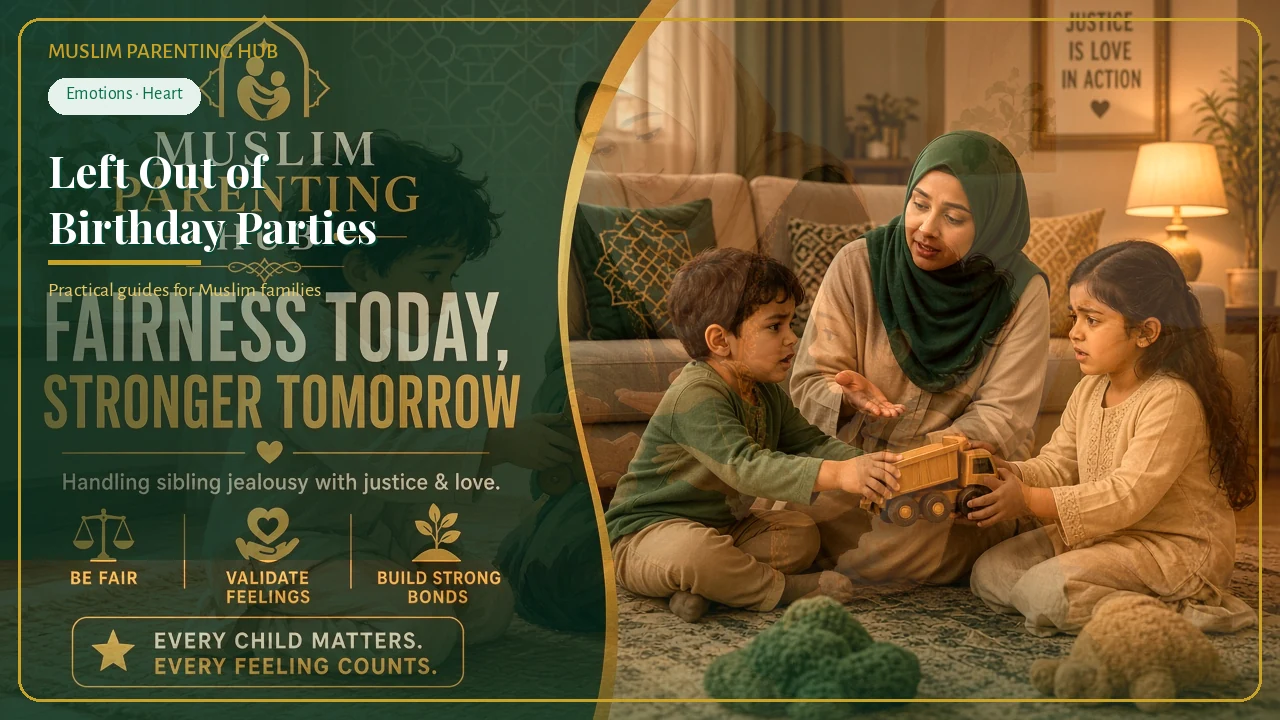
When Your Muslim Child Is Left Out of Birthday Parties: Scripts That Protect Their Heart
Soft scripts when Muslim kids are left out of birthday parties—validate feelings, protect identity without shaming others, and build warm family alternatives.
Read guide →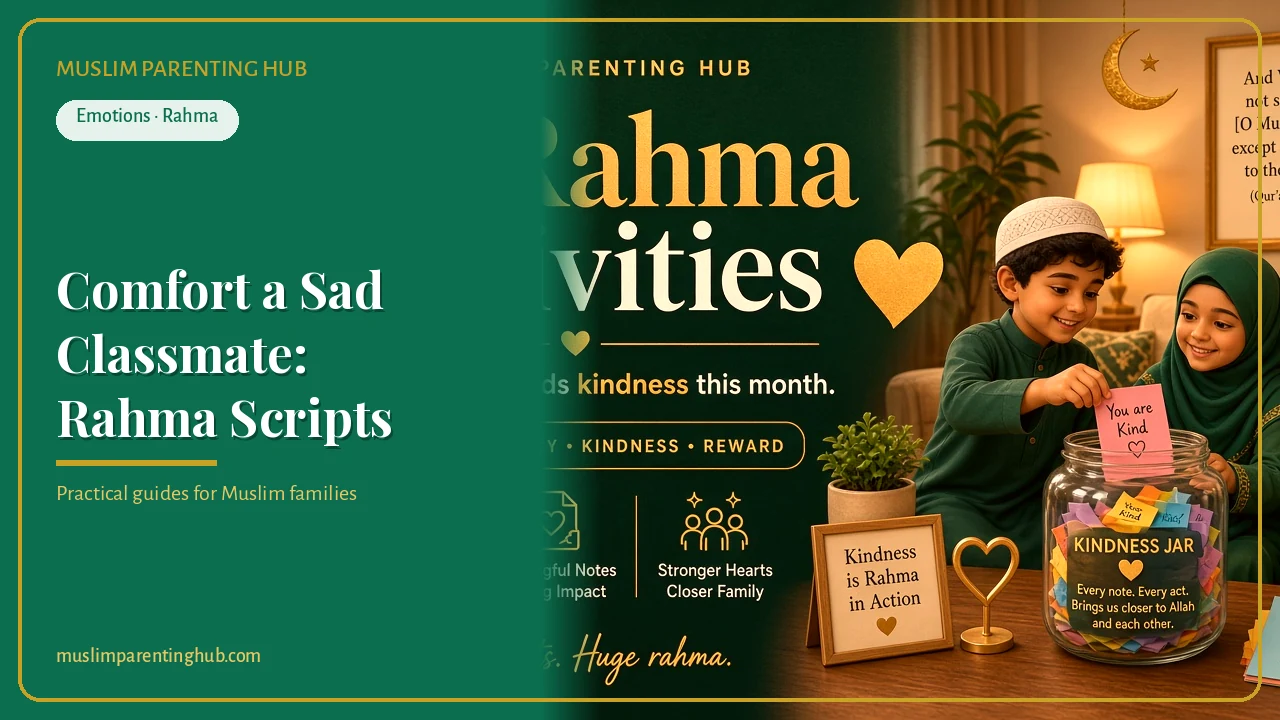
Teach Kids to Comfort a Sad Classmate: Rahma Scripts for US Public School
Teach Muslim kids rahma scripts to comfort a sad classmate at US public school—kind words, consent, inclusion tips, and what not to say.
Read guide →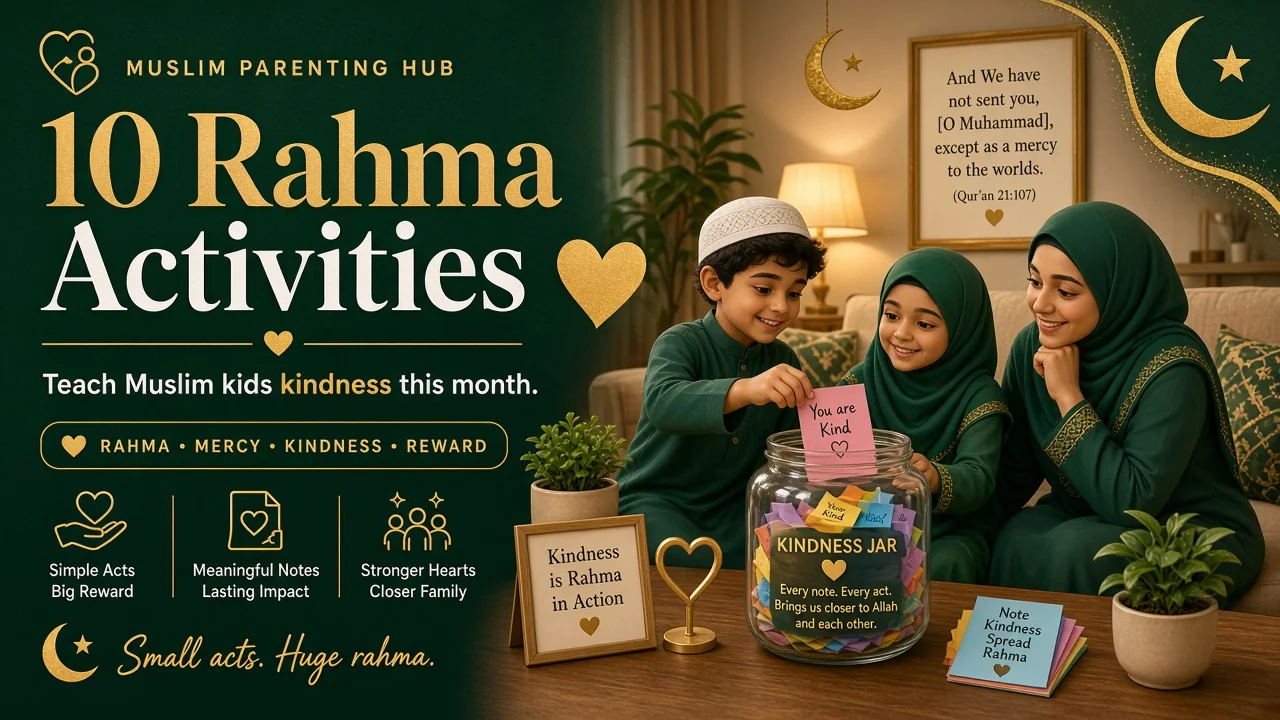
10 Rahma Activities to Teach Muslim Kids Kindness This Month
Teach Muslim kids rahma with 10 kindness activities—kindness jar, neighbor drops, Prophet ﷺ mercy stories, age charts, and tonight scripts. Soft, practical monthly plan.
Read guide →