
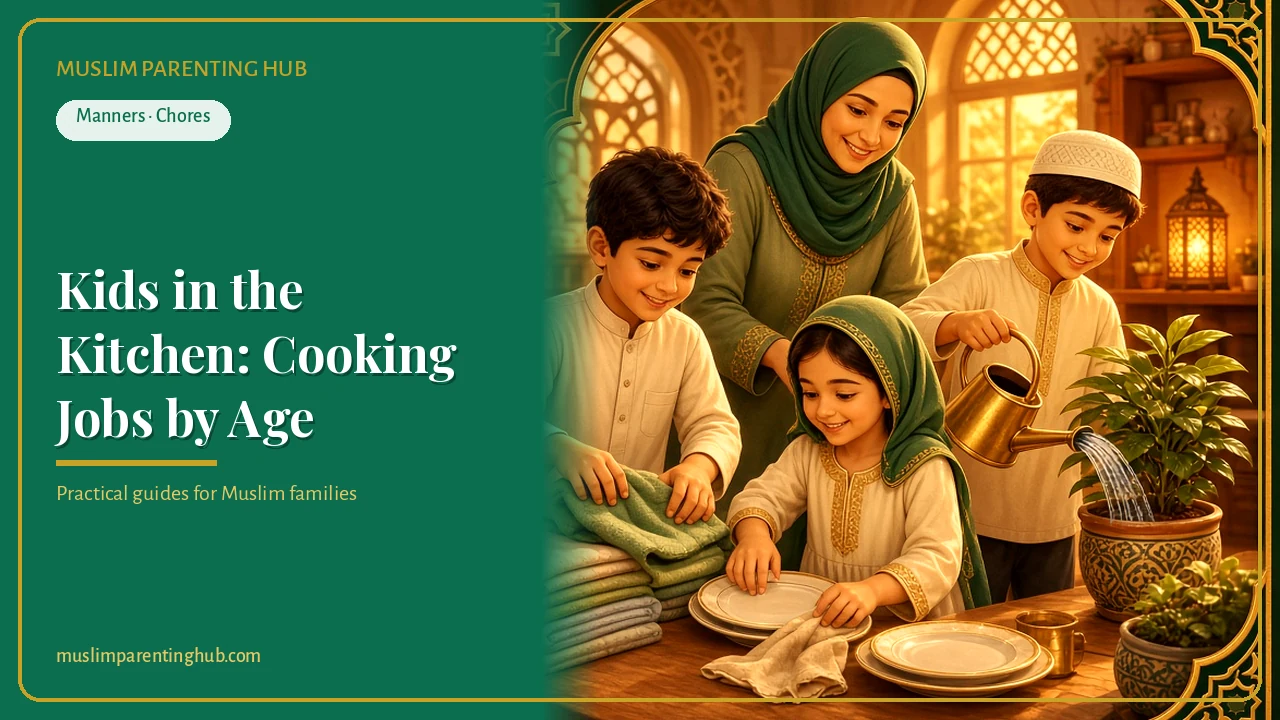
Kids in the Kitchen: Age-by-Age Cooking Jobs for Muslim Kids (Ages 2–12)
It’s 5:40 on a Tuesday in October. Soccer practice ran late, the sun is already sliding toward Maghrib, and someone is asking, “What’s for dinner?” for the fourth time. The easiest thing is to shoo everyone out of the kitchen and cook alone.
But the kitchen is one of the best classrooms a Muslim home has. It is where kids learn to say Bismillah before they touch the food, to wash their hands, to share, to not waste, and to serve other people before themselves. It is where a four-year-old discovers that her hands are useful and a ten-year-old learns he can feed his family.
This guide gives you age-by-age kitchen jobs for kids from 2 to 12, simple safety rules, the Islamic habits to weave in, a weekly “kids cook” night you can actually keep, and ideas for the busy Thanksgiving-to-winter season. It pairs well with our Islamic chores age chart for Muslim kids, which covers the rest of the house.
Why the Kitchen Is Worth the Mess
The Prophet ﷺ was the busiest man in Madinah, yet when Aisha (may Allah be pleased with her) was asked what he did at home, she said he used to help his family with their work, and when the time for prayer came he went out to pray (Bukhari). Serving the family was not “women’s work” or “kids’ work”—it was Sunnah.
When children help cook, they practice:
- Responsibility: “The family is counting on me to wash the lettuce.”
- Gratitude: It’s hard to complain about a meal you chopped yourself.
- Not wasting: Allah says, “Eat and drink, but do not waste” (Quran 7:31). Kids who peel potatoes notice how much goes in the trash.
- Generosity: The Prophet ﷺ told Abu Dharr, “When you cook a stew, add more water and look after your neighbors” (Muslim). Cooking extra for someone else is an old Muslim habit.
- Patience: Bread dough doesn’t rise faster because you’re hungry.
Yes, it will be slower and messier for a while. Think of it as an investment: the six-year-old who spills flour today is the twelve-year-old who makes Saturday pancakes for the whole family.
Kitchen Habits to Build First (Before Any Recipe)
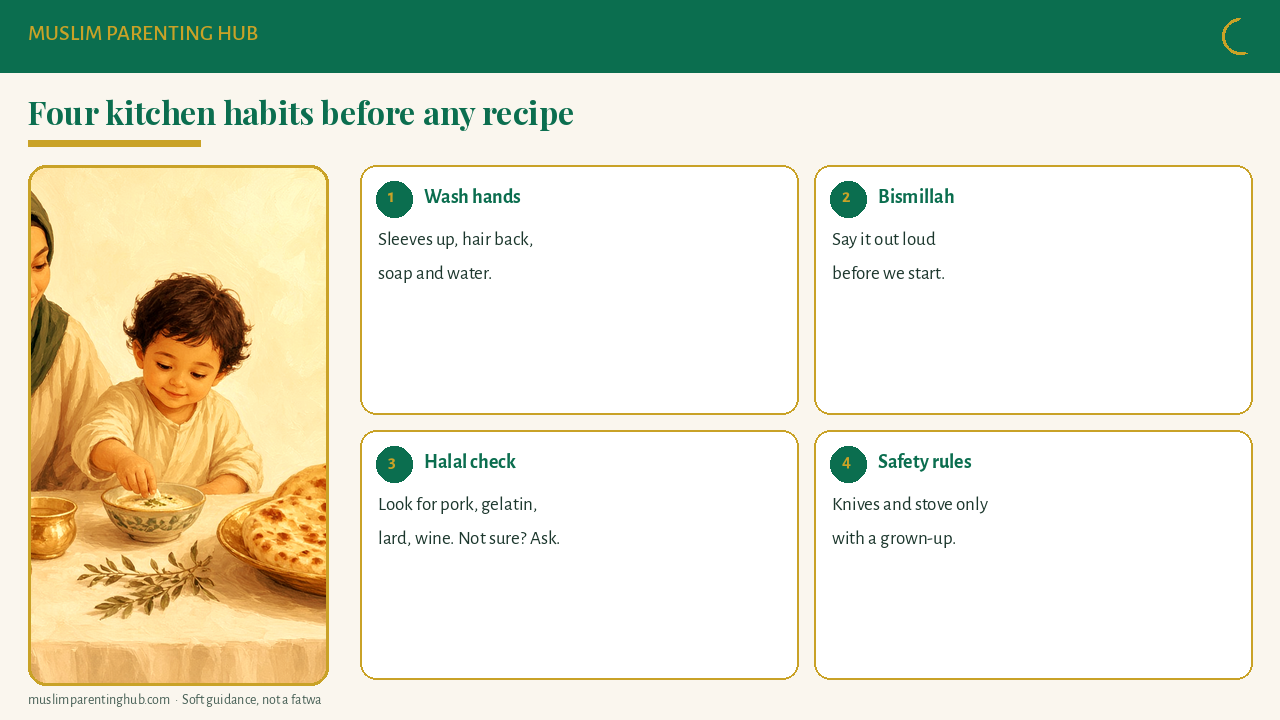
Before you hand anyone a peeler, set up four habits. Say them the same way every time so they become automatic.
1. Wash hands, sleeves up
Cleanliness is woven through Islam, and food prep is the obvious place to practice it. Make it a ritual: sleeves pushed up, hair tied back, hands washed with soap for as long as it takes to say Bismillah, Alhamdulillah and SubhanAllah three times each.
2. Bismillah before we start
Many families say Bismillah before cooking as well as before eating. Kids love being the one who “starts” the cooking with Bismillah. If your child is still building the habit, our guide to teaching kids to say Bismillah in everyday moments has a simple plan.
3. Check it’s halal
Older kids can become “label detectives.” Teach them to look for pork, gelatin (often pork-based in US products), lard, and wine or rum in ingredients. Some ingredients—like vanilla extract with alcohol, or certain cheeses—are things scholars and families view differently. Keep it simple: “In our family we use these; if you’re not sure, ask me.” For rulings, ask a scholar you trust.
4. Safety rules are not negotiable
- Knives and the stove only with a grown-up right there.
- Pot handles turned inward.
- “Hot!” means hands off—every time.
- Walk, don’t run, in the kitchen.
- Clean as you go: spill → wipe.
Post these on the fridge. A child who hears the same five rules a hundred times will repeat them to younger siblings.
Age-by-Age Kitchen Jobs for Kids
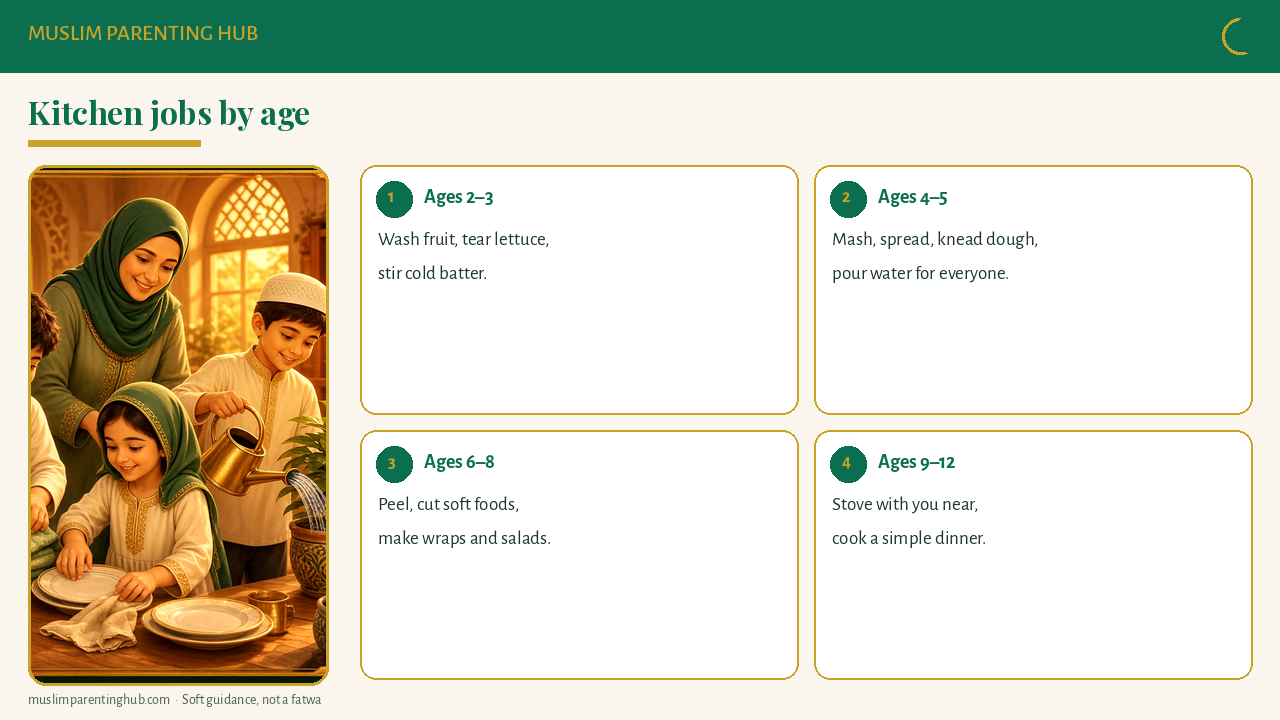
Every child is different. Use these as starting points, not a test. If your child is ready for more, wonderful; if they need more time, that’s fine too.
Ages 2–3: The tiny helpers
Toddlers want to do what you do. Give them real jobs with no sharp edges or heat.
- Wash vegetables and fruit in a bowl of water
- Tear lettuce and herbs
- Pour pre-measured ingredients into a bowl
- Stir cold batters
- Put napkins and spoons on the table
- Carry unbreakable items to the table
- Wipe the table with a damp cloth
Say: “Bismillah—your job is to wash the grapes. Thank you, helper!” Keep tasks to five minutes. When they wander off, let them go.
Toddlers who help set the table are already practicing table adab: Bismillah, the right hand, and waiting for everyone.
Ages 4–5: The preschool sous-chefs
- Mash bananas, avocados, or boiled potatoes
- Spread butter, hummus, or labneh with a butter knife
- Crack eggs into a separate bowl (expect shells at first)
- Knead dough for roti, paratha, or pizza
- Measure with cups and spoons
- Sort groceries into the fridge and pantry
- Fill water glasses for the family
Islamic touch: Let them be the “water server.” The Prophet ﷺ said the one who serves drinks to the people should be the last to drink (Muslim). A five-year-old who pours for everyone and drinks last is learning adab without a lecture.
Ages 6–8: The real assistants
- Peel carrots and potatoes with a safe peeler
- Cut soft foods (cucumbers, strawberries, cheese) with a kid-safe knife
- Read a simple recipe aloud
- Make sandwiches, wraps, and salads
- Load and unload the dishwasher (no sharp knives)
- Make simple breakfasts: cereal, yogurt bowls, toast
- Pack their own school lunch with your checklist
This is a great age to make kitchen work part of the official family chore chart. Some families pair a few extra “big” kitchen jobs with a small allowance—if you’re deciding how to handle that, read should Muslim kids get an allowance for chores?
Ages 9–10: The independent cooks (with supervision nearby)
- Use the stove for scrambled eggs, pancakes, pasta, and rice with you in the room
- Chop with a real knife after you’ve taught a safe grip
- Follow a full recipe from start to finish
- Bake muffins, cookies, or banana bread
- Plan one family dinner a week
- Make a grocery list from a recipe
Ages 11–12: The family chefs
- Cook a full simple dinner—curry and rice, tacos, baked chicken and vegetables
- Use the oven independently (with a grown-up home)
- Make a dish for guests or for a neighbor
- Help plan meals for the week and stay within a budget
- Teach a younger sibling one kitchen job
By twelve, many kids can genuinely carry one meal a week. That isn’t child labor; it’s preparing them to be adults who can feed themselves, host guests, and serve their own families one day.
A Weekly “Kids Cook” Night You’ll Actually Keep
Most families start strong and fade by week three. The trick is to make it small, predictable, and tied to something that already happens.
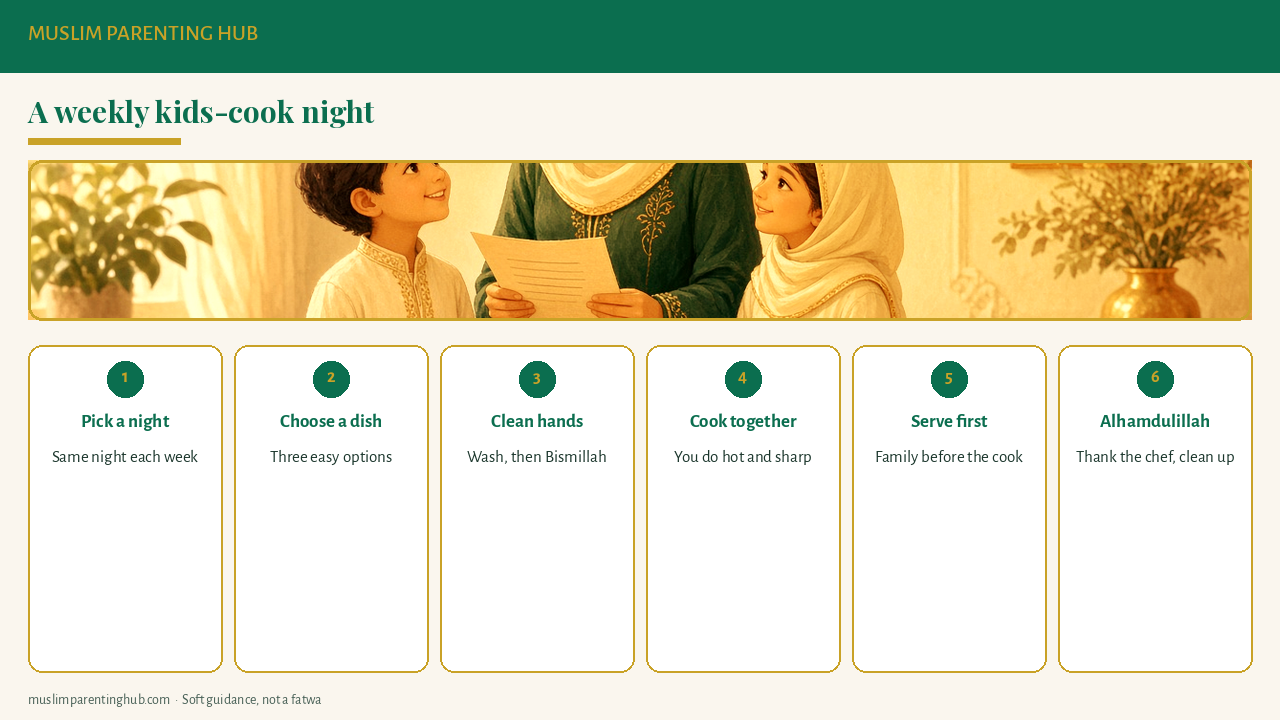
- Pick one night. Saturday lunch or a calm weeknight works better than a rushed school night.
- Choose the dish together on the weekend. Let the child pick from three easy options you’re happy with.
- Check the ingredients. The child reads the list; you check halal and allergies together.
- Start with wudu-clean hands and Bismillah. Hands washed, sleeves up, Bismillah out loud.
- Cook side by side. The child does every step they safely can. You do the hot and sharp parts.
- Serve the family first. The cook carries plates to the table and pours water.
- End with Alhamdulillah and a thank-you. Everyone thanks the cook by name. “JazakAllahu khayran, Chef Yusuf!”
- Clean up as a team. The cook doesn’t wash everything—everyone has a clean-up job.
On weeknights, time cooking around prayer. In October, Maghrib in much of the US comes around 6:15–6:45 p.m., so prep before Maghrib, pray together, then finish and eat. Our after-school Maghrib routine for Muslim families shows how to fit snack, homework, prayer and dinner into the same evening.
Simple Starter Recipes by Age
You don’t need special “kid recipes.” Choose everyday family food with steps kids can own.
| Age | Starter dish | The child’s job |
|---|---|---|
| 2–3 | Fruit salad | Wash and tear, stir with a big spoon |
| 4–5 | Hummus wraps | Spread, sprinkle, roll |
| 6–8 | Overnight oats or yogurt parfaits | Measure, layer, decorate |
| 6–8 | Mini pizzas on pita | Spread sauce, add toppings |
| 9–10 | Scrambled eggs and toast | Stove with you nearby |
| 9–10 | Banana bread | Full recipe, you handle the oven |
| 11–12 | Chicken and rice or a simple curry | Plan, chop, cook with you in the room |
Fall and Thanksgiving-Week Kitchen Projects
Late fall is full of chances to cook together:
- Apple or pumpkin baking: Many US families go apple picking in October. Bake apple crumble or pumpkin muffins with kids measuring and stirring.
- Soup for a neighbor: Make a big pot, then let your child carry a container next door with a note. That’s the Abu Dharr hadith in action.
- Food-drive shopping: Let kids pick canned goods for a masjid pantry or school drive.
- Thanksgiving week: Whether your family hosts a big dinner, visits relatives, or keeps it low-key, give kids real jobs—washing vegetables, making a dessert, setting the table, writing name cards. Our guide to Thanksgiving for Muslim families covers halal turkey, prayer times, and gratitude traditions.
- Eid prep later in the year: The skills kids build now make Eid baking feel like a joy rather than a scramble.
When guests come, children who already know their kitchen jobs become confident little hosts: they pour water, carry the dates, and offer the plate to the guest first.
When Kids Don’t Want to Help
Some kids rush in; others hide. A few ideas for reluctant helpers:
- Offer a choice, not a demand: “Do you want to stir or measure?”
- Use their interests: Sporty kids can be the “timer captain”; artistic kids can plate and decorate.
- Keep it short: Five focused minutes beats thirty minutes of complaining.
- Praise the effort and the intention: “You helped because you care about the family. Allah sees that.”
- Avoid perfectionism: Lumpy pancakes still taste good. Re-doing their work in front of them teaches them not to try.
- Don’t use cooking as punishment: We want the kitchen to feel like a place of belonging, not a consequence.
If a child resists all chores, not just cooking, step back and look at the bigger picture—sleep, screens, and whether chores feel fair between siblings.
A Note for Dads and Older Brothers
Kids notice who does what at home. When fathers and older brothers cook, wash dishes and serve, children see the Sunnah of the Prophet ﷺ helping his family—not just hear about it. Even one “Dad and kids make breakfast” Saturday a month shapes how boys and girls see home life.
FAQ
What age can kids start helping in the kitchen?
Most toddlers can start around age 2 with no-heat, no-knife jobs like washing fruit, tearing lettuce, stirring cold batter, and setting out spoons. Keep it short and closely supervised.
When can my child use a knife?
Many children can use a kid-safe knife on soft foods around 6–8 and a real knife with careful teaching around 9–10. Go by your child’s focus and coordination, not just age, and always supervise.
How do I teach Islamic manners while cooking?
Start every session with washed hands and Bismillah, avoid wasting food, let kids serve others before themselves, and end with Alhamdulillah and a thank-you to the cook.
How can kids check if food is halal?
Teach older kids to read labels for pork, lard, gelatin, and alcohol-based ingredients. Where families or scholars differ, such as some flavorings or cheeses, explain your family’s practice and ask a trusted scholar if you’re unsure.
Should kids get paid for kitchen chores?
Many families keep everyday helping unpaid because it’s part of being a family, and pay only for extra jobs. Choose one approach and explain it clearly.
How do I keep cooking night going without stress?
Pick one predictable night, let the child choose from three easy dishes, do the hot and sharp steps yourself, and keep clean-up a team job.
Related guides
- Islamic chores for kids: age-by-age chart
- Should Muslim kids get an allowance for chores?
- Islamic table manners for toddlers
- Thanksgiving for Muslim families
Closing: Feed Them, Then Teach Them to Feed Others
The goal isn’t a perfect dinner. It’s a child who walks into a kitchen and feels capable, who says Bismillah without being reminded, who thinks to save a plate for the neighbor, and who knows that serving the family is something the best of creation did with his own hands. Pick one job for each child tonight—washing grapes, pouring water, cracking eggs—and start there.
Related articles

Islamic Chores for Kids: Age-by-Age Responsibility Chart for Muslim Homes
Age-by-age Islamic chores chart for Muslim kids—Prophetic helping-at-home framing, tonight scripts, sticker-free tips, and responsibility without shame.
Read guide →
Should Muslim Kids Get an Allowance for Chores? Allowance, Sadaqah and Saving Explained
Should Muslim kids get an allowance for chores? US guide to khidmah vs paid extras, three jars (spend, save, sadaqah), and what never to pay for.
Read guide →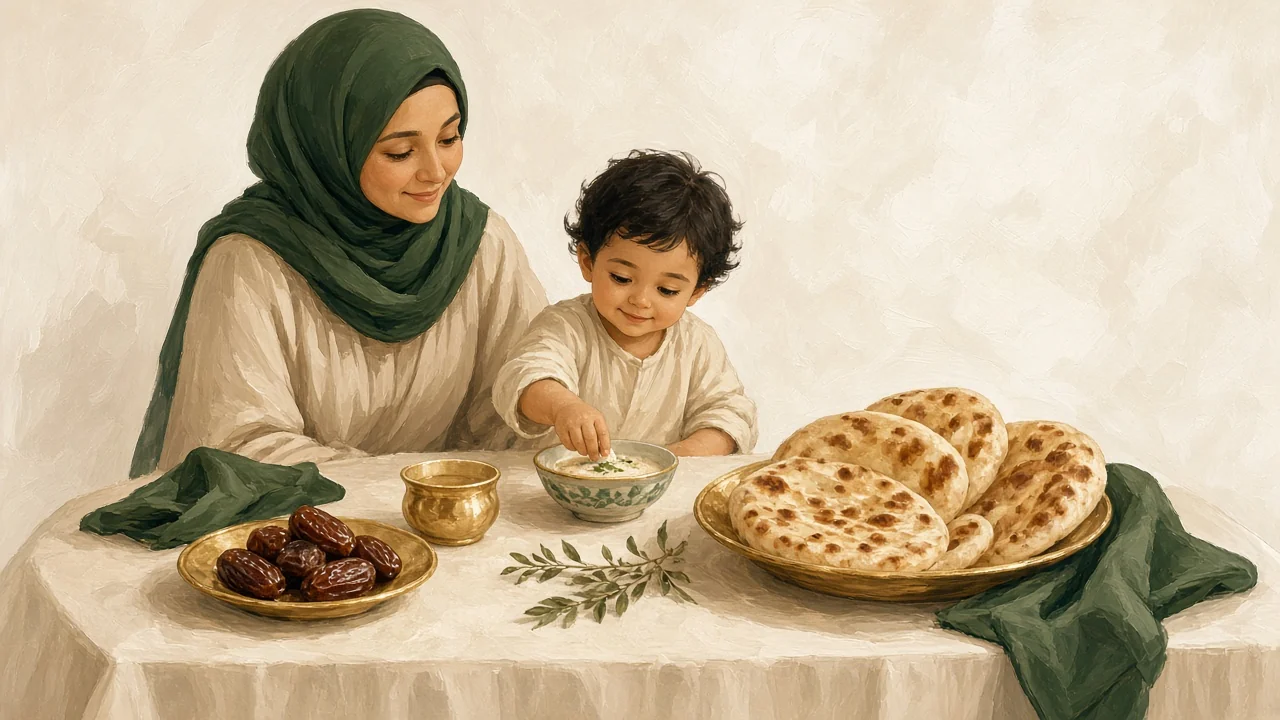
Islamic Table Manners for Toddlers: A 7-Day Bismillah & Right-Hand Plan
Teach Islamic table manners for toddlers with a 7-day Bismillah and right-hand plan—meal scripts, age tips, guest/restaurant edge cases, and a gentle sticker chart.
Read guide →
Thanksgiving for Muslim Families: Shukr Traditions, Halal Turkey Tips and Kind Answers for Kids
Thanksgiving for Muslim families: school crafts, halal turkey, prayer times on the day, hosting adab, and simple shukr traditions kids will remember.
Read guide →