
How to Teach Muslim Kids to Cheer Up a Sad Friend: Rahma Scripts and Small Acts That Help
Your son gets in the car after school and says, “Leo was sad all day. His dog died. He cried at lunch.” Then he goes quiet. After a minute: “I didn’t know what to say, so I didn’t say anything.”
That moment is gold. Your child noticed. He cared. He just didn’t have the tools. Most kids don’t. They either freeze, make an awkward joke, or say something that accidentally makes it worse (“It’s just a dog!”).
Cheering up a friend is a skill, and like any skill, it can be taught. For Muslim kids, it’s also an act of rahma (mercy) that the Prophet ﷺ modeled again and again. This guide gives you the Islamic foundation, a simple step-by-step method kids can remember, scripts by situation, and ideas for practicing at home.
If your child mostly needs help with the very first moment (sitting with a crying classmate, asking “Are you okay?”), start with our guide to comforting a sad classmate with rahma scripts. This article goes one step further: what to do after the first comfort, to actually help a friend feel a little better.
The Prophet ﷺ Cheered Up a Little Boy
There’s a beautiful hadith that kids love. A young boy named Abu Umayr had a small pet bird, a nughayr, that he loved to play with. One day the bird died, and the boy was sad. When the Prophet ﷺ saw him, he didn’t ignore the boy’s sadness or tell him to get over it. He gently and playfully asked, “O Abu Umayr, what happened to the nughayr?” (Bukhari and Muslim; other narrations, such as in Abu Dawud, mention that the bird had died).
Think about that. The leader of the Muslims, with the weight of a whole community on his shoulders, noticed a little boy’s sadness about a tiny bird and took time to speak to him kindly, using his nickname, with a gentle, playful tone.
That’s the model: notice, care, and lighten the heart.
Why It Matters in Islam
Bringing joy is beloved to Allah. The Prophet ﷺ said that among the most beloved deeds to Allah is bringing happiness to a Muslim or relieving them of distress (reported by At-Tabarani, graded hasan by scholars). Kids can apply the spirit of this to everyone they meet, Muslim or not.
A smile is charity. “Your smiling in the face of your brother is charity” (Tirmidhi). Even the smallest cheer-up counts.
Mercy to everyone. The Prophet ﷺ said, “Those who show mercy will be shown mercy by the Most Merciful. Be merciful to those on the earth, and the One above the heavens will be merciful to you” (Tirmidhi). He also visited a sick Jewish boy who used to serve him (Bukhari). Our kindness isn’t only for Muslim friends.
Sadness is not a weakness. When the Prophet’s ﷺ baby son Ibrahim died, tears ran from his eyes. He said, “The eyes shed tears and the heart grieves, but we say only what pleases our Lord” (Bukhari). Cheering someone up never means telling them not to be sad.
That last point matters. Before kids learn to cheer, they need to learn that sadness is allowed.
The 5-Step Cheer-Up Method Kids Can Remember
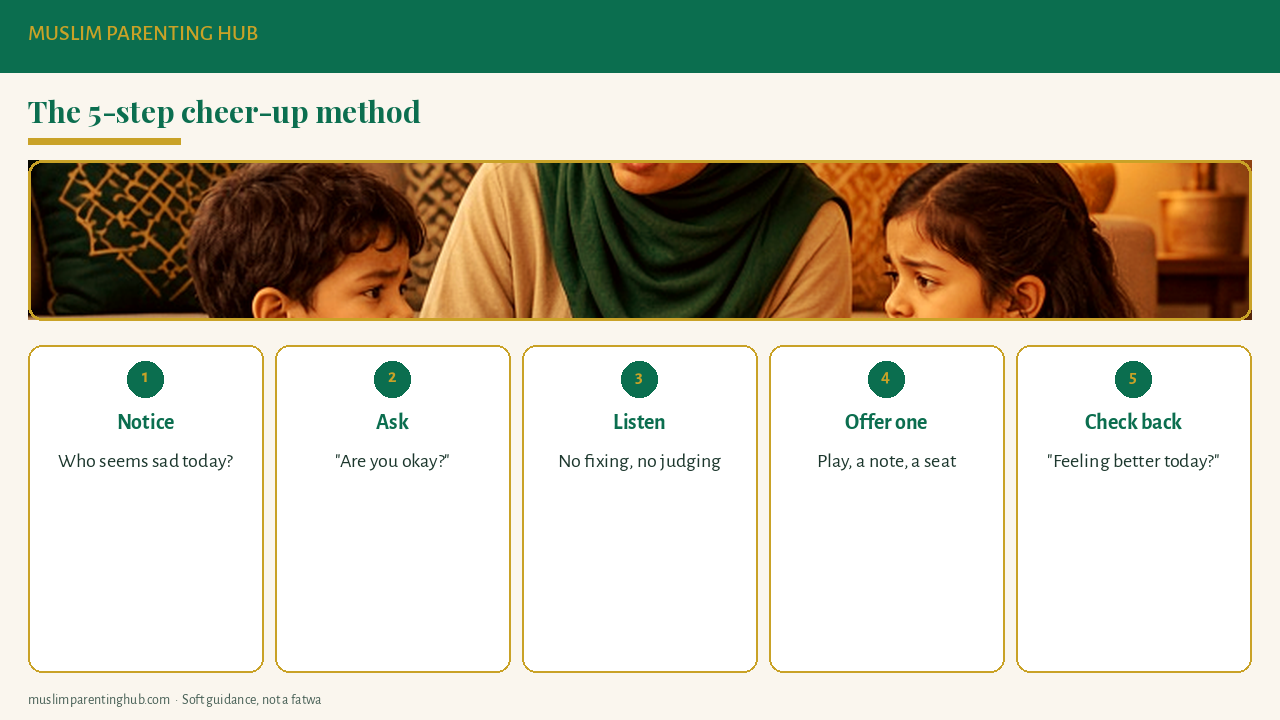
Teach these five steps with a simple hand: one finger per step.
1. Notice
“Is someone sitting alone? Crying? Quiet when they’re usually loud?” Help your child become a noticer. Ask at dinner: “Did anyone seem sad today?”
2. Ask
“Are you okay?” or “You seem sad. Do you want to talk?” Keep it simple. A gentle question opens the door without pushing.
3. Listen
This is the hardest part for kids. Teach them to listen without fixing, judging, or turning the story to themselves (“My grandma’s dog died too and…”). A nod and “That sounds really hard” go a long way.
4. Offer one cheer-up
Not ten. One small thing that fits the friend and the moment (see the cheer-up menu below).
5. Check back tomorrow
“Hey, are you feeling a little better today?” This is what real friends do, and most kids forget it. Checking back tells your friend, “I still remember. You matter to me.”
The Cheer-Up Menu: Small Acts That Help
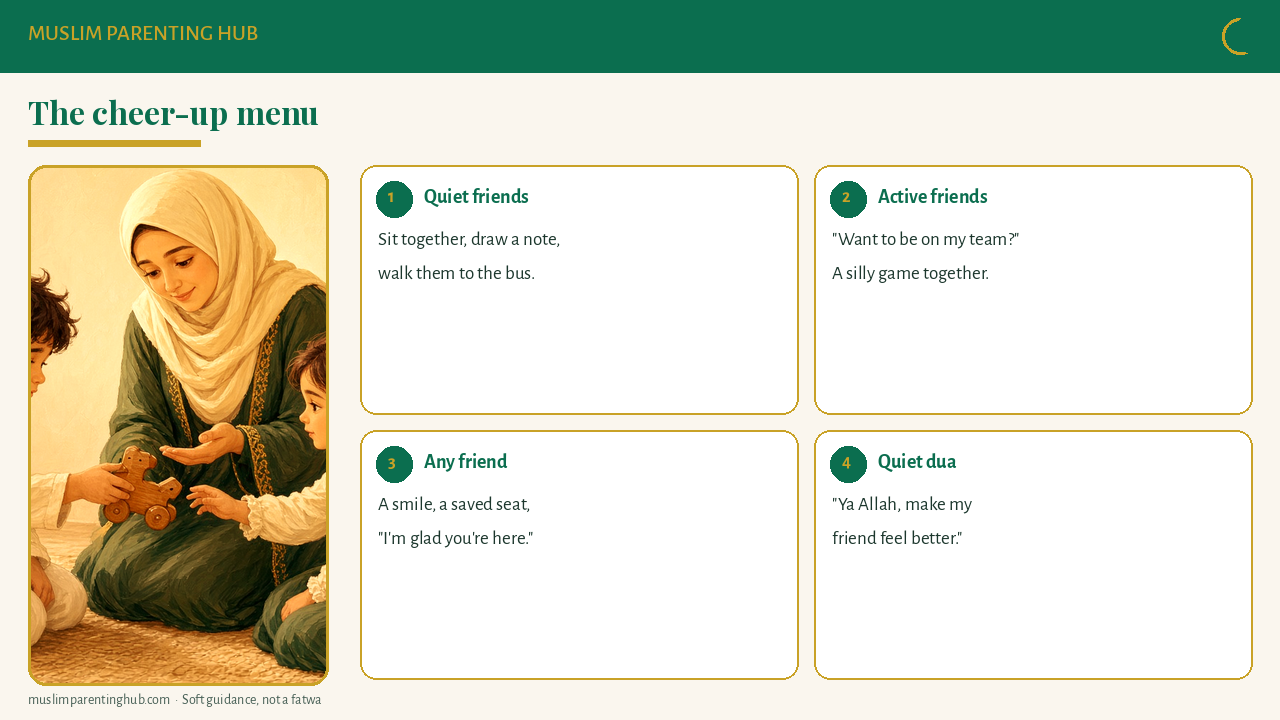
Different friends need different things. Help your child think: “Is my friend a quiet person or an active person? Do they want to talk, or do they want to forget about it for a while?”
For quiet friends: - Sit next to them at lunch without saying much - Draw them a picture or write a short note (“I’m glad you’re my friend”) - Share a favorite book or show them something interesting - Offer to walk with them to the bus
For active friends: - Invite them to play at recess: “Want to be on my team?” - Play a silly game together - Tell a (kind) joke, if they seem ready to laugh - Make them laugh with a funny face, but only if it feels right
For any friend: - A smile - Saying “I’m glad you’re here” - Saving them a seat - Including them in a group activity - Sharing a snack (check allergies and school rules first)
Something only Muslim kids can do: - Make dua for them quietly: “Ya Allah, make my friend feel better.” - For Muslim friends, a gentle reminder: “Allah is with you.”
Making dua for a non-Muslim friend’s well-being is a beautiful act of mercy. Your child can do it privately, without making it awkward.
Scripts for Common Situations
Kids freeze because they don’t know the words. Give them ready-made lines.
When a friend’s pet died
“I’m so sorry about your dog. What was his name? What did he like to do?”
Letting a friend talk about what they lost is often the best cheer-up. Later: “Want to draw a picture of him?” If your own child is struggling with loss, our guide to explaining death to a child in Islam can help.
When a friend lost a game or didn’t make the team
“That was a tough game. You tried really hard. Want to practice together at recess?”
Our guide on good sportsmanship for Muslim kids has more words for wins and losses.
When a friend got in trouble
“That was embarrassing. Everyone gets in trouble sometimes. Want to sit together at lunch?”
Avoid gossiping about what happened.
When a friend is homesick or missing a parent
“I miss my mom sometimes, too. Want to make her a card in free time?”
When a friend was left out
“You can play with us! We need one more.”
When a friend is sad and won’t say why
“That’s okay. You don’t have to tell me. I’ll just sit with you.”
When your child accidentally made the friend sad
Cheering up starts with a real apology: “I’m sorry I said that. It wasn’t kind.” Our guide to teaching kids to apologize with heart walks through it.
What NOT to Say (Even With Good Intentions)
Kids often try to help with phrases that backfire. Practice swapping them:
| Instead of… | Try… |
|---|---|
| “Don’t be sad.” | “It’s okay to be sad.” |
| “It’s not a big deal.” | “That sounds hard.” |
| “Stop crying.” | “Do you want a tissue?” |
| “At least…” | “I’m sorry that happened.” |
| “You’ll get over it.” | “I’m here if you want to talk.” |
| “Let’s tell everyone!” | “I won’t tell anyone.” |
The goal isn’t to make sadness disappear in five minutes. It’s to make sure the friend doesn’t feel alone.
Knowing When to Get a Grown-Up
Cheering up a friend is kind, but some problems are too big for kids. Teach your child clearly:
Tell a teacher or parent right away if a friend: - Says they want to hurt themselves or that they wish they weren’t alive - Says someone is hurting them at home or at school - Is being bullied over and over - Is hurt physically - Is sad for many days in a row
Say: “Telling a grown-up isn’t tattling. It’s helping. Some things are too heavy for kids to carry alone.” Make sure they know which adults at school they can go to: teacher, counselor, nurse, or a favorite aide.
By Age: What to Expect
Ages 4–6
Kids can notice, say “Are you okay?”, share a toy, and tell a grown-up. Practice with stuffed animals at home: “Teddy is sad. What can we do?”
Ages 7–9
They can learn the full 5-step method, use scripts, and check back the next day. This age loves the Abu Umayr story; tell it and ask, “How do you think he felt when the Prophet ﷺ asked about his bird?”
Ages 10–11
Older kids can read emotions more subtly, notice quieter sadness, and handle more private conversations. Talk about respecting privacy, not sharing a friend’s sadness online, and recognizing when to involve an adult.
Practicing at Home
Kids learn kindness most from what they see and practice at home.
- Role-play once a week: You pretend to be a sad friend; your child tries the 5 steps. Swap roles.
- Use family moments: When a sibling is sad, coach the other child: “What could you do to cheer him up?” Our rahma activities for kids have more practice ideas.
- Model it yourself: Let your child see you checking on a neighbor, calling a sad relative, or bringing food to someone sick. Our neighbor kindness 7-day plan is an easy family project.
- Ask after school: “Did anyone need cheering up today? What did you do?” Celebrate the effort, not just success.
- Make dua together: At bedtime, make dua for anyone who was sad that day.
When Your Child’s Cheer-Up Doesn’t Work
Sometimes your child will try and the friend will say “Go away” or stay sad. Teach your child:
- “It’s not your job to fix their feelings. Your job is to be kind.”
- “Sometimes people need space. You can try again tomorrow.”
- “Allah sees your kindness even if your friend doesn’t notice.”
This protects your child from feeling rejected and keeps them from becoming a people-pleaser.
A Final Word
A child who knows how to cheer up a friend is a child who will grow into an adult who knows how to show up for people. The Prophet ﷺ noticed a little boy’s sadness over a small bird. If our children can learn to notice, ask, listen, offer one small kindness, and check back tomorrow, they’ll be living a piece of that Sunnah every day at school.
FAQ
How can my child cheer up a sad friend at school?
Teach five steps: notice, ask “Are you okay?”, listen without fixing, offer one small kindness like playing together or drawing a note, and check back the next day.
Is it okay for Muslim kids to make dua for non-Muslim friends?
Yes. Making dua for a friend’s comfort, health, and happiness is an act of mercy. Your child can do it privately without making the friend uncomfortable.
What if my child tries to help and the friend says “go away”?
Teach that it’s not their job to fix feelings. Respect the friend’s space, try again tomorrow, and remember that Allah sees every kind effort.
When should my child tell a grown-up about a sad friend?
Right away if the friend talks about self-harm, mentions being hurt or bullied, is physically hurt, or seems sad for many days in a row. Telling a grown-up is helping, not tattling.
What Islamic story teaches kids to cheer up others?
The story of Abu Umayr and his bird: when the boy’s pet died, the Prophet ﷺ gently asked, “O Abu Umayr, what happened to the nughayr?”, showing care for a child’s sadness.
Related guides
Related articles
Teach Kids to Comfort a Sad Classmate: Rahma Scripts for US Public School
Teach Muslim kids rahma scripts to comfort a sad classmate at US public school—kind words, consent, inclusion tips, and what not to say.
Read guide →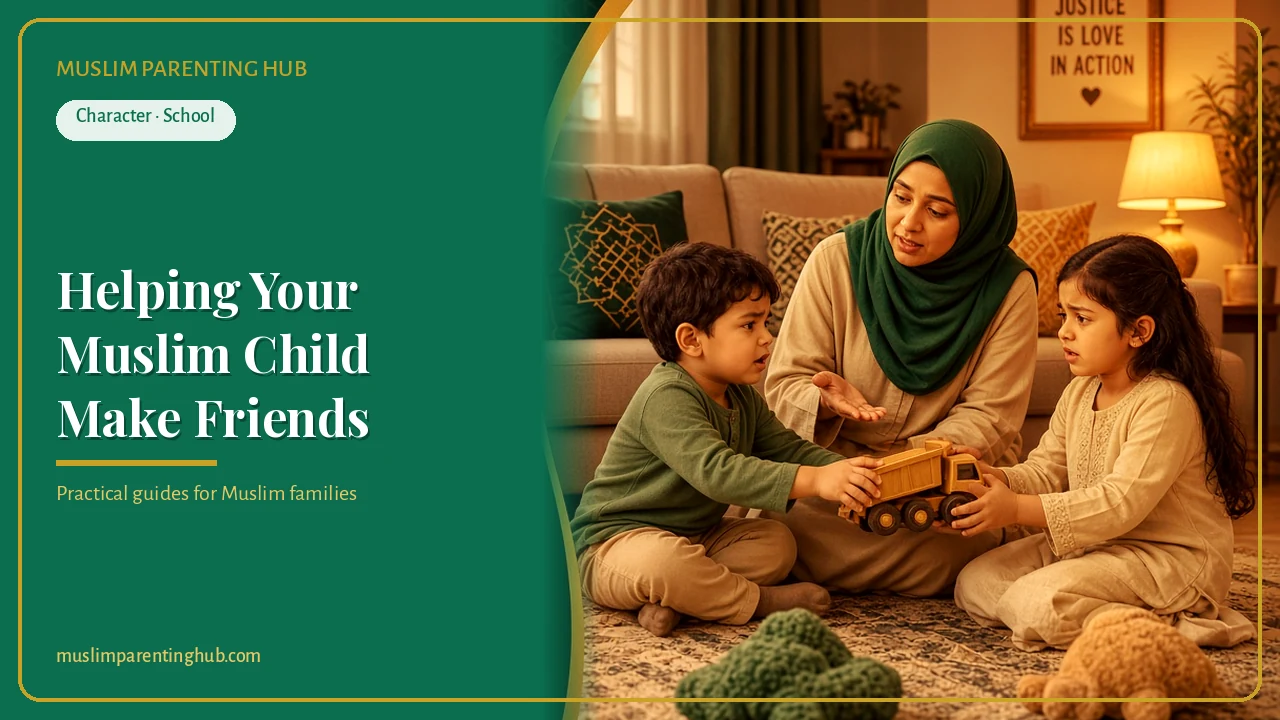
Helping Your Muslim Child Make Friends at School: Scripts, Playdates and Good Companions
Is your Muslim child lonely at school? Friendship scripts, halal playdate ideas, what to say when "no one plays with me," and the Sunnah of good friends.
Read guide →
10 Rahma Activities to Teach Muslim Kids Kindness This Month
Teach Muslim kids rahma with 10 kindness activities—kindness jar, neighbor drops, Prophet ﷺ mercy stories, age charts, and tonight scripts. Soft, practical monthly plan.
Read guide →
Good Sportsmanship for Muslim Kids: Winning, Losing and Teamwork With Islamic Adab
Teach Muslim kids good sportsmanship with Islamic adab: scripts for losing, humble winning, anger tools, sideline manners, and a game-day routine.
Read guide →