Teach Kids the Full Salam: The Words, the Best Replies and the 10-20-30 Reward
Your toddler has learned “Salam!” Your preschooler says “Assalamu alaikum” at the masjid door. Now your child is 5, 6 or 8, and you hear yourself thinking: Is it time for the whole thing?
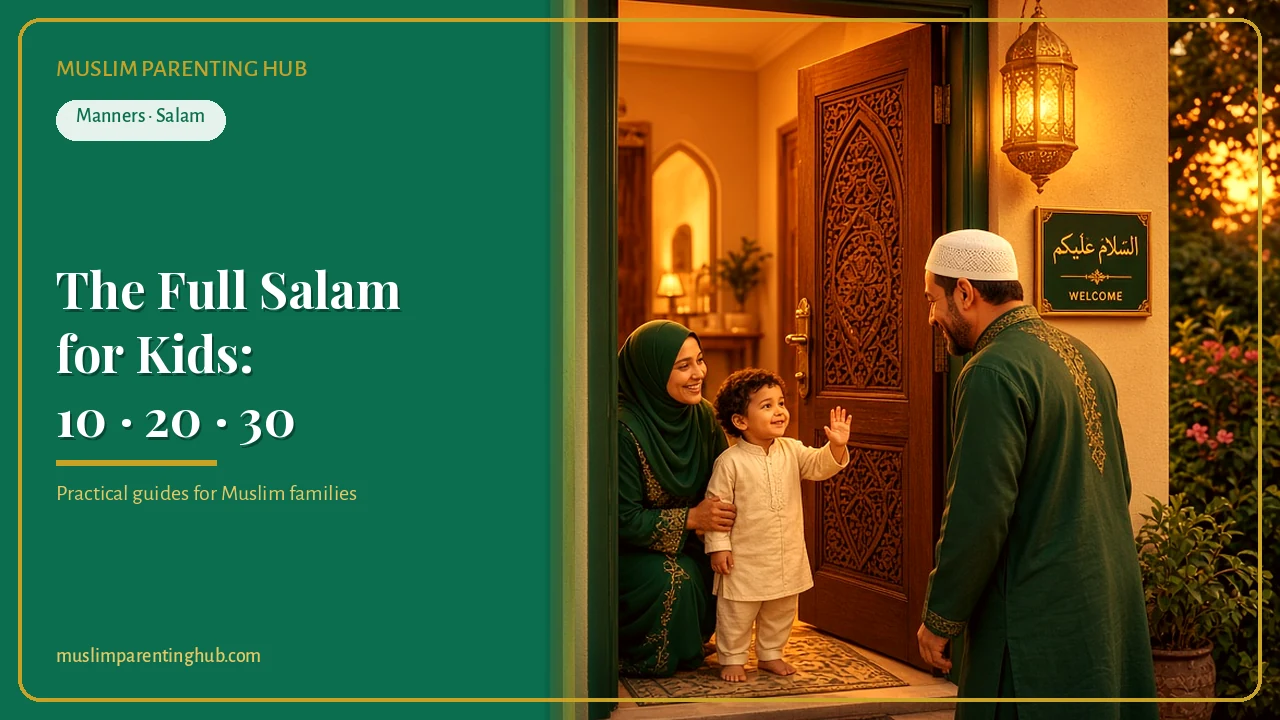
Yes, it is. The full Islamic greeting, “Assalamu alaikum wa rahmatullahi wa barakatuh,” is one of the easiest ways to teach children that a simple hello can be worship. And there is a beautiful hadith that kids love, because it comes with points: 10, 20 and 30.
This guide shows US Muslim parents how to teach the full salam and the best reply, who should greet first, how to handle school and non-Muslim friends kindly, and fun games for ages 4–10. It is gentle home guidance, not a fatwa.
If your child is still a toddler or just starting, begin with our playful 7-day plan to teach toddlers to say salam. This article is the next step up.
The Three Levels of Salam (and the 10-20-30 Reward)
A man came to the Prophet ﷺ and said, “Assalamu alaikum.” The Prophet ﷺ replied and said, “Ten.” Another came and said, “Assalamu alaikum wa rahmatullah.” He replied and said, “Twenty.” A third said, “Assalamu alaikum wa rahmatullahi wa barakatuh.” He replied and said, “Thirty” (Abu Dawud, Tirmidhi), meaning ten, twenty and thirty good deeds.

| Level | Words | Meaning | Reward |
|---|---|---|---|
| 1 | Assalamu alaikum | Peace be upon you | 10 good deeds |
| 2 | Assalamu alaikum wa rahmatullah | Peace and Allah’s mercy be upon you | 20 good deeds |
| 3 | Assalamu alaikum wa rahmatullahi wa barakatuh | Peace, Allah’s mercy and His blessings be upon you | 30 good deeds |
Kids instantly understand this. “Why would I say ten when I can say thirty?”
The Best Reply
Allah tells us: “When you are greeted with a greeting, greet back with a better one, or at least return it equally” (Quran 4:86).
So the reply should match or beat the greeting:
- If someone says “Assalamu alaikum,” reply “Wa alaikum assalam wa rahmatullah” (better) or at least “Wa alaikum assalam.”
- If someone says the full salam, reply in full: “Wa alaikum assalam wa rahmatullahi wa barakatuh.”
Teach kids that returning salam is a duty, while starting salam is a Sunnah with a big reward. If your child is happy to start but shy to reply (or the other way around), our guide on teaching shy kids to return the salam has soft scripts.
Break It Into Chunks (How Kids Actually Learn It)
The full salam is long for little mouths. Teach it in three chunks, one week each:
- Week 1: “Assalamu alaikum” (most kids already know this). Focus on saying it clearly, with a smile and eye contact.
- Week 2: Add “wa rahmatullah.” Explain: “Rahmah means mercy. You’re asking Allah to be kind to that person.”
- Week 3: Add “wa barakatuh.” “Barakah means blessing, when Allah puts extra good into something.”
Practice the reply the same way, chunk by chunk. A parent says the greeting, the child replies, and then swap.
Who Says Salam First?
The Prophet ﷺ gave simple guidelines that kids find fair and easy to remember: the one riding greets the one walking, the one walking greets the one sitting, the smaller group greets the larger group (Bukhari, Muslim), and the younger greets the older (Bukhari).
Turn it into a game: “I’m walking into the kitchen and Grandma is sitting. Who says it first?” (Me!)
Also teach:
- Entering the house: say salam to the family, even if they’re busy.
- Leaving a gathering: say salam on the way out too.
- Siblings count. Greeting a brother or sister at breakfast earns the same reward.
- Spreading salam brings love. The Prophet ﷺ said, “Shall I tell you something that, if you do it, you will love one another? Spread salam among yourselves” (Muslim).
Salam at School and With Non-Muslim Friends
US kids greet lots of people who aren’t Muslim: teachers, bus drivers, neighbors and friends. Keep it simple and kind:
- Muslim friends and families: use the full salam freely.
- Non-Muslim teachers and friends: a warm “Good morning!”, “Hi!” or “Peace be with you” is kind and appropriate. Scholars differ on initiating the Arabic salam with non-Muslims, so follow your family’s or imam’s guidance.
- If a non-Muslim greets your child with “Assalamu alaikum”: many families teach the reply “Wa alaikum” or “Wa alaikum assalam,” returned warmly.
The goal is a child who is confident in their own greeting and polite to everyone. For more on calm, kind answers at school, see our guide on helping your Muslim child make friends at school.
Four Fun Practice Games (Ages 4–10)
1. The Points Game
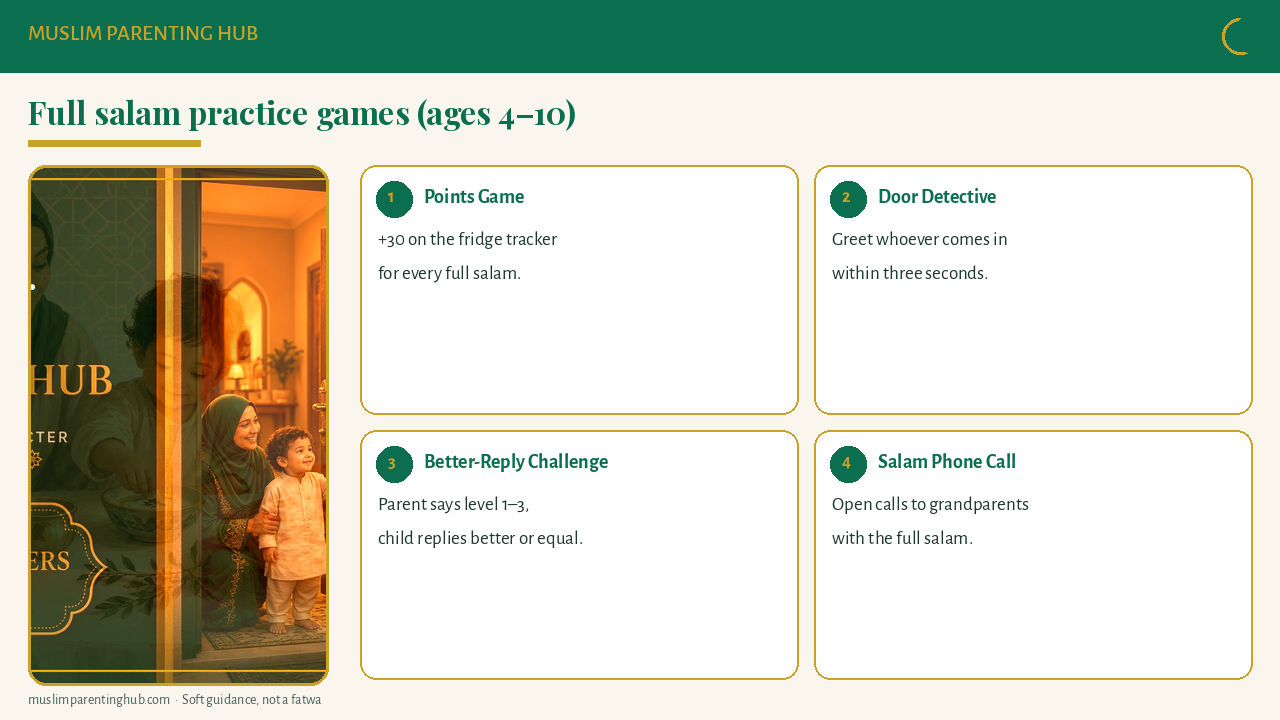
Every time your child uses the full salam at home this week, they add 30 to a paper tracker on the fridge. At the end of the week, add it up together and say, “Only Allah knows the real reward, but look how many times you spread peace!” Keep it about the reward from Allah, not about prizes.
2. Door Detective
Whoever comes through the front door has to be greeted with the full salam within three seconds. Kids love being the “door detective,” and it builds the habit of greeting family members first.
3. Better-Reply Challenge
A parent says a greeting at random level (1, 2 or 3). The child must reply better or equal. Quick, silly and great practice for Quran 4:86.
4. Salam Phone Call
On calls to grandparents or relatives, let your child open with the full salam. Older relatives usually respond with great delight, and the child learns that salam belongs on the phone and on video calls too.
Manners That Go With Salam
The words matter, and so does the way we say them. Teach:
- Smile — the Prophet ﷺ said a smile for your brother is charity (Tirmidhi).
- Look up, not at a screen.
- Speak clearly, not mumbled.
- Handshake with family and same-gender friends, if your family does so, and respect anyone who prefers not to.
These go well with the other habits in our Islamic manners for kids daily adab checklist. And once salam is strong, the next natural step is gratitude: teach kids to say JazakAllah khair.
FAQ
What is the full salam in Islam?
The full salam is “Assalamu alaikum wa rahmatullahi wa barakatuh,” meaning “Peace be upon you, and Allah’s mercy and His blessings.” It is the most complete form of the Islamic greeting.
What is the 10-20-30 salam hadith?
The Prophet ﷺ said “Ten” for someone who said “Assalamu alaikum,” “Twenty” for adding “wa rahmatullah,” and “Thirty” for the full salam with “wa barakatuh,” meaning ten, twenty and thirty good deeds (Abu Dawud, Tirmidhi).
How should kids reply to salam?
Reply with a better or equal greeting (Quran 4:86). For “Assalamu alaikum,” say “Wa alaikum assalam wa rahmatullah.” For the full salam, reply “Wa alaikum assalam wa rahmatullahi wa barakatuh.”
At what age should kids learn the full salam?
Most children can learn it between ages 4 and 7. Teach it in three chunks, one week each, and practice the reply the same way. Younger toddlers can start with “Salam” or “Assalamu alaikum.”
Who should say salam first?
The one walking greets the one sitting, the one riding greets the one walking, the smaller group greets the larger, and the younger greets the older. Anyone who starts salam first gets a special reward.
Should Muslim kids say salam to non-Muslim friends?
A warm “Hi” or “Good morning” is kind and appropriate with non-Muslim friends and teachers. Scholars differ on starting the Arabic salam with non-Muslims, so follow your family’s or imam’s guidance.
Related guides
- How to teach toddlers salam: 7 playful days
- Teach shy kids to return the salam
- Teach kids to say JazakAllah khair
- Islamic manners for kids: daily adab checklist
Closing
Salam is the smallest act of worship your child can do a hundred times a day. Three short phrases, a smile and a better reply turn every doorway, breakfast table and phone call into a chance to spread peace and earn thirty good deeds. Start with one chunk this week. By next month, you may hear the full salam ringing through your home.
Related articles
How to Teach Toddlers to Say Salam: A Playful 7-Day Plan
Teach your toddler to say Assalamu alaikum in 7 playful days: mirror games, doorway role-play, shy-child scripts and age tips. Start today, no forcing.
Read guide →
Teach Shy Kids to Return the Salam: A Gentle 7-Day Plan
Help shy Muslim kids return Assalamu alaikum without forcing. Soft scripts, age tips, doorway practice, and a 7-day plan for US families.
Read guide →
Teach Kids to Say JazakAllahu Khayran: Thank-You Manners for Muslim Kids at Home, School and the Masjid
How to teach kids to say JazakAllah khair and thank you: meaning, correct forms and replies, US school and masjid scripts, thank-you notes and a 7-day plan.
Read guide →
Islamic Manners for Kids: A Daily Adab Checklist for Home, School and the Masjid (Ages 3–10)
A printable-style Islamic manners checklist for kids: 30 everyday adab habits for home, school, and the masjid, with age guides, scripts, and a weekly focus plan.
Read guide →