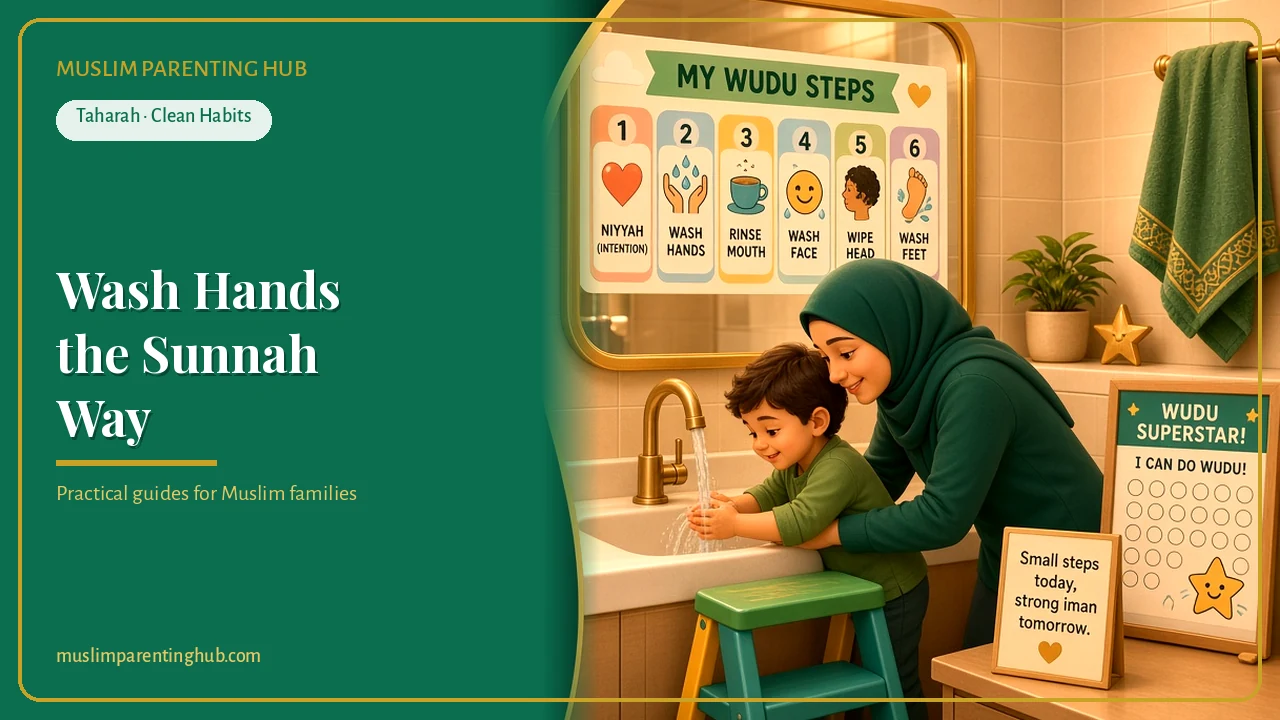
Teach Kids to Wash Hands the Sunnah Way: When, How and Why (A Cold-and-Flu Season Guide)
Cold-and-flu season is here, school sinks are busy, and every parent is saying the same sentence fifty times a day: “Did you wash your hands?”
For Muslim families, that sentence can carry more than germs. Cleanliness is part of our deen. The Prophet ﷺ said, “Purity is half of faith” (Muslim). Handwashing is one of the first places a small child can feel taharah: water, soap, a clean feeling, and the quiet knowledge that Allah loves those who keep clean (Quran 2:222).
This guide shows US Muslim parents the key handwashing moments from the Sunnah, a simple how-to kids can follow, right-hand and left-hand adab, and a seven-day plan to turn reminders into a habit. It is gentle home guidance, not a fatwa. If you are in the middle of toilet training, our full guide to Islamic potty training without shame covers the bigger picture of taharah for little ones.
Why Handwashing Is Part of Taharah
Taharah means purity. For kids, the word can feel big, so make it concrete:
“Taharah means being clean for Allah. Clean body, clean clothes, clean place to pray. Washing our hands is a little piece of taharah we can do many times a day.”
Three simple truths make it stick:
- Allah loves cleanliness. “Allah loves those who turn to Him and loves those who purify themselves” (Quran 2:222).
- The Prophet ﷺ washed his hands at special times. Kids love learning “what the Prophet ﷺ did,” told in words.
- Clean hands protect others. Washing before you share snacks or hold a baby is a kind of rahma.
The Key Handwashing Moments (Sunnah + Common Sense)
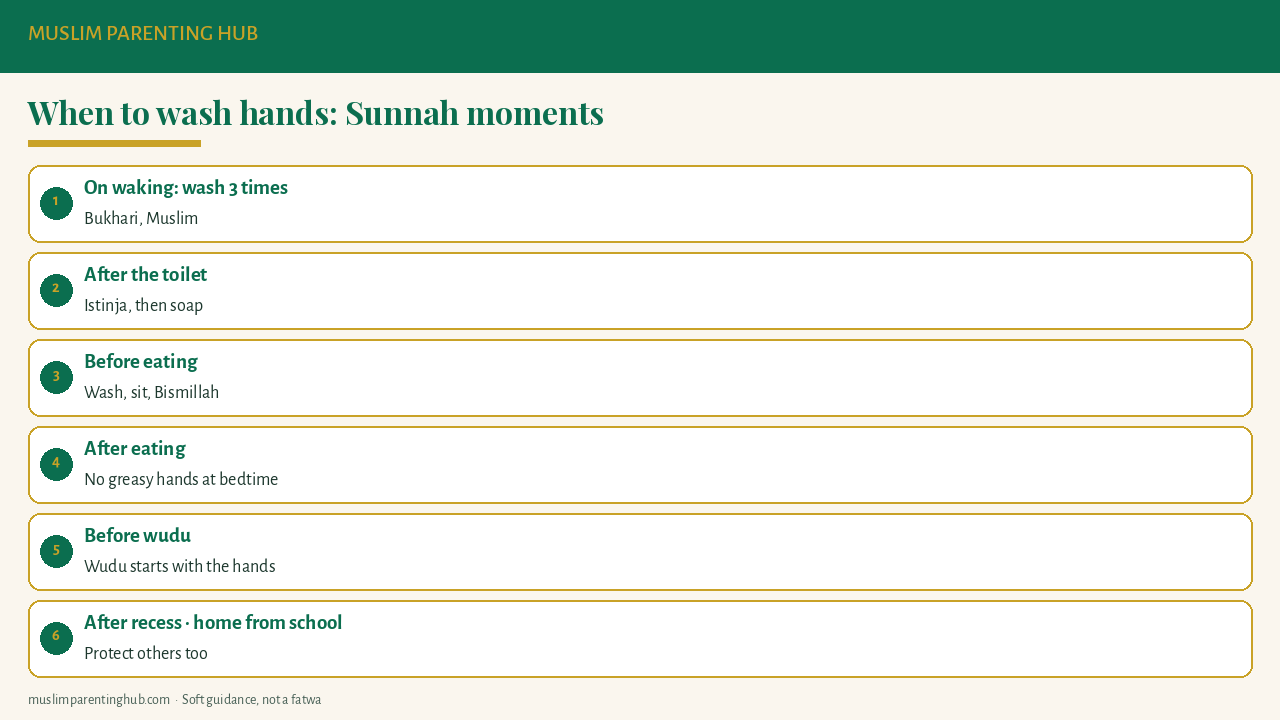
1. When Waking Up
The Prophet ﷺ said, “When one of you wakes up from sleep, he should not put his hand into a vessel until he has washed it three times, for he does not know where his hand spent the night” (Bukhari, Muslim). For kids, this becomes a simple morning step: wake up, Alhamdulillah, wash hands three times.
2. After the Toilet
After istinja (cleaning with water), hands get washed well. The Prophet ﷺ, after cleaning himself, would rub his hand on the ground (the soap of that time) and then wash it (Abu Dawud, Nasa’i). Today, that’s soap and water. Our istinja washing steps for kids cover the cleaning part, and the bathroom duas for kids cover the words at the door. Handwashing is the final step before “Ghufranak.”
3. Before and After Eating
Washing before meals is good adab and good health. Washing after is in the Sunnah too: the Prophet ﷺ warned against sleeping with grease on the hand without washing it (Abu Dawud, Tirmidhi). Teach both, and pair the “before” wash with Bismillah at the table. Our Islamic table manners 7-day plan builds on this.
4. Before Wudu and Salah
Wudu itself begins by washing the hands three times. Children who already wash their hands carefully find wudu much easier. See playful wudu steps for preschoolers.
5. Everyday Health Moments
After recess, after blowing the nose, after touching pets, before holding a baby, and after coming home from school or the masjid. These aren’t specific hadith moments, but they protect people, and protecting people is part of our deen.
How to Wash: 7 Kid-Size Steps
Health experts recommend scrubbing with soap for about 20 seconds. That’s roughly the time it takes to say Surah Al-Ikhlas slowly, or to say “SubhanAllah” ten times. Many families use that instead of a song.
- Bismillah (outside the toilet room, or at the kitchen sink).
- Wet both hands with clean water.
- Soap – one pump is enough.
- Scrub palms, backs, between fingers, thumbs and under nails while you count or say your dhikr quietly. (Inside the toilet room, keep the dhikr in the heart.)
- Rinse right hand first, then left, a nice Sunnah habit of starting with the right.
- Dry with a clean towel or paper towel.
- Alhamdulillah for clean water. Many children in the world don’t have it.
There is no special hadith dua just for handwashing, so don’t invent one. Bismillah before and Alhamdulillah after is a beautiful, simple frame.
Right Hand, Left Hand: The Adab Kids Can Learn
The Prophet ﷺ liked to start with the right in good things: putting on shoes, combing hair and purifying himself (Bukhari, Muslim). He taught that the right hand is for eating and drinking (Muslim), and the left hand is used for cleaning after the toilet (Muslim).
Make it a game rather than a rule list:
- “Which hand eats? Right!”
- “Which hand helps clean in the bathroom? Left!”
- “Which hand do we rinse first? Right!”
Left-handed kids can still write, draw and play with their left hand. The adab is mainly about eating, drinking, giving and receiving with the right, and using the left for cleaning.
A 7-Day Handwashing Habit Plan
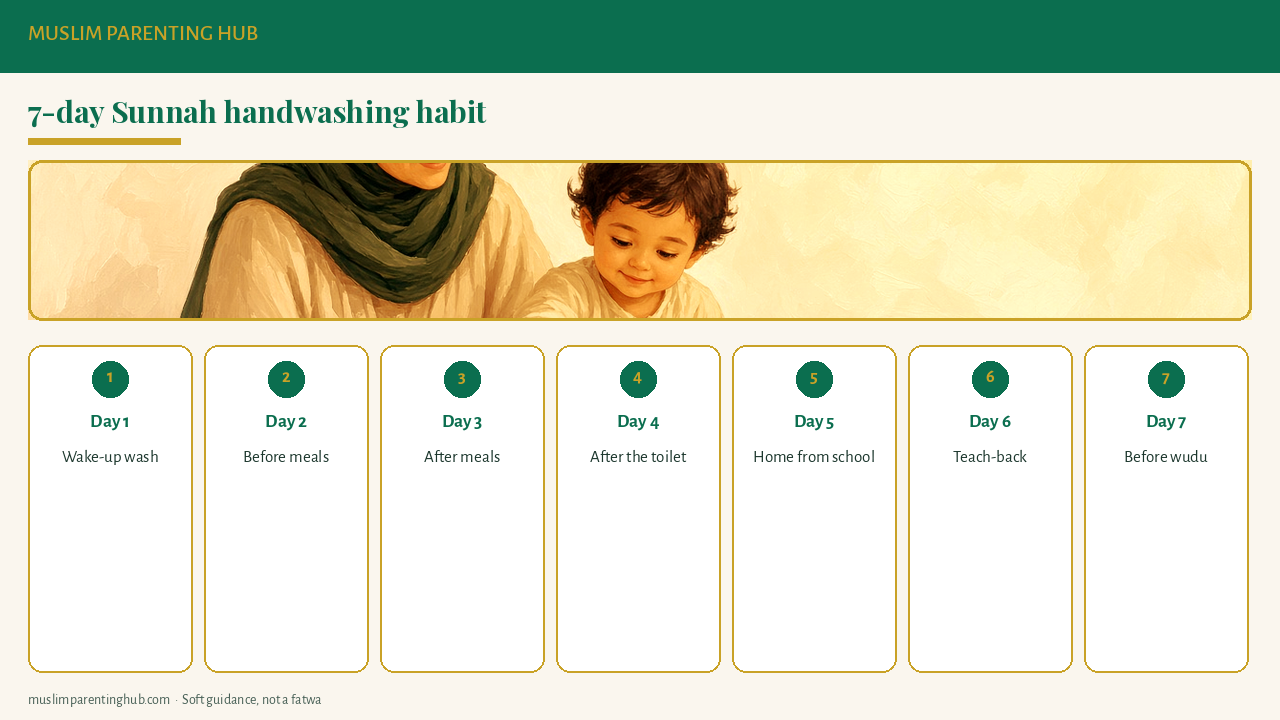
Add one moment a day. By the end of the week, all the key moments are linked:
- Day 1 — Wake-up wash. Alhamdulillah, then wash three times.
- Day 2 — Before meals. Wash, sit, Bismillah.
- Day 3 — After meals. Wash sticky hands before play.
- Day 4 — After the toilet. Soap and a 20-second scrub, then Ghufranak at the door.
- Day 5 — Home from school. Shoes off, bag down, hands washed before snack.
- Day 6 — Teach-back. Your child shows a sibling or a grandparent the 7 steps.
- Day 7 — Before wudu. Notice how the hand wash at the start of wudu feels familiar.
A small sticker chart by the sink helps for ages 3–6. Stop the stickers once it’s automatic. The goal is a habit, not a reward.
Make the Sink Kid-Friendly
- A sturdy step stool so they can reach without help.
- Pump soap kids can press with one hand.
- A hand towel on a low hook (change it often in flu season).
- A small card with the 7 steps and “Bismillah / Alhamdulillah” at eye level.
- A cup for the kitchen sink so they can rinse hands at the table if a meal gets messy.
By Age: What to Expect
| Age | What they can do |
|---|---|
| 2–3 | Wet, soap, rinse with your hands over theirs. Say Bismillah together. |
| 4–5 | All 7 steps with reminders. Count to 20 or say a short dhikr. |
| 6–8 | Wash independently at the key moments; remember right-first. |
| 9+ | Link handwashing to wudu and to protecting others, especially babies and grandparents. |
What to Avoid
- Shame. “You’re dirty” hurts. Say “Let’s get those hands clean for Allah.”
- Turning it into fear. Germs are a good reason, but taharah is about love of cleanliness, not anxiety. Watch for over-washing in worried kids and talk to your pediatrician if it starts to look compulsive.
- Dhikr aloud inside the toilet room. Keep it in the heart there.
- Making up hadith or duas. Stick to what’s known: Bismillah and Alhamdulillah.
FAQ
Is washing hands a Sunnah in Islam?
Yes. The Prophet ﷺ washed his hands at the start of wudu, after using the toilet, and told us to wash our hands three times after waking up before putting them into a vessel (Bukhari, Muslim). Cleanliness in general is part of faith.
Is there a dua for washing hands?
There is no specific authentic dua only for handwashing. Say Bismillah before washing (outside the toilet room) and Alhamdulillah afterward. Wudu has its own Bismillah at the start and a dua at the end.
Should kids wash their hands before eating in Islam?
Washing before meals is good adab and healthy, and the Sunnah warns against sleeping with food grease on the hands without washing (Abu Dawud, Tirmidhi). Teach kids to wash before eating, say Bismillah, and wash again after.
Why do Muslims eat with the right hand and clean with the left?
The Prophet ﷺ taught that we eat and drink with the right hand and use the left for cleaning after the toilet (Muslim). He also liked starting with the right in good things. It keeps food and cleaning separate and builds adab.
How long should kids scrub their hands?
About 20 seconds with soap. Many Muslim families time it by slowly reciting Surah Al-Ikhlas or saying SubhanAllah ten times, but outside the toilet room only. Inside, kids can count quietly instead.
At what age can kids wash their hands on their own?
Most children can follow the full steps with reminders by age 4–5 and wash independently at key moments by 6–7. Toddlers can start at 2 with a step stool and your hands guiding theirs.
Related guides
- Islamic potty training without shame
- Bathroom duas for kids: before and after the toilet
- Teach kids istinja: washing steps
- Playful wudu steps for preschoolers
Closing
Every time your child washes their hands, they can learn a little more about taharah. Keep it simple: Bismillah, scrub, rinse right first, Alhamdulillah. In a few weeks, the reminders fade and the habit stays, along with a sense that being clean is something we do for Allah, for ourselves and for everyone around us.
Quick steps
7-day Sunnah handwashing habit plan for kids. Add one handwashing moment a day until all the key moments are linked.
- Day 1 — Wake-up wash — Say Alhamdulillah on waking, then wash hands three times.
- Day 2 — Before meals — Wash, sit down and say Bismillah.
- Day 3 — After meals — Wash sticky hands before playing.
- Day 4 — After the toilet — Soap and a 20-second scrub, then Ghufranak at the door.
- Day 5 — Home from school — Shoes off, bag down, hands washed before snack.
- Day 6 — Teach-back — Your child shows a sibling or grandparent the 7 steps.
- Day 7 — Before wudu — Notice how the hand wash at the start of wudu feels familiar.
Related articles
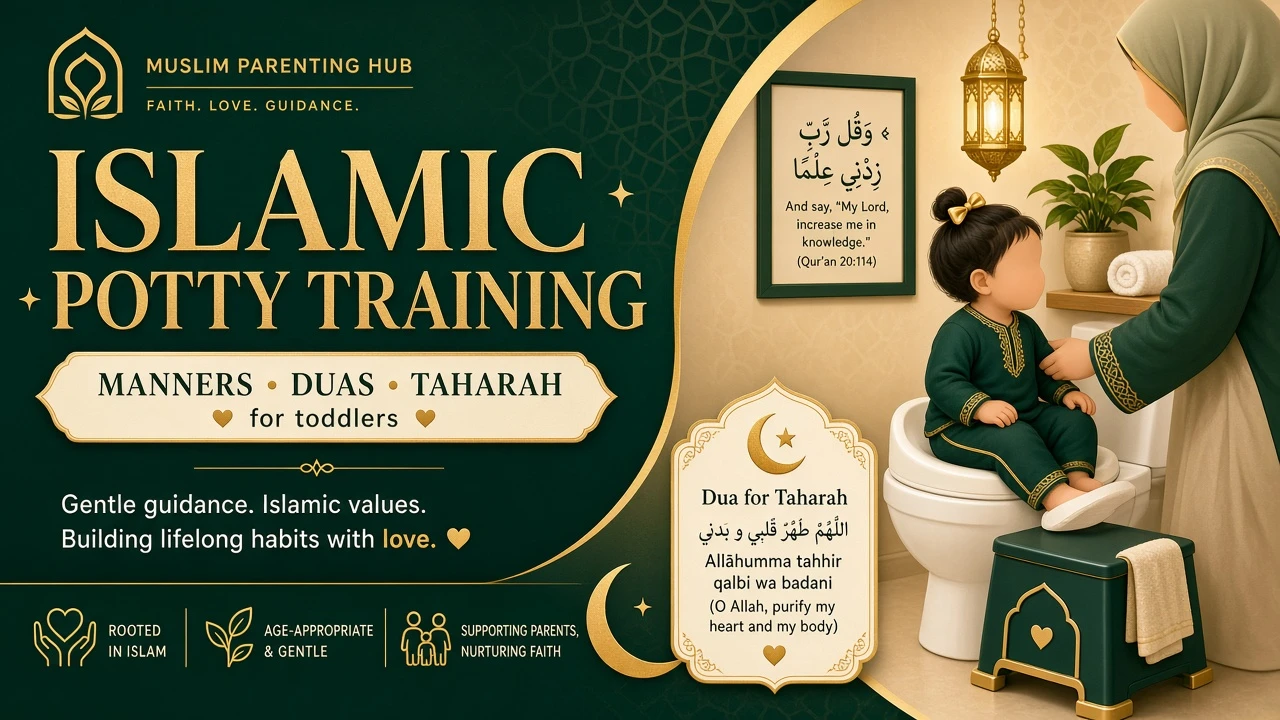
Islamic Potty Training Without Shame: Readiness, Bathroom Duas & Taharah
Ready for Islamic potty training? Spot readiness signs, teach bathroom duas and gentle istinja, and coach toilet manners with zero shame—start tonight.
Read guide →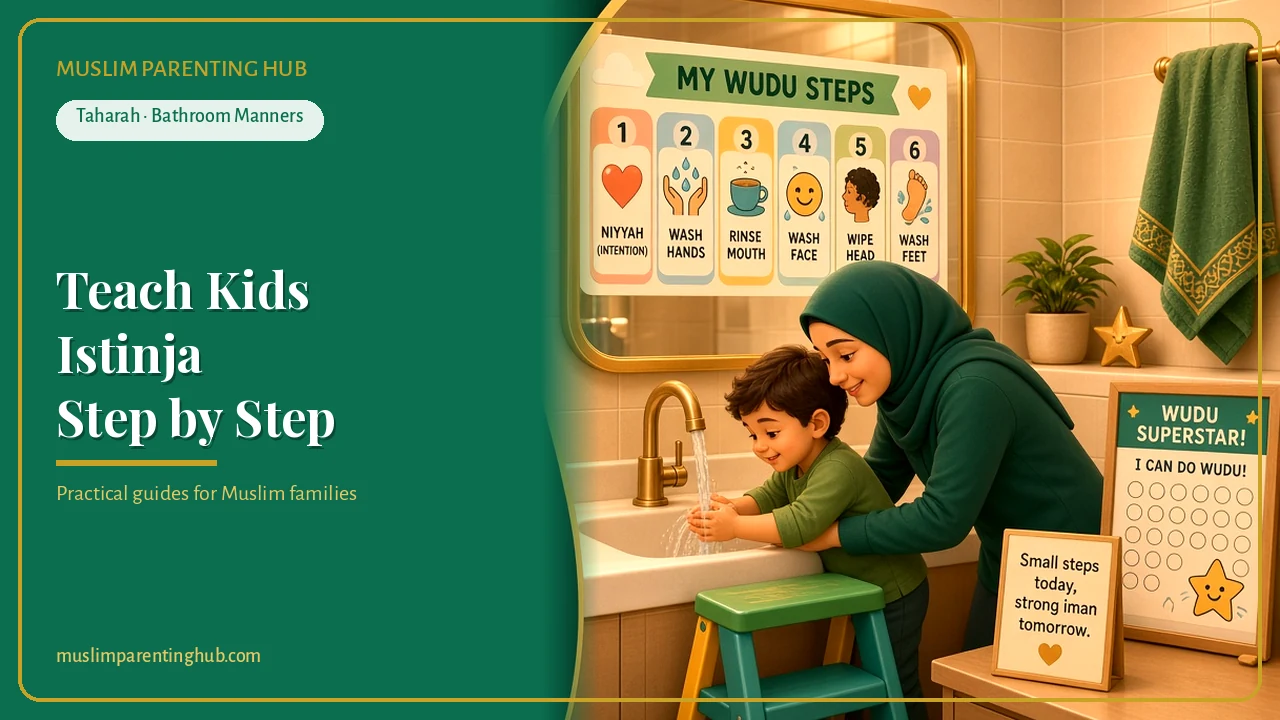
How to Teach Kids Istinja: Simple Washing Steps for US Bathrooms
Teach your child istinja without shame: easy wiping and washing steps, left-hand rules, peri bottle and bidet tips for US bathrooms, and a 7-day practice plan.
Read guide →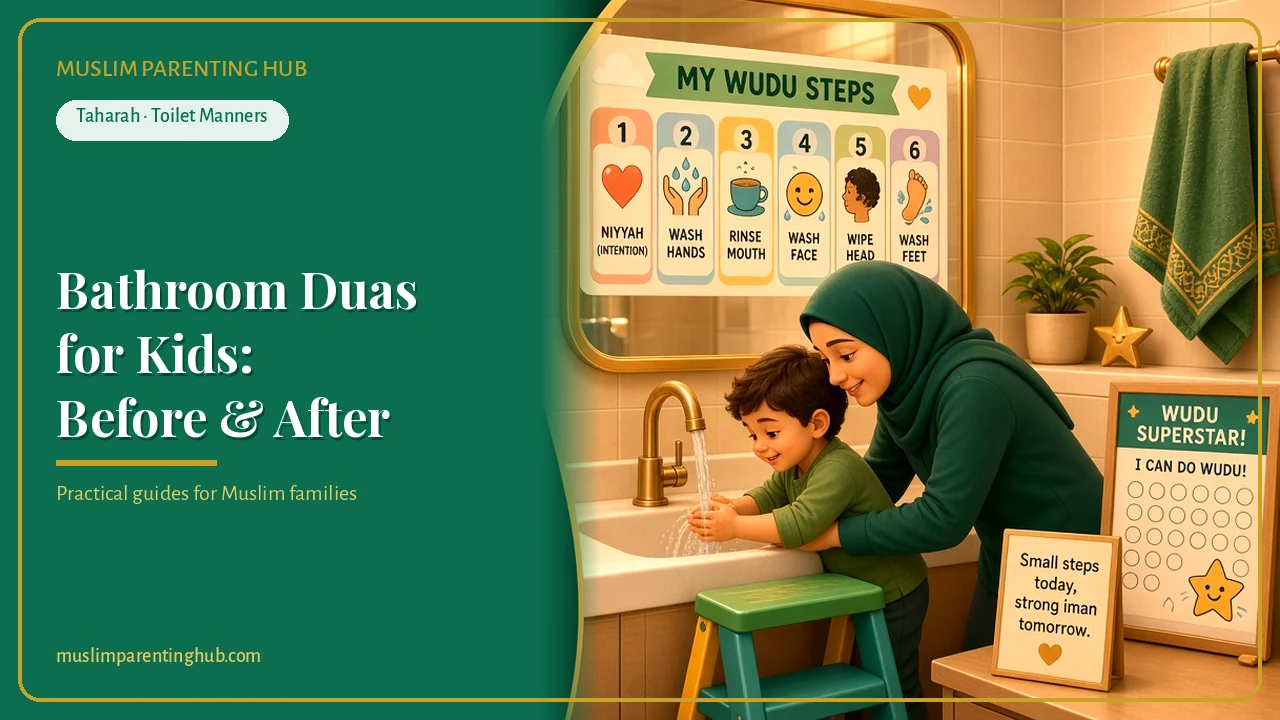
Bathroom Duas for Kids: What to Say Before and After the Toilet (Easy Words + a 5-Day Plan)
Teach kids the bathroom duas in easy steps: Bismillah and the entering dua, Ghufranak when leaving, left foot in, right foot out, and a 5-day plan (ages 2–8).
Read guide →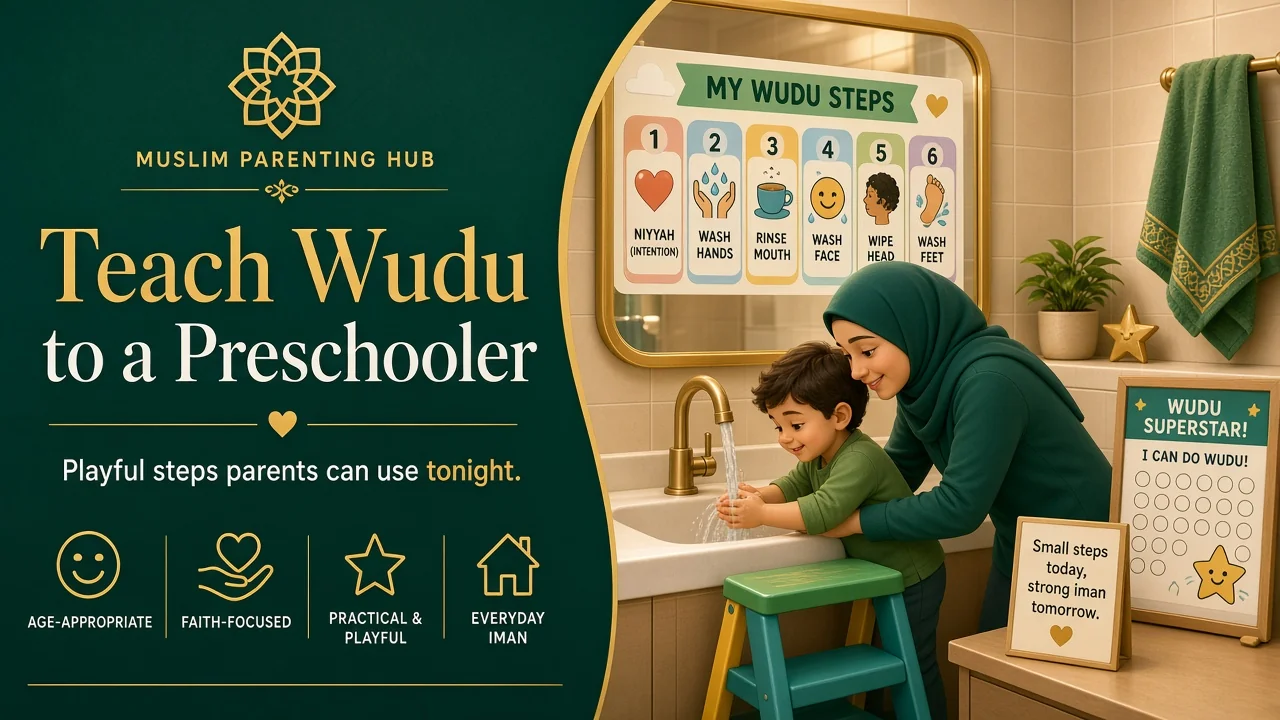
How to Teach Wudu to a Preschooler (Playful Steps Parents Can Use Tonight)
Teach wudu to preschoolers with playful steps—sink poster, doll practice, sticker chart, age tips, and tonight scripts. Gentle Muslim parenting for ages 3–5. Soft, practical.
Read guide →