
Ramadan, Eid & Jumu'ah with Kids
Make Islamic special days joyful for kids—toddler Ramadan at home, a calm Eid morning checklist, and a Friday night family routine they will ask for every week.
Children remember how special days felt long after they forget what they were told about them. The glow of lanterns in Ramadan, the smell of dates at iftar, new clothes on Eid morning, a Friday night that feels different from every other evening—these are the moments that make Islam feel like home. This topic guide brings together our articles on Ramadan, Eid, and the weekly celebration of Jumu’ah.
The approach throughout is belonging before obligation. Young children are not expected to fast, pray long taraweeh, or sit through lectures. What they need is to feel part of the family’s worship—carrying the plate of dates, ringing the iftar bell, making their own little dua—so that the obligations of later years grow from love rather than pressure.
Ramadan
Ramadan with toddlers at home gives you a low-cost home Ramadan kit, a sixty-second script to introduce the month, a ten-idea activity menu (moon windows, kindness calendars, iftar helper jobs, charity shopping), a gentle “we don’t fast yet” boundary, and a seven-day starter plan for tired parents.
Eid
The calm Eid morning checklist moves most of the work to the night before, then offers a day-of timeline, age-based helper jobs, scripts for hard moments, gift and eidi fairness tips that teach shukr, and a plan for homebound or rainy Eids—so the morning is remembered for joy, not rushing.
Jumu’ah, every week
Friday is the Muslim weekly celebration, and it is the easiest special day to practice. The Friday night family routine sets out a 60–90 minute “Friday glow”: Maghrib together, a child-sized taste of Surah Al-Kahf, one family joy, and a gratitude and dua close.
Tips for any special day
- Prepare the night before; calm mornings are mostly built the evening before.
- Give every child a job that matches their age, however small.
- Keep one or two traditions rather than chasing a picture-perfect schedule.
- Let giving sit beside getting—a sadaqah jar, a neighbor plate, a gift for someone in need.
- End with gratitude: “Alhamdulillah for…” from every person at the table.
Related habits make special days easier: a steady shukr practice, simple rahma activities, and a first masjid visit plan before the Eid prayer. Follow your local moon-sighting authority and trusted scholars for dates and rulings.
All Ramadan, Eid & Jumu'ah guides
3 practical guides in this topic.
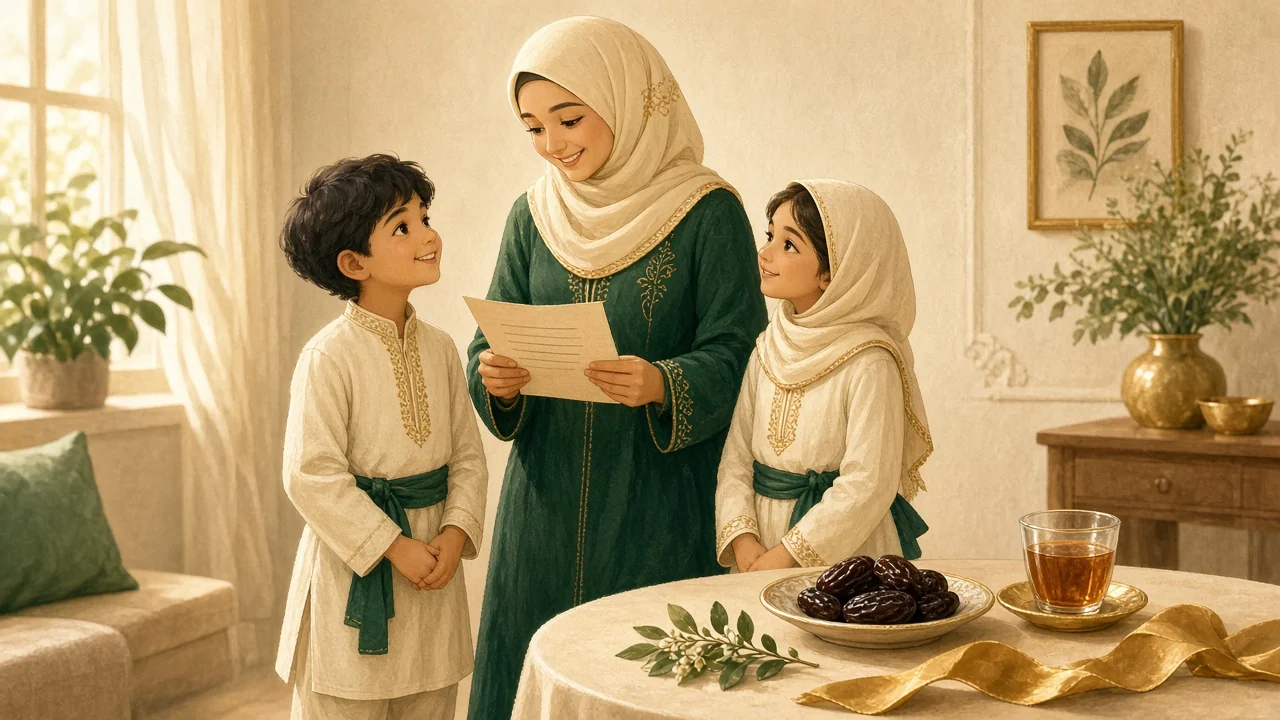
A Calm Eid Morning Checklist for Muslim Kids (Night-Before + Day-Of)
A calm Eid morning checklist for Muslim kids—night-before prep, day-of timeline, helper jobs by age, and soft Fitr vs Adha notes. Less stress, more joy at home.
Read guide →
Ramadan for Toddlers at Home: Joyful Ideas Without Forcing Fasts
Joyful Ramadan for toddlers at home—moon crafts, kindness calendar, iftar helper jobs, and scripts that build love of the month without forcing fasts. Soft Muslim parenting.
Read guide →
A Simple Friday Night Family Routine for Muslim Parents (That Kids Will Look Forward To)
A simple Friday night Muslim family routine—Jummah evening at home with kids, Surah Al-Kahf, age tips, tonight scripts, and joy that sticks. Soft, practical.
Read guide →