
Emotions & Character: Raising Honest, Kind, Grateful Muslim Kids
Islamic parenting scripts for big feelings and good character—lying, real apologies and istighfar, sibling jealousy, rahma (kindness), and shukr (gratitude).
Big feelings arrive in every home: the child who lies about the broken cup, the sibling who seethes when the baby gets attention, the “sorry” that is shouted rather than meant. Islam gives parents a rich vocabulary for these moments—truthfulness, repentance, mercy, justice, and gratitude—but turning those ideals into calm, practical responses at 6 p.m. is hard. This topic guide collects our articles on emotions and character, each with scripts you can use the same day.
The common thread is connection before correction. A child who feels safe is far more likely to tell the truth, repair a hurt, and practice kindness. So these guides avoid threats like “Allah will punish you” and heavy public shaming, and instead pair clear limits with mercy, private coaching, and repair.
Honesty and making things right
- When your child lies helps you work out what kind of lie you are facing, respond in the first ten minutes without an interrogation, and build a seven-day honesty reset rooted in taqwa without terror.
- Teaching kids to apologize in Islam replaces forced “sorry” with a three-step repair, age-band scripts, and soft istighfar that turns a child back towards Allah with hope rather than fear.
Siblings, kindness, and gratitude
- Sibling jealousy in a Muslim home explains why justice does not mean sameness, and gives fairness tools, a four-step conflict flow, and gentle ways to talk about hasad (envy).
- Rahma activities for kids offers ten hands-on ways to practice mercy, from a kindness jar to neighbor food drops and a sibling repair kit.
- The 14-day shukr plan builds gratitude step by step—specific Alhamdulillahs, a dinner gratitude round, bedtime shukr, and gratitude shown through care and sadaqah.
Using these guides together
Character grows on calm days, not only in crises. A few minutes of kindness practice, a gratitude round at dinner, or a short story with an empathy question makes the hard moments easier to handle. When conflict does happen, cool bodies first, name the feeling, hold the limit, then repair—and model it yourself when you are the one who snapped.
If a child’s anger, anxiety, or dishonesty feels persistent or overwhelming, it is wise to speak with your pediatrician or a qualified counselor alongside your family’s religious guidance. These articles are parenting support, not a substitute for professional help.
All Emotions & Character guides
5 practical guides in this topic.
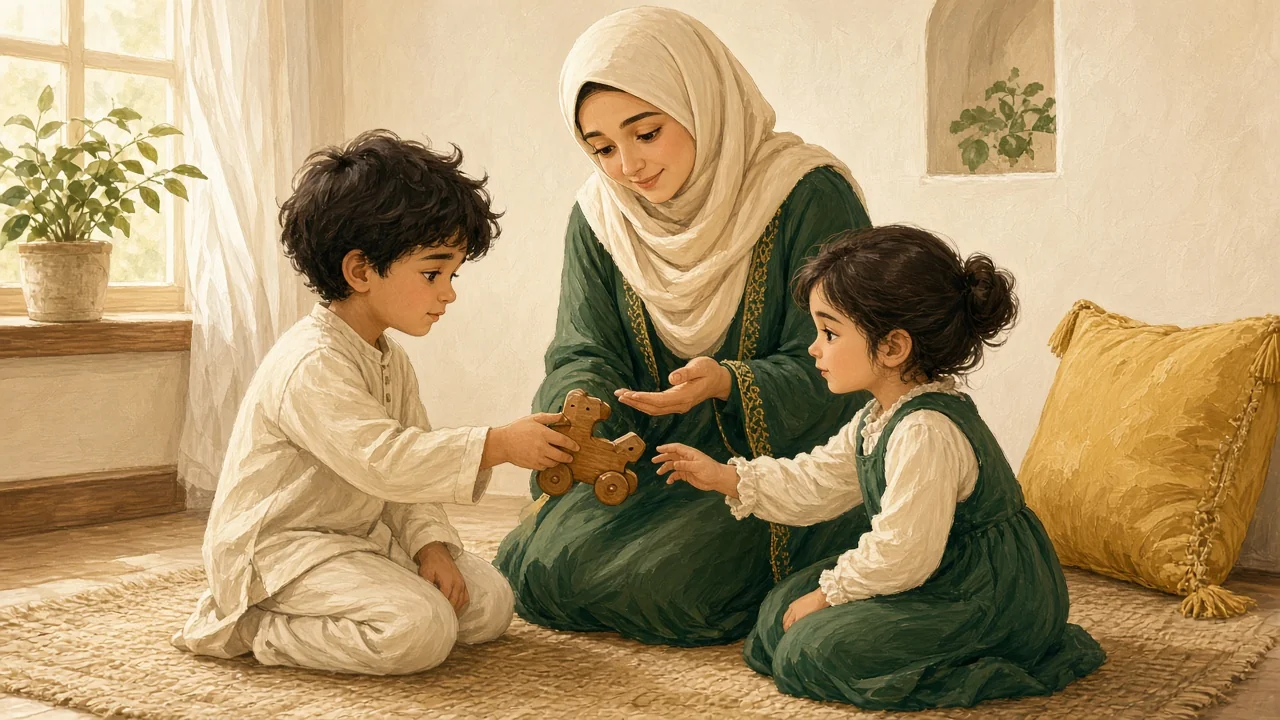
Teach Kids to Apologize with Heart: Islamic Repair Scripts (Plus Soft Istighfar)
Teach kids to apologize with Islamic repair scripts—pause, name the hurt, make it right—plus soft istighfar without shame. Age bands, what not to force, sibling tips.
Read guide →
How to Teach Shukr to Kids: A 14-Day Muslim Family Gratitude Plan
Teach shukr to Muslim kids with a 14-day family plan—Alhamdulillah habits, dinner and bedtime scripts, gratitude jar, age tips, and edge cases. Soft, practical.
Read guide →
10 Rahma Activities to Teach Muslim Kids Kindness This Month
Teach Muslim kids rahma with 10 kindness activities—kindness jar, neighbor drops, Prophet ﷺ mercy stories, age charts, and tonight scripts. Soft, practical monthly plan.
Read guide →
Sibling Jealousy in a Muslim Home: Fairness, Scripts & What Not to Say
Practical Islamic parenting scripts for sibling jealousy—fairness vs sameness, what not to say, conflict coaching, and age tips. Calm tools for Muslim homes.
Read guide →
My Child Lied: An Islamic, Trust-Building Response Guide for Parents
What to do when your child lies—Islamic, trust-building scripts by age. Fear-based vs imaginative lies, no “liar” label, repair plans, and taqwa without terror.
Read guide →