
How to Clean Pee Accidents the Islamic Way: Clothes, Carpet, Couch and Car Seat (Potty Training Guide)
Potty training comes with puddles. On the living room rug. On the couch cushion. In the car seat on the way home from Target. And for Muslim parents, a second question follows the paper towels: Is this clean enough to pray on now?
The good news: Islamic taharah (purity) for urine is simple, water-based and very forgiving of honest effort. You don’t need special products, and you don’t need to throw anything away. This guide walks US Muslim families through cleaning urine from clothes, carpet, couches, mattresses and car seats in a way that is both hygienic and pure for salah, plus calm words to say to your child so the accident never turns into shame.
It is practical home guidance based on widely taught rulings, not a fatwa. Details differ slightly between madhhabs, so ask your local imam if you follow a specific school. For the bigger picture of toilet manners, duas and readiness, start with our main guide to Islamic potty training without shame.
The Basic Rule in One Sentence
Urine is najis (impure), and water removes it: wash or pour water over the spot until the urine is gone, and the place becomes pure.
That’s it. A few helpful points sit underneath that rule:
- Water is the main purifier. The Prophet ﷺ told the companions to pour a bucket of water over the spot where a Bedouin had urinated in the masjid, and he said, “You were sent to make things easy, not to make them hard” (Bukhari). That hadith is the model for carpets and floors.
- Remove what you can. Blot or wipe up the urine first, then purify with water.
- A faint stain that won’t come out after honest washing is excused. You are not asked to do the impossible.
- Certainty beats doubt. If you’re not sure whether urine touched something, the default is that it is still clean. Don’t let worry turn taharah into stress.
Step-by-Step by Surface
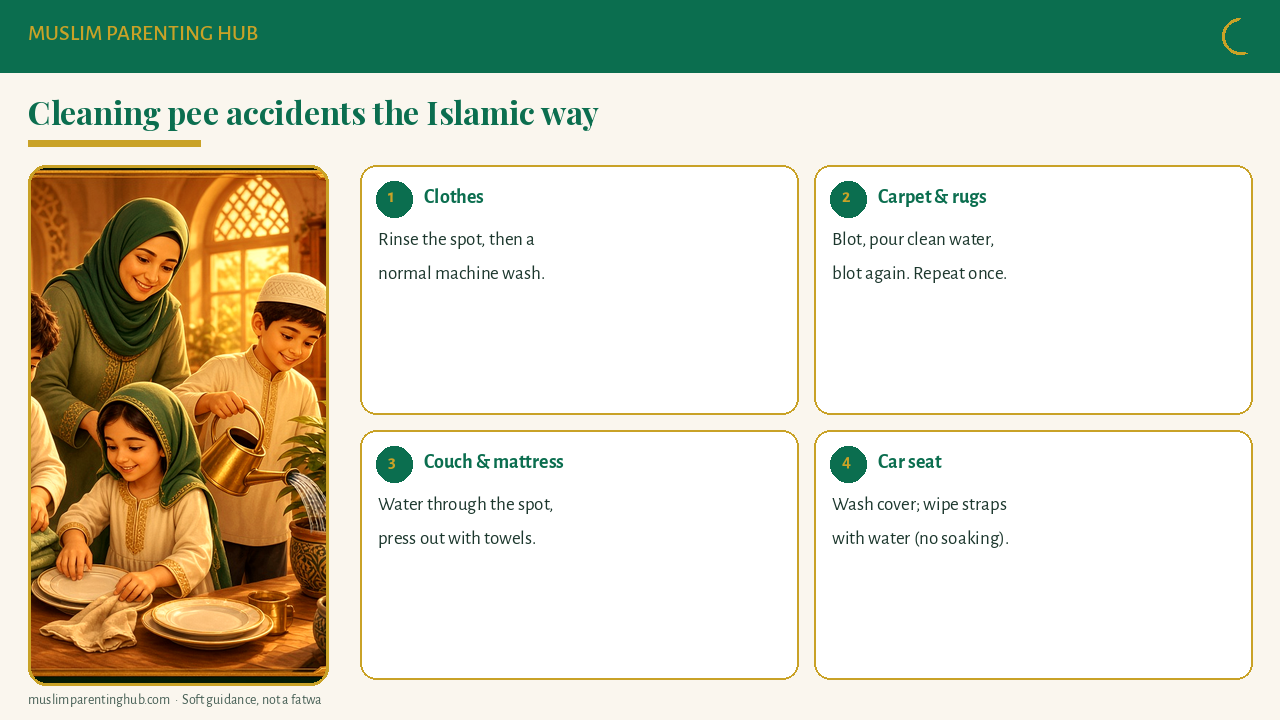
Clothes, underwear and towels
- Rinse the wet area under running water, or soak it in a bucket and pour off the water.
- Toss it in the washing machine with your normal load. Many scholars say a normal machine wash with plenty of clean water purifies the clothes, including other items in the same load.
- Dry as usual.
If your child needs the outfit right away for salah, rinsing the spot well under the tap is enough to make it pure, even if it is still damp.
Carpet and rugs
This is where most potty-training puddles land.
- Blot with paper towels or an old towel until no more comes up. Press, don’t rub.
- Pour clean water over the spot generously, a cup or two, covering a little beyond the edges.
- Blot or extract again. A carpet cleaner, wet-vac or even standing on a thick towel works well.
- Repeat once if the smell is still strong.
- Optional: finish with an enzyme cleaner for odor once the spot is purified. Enzyme sprays help with smell, but water is what you rely on for taharah.
Let it air dry. Many families simply avoid praying directly on that spot until it is dry, or lay a prayer rug over it.
Couch cushions and upholstery
Treat it like carpet: blot, pour or spray plenty of water, blot again, repeat. If the cushion cover is removable, wash it in the machine. For deep foam that soaked through, press water through with a towel several times, then let it dry in the sun or near a fan.
Mattress and crib mattress
Blot, then pour water over the spot and press it out with towels several times. A wet-vac helps. A waterproof mattress protector is your best friend during potty training and night training. For night-time accidents, our guide to bedwetting in Muslim kids covers the full wet-night reset.
Car seat
- Remove the cover and wash it per the manufacturer’s instructions (usually gentle cycle).
- For straps and buckles, most manufacturers say do not soak or machine wash them, for safety. Wipe them several times with a cloth soaked in clean water until no trace remains.
- Wipe the plastic shell with water and let everything dry fully before reinstalling.
Road trips are the classic car-seat accident moment. Our potty training while traveling guide has a full travel istinja and accident kit.
Hard floors, tile and the bathroom
Wipe up, then wipe the spot with a wet cloth or mop with clean water. Done.
What About a Baby Boy Who Only Drinks Milk?
Islamic law has a special ease here. For a baby boy who has not yet started eating solid food, sprinkling water over his urine is enough, based on the hadith of Umm Qays, whose baby boy urinated on the Prophet ﷺ, who sprinkled water over it and did not wash it (Bukhari, Muslim). For a baby girl, the spot is washed (Abu Dawud). Once a child is eating food, which includes every potty-training toddler, wash normally as above.
Your Child’s Body After an Accident
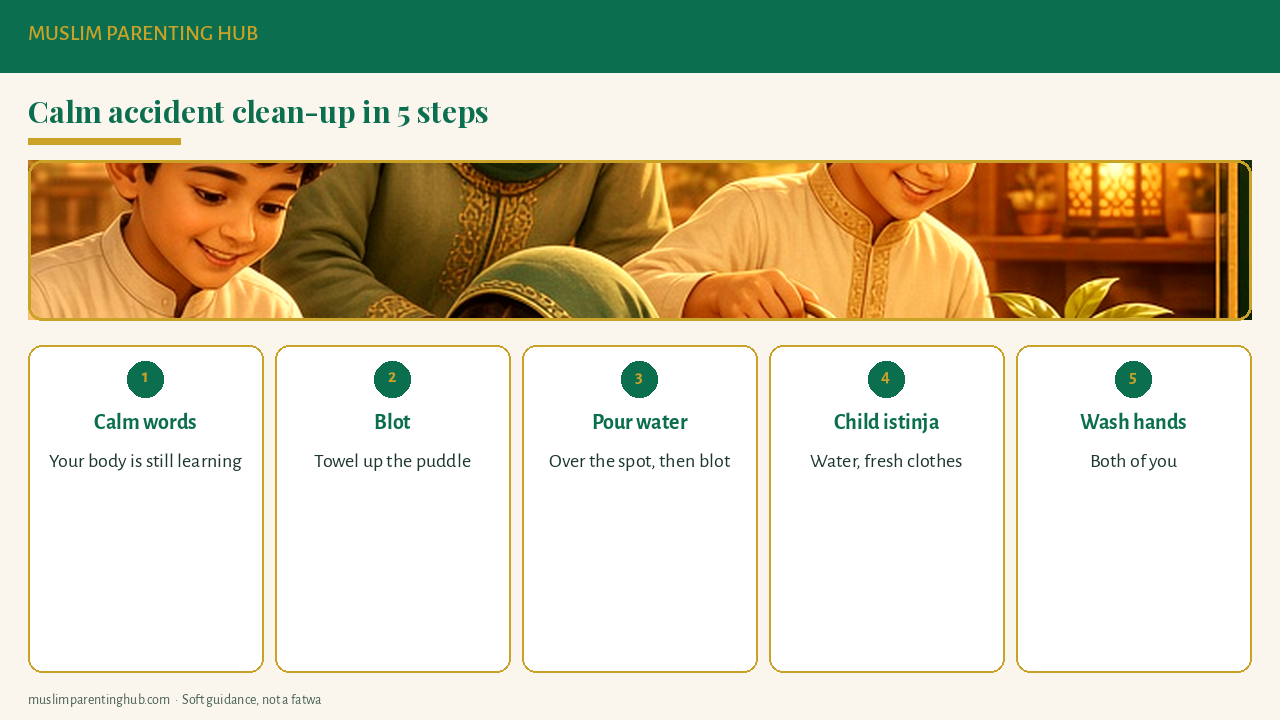
Cleaning the floor is only half of it. Your child also needs a quick, kind clean-up:
- Wet clothes off, into a bag or the washer.
- Wash the private area with water (a peri bottle or a quick shower works), then pat dry. This is their istinja, and it’s a good moment to practice it calmly. Our step-by-step istinja guide shows how.
- Fresh clothes.
- Both of you wash hands with soap.
No ghusl is needed after a urine accident. If your older child is ready to pray, they make wudu after the clean-up.
Calm Words While You Clean
How you talk during clean-up matters more than the carpet. Kids who feel shame start hiding accidents, which makes potty training slower.
“Oops, your body is still learning. That’s okay. Let’s clean it together.”
“Water makes it clean. You hold the towel, I’ll pour.”
“Next time, try to run to the potty when your tummy feels full. You’re getting closer every day.”
Avoid: “Now the whole house is najis!” or “You ruined the rug.” Kids hear “I am dirty,” not “the rug needs water.” If accidents keep happening for weeks, read when Islamic potty training stalls for patience scripts and a soft reset.
A Potty-Training Clean-Up Kit (Keep It in One Basket)
- Roll of paper towels or 2–3 old towels
- A plastic cup or squeeze bottle for pouring water
- Gallon zip bags for wet clothes
- A spare set of clothes for your child
- Enzyme spray (for odor, after water)
- A waterproof mattress protector and a washable couch throw
- A spare small prayer rug, so salah is never delayed by a damp carpet
Keep the basket where accidents happen most, usually the living room.
Praying After an Accident
- Pray on a clean spot or a prayer rug. You do not need to wait for the whole house to be cleaned.
- If you discover urine on your clothes after praying and you didn’t know it was there, many scholars say the prayer is still valid. Clean it and carry on.
- If you’re unsure whether a spot was ever wet, treat it as clean. Islam does not ask parents of toddlers to live in suspicion.
FAQ
How do I clean urine from carpet Islamically?
Blot up as much as you can, pour clean water generously over the spot, then blot or extract it again. Repeat once if needed. The Prophet ﷺ had water poured over urine on the masjid floor, and that is the model for carpets (Bukhari).
Is my carpet pure for salah after a potty accident?
Once you have removed the urine and poured water over the spot, it is considered pure, even if a faint stain remains after honest effort. Many families lay a prayer rug over damp spots until they dry.
Does the washing machine make clothes with urine pure?
Many scholars say a normal machine wash with plenty of clean water purifies clothes, including the rest of the load. Rinsing the wet spot under the tap first is an easy extra step.
Do I need special cleaners to remove najasah?
No. Water is what purifies. Enzyme cleaners are helpful for smell, so use them after the water step if you like, but they are not required for taharah.
Is a baby boy’s urine treated differently in Islam?
Yes. For a baby boy who only drinks milk, sprinkling water over the spot is enough (Bukhari, Muslim). For a baby girl, or any child already eating food, the spot is washed normally.
What should I say to my child after a pee accident?
Stay calm and kind: “Your body is still learning. Let’s clean it together.” Avoid words like “dirty” or “najis” aimed at your child, so accidents never turn into shame or hiding.
Related guides
- Islamic potty training without shame
- How to teach kids istinja
- Bathroom accident at school? A calm response
- Potty training boys in Islam
Closing
Every puddle is a small chance to show your child what Islam really teaches about purity: it is simple, it uses water, and it is full of mercy. A cup of water, a calm voice and a clean prayer rug are all you need. The carpet will dry. The lesson your child keeps is that mistakes can be cleaned up, kindly.
Quick steps
How to clean a pee accident from carpet the Islamic way. Remove the urine, purify the spot with clean water, and keep your words calm so your child never feels ashamed.
- Blot — Press paper towels or an old towel on the spot until no more urine comes up.
- Pour clean water — Pour a cup or two of clean water generously over the spot and a little beyond the edges.
- Blot or extract again — Blot with towels or use a carpet cleaner or wet-vac to pull the water out.
- Repeat once if needed — If the smell is still strong, pour and blot once more; a faint stain after honest washing is excused.
- Optional odor step — Use an enzyme cleaner for smell after the water step, then let the spot air dry or cover it with a prayer rug.
Related articles
Islamic Potty Training Without Shame: Readiness, Bathroom Duas & Taharah
Ready for Islamic potty training? Spot readiness signs, teach bathroom duas and gentle istinja, and coach toilet manners with zero shame—start tonight.
Read guide →
When Islamic Potty Training Stalls: Soft Patience Scripts & Taharah Without Pressure
Islamic potty training stalled? Soft scripts, taharah habits without pressure, regressing toddlers, and calm US-family tips that keep dignity intact.
Read guide →
Bedwetting in Muslim Kids: Calm Nighttime Tips, Taharah Basics and No-Shame Scripts
Is bedwetting normal? How to clean the mattress Islamically, whether ghusl is needed, praying Fajr after a wet night, and no-shame words for Muslim kids.
Read guide →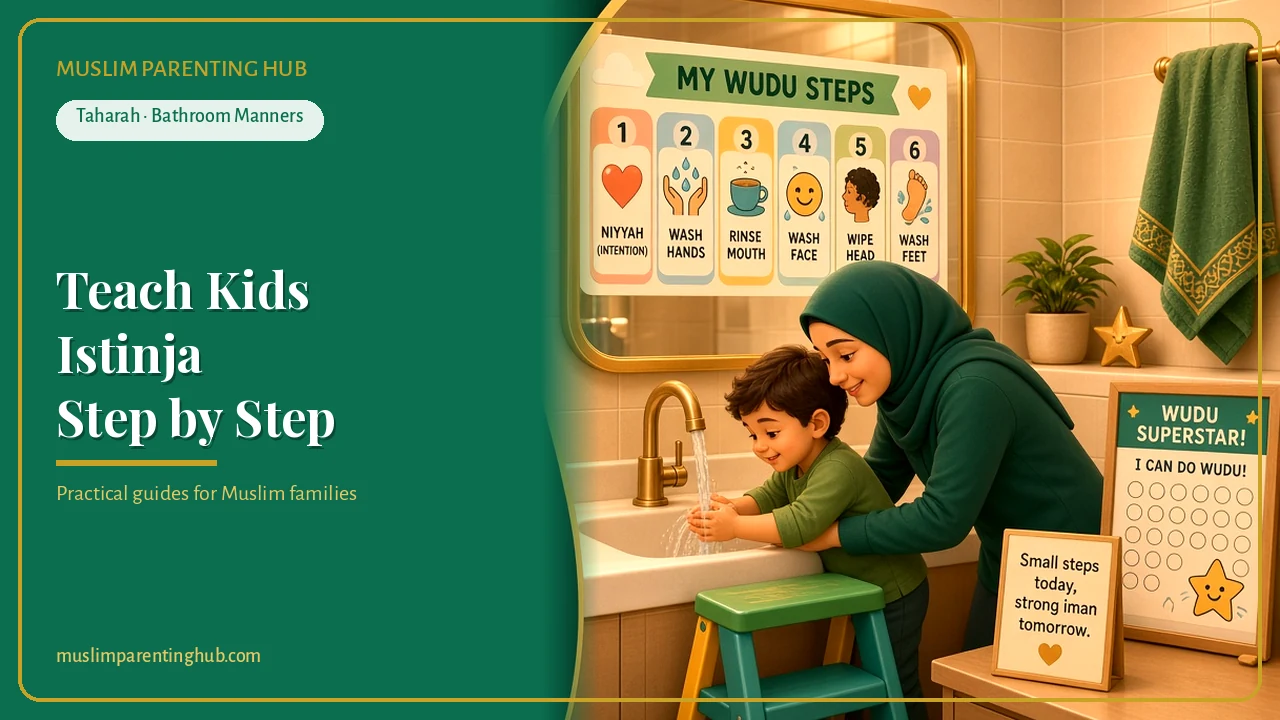
How to Teach Kids Istinja: Simple Washing Steps for US Bathrooms
Teach your child istinja without shame: easy wiping and washing steps, left-hand rules, peri bottle and bidet tips for US bathrooms, and a 7-day practice plan.
Read guide →