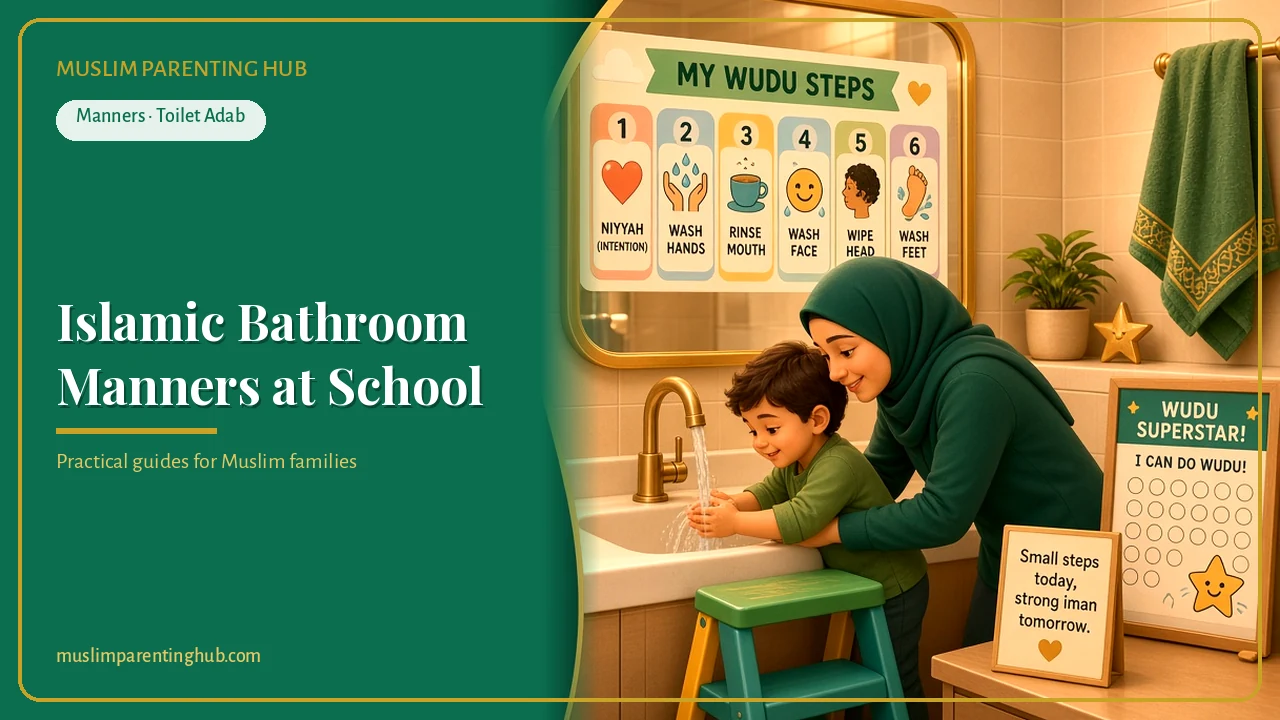
Islamic Bathroom Manners at School: A Kid-Friendly Guide to Public Restrooms
At home, your child has the step stool, the water jug, the towel on the low hook, and you outside the door whispering “Bismillah.” Then school starts. Suddenly there are stalls with gaps, urinals in a row, no water near the toilet, a five-minute break, and classmates who think washing is “weird.”
This guide is for that moment. It helps Muslim kids (roughly ages 4–10) keep Islamic bathroom manners at school and in public restrooms without stress or shame. You’ll get a simple restroom flow, a school bathroom kit, a plan for istinja when there’s no lota, scripts for teachers, and practice ideas you can start this week.
If your child is still learning the basics at home, start with our Islamic potty training guide. This article picks up where that one ends.
Soft guidance for families, not a fatwa. For detailed rulings on taharah, follow the scholars and teachers you trust.
Why Bathroom Manners Matter Outside the House
Toilet manners are part of taharah, and taharah is part of salah. Kids who learn to clean themselves well at school:
- Pray with confidence at school, at the masjid, and on trips
- Feel dignity instead of embarrassment when routines change
- Carry their deen into public spaces quietly, without a lecture
- Build independence, which every teacher appreciates
The goal is not a perfect replica of your home bathroom. It’s a portable habit: the same few steps, adapted to whatever room your child finds.
The Portable Restroom Flow (Same Steps, Any Bathroom)
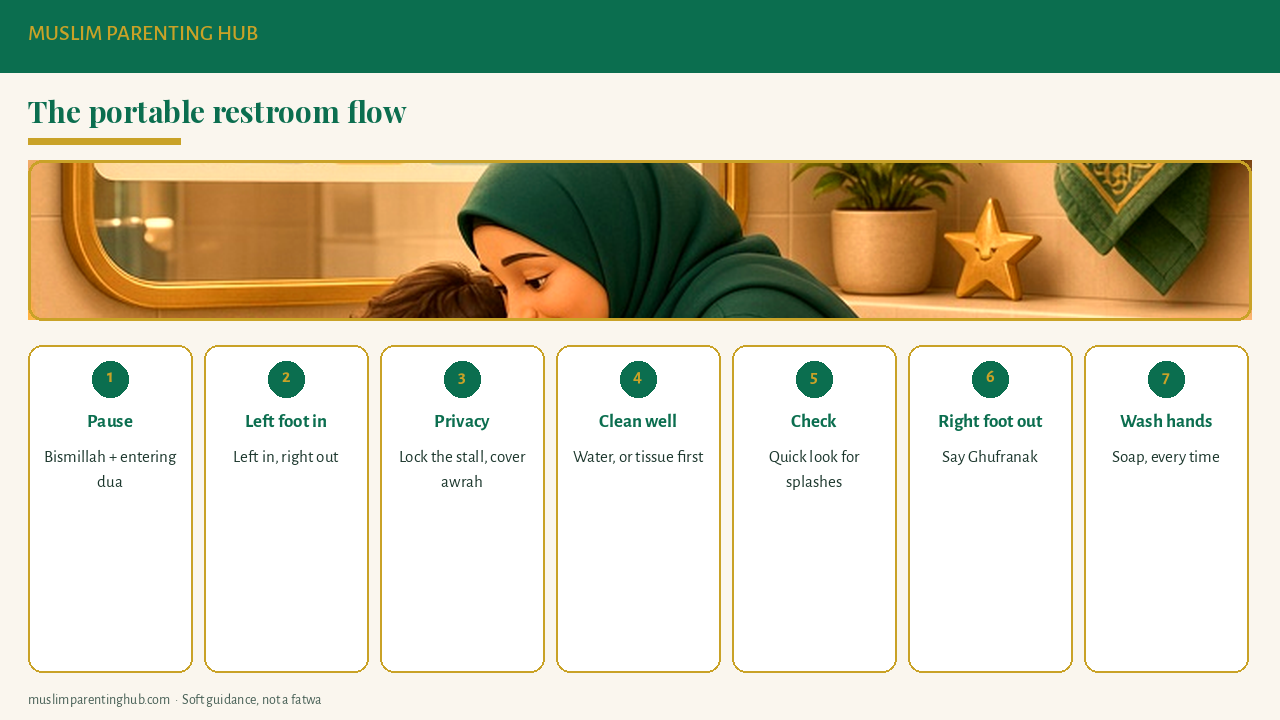
Teach one flow that works in a school stall, a mall restroom, or a motorway stop:
- Pause at the door. Quietly say “Bismillah. Allahumma inni a’udhu bika minal-khubuthi wal-khaba’ith” (or just “Bismillah” for younger kids). It can be said under the breath before stepping in.
- Left foot in. A small Sunnah habit many families teach: left in, right out.
- Choose privacy. Use a stall with a lock when possible. Keep the awrah covered from others.
- Sit when you can. Sitting helps avoid splashes on clothes. If a child uses a urinal, teach them to stand close and be careful.
- Clean well. Water if available; otherwise tissue first, then water later if you can (see below).
- Left hand for cleaning. The right hand is kept for eating and greeting.
- Check clothes. A quick look for splashes before pulling up.
- Right foot out + “Ghufranak.” It means “I ask Your forgiveness, O Allah.”
- Wash hands with soap. Every time, even in a rush.
Script to teach it:
“School bathrooms look different, but our steps stay the same. Bismillah at the door, clean carefully, Ghufranak on the way out, wash hands. That’s it.”
For a fuller list of duas kids can learn alongside these, see our 10 easy duas for kids to learn.
Istinja at School When There’s No Lota
This is the number one worry for Muslim parents. Most school toilets have no water near the seat. Here are practical options families use:
Option 1 — A small squeeze bottle
A soft 250–350 ml travel bottle (the kind sold for peri care or travel) fits in a backpack pocket. Your child fills it at the sink, takes it into the stall, and uses it like a mini lota. Practise at home first so it doesn’t become a soggy disaster.
Option 2 — Tissue first, water when possible
Many scholars allow cleaning with tissue (istijmar) when water isn’t practical, as long as the area is properly cleaned. Teach your child to wipe thoroughly with the left hand, using several pieces, until clean. If you want water too, they can rinse at home or during the next convenient break.
Option 3 — Unscented wet wipes (flushable or bin)
Some families pack a small pouch of wipes. Teach kids which bin to use. Many “flushable” wipes still block pipes, and a blocked school toilet is not good adab.
Parent tip: Pick one option and practise it at home for a week. Too many choices confuse kids in a hurry.
The School Bathroom Kit (Backpack Edition)
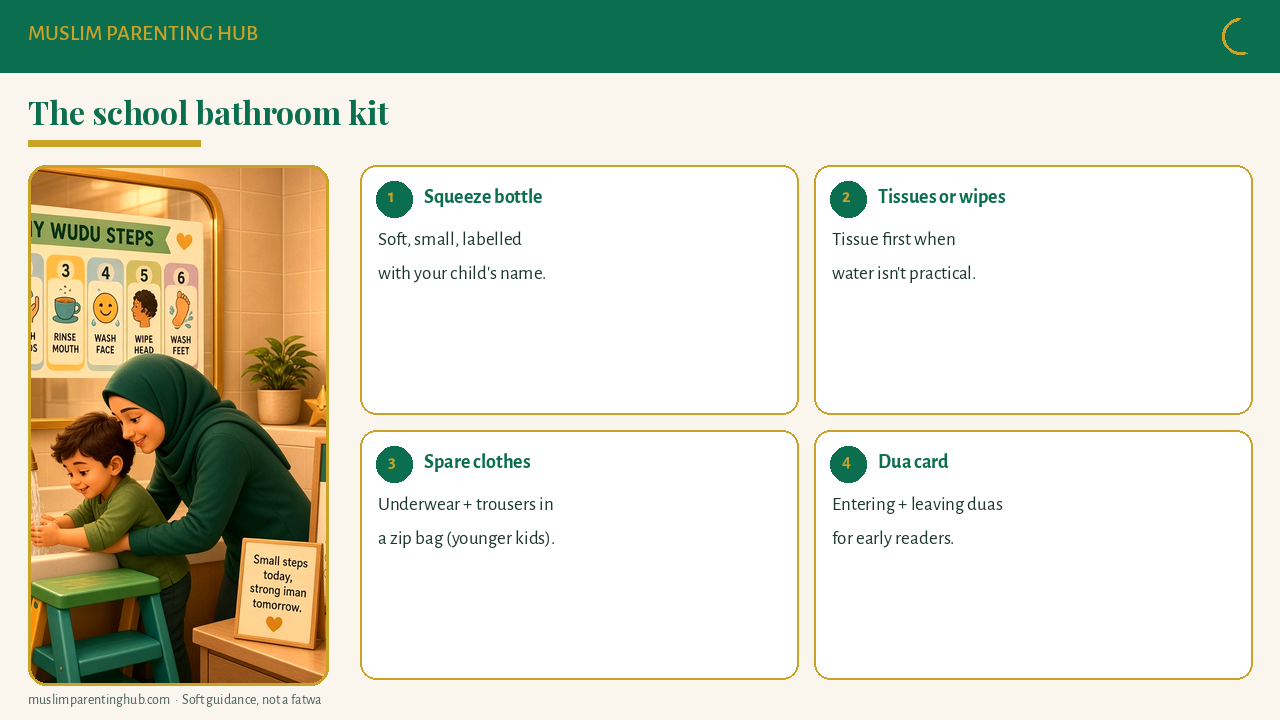
Keep it small and discreet:
- Soft squeeze bottle (labelled with your child’s name)
- Small pack of tissues or wipes
- Spare underwear and trousers in a zip bag (for younger kids)
- A tiny hand towel or paper towels
- Optional: a card with the entering and leaving duas for early readers
Check the kit every Friday when you empty the backpack. A missing bottle on Monday is how habits fall apart.
Privacy, Awrah, and Stall Choices
Kids often don’t know they’re allowed to choose. Give them permission:
- Use a stall even for a quick wee if they prefer privacy. That’s fine.
- Wait for a free stall instead of using a urinal in a crowded row if it makes them uncomfortable.
- Keep clothes up until they’re inside, and adjust before stepping out.
- Don’t peek or talk across stalls. Bathrooms aren’t chat rooms, and the Sunnah is to keep speech minimal in the toilet.
Script:
“Your body is an amanah from Allah. You get to keep it private. If you need to wait for a stall, wait.”
This links naturally to the adab of asking permission and knocking before entering that kids also learn at home.
Wudu at School (When Salah Time Falls in the Day)
Older kids who pray Dhuhr at school may need wudu at a sink. Keep it simple:
- Do wudu at a quieter time if possible (start of lunch, not the bell rush).
- Wipe over socks is something some families follow with conditions; ask your teacher which approach your family uses.
- Bring a small towel so the floor stays dry and the cleaner doesn’t get annoyed.
- If feet-washing in a school sink isn’t allowed, talk to the school about a prayer space with a water source.
The playful steps from how to teach wudu to a preschooler work for younger kids too, just at a faster pace.
Talking to the School (Kind, Clear, Short)
Most teachers want to help; they just don’t know what you need. A short email or note works better than a long religious explanation.
Sample note:
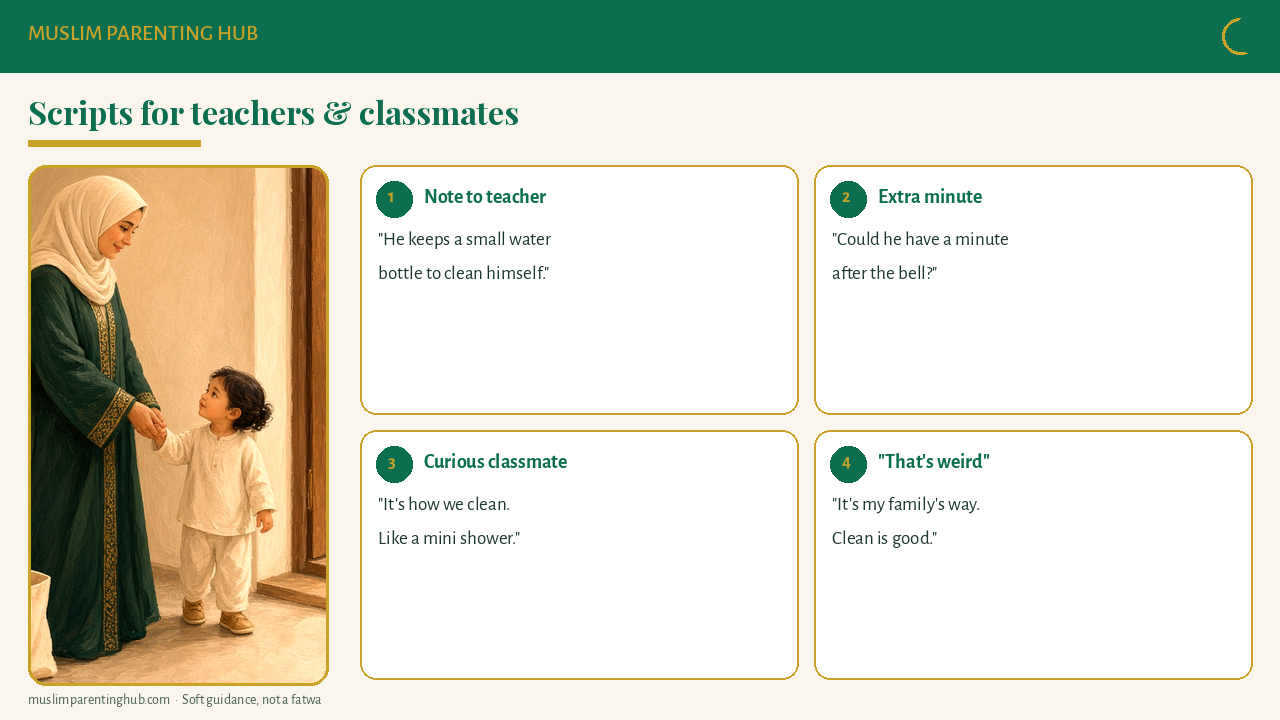
“Assalamu alaikum / Hello Ms. Patel, our son keeps a small water bottle in his backpack to clean himself after using the toilet, which is part of our faith practice. Could he take it to the bathroom when needed? He’s been practising so it stays tidy. Thank you!”
If your child needs more time:
“Could he have an extra minute after the bell if he’s finishing in the bathroom? He’s learning to be thorough.”
For younger kids (Reception / Kindergarten):
“If she has an accident, please use the spare clothes in her bag. We’d appreciate a quiet word to us rather than in front of classmates.”
Scripts for Your Child (When Classmates Notice)
Kids worry about being teased more than about the toilet itself. Give them short, confident lines:
- “Why do you have a water bottle in there?” → “It’s how we clean. Like a mini shower.”
- “That’s weird.” → “It’s just my family’s way. Clean is good.”
- “Why do you always use the stall?” → “I like privacy.”
Role-play these at home with a stuffed animal playing the curious classmate. Practise until your child can say them in a bored voice. A bored voice ends most teasing.
If teasing continues, tell the teacher. Children should never feel ashamed of taharah.
Age Bands: What “Good Enough” Looks Like
Ages 4–5 (Reception / Pre-K)
- Uses the toilet independently, with occasional help
- Says “Bismillah” at the door (whisper counts)
- Wipes with tissue; water may still be a home job
- Washes hands every time
Ages 6–7
- Uses a squeeze bottle or tissue thoroughly
- Says both duas (entering and leaving)
- Uses the left hand for cleaning
- Checks clothes for splashes
Ages 8–10
- Manages the full flow independently, including in public restrooms
- Does wudu at school or the masjid without help
- Can explain their routine calmly to a curious friend
- Reminds a younger sibling gently, without bossing
A 5-Day Practice Plan Before School (or Any Time)
Day 1 — Talk about it. Show the kit. Explain the “same steps, any bathroom” idea.
Day 2 — Bottle practice at home. Fill it at the sink, use it, refill it, put it back. Laugh at the first splash.
Day 3 — Public restroom trip. Visit a library or mall restroom together (same-gender parent where appropriate). Walk through the flow.
Day 4 — Script role-play. Practise the classmate and teacher lines.
Day 5 — Solo run. Your child does a full public-restroom trip with you waiting outside. Celebrate with a small treat and a big “Alhamdulillah, you did it.”
Repeat Day 3 and Day 5 a few times before the first week of school.
Common Problems (And Calm Fixes)
“My child holds it all day to avoid school toilets.” This can cause constipation and accidents. Ask what’s hard: the smell, the noise, the bottle, other kids? Fix one thing at a time. A quick chat with the teacher about a quieter bathroom option often helps.
“The bottle leaks in the backpack.” Use a bottle with a flip cap and store it in a zip bag. Fill it at school instead of at home.
“My child forgets the duas.” Put a tiny sticker inside the backpack lid. Or agree on one word, “Bismillah,” as the minimum.
“They won’t use public restrooms on trips.” Plan breaks before everyone is desperate. Take them in yourself until they’re comfortable, and keep the flow identical. Our car travel dua routine pairs well with planned rest stops.
“There’s no stall door / the lock is broken.” Teach them to use the accessible stall if allowed, or ask a friend to wait outside. Privacy problems are worth reporting to the school.
Keep It Gentle
Bathroom habits are tied to a child’s sense of dignity. Correct privately, praise often, and never threaten kids with punishment for mistakes in taharah. If an accident happens at school, the message at home should be: “You’re still clean in your heart. We’ll fix the clothes. Alhamdulillah, you told me.”
The shame-free tone from our apology and repair guide applies here too: fix the problem, keep the relationship warm.
FAQ
How can my child do istinja at school without a lota?
Pack a small soft squeeze bottle your child fills at the sink and takes into the stall. If water isn’t practical, many scholars allow thorough cleaning with tissue (istijmar), and your child can rinse with water later. Practise the method at home for a week before school.
What dua should kids say before entering a school bathroom?
The Sunnah dua is “Bismillah. Allahumma inni a’udhu bika minal-khubuthi wal-khaba’ith”, which means “In the name of Allah. O Allah, I seek refuge in You from all evil and harmful things.” Children can say it quietly before stepping in, and younger kids can start with “Bismillah.”
Is it okay for Muslim boys to use urinals?
Many families prefer boys to use a stall and sit, because it is easier to avoid splashes and keep the awrah covered. If a boy uses a urinal, teach him to be careful about splashes and to clean properly afterwards. Follow your family’s teachers on the details.
Should I tell my child’s teacher about our bathroom routine?
Yes, briefly. A short, friendly note explaining that your child uses a water bottle to clean after the toilet as part of your faith is usually enough. Most teachers are happy to help when they know what’s needed.
What if my child is teased for using water in the bathroom?
Give them short, calm lines to use, such as “It’s how we clean, like a mini shower,” and practise them at home. If teasing continues, tell the teacher. Children should never feel ashamed of taharah.
At what age can kids manage school bathroom manners alone?
Many children manage the basic flow by ages 5–6, with full independence (including water cleaning and duas) by around 7–8. Every child is different, so focus on steady progress rather than a deadline.
What should my child do if they have an accident at school?
Pack spare clothes in a zip bag, teach them to tell a trusted adult quietly, and ask the teacher to handle it discreetly. At home, respond with calm and comfort, not blame.
Related guides
- Islamic Potty Training: A 7-Day Plan, Toilet Duas & Manners for Toddlers
- How to Teach Wudu to a Preschooler
- Duas for Kids to Learn: 10 Easy Duas + Dua From the Heart
- The Car Dua Routine Muslim Kids Actually Remember
Quick steps
Portable Islamic restroom routine for kids at school. The same short sequence of bathroom manners a child can use in any school or public restroom.
- Pause at the door — Quietly say Bismillah and the entering dua (Allahumma inni a'udhu bika minal-khubuthi wal-khaba'ith), or just Bismillah for younger kids.
- Left foot in — A small Sunnah habit many families teach: left in, right out.
- Choose privacy — Use a stall with a lock when possible and keep the awrah covered from others.
- Sit when you can — Sitting helps avoid splashes on clothes; at a urinal, stand close and be careful.
- Clean well — Use water if available; otherwise tissue first, then water later if you can.
- Left hand for cleaning — The right hand is kept for eating and greeting.
- Check clothes — Take a quick look for splashes before pulling up.
- Right foot out and say Ghufranak — Ghufranak means 'I ask Your forgiveness, O Allah.'
- Wash hands with soap — Every time, even in a rush.
Related articles
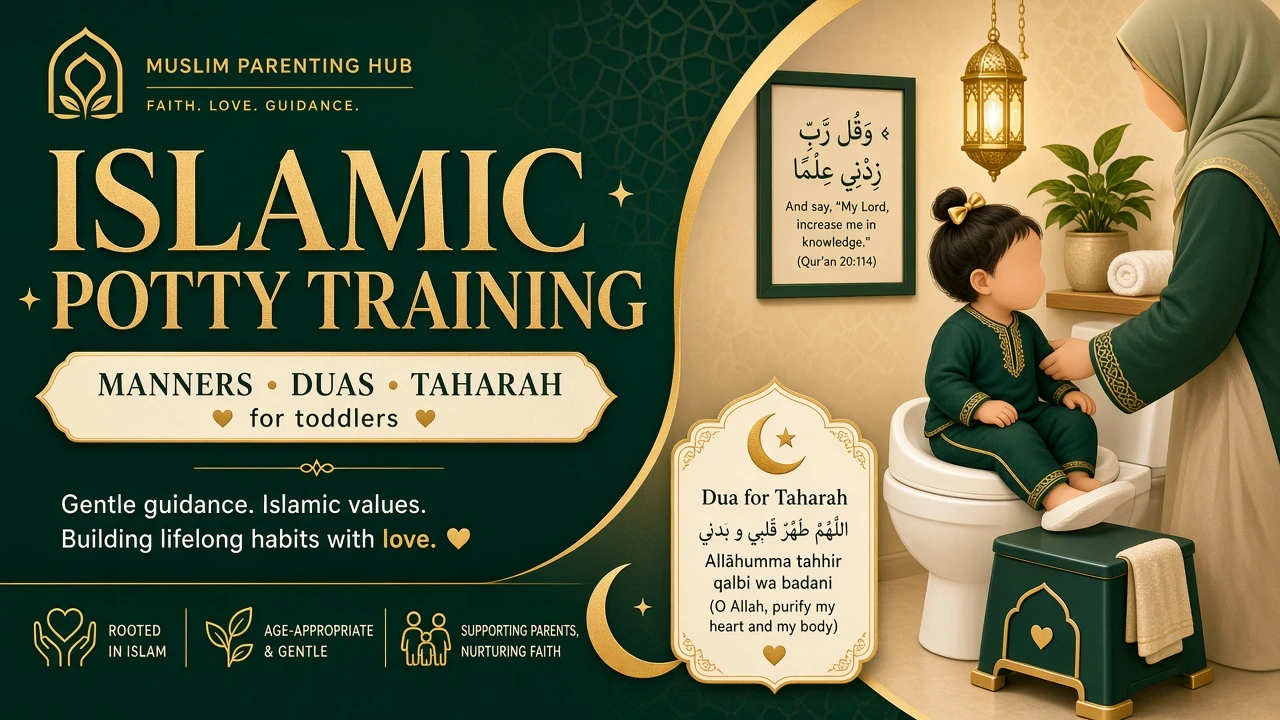
Islamic Potty Training: A 7-Day Plan, Toilet Duas & Manners for Toddlers
Start Islamic potty training calmly: readiness signs, a 7-day plan, toilet duas kids can learn, and gentle istinja tips. No shame. Begin tonight.
Read guide →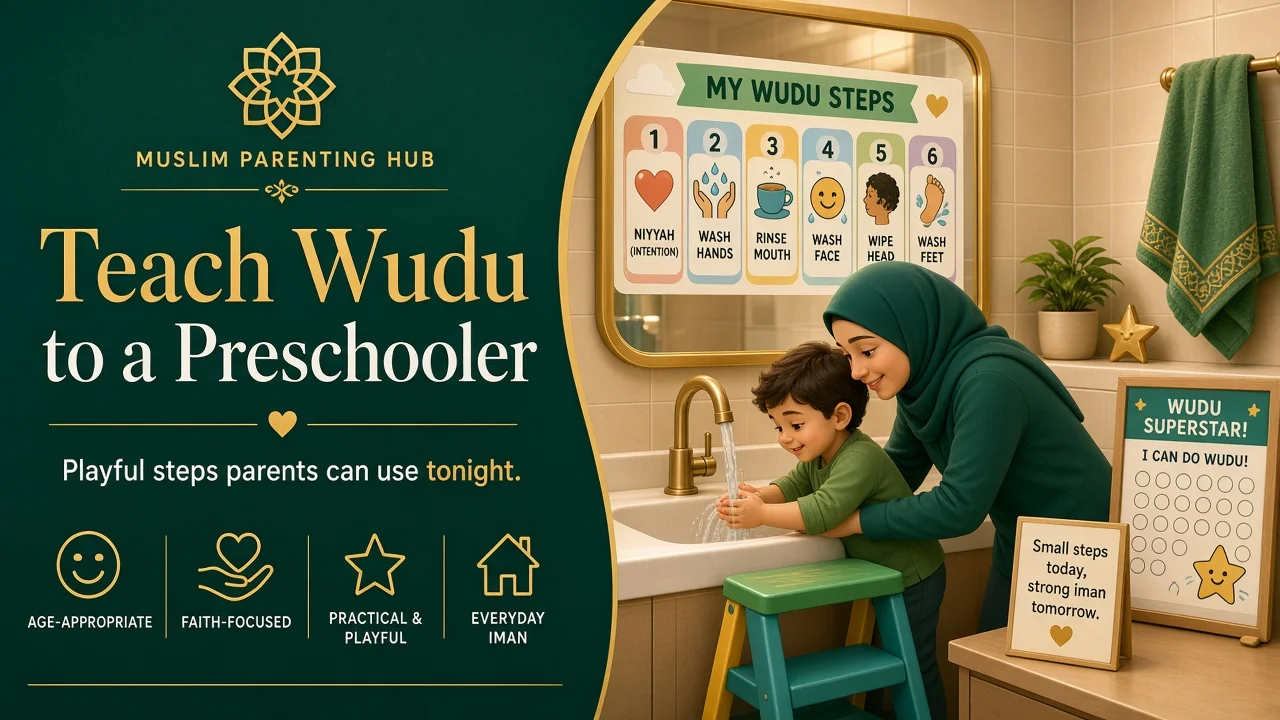
How to Teach Wudu to a Preschooler (Playful Steps Parents Can Use Tonight)
Teach wudu to preschoolers with playful steps—sink poster, doll practice, sticker chart, age tips, and tonight scripts. Gentle Muslim parenting for ages 3–5. Soft, practical.
Read guide →
Duas for Kids to Learn: 10 Easy Duas + How to Make Dua From the Heart
10 easy duas for kids to learn, with meanings, plus a simple way to help children make dua from the heart in their own words. Scripts for tonight.
Read guide →
The Car Dua Routine Muslim Kids Actually Remember (School Run to Road Trip)
Build a car travel dua routine Muslim kids remember—ignition trigger, call-and-response, school-run vs road-trip versions, and printable card placement tips. Soft and practical.
Read guide →