Thanksgiving at a Non-Muslim Relative's House: A Calm Guide for Muslim Families With Kids
For many Muslim families in America, Thanksgiving isn’t a question of whether to see family. It’s Grandma’s house in Ohio, your husband’s parents who aren’t Muslim, your sister who converted with you but whose spouse didn’t, or the neighbors who have invited you every year since you moved in.
You want your kids to love their grandparents and cousins. You also want them to keep their deen with confidence. And you’d rather not spend Thursday, November 26, negotiating stuffing ingredients in a tense whisper.
This guide is for that day: what to talk about with the host beforehand, how to handle food, what to do if there’s wine on the table, how to fit in Maghrib, and what to say when your child asks, “Why can’t I eat that?” It’s written especially for convert families and mixed families, but it works for anyone spending the holiday in a non-Muslim home.
If you’re still deciding how your family approaches the holiday at all, start with our main guide to Thanksgiving for Muslim families, which covers the question “Do Muslims celebrate Thanksgiving?” and gratitude traditions. This article picks up at the front door of Grandma’s house.
Start With the Heart: Family Ties Matter in Islam
Before food lists and prayer times, remember why you’re going.
Islam places huge weight on keeping family ties, including with relatives who aren’t Muslim. When Asma bint Abi Bakr’s mother, who was not Muslim, came to visit her, Asma asked the Prophet ﷺ whether she should keep good relations with her. He said, “Yes, keep good relations with your mother” (Sahih al-Bukhari 2620, Sahih Muslim 1003).
The Quran tells us to accompany parents “in this world with kindness” even when they don’t share our faith (Luqman 31:15). And Allah does not forbid us from being kind and fair to those who haven’t fought us over our religion (Al-Mumtahanah 60:8).
For your kids, this is one of the most powerful lessons of the year: we love our family, and we keep our deen. Both can be true at the same table.
A line for your kids on the drive over: “Grandma and Grandpa aren’t Muslim, and they love you so much. Being kind to them is something Allah loves. We’ll eat what’s halal, we’ll pray when it’s time, and we’ll have a wonderful day.”
The Phone Call Before the Visit
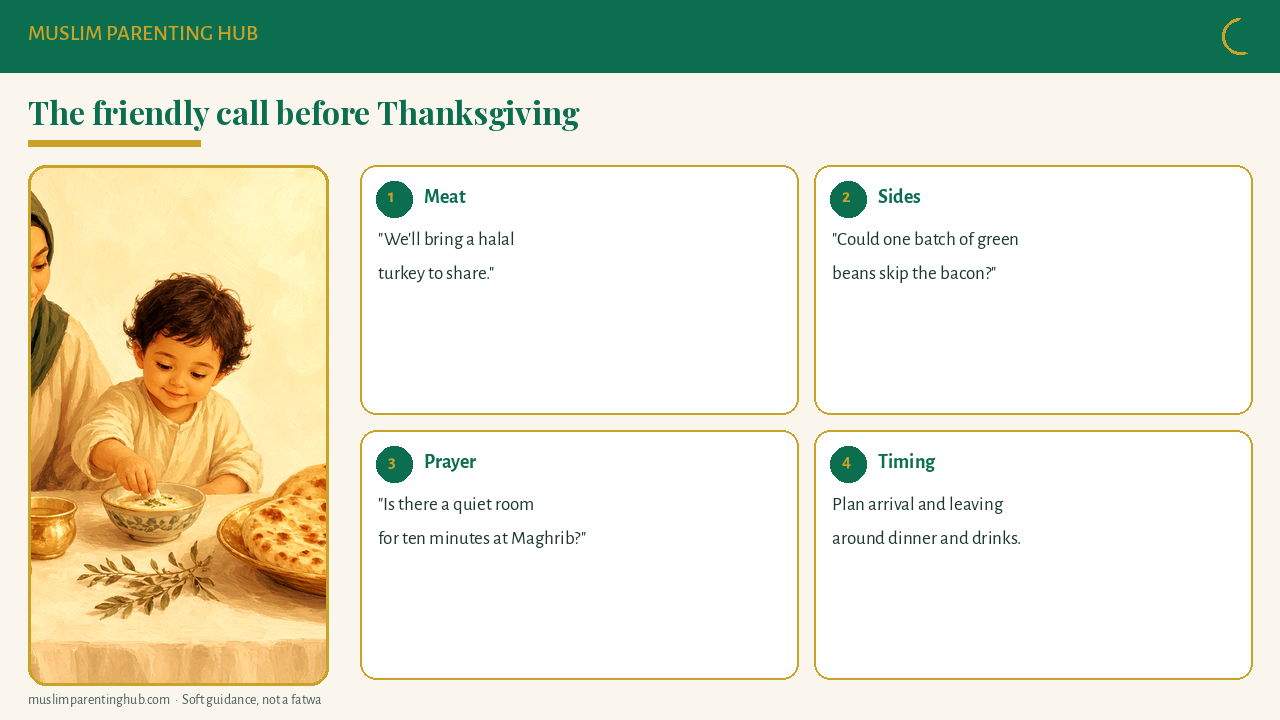
Most tension on the day comes from surprises. A friendly call a week or two before Thanksgiving prevents almost all of it.
Things to mention, kindly:
- Meat. “We only eat halal meat. Would it be okay if we brought a halal turkey breast or a main dish to share?” Most hosts are relieved to have one less thing to cook.
- Pork and alcohol in sides. Ask gently about bacon, wine or beer in recipes. “Could you set aside some green beans before the bacon goes on?”
- Prayer time. “Maghrib is early that day, around 4:30 here. Is there a quiet room where we could pray for about ten minutes?”
- Timing. If dinner runs late or there’s a long football afternoon, plan when you’ll arrive and leave.
Sample script:
“We’re so excited to come! Just so you’re not stuck guessing, we’ll bring a halal turkey and a couple of sides. If you can keep the bacon off one batch of green beans, the kids would love that. And around Maghrib time we’ll step away to pray for a few minutes. Thank you for having us. It means a lot.”
Keep the tone warm and practical, not apologetic or defensive. You’re sharing information, not asking for permission to be Muslim.
The Food: What to Watch For
Thanksgiving tables hide a few common ingredients that many Muslim families avoid. Knowing them ahead of time saves awkward moments.
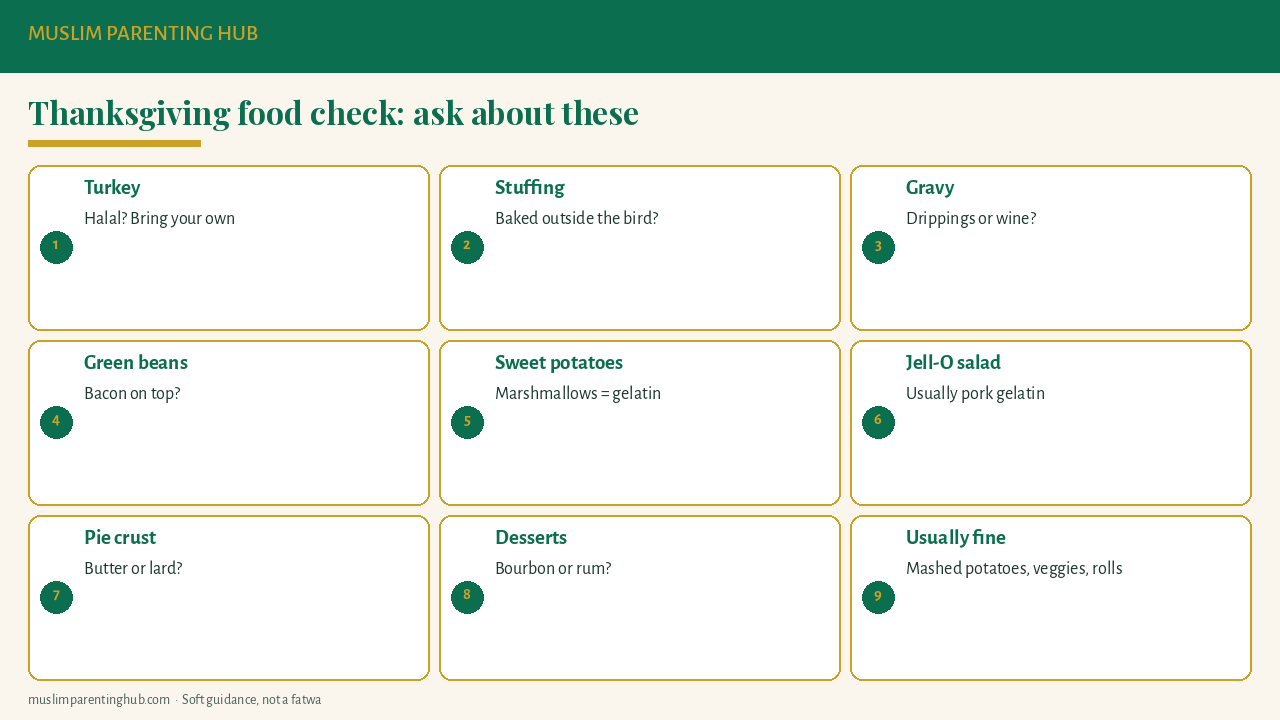
The turkey. Many Muslims eat only meat slaughtered according to Islamic guidelines. Some follow the view that meat slaughtered by Christians or Jews (People of the Book) is permitted, based on Al-Ma’idah 5:5, while many scholars say regular US supermarket meat doesn’t meet that standard. Follow your family’s understanding, and bring a halal turkey if that’s your practice.
Stuffing. Stuffing cooked inside a non-halal turkey absorbs its juices. Ask for a pan of stuffing baked separately, or bring your own.
Gravy. Usually made from turkey drippings and sometimes wine. Bring a halal gravy, or skip it.
Bacon and pork. Look for it in green beans, Brussels sprouts, mac and cheese, and some stuffings.
Gelatin. Most gelatin in the US comes from pork. Watch for marshmallows on sweet potato casserole, Jell-O salads, and some whipped toppings.
Alcohol in cooking. Wine in cranberry sauce or gravy, bourbon in pecan pie, rum in some desserts.
Lard. Some homemade pie crusts and biscuits use lard. A quick question solves it.
What’s usually safe: mashed potatoes made with butter and milk, roasted vegetables, salads, corn, dinner rolls, fruit pies with butter crusts, and most store-bought apple or pumpkin pies (check the label). Bringing two or three dishes you know are halal means your kids will always have a full plate.
Teaching Kids to Say “No, Thank You” Politely
Kids will be offered things they can’t eat. Practice at home before the visit, so the moment doesn’t catch them off guard.
Simple scripts by age:
- Ages 3–5: “No, thank you!” (with a smile). Then a parent steps in if needed.
- Ages 6–9: “No, thank you. I don’t eat pork, but this looks really good!”
- Ages 10+: “No, thank you. As Muslims we don’t eat pork, but I’ll definitely have the mashed potatoes.”
Remind them they never need to make anyone feel bad about their food. “Ew, that’s haram!” isn’t the message. Kindness is. And at the end, they thank the host: “Thank you for dinner, Grandma. It was delicious.” Our guide to teaching kids JazakAllah khair and thank-you manners has easy ways to practice gratitude before the big day.
Wine or Beer at the Table
This is one of the hardest parts for many families, so here’s an honest overview.
There is a hadith in at-Tirmidhi (2801) saying a believer should not sit at a table where alcohol is being drunk. Scholars apply this in different ways for family situations. Some advise not sitting at that table at all. Others give more room when the gathering is for maintaining family ties, the Muslims aren’t drinking, and leaving would cause serious harm to the relationship. If you’re unsure, it’s worth asking your local imam before the holiday.
Practical options families use:
- Kindly ask the host whether wine could stay in the kitchen or be served after the meal.
- Ask for a kids’ table, or sit at the end of the table away from drinks.
- Arrive for the meal and leave before the late-evening drinking starts.
- Offer to host next year, so you set the menu and drinks.
If your child asks: “Why is Uncle drinking that?” keep it calm and short: “That’s wine. Allah asks Muslims not to drink alcohol because it isn’t good for us. Uncle isn’t Muslim, so he makes his own choices. We’re still kind to him.”
Praying Maghrib (and Asr) at Grandma’s
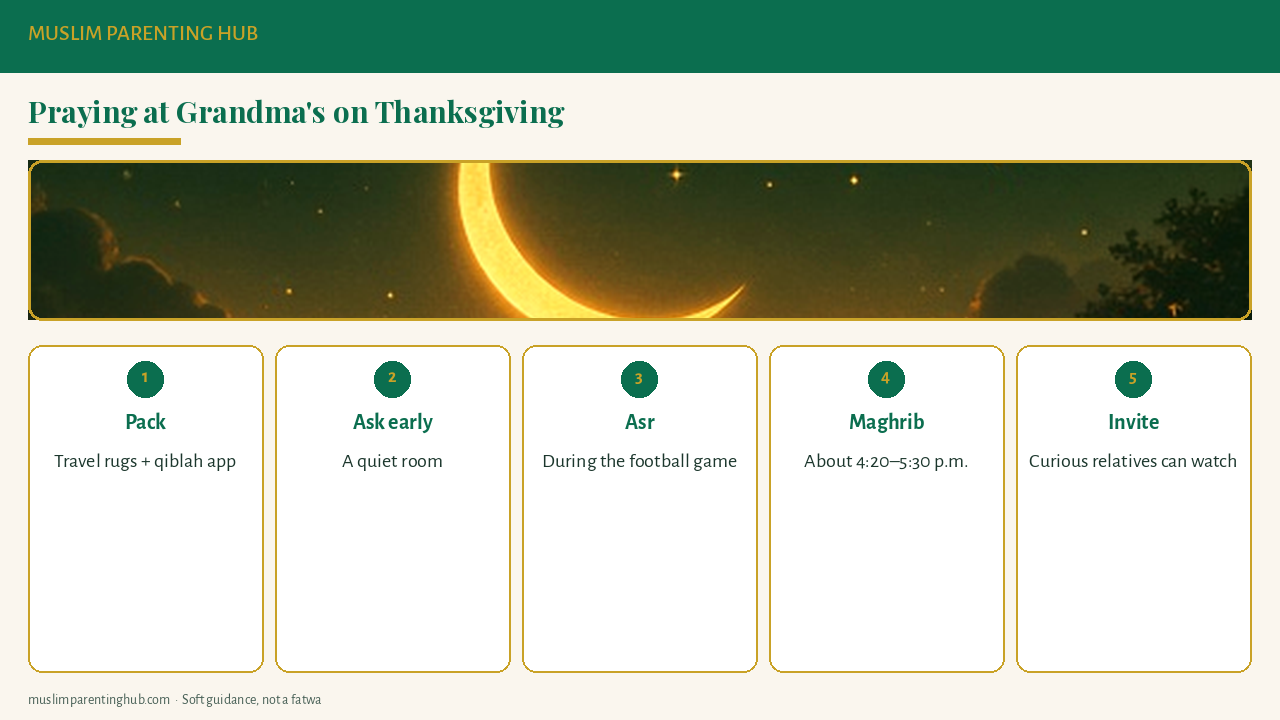
After Daylight Saving ends on November 1, Maghrib comes early. On Thanksgiving it falls between about 4:20 and 5:30 p.m. in most US cities, depending on where you live, which is often right when dinner is being served. Asr may land in the middle of the afternoon football game.
Pack a small prayer bag:
- Travel prayer rugs (one per person, or one shared)
- A compass or qiblah app
- A water bottle for wudu in case the bathroom setup is awkward
- Modest prayer clothes for kids, if your family uses them
On the day:
- Ask for a quiet room in advance (a guest bedroom or an office works).
- Pray together as a family, quickly and calmly. Young kids can take turns.
- If a relative is curious, invite them to watch. Many grandparents find it moving to see their grandchildren pray.
If you’re new to praying on the go with children, our guide to praying Maghrib on the go with kids has practical tips that work for holidays too. And for the bigger time shift, see how to adjust your family’s Maghrib routine when Daylight Saving ends.
When Grace Is Said
Many families say a Christian grace before the Thanksgiving meal. Your kids can sit quietly and respectfully while others pray. They don’t need to join in, and they don’t need to be rude.
When grace ends, your family can say “Bismillah” softly before eating, as always. Our guide to teaching kids to say Bismillah in everyday moments can help make it natural, whether you’re at your own table or someone else’s.
If a relative asks your child to say a prayer, a simple answer works: “Can I say Bismillah? That’s what we say before eating.”
Kids’ Questions You’ll Probably Hear
“Why don’t Grandma and Grandpa pray like us?” “They have a different religion. We pray to Allah, and we love them, and we make dua that Allah guides all of us and keeps us together.”
“Is Grandma going to Hell?” Kids sometimes overhear things. Keep it gentle: “Only Allah knows people’s hearts and futures. Our job is to love Grandma, be kind to her, and make dua for her.”
“Why can’t I eat the marshmallows?” “They have something from pigs inside called gelatin. We’ll get halal marshmallows next time and make our own.”
“Do Muslims celebrate Thanksgiving?” “Muslims are thankful to Allah every day. Today we’re visiting family, eating together and saying Alhamdulillah for everything Allah gave us.” For a longer answer, see our Thanksgiving guide for Muslim families.
If cousins ask your kids questions about Islam, the same kind, short answers they use at school work here. Our guide to answers Muslim kids can give when classmates ask about Islam has scripts that translate easily to family gatherings.
Being Good Guests
The way your family behaves can be a quiet form of da’wah. Kids remember how their parents treat people.
- Bring a gift for the host: flowers, a dessert, or a pie.
- Let your kids help set the table, clear plates, or entertain younger cousins.
- Thank the host warmly at the end, and send a thank-you text the next day.
- Stay positive. If something wasn’t perfect, it can wait for a calm conversation later.
The Prophet ﷺ said, “Give gifts, and you will love one another” (al-Adab al-Mufrad 594). For more guest-and-host ideas, our guide to guest manners for Muslim kids has simple role-plays you can practice before the visit.
FAQ
Can Muslims go to Thanksgiving dinner with non-Muslim family?
Many scholars encourage keeping family ties with non-Muslim relatives. The Prophet ﷺ told Asma to keep good relations with her non-Muslim mother (Bukhari 2620). Families can attend while eating only halal food, praying on time, and keeping their own boundaries.
What Thanksgiving foods should Muslim kids avoid?
Common ones are non-halal turkey (if that’s your family’s practice), stuffing cooked inside the turkey, bacon in side dishes, gelatin in marshmallows and Jell-O salads, lard in some pie crusts, and wine or liquor in gravy, cranberry sauce or desserts.
What should we do if wine is served at the table?
Scholars differ on how strictly to apply the hadith about tables with alcohol (Tirmidhi 2801) in family settings. Many families ask the host to keep drinks off the table, sit away from them, or leave before evening drinking. Ask your local imam if you’re unsure.
How do we pray Maghrib at a relative’s house on Thanksgiving?
Ask the host ahead of time for a quiet room, pack travel rugs and a qiblah app, and pray together for about ten minutes. After Daylight Saving ends, Maghrib falls between about 4:20 and 5:30 p.m. in most US cities, depending on where you live.
Should my child join a Christian grace before the meal?
They don’t need to join. Teach them to sit quietly and respectfully while others pray, then say “Bismillah” softly before eating. Respect and clarity go together.
How do I explain to my child why Grandma isn’t Muslim?
Keep it simple and loving: “Grandma has a different religion. We love her, we’re kind to her, and we make dua for her.” Avoid frightening statements; leave judgment to Allah.
Related guides
- Thanksgiving for Muslim families: shukr traditions and kind answers
- Guest manners for Muslim kids
- Praying Maghrib on the go with kids
- Teach kids JazakAllah khair and thank-you manners
Soft guidance, not a fatwa. For detailed fiqh questions, please ask a trusted local scholar or your masjid’s imam.
Related articles
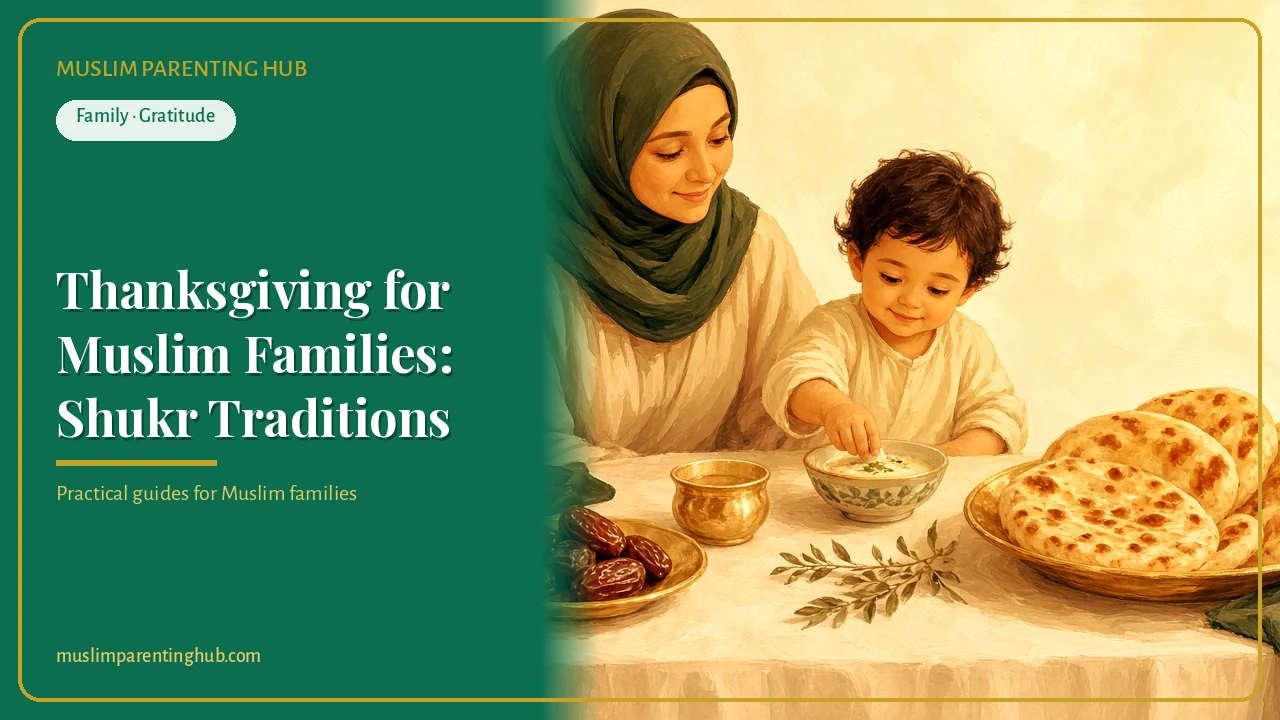
Thanksgiving for Muslim Families: Shukr Traditions, Halal Turkey Tips and Kind Answers for Kids
Thanksgiving for Muslim families: school crafts, halal turkey, prayer times on the day, hosting adab, and simple shukr traditions kids will remember.
Read guide →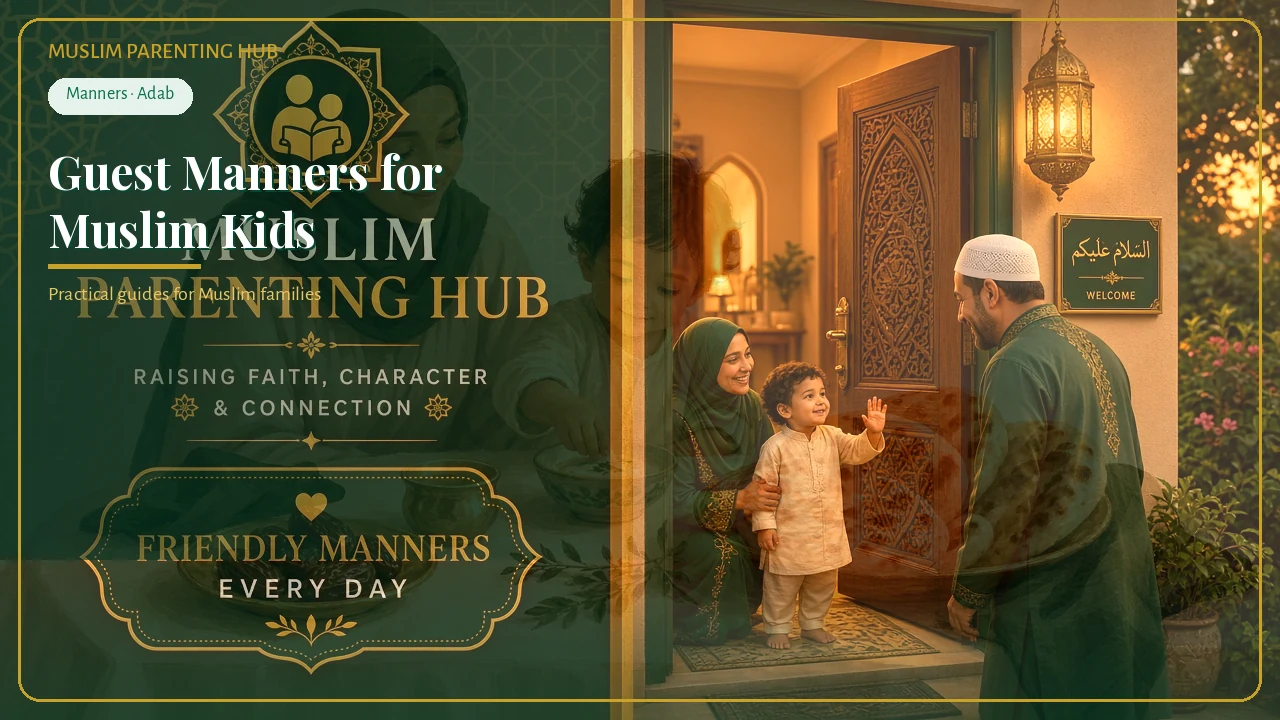
Guest Manners for Muslim Kids: Hosting at Home with Islamic Adab
Teach Muslim kids guest manners for hosting at home—shoes, greetings, serving, privacy, and soft scripts. Islamic adab parents can practice tonight.
Read guide →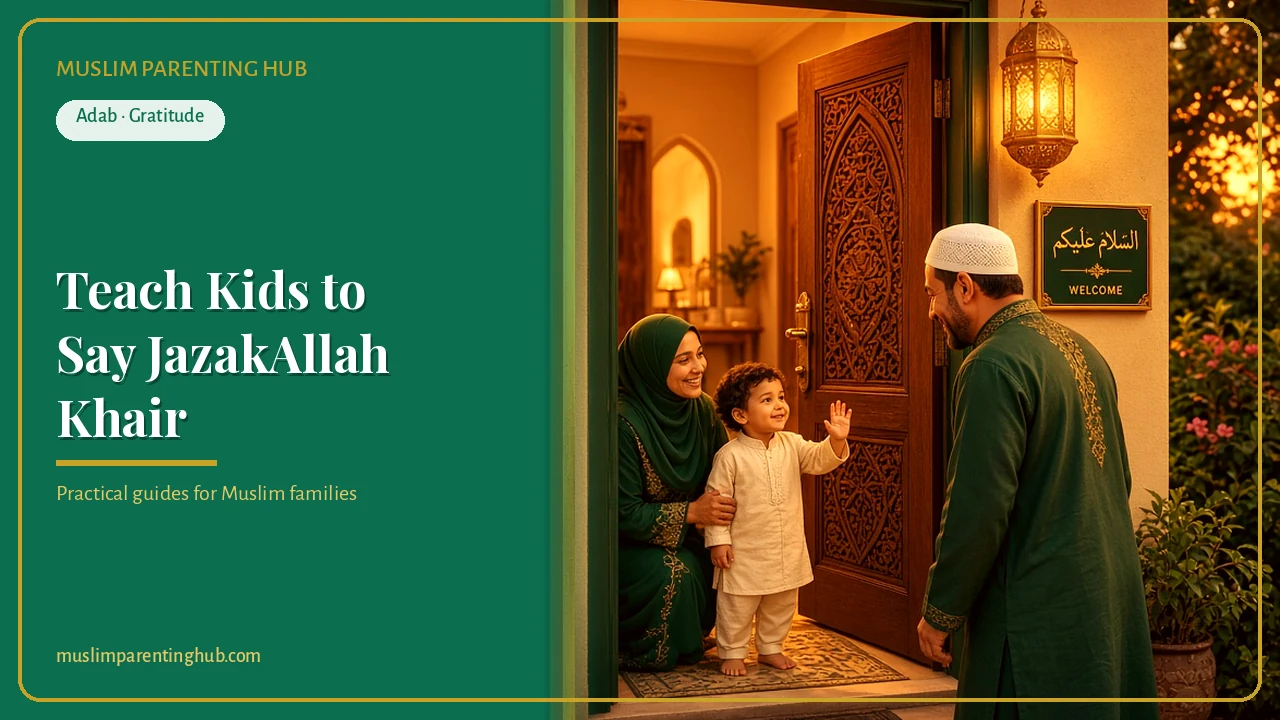
Teach Kids to Say JazakAllahu Khayran: Thank-You Manners for Muslim Kids at Home, School and the Masjid
How to teach kids to say JazakAllah khair and thank you: meaning, correct forms and replies, US school and masjid scripts, thank-you notes and a 7-day plan.
Read guide →
Praying Maghrib on the Go With Kids: Soccer Practice, Carpools and Evening Errands
Maghrib hits during soccer practice, carpool, or a Target run? A portable prayer kit, where to pray, a 10-minute on-the-go plan, and coach scripts for US families.
Read guide →