
Najis and Tahir for Kids: How to Teach What’s Clean for Salah (Without Worry)
Your six-year-old is newly potty trained and very proud of it. Then, right before Maghrib, they come to you with a worried face: “A little pee got on my pants. Can I still pray?” Or your eight-year-old asks why you rinse the bathroom floor mat, but not the muddy shoes.
These are taharah questions, and they are a normal part of growing up Muslim. Kids need two simple words to make sense of them: tahir (pure, clean for salah) and najis (impure, something that must be washed off before praying).
This guide explains najis and tahir at a child’s level, gives a short list of what to wash and what not to worry about, shows how to clean a pee spot before prayer, and helps you avoid the overthinking that can make some kids anxious. It builds on our main guide to Islamic potty training without shame, which is the best place to start if your child is still learning the toilet.
This is home guidance for young children, not a fatwa. Some details differ between the schools of fiqh; follow your local imam where your community has a particular practice.
Why Taharah Matters (the Kid Version)
The Prophet ﷺ said: “Purity is half of faith” (Muslim). Allah says: “Indeed, Allah loves those who repent and loves those who purify themselves” (Quran 2:222). And one of the very first instructions in the Quran’s revelation was: “And your clothing purify” (Quran 74:4).
For a child, you can put it like this:
“When we pray, we are visiting Allah. So we get ready: we make wudu, we put on clean clothes and we pray in a clean place. Allah loves people who keep clean.”
That is the whole idea. Being clean for salah is a way of showing respect, not a test you can fail.
Two Words Kids Can Learn
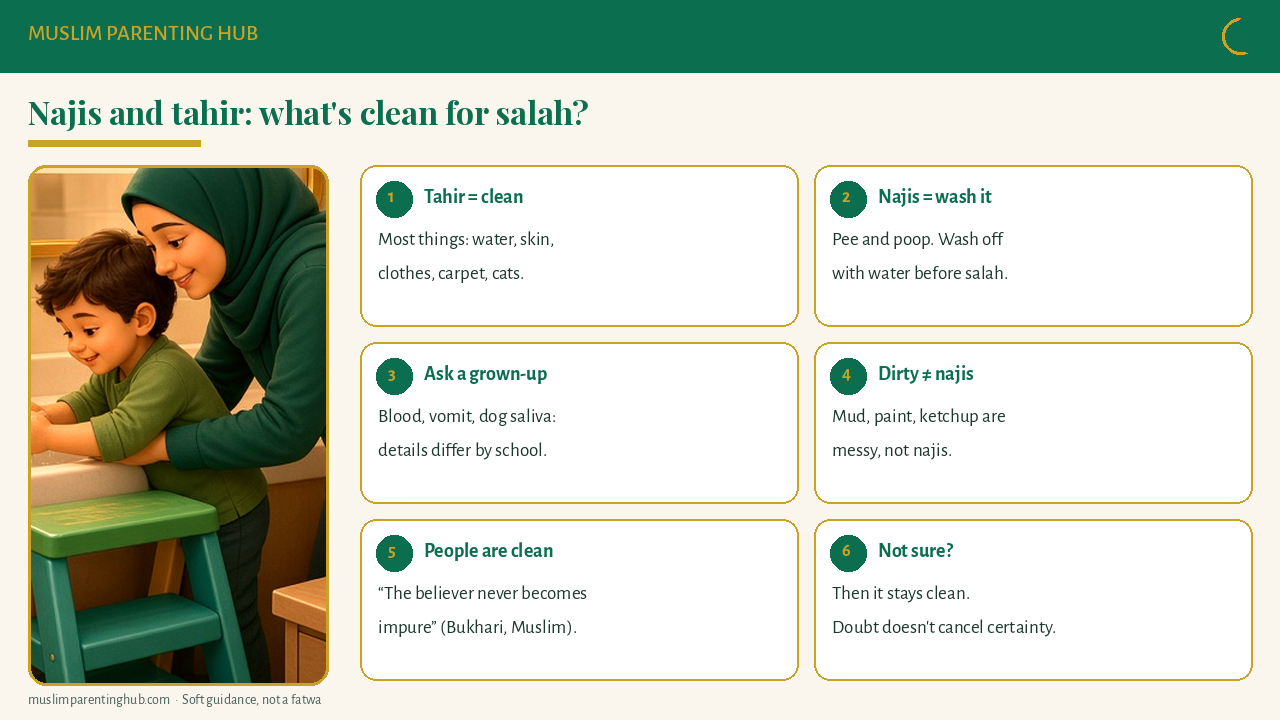
Tahir (طاهر) = clean for salah. Most things are tahir. Water, soil, your skin, your clothes, the carpet, your pet cat, your sister’s hug.
Najis (نجس) = needs washing before salah. A few specific things are najis. If they get on your body, clothes or prayer place, you wash them off with water.
A third word helps too: dirty is not the same as najis. Mud, paint, marker, playdough and spaghetti sauce are messy, but they are not najis. You can pray in a shirt with a ketchup stain (though it’s nice to change). A tiny invisible spot of urine, on the other hand, is najis even if you can’t see it.
What Kids Should Know Is Najis
Keep the list short for children. These are the ones they will meet most:
- Pee (urine). The most common one for kids.
- Poop (stool). This is why we do istinja, washing with water after the toilet.
- A few other things grown-ups help with. Things like blood, vomit or a dog’s saliva have details that differ between the schools of fiqh. For young children, simply say: “If something like that gets on you, come and tell me and we’ll take care of it together.”
That’s it. Children don’t need a full fiqh list. They need to know that pee and poop must be washed off with water, and that a parent can help with anything else.
What Is Not Najis (This Part Prevents Worry)
Kids who learn only the “unclean” list can start to see dirt everywhere. Balance it with what is clean:
- People are never najis. When Abu Hurayrah worried he wasn’t clean enough to sit with the Prophet ﷺ, the Prophet said: “Subhan Allah! The believer never becomes impure” (Bukhari, Muslim). A sweaty, sticky, muddy child is still tahir.
- Sweat, tears and spit (saliva) of a person are clean.
- Cats are clean. The Prophet ﷺ said about the cat: “She is not impure; she is one of those who go around among you” (Abu Dawud, Tirmidhi). Kids love this one.
- Water is clean and cleans everything. Plain tap water is all you need.
- Dried mud, crumbs, paint and marker are dirty, not najis.
A simple rule from the Sunnah also protects kids from worry: if you are not sure, it stays clean. In wudu, the Prophet ﷺ told a man who felt unsure whether he had broken his wudu not to leave the prayer “until he hears a sound or smells something” (Bukhari, Muslim). Scholars take a general rule from this: certainty is not removed by doubt. So: “If you think maybe something touched you but you’re not sure, you are still clean.”
How to Wash a Pee Spot Before Salah (Kid Steps)
This is the situation children face most. Teach it once, practice it with plain water, and they will know what to do at home, at a friend’s house or at school.
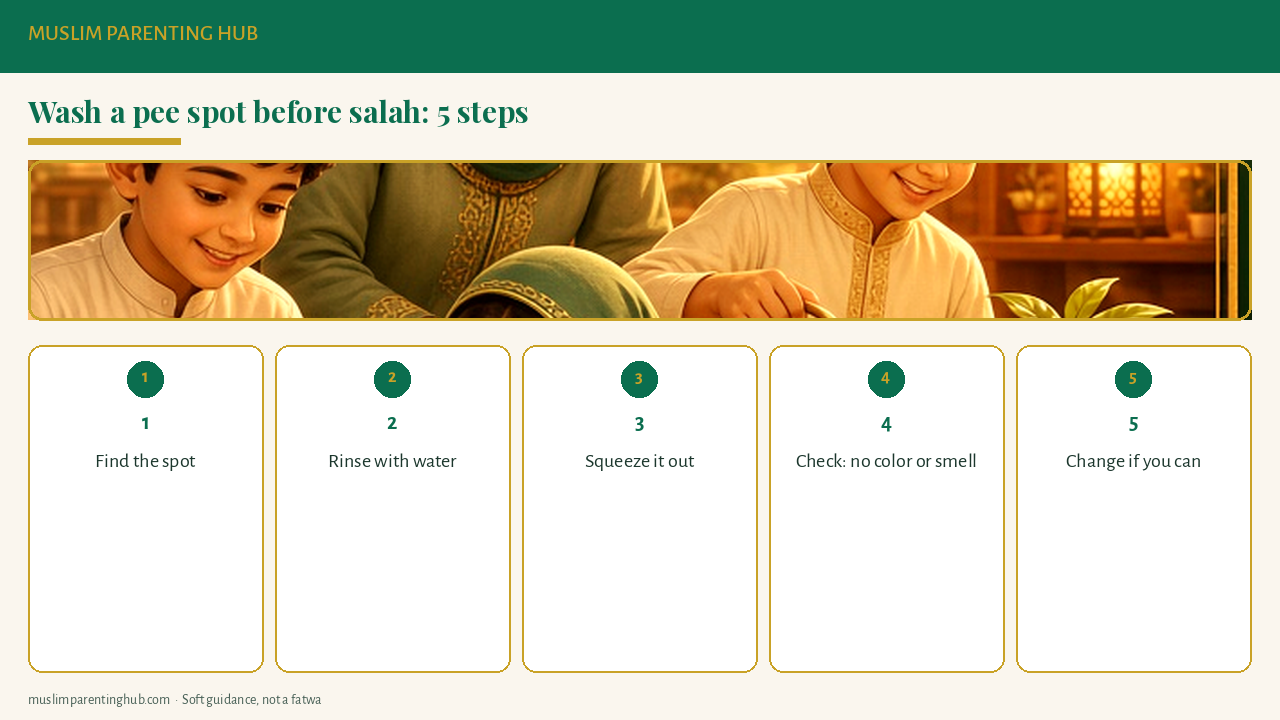
- Find the spot. Where did it go? Pants, underwear, sock?
- Rinse it with water. Hold that part under the tap or pour water over it until the pee is washed away. You don’t need special soap, though soap is fine.
- Squeeze it out. Gently wring the wet part.
- Check. No pee color or smell left? Then it’s clean.
- Change if you can. If the wet patch is uncomfortable, change into dry clothes. If not, a damp but clean patch is fine for salah.
If the pee went on your body, it is the same: wash that skin with water. Then, if your child had already made wudu and went to the toilet, they make wudu again before praying.
For accidents on carpets, couches and car seats, see our step-by-step guide to cleaning pee accidents the Islamic way.
What About Babies and Toddlers?
Parents of little ones often worry about their own prayer: the baby spit up on your shoulder, or a leaky diaper got on your sleeve. Two things help:
- For a baby boy who only drinks milk, the Prophet ﷺ sprinkled water over the place where a baby boy had urinated on his clothes (Bukhari, Muslim). Many scholars apply this to milk-fed baby boys; for girls and for children who eat food, wash the spot. Ask your imam about your school’s view.
- Keep a “prayer shirt” or a spare top by your prayer mat during the diaper years. It makes salah far less stressful.
Children who are still wetting at night aren’t sinful and aren’t “dirty.” Our bedwetting and taharah guide explains how to handle sheets and morning prayers without shame.
The Three Checks Before Salah
Older children (around seven and up) can learn a quick three-check habit before praying:
- Body: Did I wash after the toilet? Is my wudu fresh?
- Clothes: Is anything wet from pee? If yes, rinse or change.
- Place: Is my prayer spot clean? A prayer mat makes this easy. See our prayer corner ideas.
Make it fast, like a pilot’s pre-flight check: “Body? Clean. Clothes? Clean. Place? Clean. Allahu Akbar!” If your child is just learning to pray, our step-by-step guide to wudu and salah shows where this fits.
The Gentlest Lesson: The Man in the Masjid
When a Bedouin man urinated in a corner of the Prophet’s masjid, the Companions jumped up to stop him. The Prophet ﷺ told them to leave him alone, then had a bucket of water poured over the spot, and said: “You were sent to make things easy, not to make them difficult” (Bukhari).
Share this story with older children. It teaches three things at once: urine is cleaned with water, mistakes are fixed calmly, and nobody should be shamed. It’s also a good reminder for parents when an accident happens at the worst moment.
Avoiding Waswasa (Overthinking About Cleanliness)
Some sensitive children, often the most conscientious ones, start to worry too much: washing again and again, asking “Am I clean?” many times, or avoiding salah because they feel never clean enough. This is called waswasa.
To keep taharah healthy:
- Teach the “not sure = clean” rule early and repeat it.
- Wash once, properly, then stop. “We washed it. It’s clean. Done.”
- Don’t quiz them about every toilet trip.
- Praise effort, not perfection: “I love how you took care of that yourself.”
- If worry is growing over weeks, gently talk with your pediatrician or a counselor. Repeated checking can be anxiety, and help is available.
Teaching It Through Everyday Moments
You don’t need a lesson plan. Use moments as they happen:
- After the toilet: “Water makes us tahir again. Alhamdulillah!” Our Islamic toilet manners for kids shows the full routine.
- Laundry day: Let kids help sort clothes and talk about clean for salah vs. just dirty.
- Before Jumu’ah: The Friday bath is a great chance to talk about purity. See how to teach kids ghusl.
- Handwashing: Connect it to the Sunnah in our Sunnah handwashing for kids guide.
FAQ
What is the difference between najis and tahir for kids?
Tahir means clean for salah, and most things are tahir. Najis means something that must be washed off with water before praying, like pee and poop. Dirty is not the same as najis: mud and paint are messy but not najis.
Can my child pray if a little pee got on their clothes?
They should wash the spot with water first, or change into clean clothes, then pray. Rinse until no color or smell is left. If they had wudu and went to the toilet, they make wudu again.
Is my child najis if they are sweaty or dirty from playing?
No. The Prophet ﷺ said, “The believer never becomes impure” (Bukhari, Muslim). Sweat, tears and mud don’t make a person najis. Kids can wash up for comfort, but they don’t need to worry.
How do I clean urine from clothes for salah?
Rinse the spot with plain water until the urine is washed away, squeeze it out and check that no color or smell remains. Soap is fine but not required. Dry or change the clothes if the wet patch is uncomfortable.
Are cats najis in Islam?
No. The Prophet ﷺ said a cat “is not impure; she is one of those who go around among you” (Abu Dawud, Tirmidhi). Kids can pet cats and still pray. Wash hands if there was a litter-box mess.
My child keeps worrying they are not clean. What should I do?
Teach the rule “if you’re not sure, it stays clean,” wash once properly and then stop, and avoid quizzing them. Praise effort. If the worry lasts for weeks or affects daily life, talk to your pediatrician or a counselor.
Related guides
- Islamic potty training without shame
- How to teach kids istinja
- Clean pee accidents the Islamic way
- Islamic toilet manners for kids: 12 rules
- Bedwetting and taharah: no-shame tips
Closing
Taharah is meant to be easy. Most things are clean, water fixes almost everything, and a doubt never cancels what you know. Teach your child the two words, tahir and najis, show them how to rinse a pee spot, and keep your voice calm. Then let salah be what it should be: a clean, happy visit with Allah.
Quick steps
How to wash a pee spot from clothes before salah. Five simple steps children can follow to make clothes clean for prayer after a small accident.
- Find the spot — Work out where the pee went: pants, underwear or sock.
- Rinse with water — Hold that part under the tap or pour water over it until the pee is washed away.
- Squeeze it out — Gently wring the wet part.
- Check — Make sure no pee color or smell is left; then it is clean.
- Change if you can — Change into dry clothes if the wet patch is uncomfortable; a damp but clean patch is fine for salah.
Related articles
How to Teach Kids Istinja: Simple Washing Steps for US Bathrooms
Teach your child istinja without shame: easy wiping and washing steps, left-hand rules, peri bottle and bidet tips for US bathrooms, and a 7-day practice plan.
Read guide →
Islamic Potty Training Without Shame: Readiness, Bathroom Duas & Taharah
Ready for Islamic potty training? Spot readiness signs, teach bathroom duas and gentle istinja, and coach toilet manners with zero shame—start tonight.
Read guide →
How to Clean Pee Accidents the Islamic Way: Clothes, Carpet, Couch and Car Seat (Potty Training Guide)
Potty training accident on the carpet, couch or car seat? Simple taharah steps to clean urine the Islamic way, what counts as clean, and calm words for kids.
Read guide →
Islamic Toilet Manners for Kids: 12 Simple Rules (With the Reason Behind Each)
Toilet manners in Islam made simple for kids: left foot in, the bathroom dua, qibla, privacy, left-hand istinja and leaving it clean, with a reason for each rule.
Read guide →