Teach Kids to Comfort a Sad Classmate: Rahma Scripts for US Public School
Recess lines tell stories. A classmate sits alone after a rough grade. Someone cries quietly after a teasing joke. A new student looks lost at lunch. Your child notices—and freezes. Or they want to help and only know “You okay?” said once, then silence.
Rahma (mercy) is not only a feeling. It is a set of small, learnable moves. This guide gives US Muslim families practical scripts for public school hallways, cafeterias, and buses—without turning kids into forced counselors or ignoring boundaries.
It reinforces the heart of our rahma activities for Muslim kids with a school-specific focus.
Why School Rahma Needs Its Own Practice
Home kindness jars are wonderful. School is louder, watched by peers, and full of mixed-faith classmates. Kids need lines that work when:
- A teacher is nearby but busy
- Friends might tease them for being “soft”
- The sad classmate does not share their faith language
- They are not close friends—just fellow humans in the same class
Islam teaches mercy as a strength. Coaching that mercy for the classroom helps kids live faith where they spend most of their weekday hours.
The Rahma Micro-Moves (Kids Can Learn)
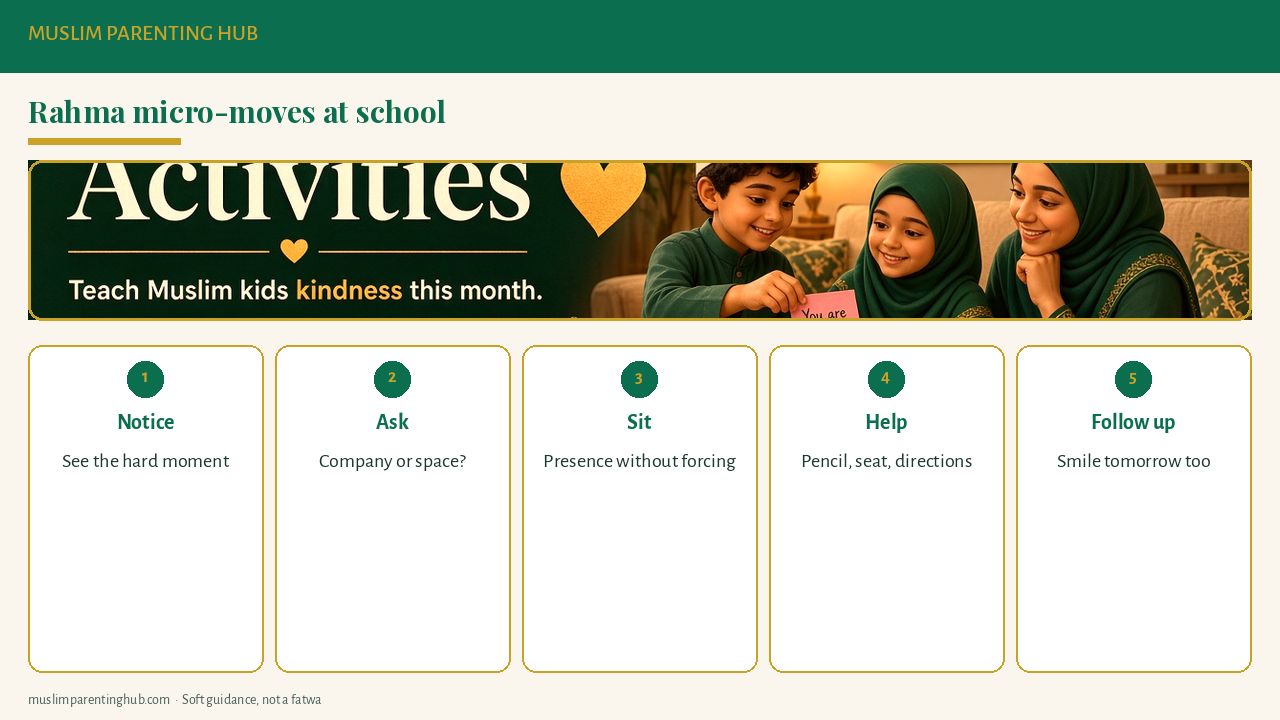
- Notice. “Something looks hard for them.”
- Check consent. Approach gently; do not force a hug or a spotlight.
- Offer presence. Sit nearby, save a seat, walk with them to class.
- Offer a simple line. One warm sentence beats a speech.
- Offer a practical help. Pencil, spot in line, explaining the worksheet directions.
- Follow up later. A smile tomorrow matters as much as today’s words.
- Tell a trusted adult if the sadness looks like bullying or danger.
These moves work for Muslim and non-Muslim classmates alike. Mercy is not limited by matching beliefs.
Soft Scripts Kids Can Practice at Home
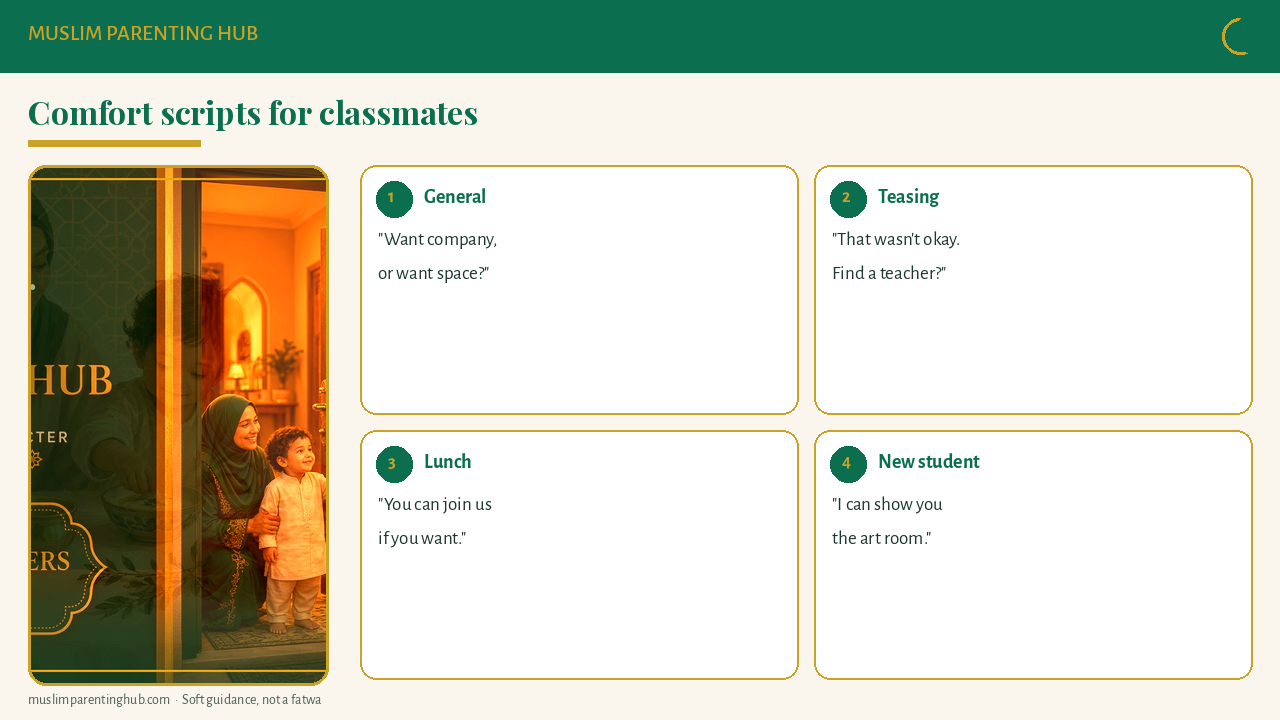
General comfort:
“You look upset. Want company, or want space?”
After teasing:
“That wasn’t okay. Want to go find Ms. Rivera together?”
Lunch isolation:
“We’re sitting by the window. You can join if you want.”
Bad grade energy:
“Rough papers happen. Want to shoot baskets at recess anyway?”
New student:
“I can show you where the art room is. I got lost the first week too.”
When they don’t know what to say:
“I’m here.” (Then sit.)
Role-play these at home the same way you practice apology repair scripts—short, repeated, no mockery.
Consent, Privacy, and Not Making It Weird
Rahma without consent can feel like attention they did not ask for. Teach:
- No forced hugs
- No announcing “He’s sad!” to the whole table
- No prying for family secrets
- Accept “I want to be alone”
- Do not film or meme someone’s tears
A kind exit line when space is requested:
“Okay. If you change your mind, I’m by the swings.”
Muslim Language in a Public School
Qur’anic phrases and duas are beautiful at home and with Muslim peers. With mixed classmates, prioritize universal kindness words first so help never feels like a debate about religion. Your child can still make silent dua for a hurting friend—that is a hidden rahma practice.
If a Muslim classmate is sad, a soft “Allah make it easy for you” may fit if that friendship already shares faith language. Teach discernment, not scripts blasted at everyone.
Linking School Mercy to Neighbor Kindness
The same muscle that comforts a classmate helps on your street: noticing, offering, not forcing. Point kids to neighbor kindness habits so rahma feels like one lifestyle, not a school-only performance. Gratitude practice also fuels empathy—kids who notice blessings often notice others’ struggles sooner; see teaching shukr.
Age Bands
Ages 5–7: Focus on sitting nearby, sharing a crayon, telling the teacher if someone is hurt. Keep scripts to one line.
Ages 8–10: Add consent questions, lunch invitations, and telling an adult about teasing patterns.
Ages 11–14: Discuss peer pressure (“don’t be soft”), online pile-ons, and how to support without gossiping in group chats.
What Not to Say (Even With Good Intentions)
- “Just smile.”
- “At least you…”
- “Boys don’t cry.” / “You’re too sensitive.”
- “Everything happens for a reason” as a shutdown
- “I won’t be your friend if you stay sad” (yes, kids say versions of this)
Replace with presence and practical help.
When Your Child Is the Sad One
Teach them to receive rahma too: how to say “I need space,” how to ask a safe friend to sit closer, how to tell you after school. Kids who only give comfort and never receive it burn out or fake toughness.
After-school debrief question:
“Did anyone seem like they needed kindness today? Did you need any?”
Bullying vs Ordinary Sad Days
Comfort skills are not a substitute for adult intervention. If sadness links to repeated targeting, racial/religious slurs, or exclusion campaigns, your child should loop in teachers and you. Mercy includes protecting people, not only whispering kind words beside harm.
A 7-Day Home Practice for School Rahma
Day 1: Read one Prophet ﷺ mercy story at bedtime (keep it five minutes).
Day 2: Practice two comfort scripts with stuffed animals.
Day 3: Notice game—each family member shares one person they noticed today.
Day 4: Role-play “want company or space?”
Day 5: Pack an extra snack/pencil as a quiet help tool.
Day 6: Discuss a real school scenario from your child’s week (no gossip names if private).
Day 7: Choose one kind act for a classmate or neighbor and debrief.
This sits alongside the wider activity list in the rahma guide without duplicating every game.
Teachers, Coaches, and Carpool Adults
Encourage kids to use adults as partners. A simple line to a teacher:
“Jordan seems really upset. I think they might need you.”
That is rahma with wisdom. Carpool parents can model checking on quiet kids without interrogation.
Bus Rides and Hallway Seconds
Some of the hardest sadness shows up in sixty-second hallway windows. Teach a pocket script: eye contact, “Want me to walk with you?”, then move with the bell. Bus seats can be offered without speeches. Tiny mercy still counts when time is short.
Cultural and Religious Difference
Your child may comfort classmates who celebrate different holidays or eat different foods. Rahma does not require agreeing on worldview; it requires recognizing shared human hurt. Practice curious respect: no mocking lunch boxes, no forcing faith explanations mid-tears.
Tracking Kindness Without Ego
A private journal line—“One mercy I offered / one I received”—beats public bragging. The goal is a soft heart, not a kindness resume for adults.
Playground Triage: Hurt Body vs Hurt Feelings
Teach kids a quick sort: bleeding, hard fall, or can’t breathe → get an adult immediately. Tears from exclusion or embarrassment → comfort scripts and optional adult. Mixing these up either under-helps injured kids or over-alarms ordinary sadness.
Practice both at home with clear examples so recess adrenaline does not erase the plan.
Faith Stories That Fuel Mercy
Spend one bedtime a week on a short Prophet ﷺ mercy moment—toward children, animals, or someone who erred. Ask: “What would that look like in your cafeteria?” Keep the bridge concrete. Stories without application fade; application without stories loses heart.
When Your Child Reports “Nobody Helped Me”
Believe them first. Problem-solve allies, teacher check-ins, and scripts to ask for help. Being left without comfort is painful; your home becomes the place mercy is reliable. That reliability often frees them to offer more at school later.
Carpool Debrief Without Gossip
On the ride home, ask open questions: “Any chance to be kind today?” Avoid digging for classmates’ private pain to entertain adults. If your child shares, thank them for caring and help decide whether teachers need to know. Gossip dressed as concern teaches the wrong lesson.
Rahma at school is a lifelong skill: the coworker, the neighbor, the masjid newcomer. Starting with a sad classmate trains the eye and the tongue for decades of mercy ahead.
FAQ
What if my child is too shy to comfort anyone?
Start with nonverbal rahma: saving a seat, sharing supplies, smiling. Scripts can wait. Shy mercy still counts.
What if classmates mock them for being kind?
Coach a calm line: “I like being decent.” Help them find one ally. Talk to teachers if kindness is punished by peer cruelty.
Should Muslim kids always invite the sad classmate to play?
Invite when it fits; accept refusals. Forced inclusion can embarrass. Repeated gentle invitations over time are better than one dramatic rescue.
Is it okay to make dua for a non-Muslim classmate?
Yes, many families teach children to ask Allah for ease for all people. Keep it private unless the friendship welcomes shared faith talk.
How do I avoid raising a people-pleaser?
Pair rahma with boundaries: they can help and still say no to unfair demands. Mercy is not unlimited emotional labor for every peer.
What if my child caused the sadness?
Then comfort includes ownership. Use apology-and-repair skills first, then ongoing kindness.
Closing: Mercy With a Backpack
Public school will hand your child daily chances to harden or to soften. Practice rahma scripts at home until one kind sentence feels ordinary. Notice. Ask. Sit. Help. Follow up. Tell an adult when needed.
That is mercy with a backpack—faith that fits between math and recess.
Lunch Table Politics
Cafeteria seating can become accidental exclusion. Teach kids to scan for empty trays and new faces without turning lunch into a social project they must fix alone. One invitation is enough. If their own table is full, they can still walk someone to another friendly group or sit nearby for five minutes.
A practical line:
“This table is packed—want to try the end of that one with me for today?”
Sports, Clubs, and After-School Moments
Rahma is not only for tears. A teammate who missed a shot, a debate partner who froze, or a club member who got left out of a group chat also needs soft support. The same micro-moves apply on the bleachers and in the library.
Related articles

10 Rahma Activities to Teach Muslim Kids Kindness This Month
Teach Muslim kids rahma with 10 kindness activities—kindness jar, neighbor drops, Prophet ﷺ mercy stories, age charts, and tonight scripts. Soft, practical monthly plan.
Read guide →
Neighbor Kindness for Muslim Kids: A Gentle 7-Day Practice Plan
A gentle 7-day plan to teach Muslim kids neighbor kindness—scripts for Muslim and non-Muslim neighbors, quiet hours, food sharing tips, and safety.
Read guide →
How to Teach Shukr to Kids: A 14-Day Muslim Family Gratitude Plan
Teach shukr to Muslim kids with a 14-day family plan—Alhamdulillah habits, dinner and bedtime scripts, gratitude jar, age tips, and edge cases. Soft, practical.
Read guide →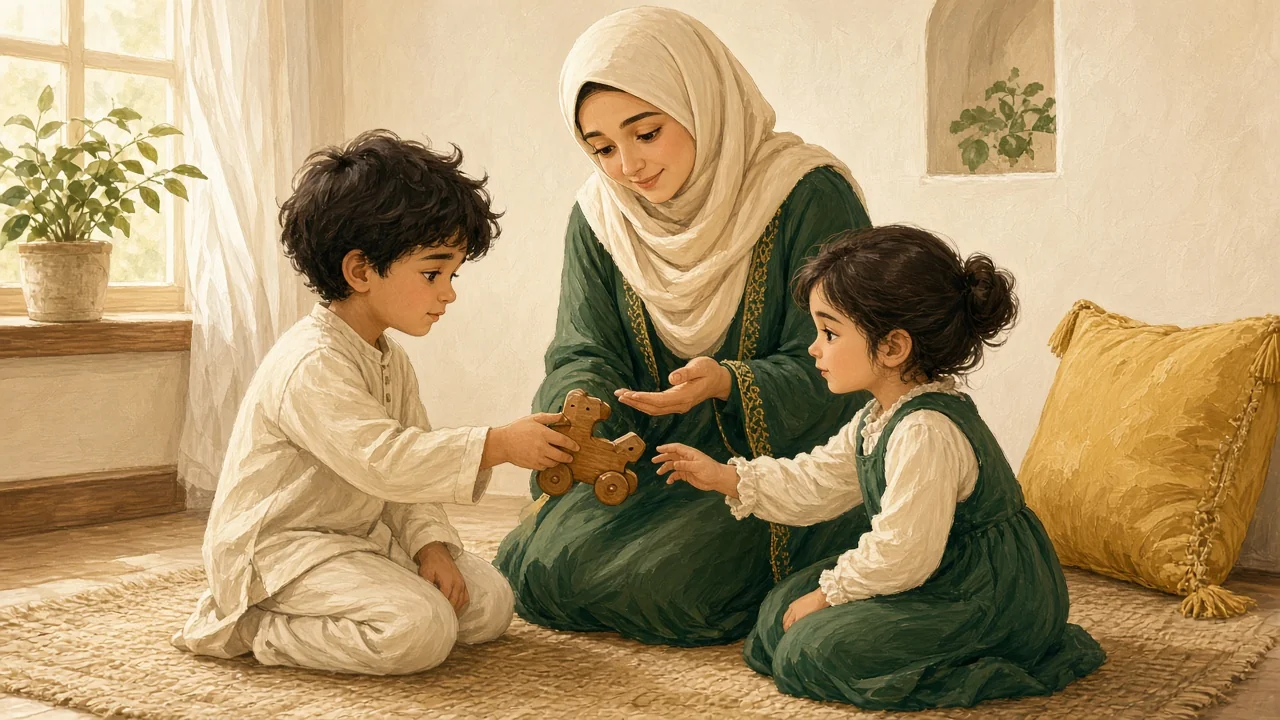
Teach Kids to Apologize with Heart: Islamic Repair Scripts (Plus Soft Istighfar)
Teach kids to apologize with Islamic repair scripts—pause, name the hurt, make it right—plus soft istighfar without shame. Age bands, what not to force, sibling tips.
Read guide →