
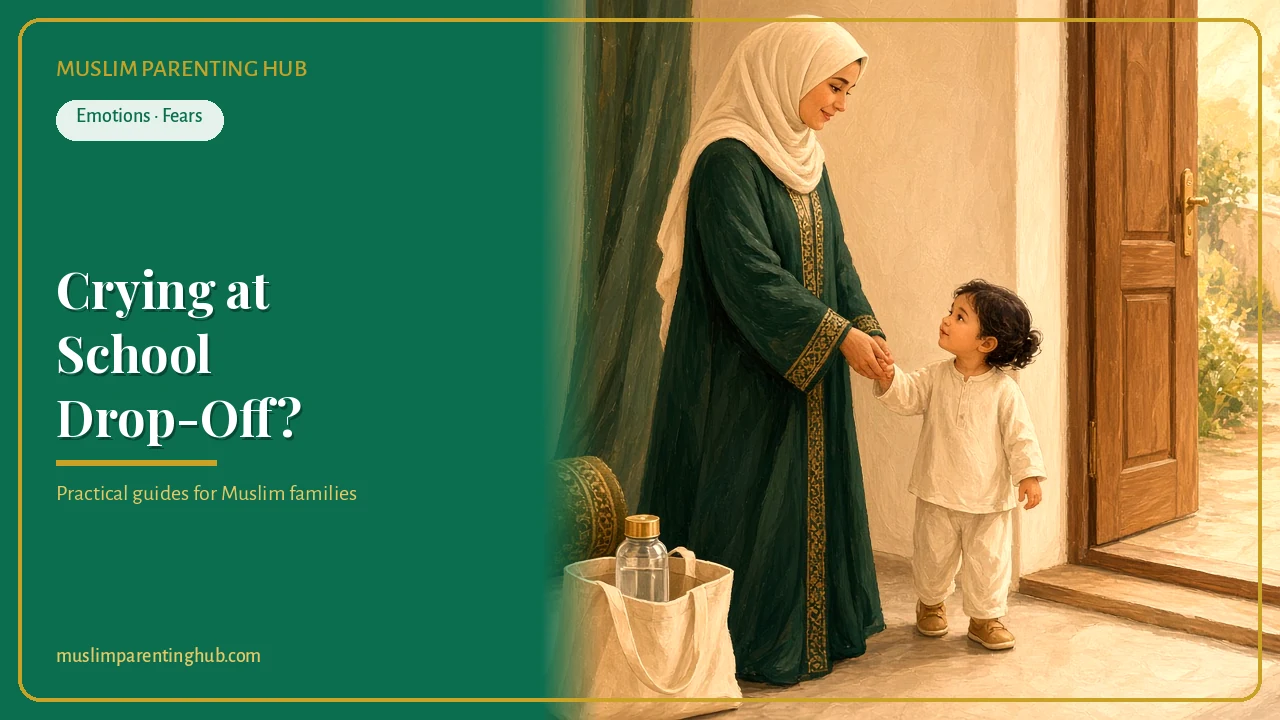
Child Crying at School Drop-Off? Islamic Duas and a Calm Goodbye Routine That Works
The car line is moving, the teacher is waving, and your child is clinging to your leg, sobbing, “Don’t leave me!” You feel every eye on you. You want to scoop them up and drive home. You also know they need to go in.
School and daycare drop-off tears are one of the most common childhood fears, and they often come back after a long weekend, a holiday break, an illness or a big change at home. Late October is a classic time: Halloween parties shake up the routine, and when daylight saving ends on 1 November, dark evenings and changed sleep can make mornings wobbly again.
The good news: a short, predictable goodbye, a few Islamic words of trust and a calm parent usually ease this within a couple of weeks. This guide gives you the words to say by age, the Sunnah dua for parting, a 60-second goodbye routine, a five-day plan and signs it is time to get more help. It is gentle home guidance, not medical advice.
Drop-off fear belongs to the same family as night fears. If your child also wakes up scared, our main guide to scary dreams in kids with Islamic comfort scripts uses the same calm, hug-first approach.
Why Drop-Off Is So Hard
Separation worry is a normal part of development, especially between ages 2 and 7. Children cry at goodbyes because they love you and aren’t yet sure the day will be okay without you. Most stop crying within a few minutes of the parent leaving, which teachers can usually confirm.
What makes it worse:
- Long, drawn-out goodbyes. Each extra “one more hug” teaches the child that crying might keep you there.
- Sneaking out. It feels kinder, but it teaches kids that you might disappear without warning, which makes them cling harder tomorrow.
- A worried parent face. Children read our faces. If we look scared, they assume there is something to fear.
- Tired mornings. Late bedtimes, a rushed breakfast and screen time before school all lower a child’s ability to cope.
The Sunnah Words for Saying Goodbye
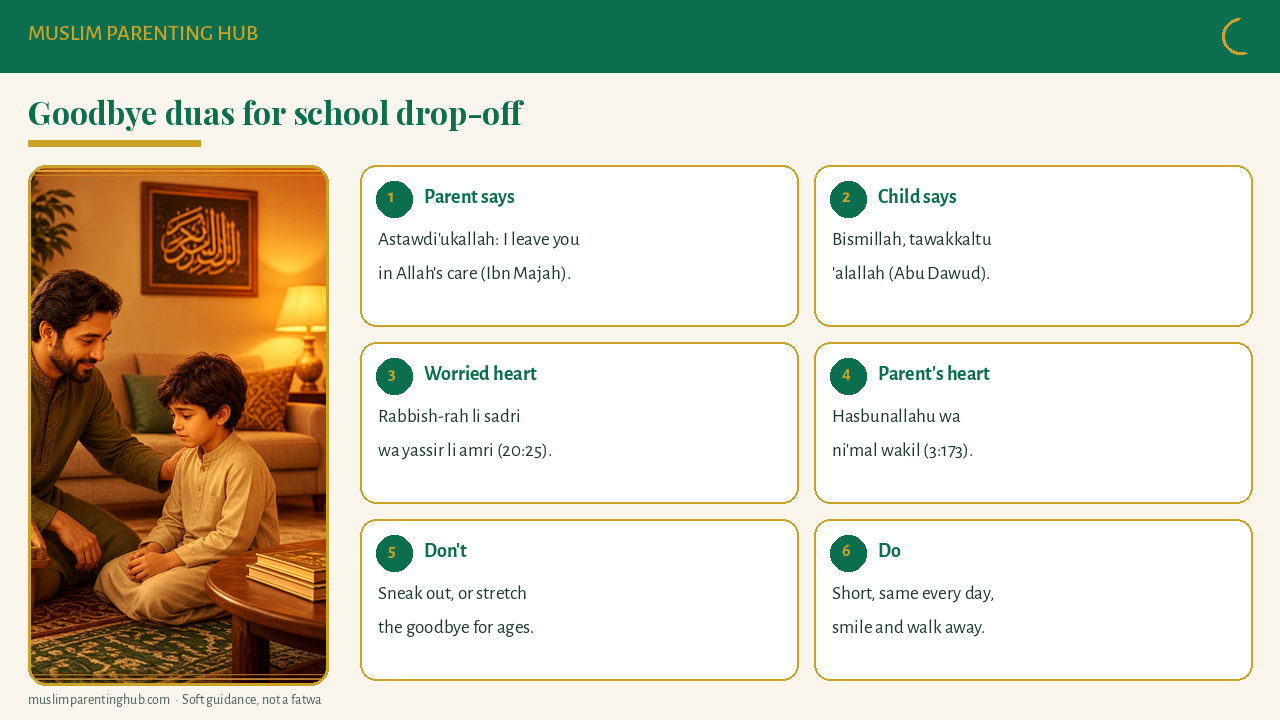
When the Prophet ﷺ said goodbye to people, he entrusted them to Allah. A beautiful dua for parting is:
“Astawdi’ukallah, alladhi la tadi’u wada’i’uh.” “I leave you in the care of Allah, whose trusts are never lost” (Ibn Majah, Ahmad).
This is a powerful thing for a child to hear. You are not abandoning them; you are leaving them in the safest hands there are. Many families say just the first word, “Astawdi’ukallah,” with a kiss on the forehead.
Other short words that help:
- For the child, leaving the house: “Bismillah, tawakkaltu ’alallah” (“In the name of Allah, I trust in Allah”) (Abu Dawud, Tirmidhi).
- For a worried heart: “Rabbish-rah li sadri, wa yassir li amri” (“My Lord, open my heart and make my task easy”) (Quran 20:25–26).
- For the parent, in your own heart: “Hasbunallahu wa ni’mal wakil” (“Allah is enough for us, and the best Guardian”) (Quran 3:173).
For more short duas for anxious moments, see our duas for worried kids guide.
What to Say by Age
Ages 2–4 (Daycare and Pre-K)
Keep it very short and concrete.
“Mama always comes back. After snack and outside time, I’ll be here. Astawdi’ukallah. Big hug, then go see Miss Lee.”
Name what comes after you leave (snack, the sandpit) so the day feels predictable.
Ages 5–7 (Kindergarten to 2nd Grade)
Validate the feeling, then show confidence.
“I know it feels hard to say goodbye. Your tummy feels jumpy, right? That’s okay. You can feel scared and still be brave. Allah is with you all day, and I’ll be at pickup at 3:15.”
Give them a job to do as you leave: carry the class pet’s food, hand the teacher a note, or find their best friend.
Ages 8–10
Older kids often worry about specific things: a test, a friend problem, a bathroom issue. Ask the night before, not at the gate.
“Is there something about school that’s worrying you? Let’s solve it together tonight so the morning feels easier.”
If friendships are the issue, our guide to help your Muslim child make friends at school can help.
The 60-Second Goodbye Routine
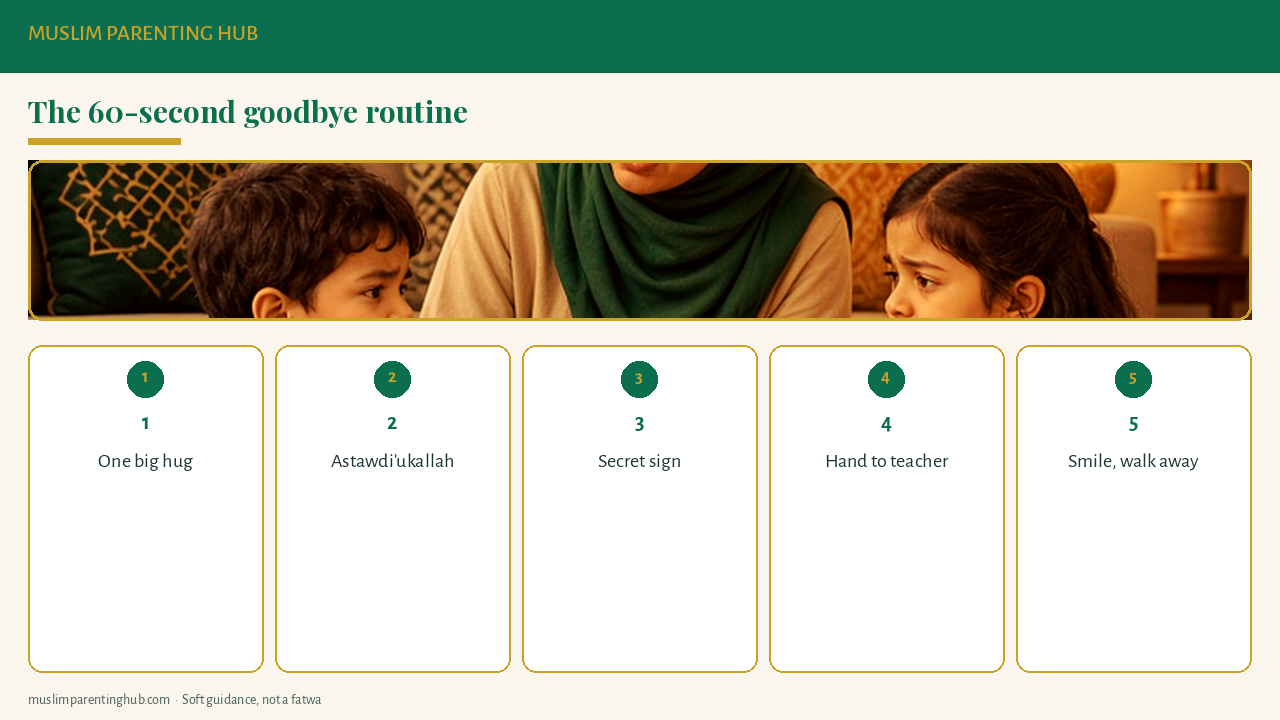
The most important part of drop-off is that it looks the same every day and is short. Practice it at home first.
- The hug. One big hug, counted down from three.
- The dua. Say “Astawdi’ukallah” while kissing their forehead.
- The secret sign. A special squeeze, a heart sign or a thumbs-up only you two share.
- The handover. Walk them to the teacher or friend and let the teacher take their hand.
- Walk away smiling. Don’t turn back for “one more.” Wave once from the door if that’s your routine.
The first few days, the crying may get louder before it gets better. That is normal and usually means the routine is working.
Five-Day Plan for Brave Mornings
- Day 1: Talk about it at home. At dinner, play “drop-off” with stuffed animals. Let your child be the parent.
- Day 2: Make a comfort item. A small family photo, a note with “Allah is with you” or a bracelet. Check school rules first.
- Day 3: Morning protection. Add a short morning dua after breakfast. Our 5-minute morning dua routine fits before the car ride.
- Day 4: Practice the routine twice. Do the full 60-second goodbye at the front door at home and again at school.
- Day 5: Celebrate. At pickup, name one brave thing they did. A small treat or a trip to the park after Asr marks the win.
Keep bedtime early and mornings calm all week. Our before-school chores checklist helps mornings run without rushing.
Talk to the Teacher
A short message or a chat at a parent-teacher conference helps the school support you:
- Ask what happens after you leave. Most teachers will tell you honestly if your child settles quickly.
- Ask for a predictable “handover” person each morning.
- Ask for a photo or a short note on the first hard days.
- Mention any recent changes: a new baby, a move, a family illness or bullying worries.
When to Get More Help
Most drop-off tears ease within two to four weeks. Talk to your pediatrician or school counselor if:
- The distress lasts most of the day, not a few minutes.
- Your child has stomachaches or headaches every school morning.
- They refuse school entirely or the fear is growing, not shrinking.
- It began after something frightening, like bullying or a scary event.
Seeking help is not a lack of faith. The Prophet ﷺ encouraged seeking treatment, and du’a and good care go together. Our guide for a child scared of shots or the doctor uses the same calm steps if a doctor visit is part of the plan.
FAQ
What dua can I say when dropping my child at school?
Say “Astawdi’ukallah, alladhi la tadi’u wada’i’uh,” meaning “I leave you in the care of Allah, whose trusts are never lost” (Ibn Majah, Ahmad). Many parents say just “Astawdi’ukallah” with a forehead kiss as part of the daily goodbye.
Should I sneak out so my child doesn’t cry?
No. Sneaking out usually makes clinging worse, because your child learns you might disappear without warning. A short, predictable goodbye is kinder. They may cry for a minute or two, but most children settle quickly once they trust the routine.
How long does school drop-off crying usually last?
For most children it eases within two to four weeks of a consistent goodbye routine. It can return briefly after holidays, illness or big changes. If it lasts much longer or gets worse, talk to your pediatrician or school counselor.
What dua can my child say when they feel scared at school?
A simple one is “Rabbish-rah li sadri, wa yassir li amri”: “My Lord, open my heart and make my task easy” (Quran 20:25–26). Younger kids can just say “Bismillah” or “Ya Allah, help me,” which is a dua from the heart.
Is separation anxiety normal for Muslim kids starting school?
Yes. Separation worry is a normal stage of development for most children, especially ages 2 to 7. It shows a strong bond with you. Calm routines, short goodbyes and words of trust in Allah help it pass.
Why does my child cry at drop-off but is fine at school?
This is very common. Children often save their biggest feelings for the person they feel safest with. Teachers usually report that they settle within minutes. Keep the goodbye short and ask the teacher how quickly they calm down.
Related guides
- Scary dreams in kids: Islamic dua and comfort scripts
- Duas for worried kids: 7 easy duas for anxiety
- Child afraid of the dark? Calm Islamic scripts and duas
- Help your Muslim child make friends at school
- Morning dua routine for kids
Closing
Every morning you hand your child over at the classroom door, you are practicing something deep: trusting Allah with the people you love most. Say “Astawdi’ukallah,” smile, and walk away. Your child is watching how you handle that moment, and one day soon they will walk in on their own.
Quick steps
The 60-second goodbye routine for school drop-off. A short, predictable goodbye with a Sunnah dua that helps anxious kids settle at school.
- The hug — Give one big hug, counted down from three.
- The dua — Say “Astawdi’ukallah” while kissing your child’s forehead.
- The secret sign — Share a special squeeze, heart sign or thumbs-up only you two use.
- The handover — Walk your child to the teacher or a friend and let the teacher take their hand.
- Walk away smiling — Leave without turning back for one more hug.
Related articles

Duas for Worried Kids: 7 Short Duas for Anxiety, Nerves and Big Worries
Short duas for kids to learn when they feel worried or anxious: test nerves, new school, bad news, bedtime. Meanings, when to say each, and calm scripts.
Read guide →
Scary Dreams and Nighttime Fear: Islamic Comfort Scripts for Muslim Kids
Child woke from a scary dream? What to say, the Sunnah steps after a bad dream, a short dua, and a calm return-to-sleep plan for Muslim kids. Gentle, no fear.
Read guide →
Muslim Kid Afraid of the Dark? Calm Scripts, Duas and a Night Plan
Is your Muslim child afraid of the dark? Use calm scripts, short bedtime duas, a cozy room setup and a 7-night plan that builds courage without scary talk.
Read guide →
Helping Your Muslim Child Make Friends at School: Scripts, Playdates and Good Companions
Is your Muslim child lonely at school? Friendship scripts, halal playdate ideas, what to say when "no one plays with me," and the Sunnah of good friends.
Read guide →