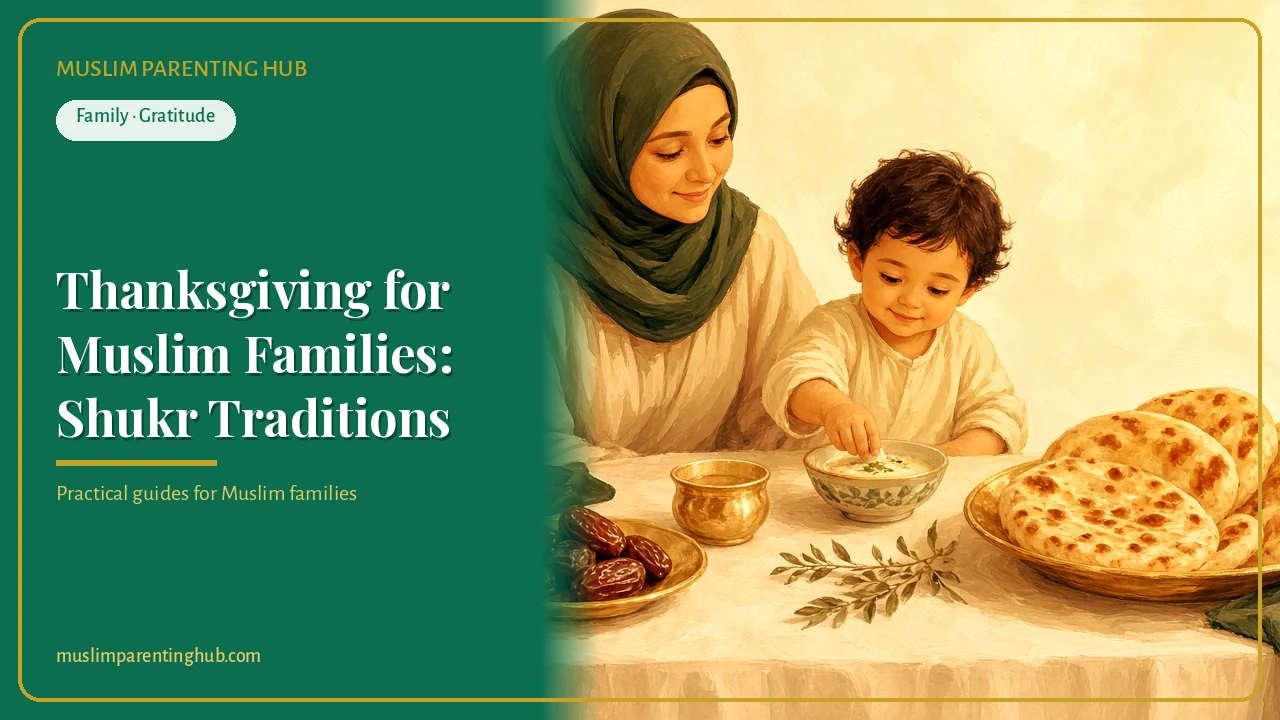
Thanksgiving for Muslim Families: Shukr Traditions, Halal Turkey Tips and Kind Answers for Kids
By mid-October, the paper turkeys start coming home. Your first grader’s handprint gobbler says “I am thankful for my mom and my iPad.” Your fourth grader is learning about the Mayflower. And somewhere in the family group chat, someone asks, “So… are we doing Thanksgiving this year?”
For many Muslim families in the United States, Thanksgiving is one of the trickier days on the calendar to think through. It isn’t a religious holiday in the way Christmas or Easter are, but it’s woven into school, work, and neighborhood life. Families genuinely differ: some treat it as a national day off and a chance to gather, some keep it low-key, and some don’t mark it at all.
This guide doesn’t settle that question for you—ask a scholar you trust if you’re unsure. Instead, it helps whatever your family decides feel rooted in shukr (gratitude to Allah), kind to neighbors, and calm for kids. You’ll find school-season tips, halal food ideas, how prayer fits into the long weekend, hosting adab, gratitude traditions, and scripts for kids’ questions.
Thanksgiving falls on Thursday, November 26, 2026, so October is the perfect time to plan.
Start With the Big Idea: Shukr Isn’t Seasonal
Before any turkey or craft, give your kids the frame:
“In our family, we thank Allah every day—when we wake up, when we eat, when something good happens. Lots of Americans take one special day in November to say thank you. We can use that day to practice our everyday shukr together.”
This keeps Thanksgiving in its place: a moment on the calendar, not the source of your gratitude. Allah says, “If you are grateful, I will surely increase you” (Quran 14:7). That verse works on a Tuesday in March just as well as on a Thursday in November.
If you want a longer gratitude project, our 14-day shukr plan for Muslim families is a lovely thing to run through November, ending right around the holiday weekend.
The School Side: Crafts, Lessons and Feasts
Most US elementary schools do something Thanksgiving-related in November: thankful trees, turkey crafts, a class “feast,” or lessons on the Pilgrims and the Wampanoag.
Crafts and gratitude lists. These are usually easy wins. Help your child add Islamic gratitude to the school version: “I am thankful to Allah for my family.” Many kids write “Alhamdulillah” on their thankful-tree leaf—and teachers often love it.
History lessons. Older kids may learn more complete history, including Indigenous perspectives. Talk about it at home. Islam teaches justice and honesty about the past, and kids can hold both: gratitude for blessings and care for people who were wronged.
Class feasts. The food question matters more than the holiday question here. Send a note: “We eat halal—please no pork, gelatin marshmallows, or turkey unless it’s halal. We’re happy to send a dish!” Then send something your child is proud of: date-stuffed treats, a fruit platter, or halal turkey roll-ups.
If you’re meeting your child’s teacher this fall, our guide to parent-teacher conferences for Muslim parents covers how to mention food and celebrations in one friendly sentence.
Halal Thanksgiving Food (Without the Stress)
If your family gathers for a big fall meal, a few practical notes:
- Halal turkey. Many US halal butchers and some larger grocery chains carry whole halal turkeys in November. Order early—local halal shops often sell out the week before.
- Watch hidden ingredients. Stuffing mixes can include pork sausage or bacon; gravies may use wine; marshmallows often contain pork gelatin. Read labels or make from scratch.
- Start with Bismillah, eat with the right hand, end with Alhamdulillah. A big table is a great time to model table adab. Toddlers can practice for a week beforehand with a pretend tea party.
- Don’t waste. Plan leftovers on purpose. Pack a plate for a neighbor or a colleague who’s alone.
Prayer on the Holiday Weekend
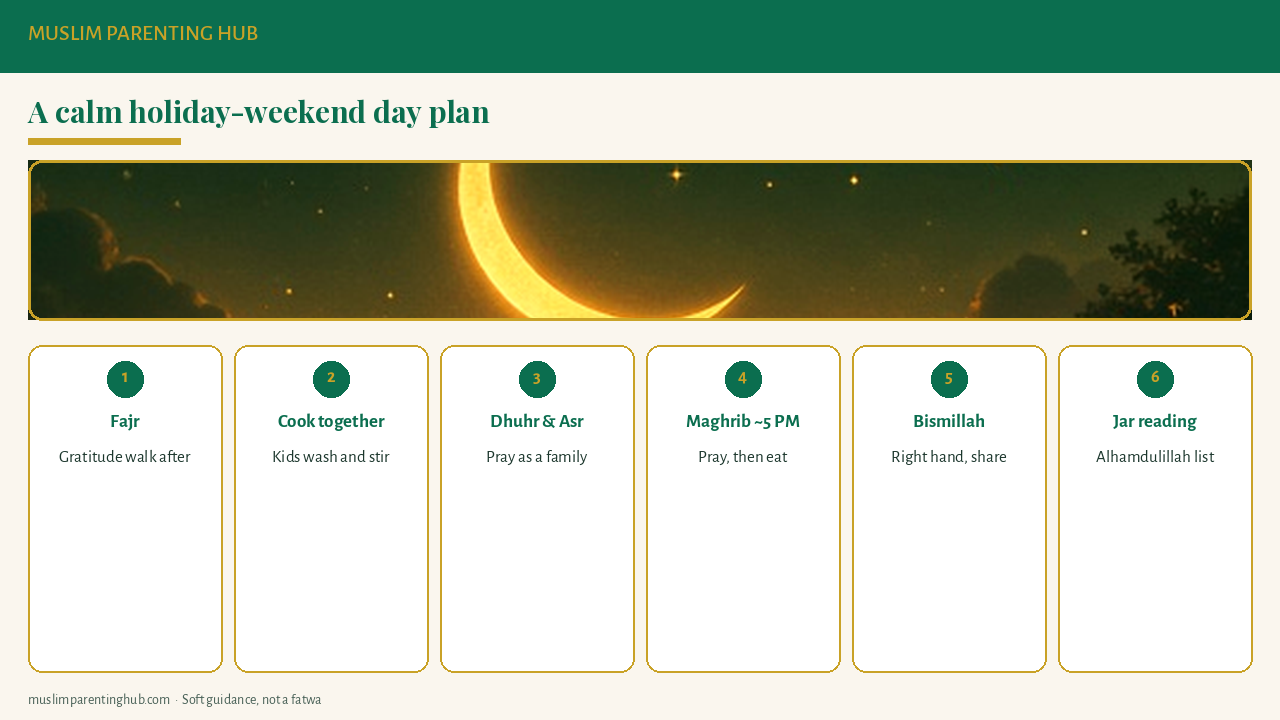
After daylight saving ends, late-November sunsets are early—Maghrib can be around 4:30–5:00 p.m. in much of the US. That’s right in the middle of many family dinners.
- Plan the meal around Maghrib. Either eat a late lunch after Dhuhr and Asr, or start dinner right after Maghrib together.
- Pray in congregation at home. A big gathering is a beautiful chance for a family jama’ah. Let an older child call the iqamah.
- Travel days. If you’re driving to relatives, keep your prayer kit in the car and use the travel dua. Let a child lead it each time you pull out of the driveway.
Hosting and Visiting: Guest Adab
Whether you host extended family, invite non-Muslim neighbors, or visit a coworker’s home, Thanksgiving weekend is full of guest moments.
When hosting: - Greet everyone warmly—salam for Muslim guests, a friendly “Welcome! We’re so glad you came” for everyone. - Give kids jobs: coat collector, water pourer, napkin folder. - Feed guests well and generously; honoring the guest is part of faith (Bukhari, Muslim).
Our guide to guest manners for Muslim kids when hosting at home has role-play scripts for these jobs.
When visiting non-Muslim friends or family: - Let the host know your food needs in advance, kindly. - Bring a halal dish to share. - Teach kids to say “No, thank you” politely and to thank the host at the end. - Step away quietly to pray if the time comes—most hosts are glad to show you a quiet room.
Gratitude Traditions Kids Remember
You don’t need to copy anyone else’s holiday. Choose one or two of these and keep them year after year:
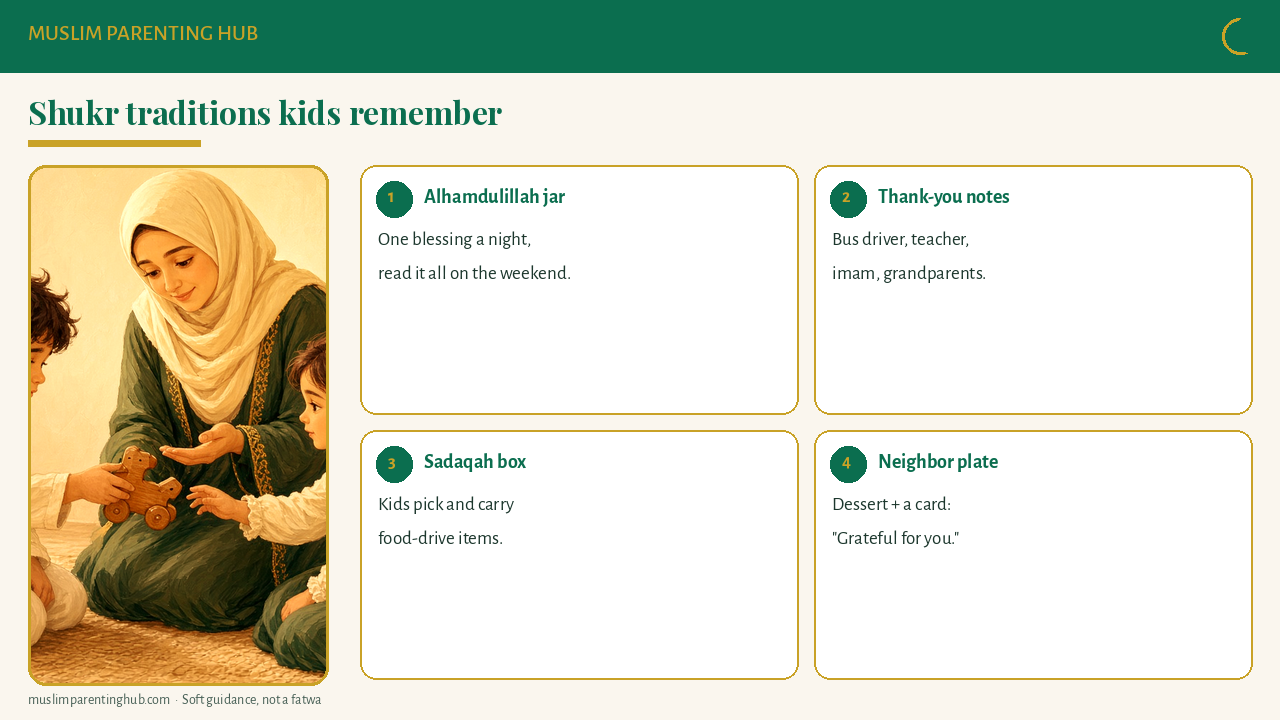
1. The Alhamdulillah jar (all of November)
Each evening after Maghrib, everyone writes one blessing on a slip of paper. On the long weekend, read them aloud together. Little ones can draw.
2. The thank-you notes night
The Prophet ﷺ taught that whoever doesn’t thank people doesn’t thank Allah (Abu Dawud, Tirmidhi). Write cards to people who help your family: the bus driver, the crossing guard, a teacher, the imam, grandparents. Deliver them the following week.
3. A family sadaqah box
Pick a food drive, a local masjid pantry, or a shelter meal. Let kids choose items at the store and carry the bags. Even a preschooler can carry one can of soup to the bin.
4. The neighbor plate
Pack small plates of dessert for two or three neighbors with a card: “We’re grateful to have you as neighbors.” Simple acts of rahma like this are exactly what kids remember. For more ideas, see our 10 rahma activities to teach kids kindness.
5. Gratitude walk
On Friday morning, take a slow family walk. Each person names five things they see that Allah made: leaves, the sky, a squirrel, their own legs that can walk.
Kind Answers for Kids’ Questions
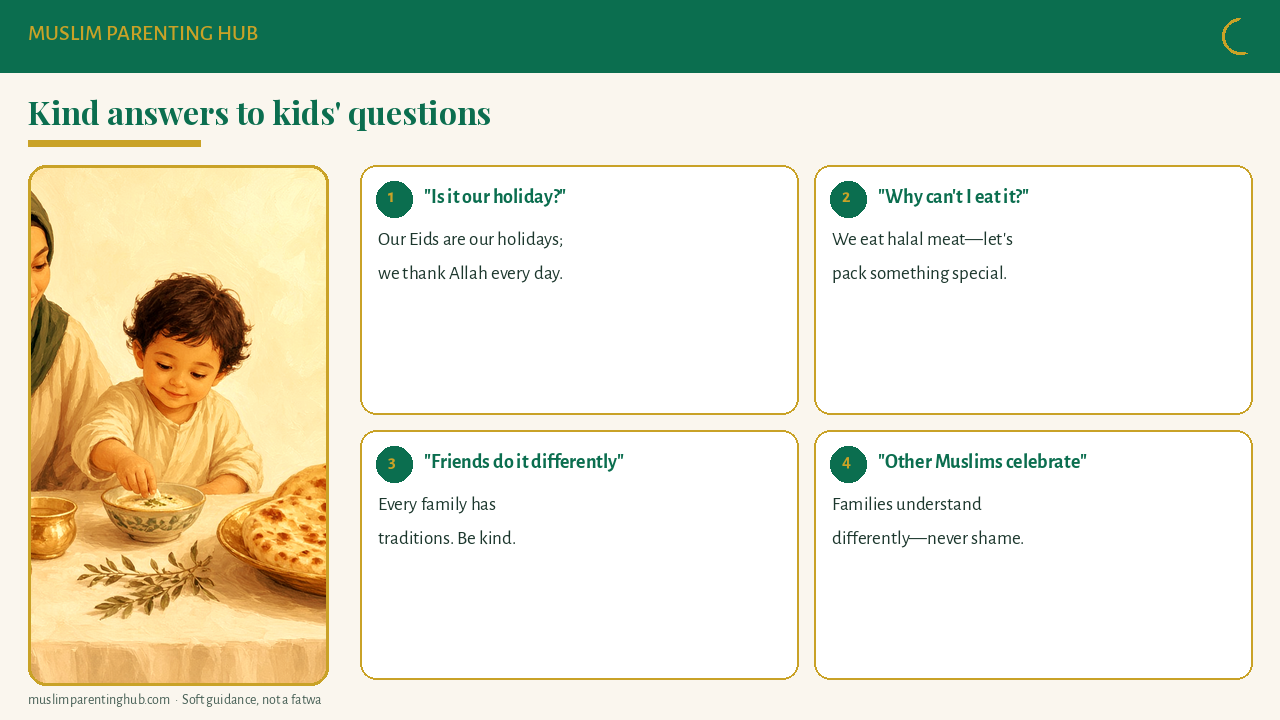
Children will ask. Short, honest, calm answers work best.
“Is Thanksgiving a Muslim holiday?”
“No. Our holidays are Eid al-Fitr and Eid al-Adha. Thanksgiving is an American day when many people get together and say thank you. We thank Allah every day.”
“Why does my friend’s family do it differently?”
“Every family has its own traditions. We can be kind and respectful to everyone.”
“Why can’t I eat the turkey at school?”
“We eat meat that’s prepared the halal way. Let’s pack something yummy so you have something special too.”
“Why do some Muslim families celebrate and some don’t?”
“Muslims sometimes understand things differently. We follow what our family has learned, and we don’t make fun of anyone else’s choice.”
That last answer matters. Kids learn adab not only toward non-Muslims but toward other Muslim families. Teach them never to shame a classmate whose family does it differently.
If your child gets lots of questions at the lunch table, practice two or three of these lines at home so they come out calmly.
Black Friday and “More Stuff”
The day after Thanksgiving often turns into a shopping marathon. It’s a good moment to gently model contentment.
- Talk about wants and needs: “Do we need it, or do we just want it right now?”
- Remind kids that real wealth is contentment of the heart (Bukhari, Muslim).
- Try a “one in, one out” rule: if a new toy comes in, an old one goes to donation.
- Set aside a little of any gift money for sadaqah first.
Age-by-Age Ideas
Toddlers and preschoolers (2–5)
Keep it sensory and simple: a leaf-collecting walk, a “thank you Allah” song, a drawing for the Alhamdulillah jar, and helping wash vegetables.
Early elementary (6–8)
Give them a job and a voice: writing thank-you cards, choosing food-drive items, leading Bismillah at the meal, and explaining the halal turkey to a cousin.
Upper elementary (9–12)
Let them plan one tradition, read the Quran verse on gratitude aloud, help cook a dish, and talk about history with nuance.
A Gentle Note on Family Differences
Extended family may hold strong opinions—one uncle loves the big dinner, another thinks it’s best avoided. Children notice tension more than menus. Whatever your family decides, keep the tone soft, avoid arguing in front of kids, and keep the focus where it belongs: gratitude to Allah, kindness to people, and time together.
Our Friday night family routine is a great reminder that the most meaningful family “holidays” are often the small weekly ones you build yourself.
FAQ
Can Muslim families celebrate Thanksgiving?
Families and scholars differ. Some see it as a national, cultural day to gather and thank Allah; others prefer not to mark it. Ask a scholar you trust, and whatever you choose, keep the focus on shukr and kindness without judging other families.
Where can I find a halal turkey?
Check local halal butchers, Middle Eastern or South Asian grocery stores, and some larger chains in November. Order early, since halal turkeys often sell out the week before the holiday.
What should my child do during the school Thanksgiving feast?
Send a short note about halal food and offer to send a dish. Your child can join the craft and gratitude parts and enjoy the food you send.
How do we fit prayer into Thanksgiving dinner?
In late November, Maghrib comes early in most of the US. Plan to eat after Dhuhr and Asr or start dinner right after praying Maghrib together as a family.
How do I explain Thanksgiving to a young Muslim child?
Say that many Americans take one day to say thank you, while Muslims thank Allah every day, and that our big celebrations are the two Eids.
Related guides
- How to teach shukr to kids: a 14-day plan
- Guest manners for Muslim kids
- Sadaqah habits for kids
- 10 rahma activities to teach kindness
Closing: A Grateful Heart Every Day
Thanksgiving comes once a year. Shukr comes with every sip of water, every hug, every sunset Maghrib. Whatever your family decides about the fourth Thursday of November, use this season to grow the habit that lasts: noticing Allah’s blessings out loud, thanking the people around you, and sharing what you have. Start the Alhamdulillah jar tonight—by Thanksgiving weekend, it will be full.
Related articles
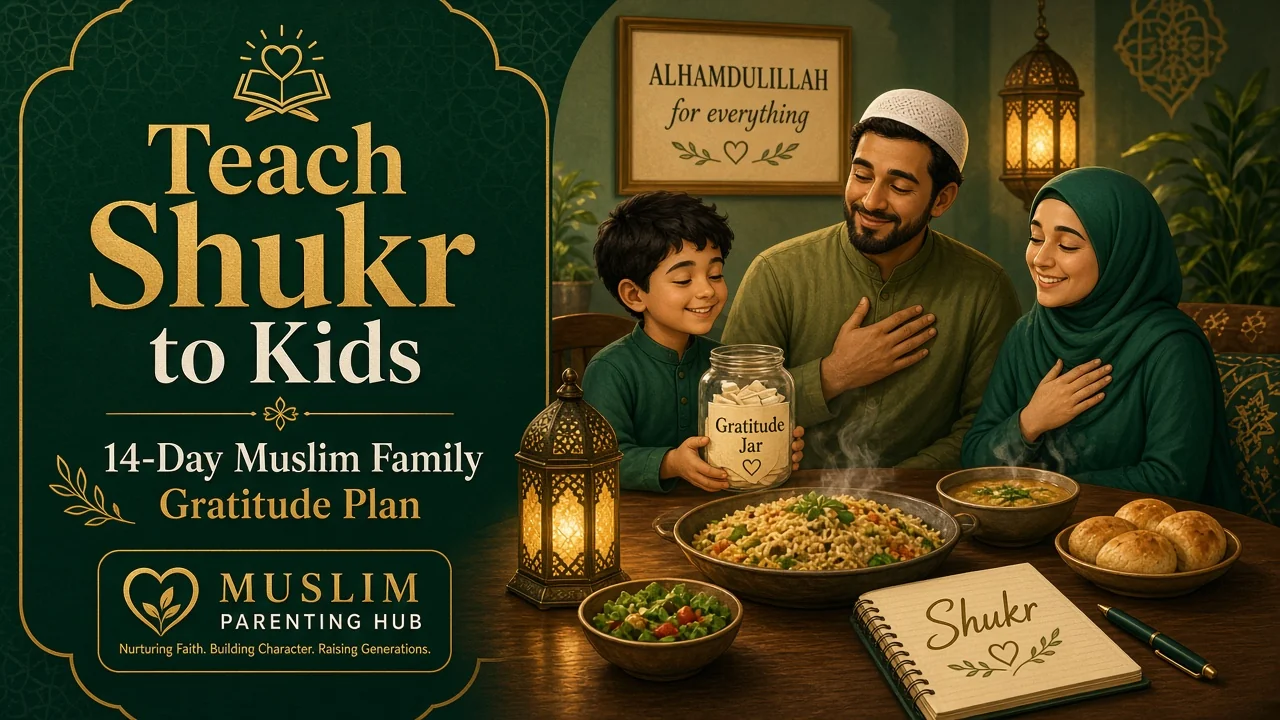
How to Teach Shukr to Kids: A 14-Day Muslim Family Gratitude Plan
Teach shukr to Muslim kids with a 14-day family plan—Alhamdulillah habits, dinner and bedtime scripts, gratitude jar, age tips, and edge cases. Soft, practical.
Read guide →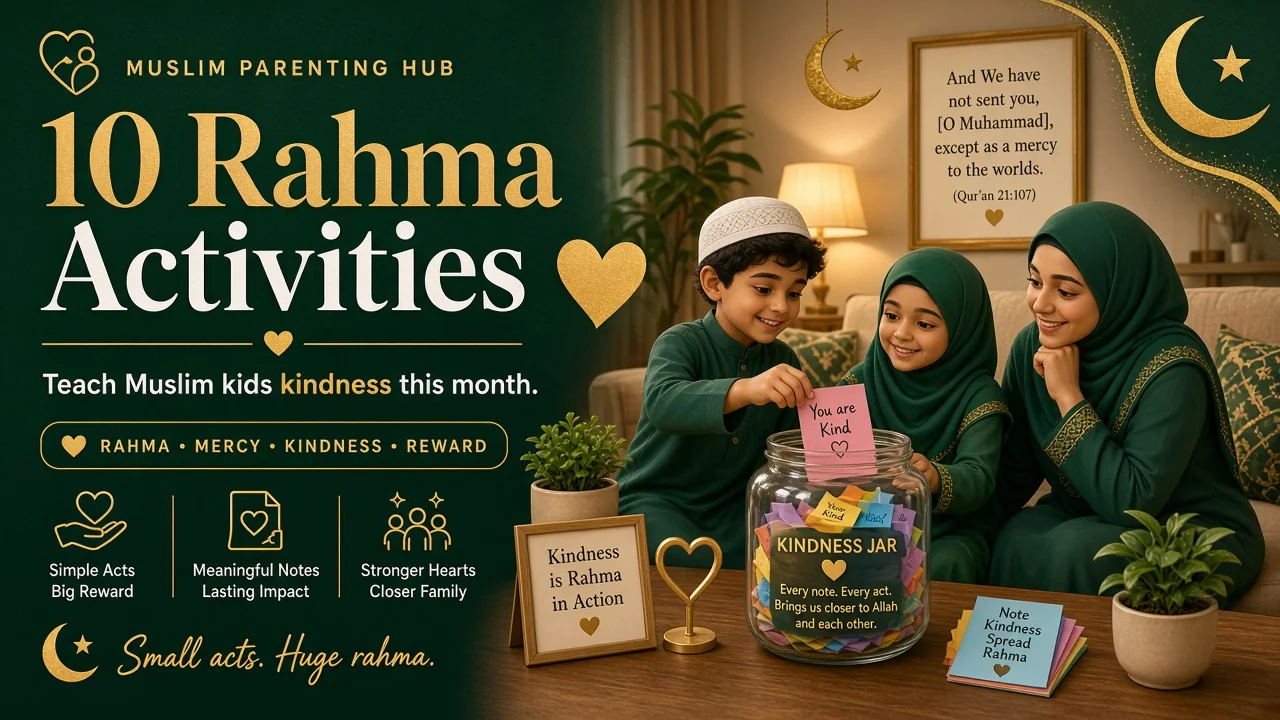
10 Rahma Activities to Teach Muslim Kids Kindness This Month
Teach Muslim kids rahma with 10 kindness activities—kindness jar, neighbor drops, Prophet ﷺ mercy stories, age charts, and tonight scripts. Soft, practical monthly plan.
Read guide →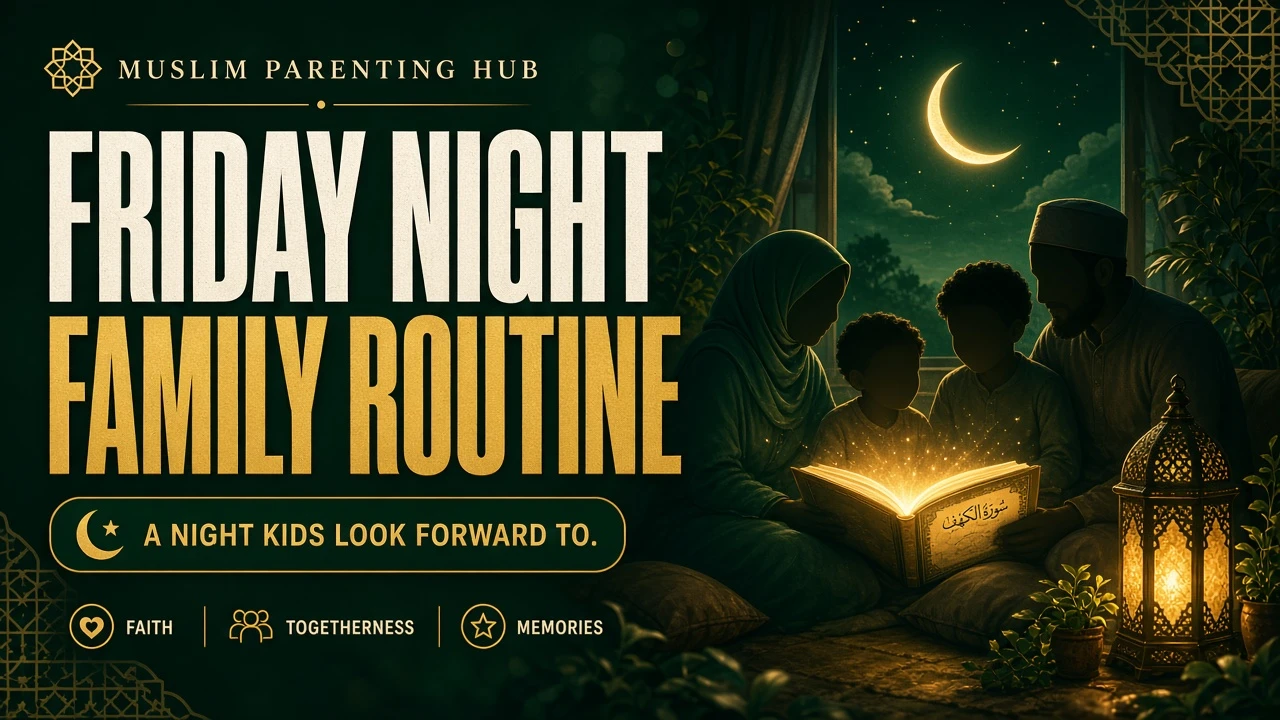
Friday Night Muslim Family Routine: 5 Simple Steps Kids Look Forward To
Make Jumuah special at home: a 60–90 minute Friday night routine with Maghrib, kid-sized Surah Al-Kahf, a family joy block and dua. Try it this week.
Read guide →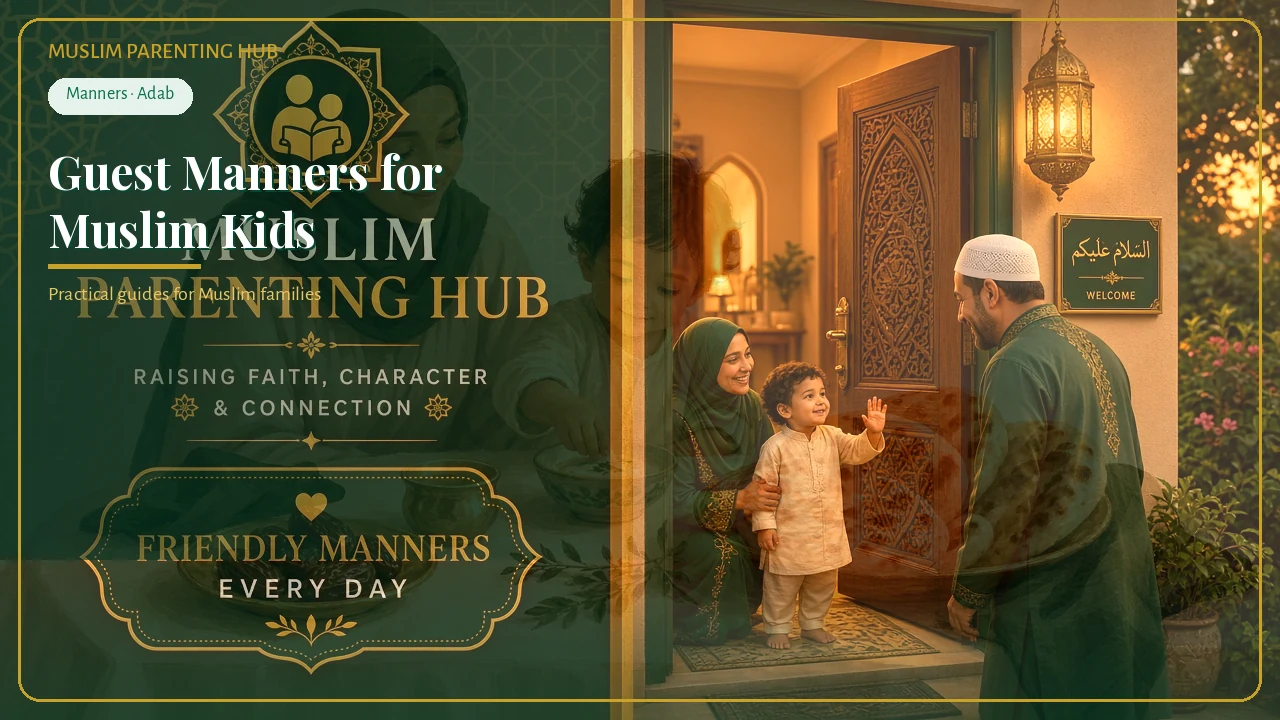
Guest Manners for Muslim Kids: Hosting at Home with Islamic Adab
Teach Muslim kids guest manners for hosting at home—shoes, greetings, serving, privacy, and soft scripts. Islamic adab parents can practice tonight.
Read guide →