
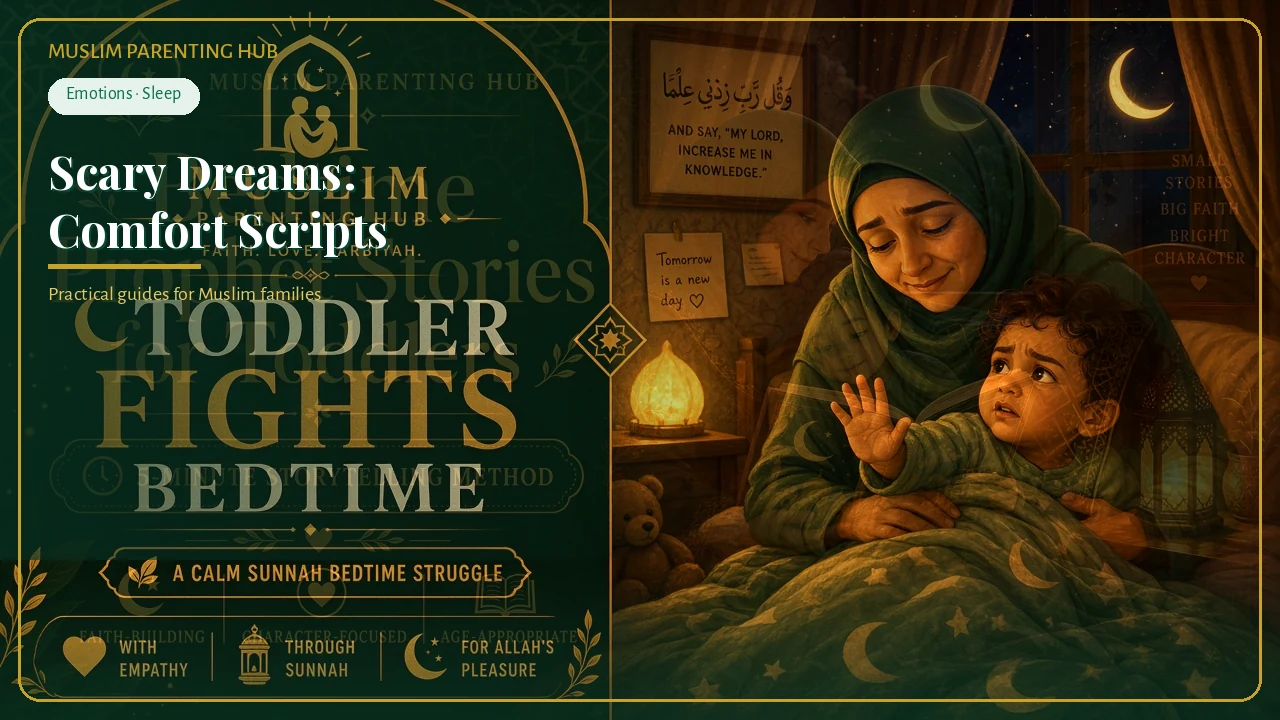
Scary Dreams and Nighttime Fear: Islamic Comfort Scripts for Muslim Kids
It is 2:14 a.m. Small feet. Hot tears. “There was a monster.” Your own heart is racing—and you want to say something true, gentle, and Islamic without turning the night into a theology lecture or a horror story.
This guide gives comfort scripts for scary dreams and nighttime fear: what to say, a short dua approach, bedroom setup, and what not to do. Soft guidance, not a fatwa. Use the duas and wording your family and teachers prefer.
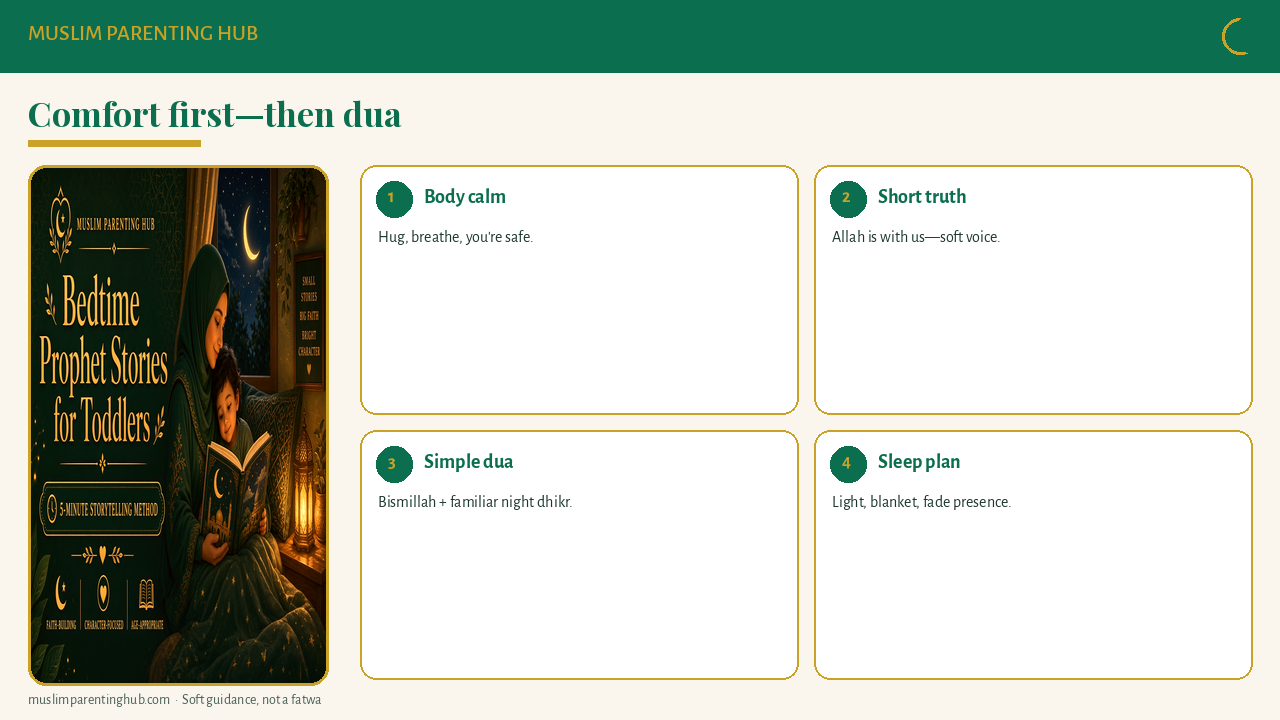
First Principle: Safety Before Explanation
When a child is scared, their body is in alarm mode. They cannot learn a long lesson. They need:
- Your body close and calm
- A short true sentence about Allah’s care
- A simple dua or dhikr
- A return-to-sleep plan
Save deeper talks for morning light.
Comfort Scripts You Can Use Tonight
Immediate hug script
“You’re safe. I’m here. Allah is with us. Breathe with me—in… out…”
Naming the feeling
“That dream felt scary in your body. Dreams can feel real, and morning is still coming. You’re not alone.”
Without mocking
Avoid: “It’s nothing, don’t be silly.”
Prefer: “It felt big. Let’s ask Allah for calm.”
If they want lights on
“We can use a soft light. Allah made the night for rest, and He is never asleep.”
Pair nighttime comfort with the calm habits in toddler bedtime sunnah fixes so evenings are less fragile to begin with.
Short Dua and Dhikr Without Scaring
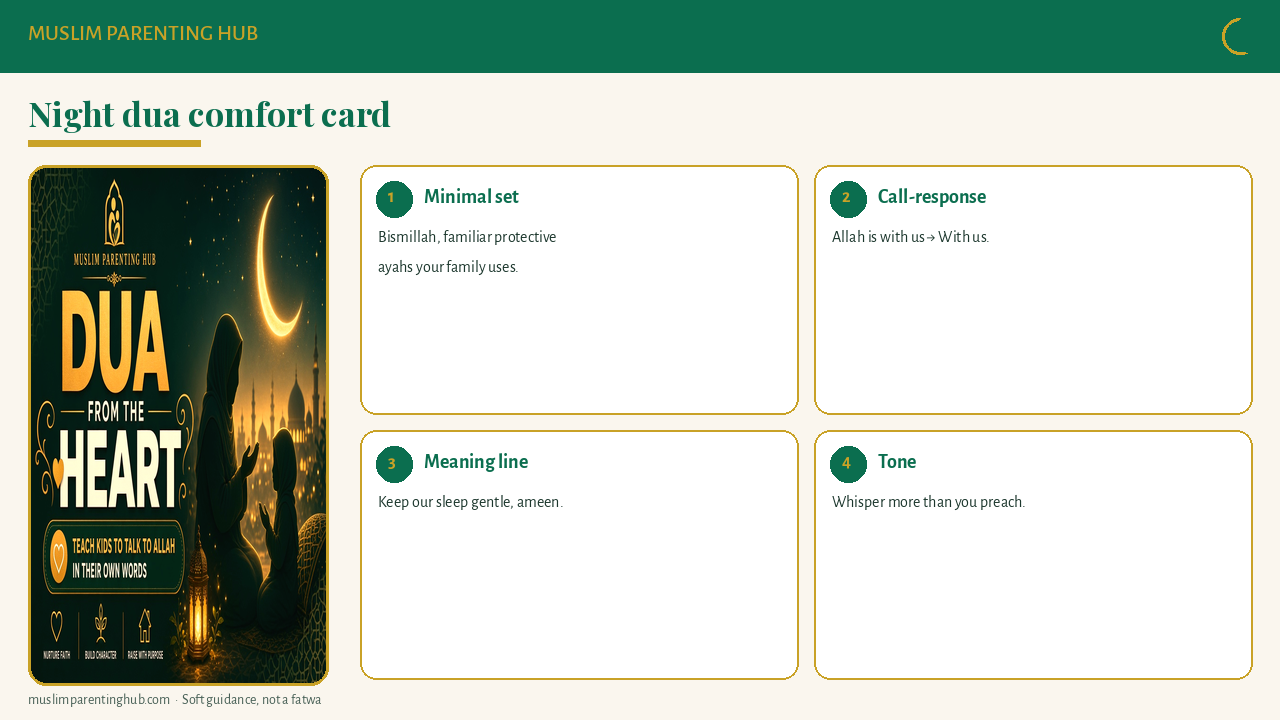
Keep it short. Whisper more than you preach.
Minimal set many families start with
- Bismillah while wiping the face gently or placing a hand on the chest
- Ayat al-Kursi if your family uses it at night—soft voice, not dramatic
- Three Quls if that is your household practice—calm rhythm, no scary commentary about “protection from evil” in graphic detail for young kids
- A meaning line: “Allah, keep our sleep gentle and our hearts soft.”
Call-and-response for preschoolers
Parent: “Allah is with us.”
Child: “With us.”
Parent: “Keep our night peaceful.”
Child: “Ameen.”
Teach heart-connection so words are not empty—see dua from the heart.
What Not to Say (Even If You Heard It Growing Up)
Some phrases accidentally increase fear:
- Graphic stories about jinn right at bedtime
- “If you don’t pray, scary things will come”
- Forcing a child to retell every detail of the nightmare while they are still shaking
- Threatening to leave them alone “to be brave”
Islam is rich with protection and trust in Allah. Kids need rahma-shaped protection language—not fright as discipline.
If angels are part of your teaching, keep it gentle like teaching kids about angels without scaring.
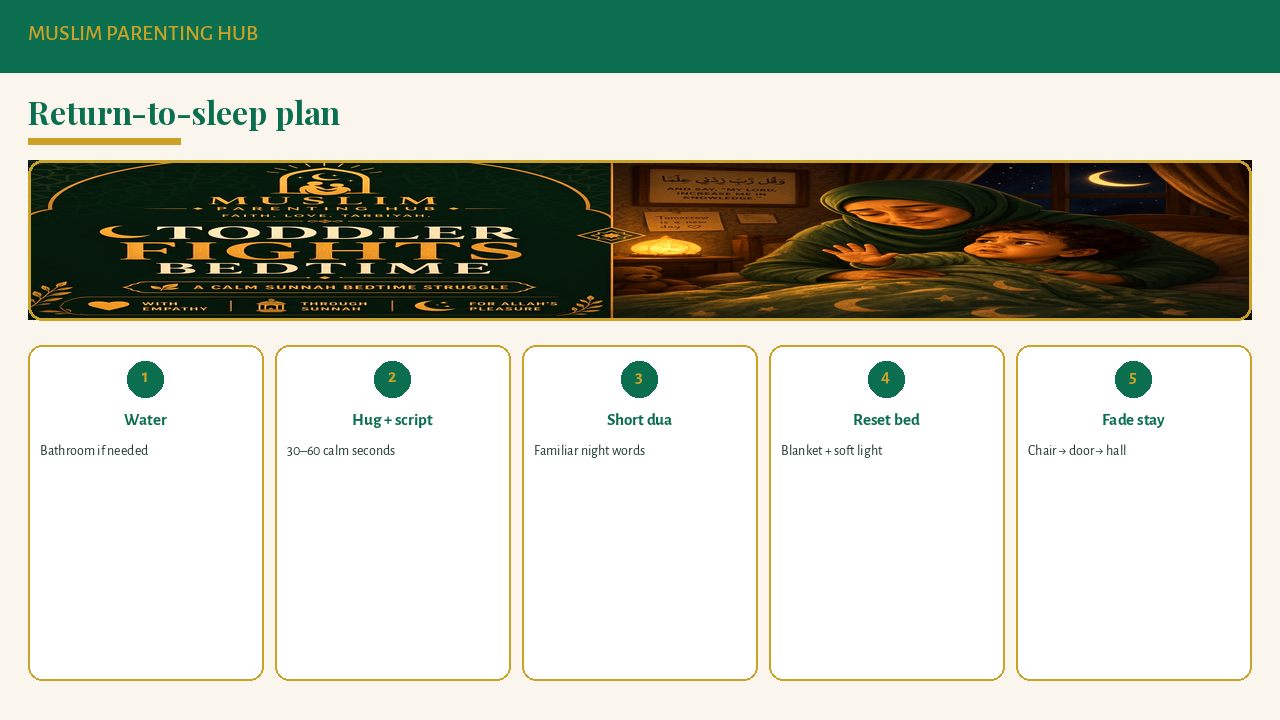
A Calm Return-to-Sleep Plan (5 Moves)
- Water + bathroom if needed
- Hug + script (30–60 seconds)
- Short dua/dhikr
- Bedroom reset — blanket, soft light, favorite safe object
- Stay nearby fading — chair in room → doorway → hallway, depending on age
For story-loving toddlers, a two-minute gentle Prophet bedtime story method can re-anchor the night—keep plots soft, not battle-heavy at 2 a.m.
Daytime Prevention That Actually Helps
Night fears often grow from daytime inputs.
- Audit screens before bed; tighten YouTube Kids setup
- Avoid scary thumbnails even in “kids” mode
- Keep evening play winding down after Maghrib when possible
- Talk about Allah’s names of gentleness in daylight: Ar-Rahman, Al-Hafiz (in age-fit language)
- Practice the same short night dua every night so it is familiar when fear hits
A predictable after-school Maghrib routine lowers overall nervous-system load.
Age Bands
Toddlers (1–3)
Need presence more than explanations. One sentence + dhikr + stay close.
Preschool (3–5)
Can do call-and-response. May invent monster details—don’t debate the monster; add Allah’s care and a light.
School-age (6–9)
Can learn a short night routine independently. Discuss dreams as dreams; avoid ridicule. Journaling a “safe ending” in the morning can help some kids.
Preteen
May have anxiety layered with dreams. Listen longer. Keep spiritual tools, and do not dismiss mental health needs—dua and professional help can coexist.
Scripts for Sibling Rooms and Shared Beds
If one child’s fear wakes everyone
“We’ll help your brother get calm. Soft bodies in your beds. You’re safe too.”
If a sibling teases
“We don’t laugh at fear. We help. That’s rahma.”
Connect to rahma activities for kindness.
When Fear Is Frequent
If nightmares are nightly for weeks, or a child refuses sleep, or fear seems tied to trauma, widen the circle: trusted family, teacher, pediatrician, or child counselor. Islamic comfort is powerful; chronic fear still deserves care.
Meanwhile keep nights boring and safe: same dua, same light rule, same parent response. Predictability is mercy.
Parent Exhaustion Script (For You)
You are allowed to be tired and still kind.
“Rabbi, help me be calm. Help my child feel safe. Forgive my short patience.”
A whispered istighfar for yourself can reset your tone before you enter their room.
Morning Aftercare
In the morning, keep it light unless they want to talk:
“You were brave to call me. Allah helped us through the night. What’s one happy thing we can do after breakfast?”
If they want to draw the dream, let them—then draw a protective light/dua bubble around it and put the paper away. Do not hang nightmare art over the bed.
Building a “Brave Night Basket”
Assemble once:
- Small flashlight or salt lamp
- Dua card in large letters
- Soft scarf that smells like a parent
- Note: “Allah is with you. Mama/Baba is near.”
Kids can fetch the basket before you arrive—agency reduces panic.
Sample Night Card Text (Print or Handwrite)
Front:
Bismillah. Allah is with me. I am safe.
Back:
Soft breath in. Soft breath out. Ameen.
Keep the card in the brave-night basket. Let your child decorate stars around the words in daylight so the card feels owned, not imposed.
Connecting Fear to Talking About Allah
Daytime is for wonder. Use gentle conversation from talk about Allah with toddlers so Allah is associated with comfort long before midnight tears.
Try after Asr:
“Allah sees us when we’re playing and when we’re sleeping. He is kinder than our kindest hug.”
Avoid using Allah’s name only as a threat. Children should run toward Him in fear, not freeze because adults used deen as a scare tool.
Couples Script When Both Are Exhausted
Agree on a default night plan:
- Who goes first on odd nights
- What the 60-second script is
- When a second parent joins vs stays asleep for tomorrow’s stamina
Unity reduces kids shopping for the “softer” parent at 2 a.m.—and reduces marital resentment.
A Note on Wet Beds and Embarrassed Kids
Sometimes fear and accidents arrive together. Lead with dignity:
“No shame. We’ll clean together. You’re still safe and loved. Let’s do our calm dua.”
Embarrassment can become a second nightmare if we lecture.
Classroom and Daycare Nightmares
Sometimes dreams replay social fear: a teacher voice, a lost backpack, a mean peer. Morning script:
“That was a dream mix of big feelings. Today we can practice what to say if your tummy feels worried at school.”
Role-play a confident line. Keep spiritual comfort and practical social tools together.
Travel Nights and Unfamiliar Beds
Hotels and relatives’ houses trigger more night waking. Pack:
- Familiar blankie/scarf
- Same dua card
- Mini night light
- Parent shirt with familiar scent
Do a “new bed tour” before sleep so the room feels mapped, not mysterious.
Using Scents and Sound Safely
Some children settle with:
- A familiar parent scarf
- Very low Quran recitation (volume kinder than conversation)
- White noise that does not sound like whispers or storms
Avoid intense incense near babies and always keep fire safety first. The goal is familiar sensory anchors, not a spa performance at midnight.
After a Funeral or Heavy Family News
Kids may dream about death or separation after hearing adult talk. Offer honest, age-fit comfort:
“People die, and Allah is the Most Merciful. We make dua for them. You are safe in this home tonight.”
Limit graphic adult conversation within earshot of light sleepers. Follow up in daylight with more questions welcomed.
FAQ
What should I say to my Muslim child after a scary dream?
Start with safety: you’re here, they’re safe, Allah is with you. Add a short dua or dhikr in a soft voice, then a simple return-to-sleep plan. Save long explanations for morning.
Is there a dua for kids after nightmares?
Families commonly use Bismillah, Ayat al-Kursi, and the protective surahs they already practice at night. Keep wording age-fit and ask a teacher you trust for the exact formulas you prefer.
Should I talk about jinn when my child has nightmares?
Be very careful with young kids. Heavy jinn talk at 2 a.m. often increases fear. Focus on Allah’s protection and calm routine; leave detailed topics for mature, daytime conversations with proper guidance.
How do I help nighttime fear without sleeping in their bed forever?
Use a fade plan: sit nearby, then move to the doorway over nights. Keep the same dua and light rules so your presence is a bridge, not a permanent requirement—adjust for age and temperament.
Can screens cause more scary dreams?
Yes for many children. Avoid intense images before bed and use safer YouTube/settings habits. Wind-down routines help the nervous system settle.
What if my child is scared of the dark itself?
Offer a soft light, practice daytime “dark is for rest” language, and pair darkness with familiar dhikr so night cues safety instead of danger.
When should I seek extra help for night fears?
If nightmares are frequent and intense for weeks, sleep collapses, or fear links to trauma or daytime anxiety, seek trusted medical or counseling support alongside your spiritual practices.
Related guides
Related articles

When Your Muslim Toddler Fights Bedtime: Calm Sunnah-Based Fixes
Calm Sunnah-based fixes when your Muslim toddler fights bedtime—stalling, fear, separation, dua, boundaries, and age tips. Soft routines that actually stick.
Read guide →
How to Teach Children About Angels in Islam Without Scaring Them
Age-appropriate ways to teach children about angels in Islam—Kiraman Katibin, bedtime protection, gentle scripts, and activities for ages 4–8. Soft, calm faith.
Read guide →
Teach Your Child to Make Dua From the Heart (Not Just Memorized Lines)
Teach kids dua in their own words—age bands, tonight scripts for fear, gratitude & friendship, plus Arabic+English tips. Soft, practical Muslim parenting.
Read guide →
Bedtime Prophet Stories for Toddlers: A 5-Minute Storytelling Method
Tell bedtime Prophet stories for ages 2–4 with a 5-minute method—story frame, weekly rotation, empathy questions, scripts, and calm tips. Soft Sunnah storytelling for tired parents.
Read guide →