

Sadaqah Habits for Kids: An Age Chart for Charity at Home
Your child clutches a coin and whispers, “Is this mine forever?” You want them to love giving—not fear losing.
Sadaqah is more than a donation drive in Ramadan. It is a habit of the heart: noticing need, sharing joyfully, and trusting Allah with what we give. This guide gives an age-appropriate sadaqah chart, charity-jar ideas, scripts, and weekly rhythms you can start this week. Soft guidance, not a fatwa.
Why Small Giving Shapes Big Character
Regular sadaqah practice teaches:
- Money and toys are tools, not gods
- Other people’s needs matter
- Giving can feel happy, not punishing
- Shukr and sadaqah grow together
Connect gratitude practice from teach shukr in 14 days so kids give from fullness, not guilt.
The Family Charity Jar (Simple Setup)
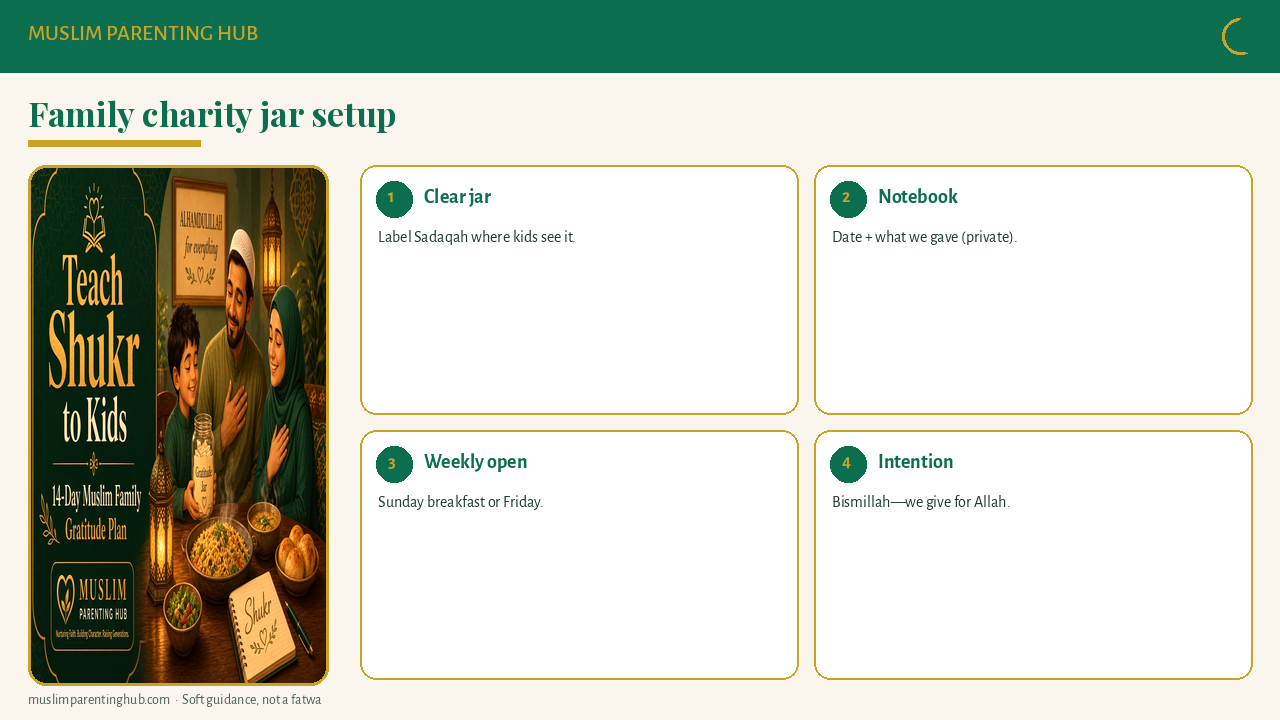
- Clear jar or box labeled “Sadaqah”
- Optional second jar: “Masjid / Family Share”
- A small notebook: date, what we gave, who it might help (keep private if needed)
- A weekly open-the-jar moment after a salah or Sunday breakfast
Script when adding money
“Bismillah. This is sadaqah—we give for Allah, and Allah can put barakah in what remains.”
Kids can also give non-money: outgrown clothes, an extra snack for a neighbor, time helping.
Age Chart: What Giving Can Look Like
Ages 1–3 (Toddler)
- Drop a coin in the jar with your hand guiding
- Choose a toy to donate (one, not their only comfort toy)
- Wave at donation drop-off
Win: joyful participation, not understanding percentages.
Ages 3–5 (Preschool)
- Pick between two coins which goes to sadaqah
- Help pack a small food bag
- Draw a heart card for someone lonely
Win: “giving is something we do.”
Ages 5–7
- Weekly allowance split: spend / save / sadaqah (simple thirds or your family rule)
- Choose a cause from two parent-approved options
- Help deliver (if safe) with a salam
Win: beginning choice and consistency.
Ages 8–10
- Track jar totals once a month
- Research a local need with you
- Give time: help a neighbor, tidy masjid shoes area with supervision
Win: linking sadaqah to real people.
Ages 11+
- Plan a small personal sadaqah goal
- Learn private giving vs public fundraising manners
- Reflect: did giving make me kinder or performative?
Win: sincerity (ikhlas) conversations.
Weekly Rhythm That Actually Sticks
Pick one anchor:
- Friday: after Jumu’ah energy, add to jar
- Sunday morning: open jar talk + one act
- Payday: parents add visibly; kids add their coin
Keep it lighter than chores, but as real as Islamic chores. Giving is worship-shaped responsibility.
Scripts for Sticky Moments
“But I want it!”
“Wanting is normal. We still share a little. Allah sees the part we give with a soft heart.”
Child gives then brags harshly
“We can feel happy—and we keep some giving private so our heart stays clean.”
Child only gives junk toys
“Sadaqah should be something useful or kind. Let’s pick one thing we’d still play with—that’s a bigger gift.”
Comparing siblings’ amounts
“Allah looks at hearts, not who dropped more coins. No scoreboard.”
Use fairness language like sibling jealousy scripts if giving becomes a competition.
Non-Money Sadaqah Kids Forget Counts
Teach the wide meaning many scholars and teachers mention in kid language: smiling, helping, removing harm, sharing knowledge gently.
Family list on the fridge:
- Smile salam at the neighbor
- Pick up litter in the park (with gloves)
- Share crayons without being asked
- Carry a bag for an elder
- Make dua for someone who hurt your feelings (advanced, with help)
This pairs with rahma kindness activities.
Ramadan and Beyond
Ramadan is a booster, not the only season. In Ramadan, toddlers can help with a joyful home Ramadan giving corner. After Eid, keep the jar—so kids learn sadaqah is identity, not a special-event costume.
Privacy, Dignity, and Photos
Do not post photos of poor families for your child’s “good deed content.” Teach:
“We protect people’s dignity. Allah already saw our giving.”
If you share family volunteering photos, blur faces when needed and avoid pity captions.
Linking Sadaqah to Hosting and Manners
When guests come, kids who already practice giving serve more naturally—see guest manners for Muslim kids. Generosity is one character muscle with many daily reps.
A 14-Day Soft Start (Optional)
Days 1–3: decorate jar
Days 4–7: one coin or one kind act daily
Days 8–10: choose a destination for the jar
Days 11–13: deliver/give together
Day 14: shukr picnic—Alhamdulillah for the chance to give
No perfection required.
Parent Modeling (The Real Curriculum)
Kids notice if adults:
- Speak kindly about people who need help
- Give without humiliating
- Avoid “we’re better than them” energy
- Keep promises about the jar
Your tone is the lesson.
Matching Grants Kids Can Understand
Some parents match kids’ sadaqah coin-for-coin. Explain:
“When you give one, we add one—because we love growing good together.”
Avoid turning it into a pure game score. Keep the intention sentence every time.
Masjid Fundraising Etiquette for Kids
If your masjid passes a box:
- Soft hands, no shouting amounts
- No shaming kids who give less
- Thank volunteers
Practice at home first with a pretend box so the real moment feels familiar.
When Relatives Give Kids Money
Eid money and birthday cash are perfect sadaqah teachers—if you ask gently:
“Would you like to put a little in the sadaqah jar and keep the rest for your goal?”
Offer choice within a parent boundary (for example, a small minimum if that is your house rule), not a confiscation that breeds resentment.
Storytime That Sparks Giving
Once a week, read or tell a short kindness story, then do one micro-sadaqah. Stories without action fade; action without heart becomes dry. Pair them.
Measuring Success Without Spreadsheets
You are succeeding if kids:
- Mention someone else’s need unprompted
- Give without a huge fight most weeks
- Speak about poor people with dignity
Coin totals are secondary.
Classroom and School Charity Drives
When school asks for cans or coins:
- Sort at home together so kids see what “useful” looks like
- Talk about dignity: we give good quality, not trash
- Let them carry the bag in
If a drive conflicts with your values, explain calmly and offer an alternative family sadaqah that week so kids still practice giving.
Digital Giving With Older Kids
For ages that understand transfers:
- Sit together for an online donation
- Read the organization’s about page
- Say the intention out loud
- Screenshot receipt into a private family folder—not for social media flex
Teach that clicking send is still an act of the heart.
Sadaqah and Apology
Sometimes repair includes giving—without buying forgiveness. If a child broke a neighbor’s plant, helping replant can be amends plus kindness. Keep apology emotional honesty first; giving is support, not a bribe to skip remorse. See also apology repair habits in your home toolkit.
Building a “Kind Eyes” Habit on Errands
At the grocery store:
“Who might need a door held? Who looks tired? What is one tiny help we can offer?”
Errand sadaqah trains noticing—the root skill beneath charity jars.
Three Family Sadaqah Personalities (All Valid)
The Jar Family — coins and monthly drop-offs
The Hands Family — meals, rides, tutoring, visiting
The Quiet Family — private gifts, few announcements
You can blend them. What matters is sincerity and consistency, not copying an influencer’s charity aesthetic.
Talking About Poverty Without Fear or Superiority
Kid-safe lines:
“Some people have less money right now. We help when we can. Needing help does not make someone less beloved to Allah.”
Avoid using poor people as a threat (“finish your food or you’ll be like them”). That breeds contempt, not compassion.
A Parent Reflection Journal Prompt
Once a month, write three lines:
- What giving habit stuck?
- Where did we slip into performance?
- Who taught our kids generosity this month (including them teaching us)?
Your reflection keeps the practice alive when novelty fades.
Keep Going When Motivation Dips
Miss a week? Restart without guilt speeches. Put one coin in together and say Bismillah. Habits are ribbons you pick up again, not glass you shattered forever. Your kids are watching how you return to good after inconsistency—and that lesson may matter more than any jar total.
FAQ
How do I teach my kids sadaqah at home?
Start a visible charity jar, give kids an age-fit job, and practice a short weekly rhythm. Mix money with kind acts, and model joyful giving without shame or competition.
What is a good sadaqah age chart for children?
Toddlers join with help; preschoolers choose simple gifts; school-age kids split small money and meet real needs with you; older kids add planning and sincerity talks. Match the task to the child’s stage.
Should kids give from their own money or parents’ money?
Both can work. Letting them give a little of “theirs” builds ownership; parents adding openly models adult responsibility. Avoid forcing large amounts that create bitterness.
How do I stop my child from bragging about charity?
Affirm happiness, then teach private giving. Praise sincerity more than public performance. Share kid-appropriate stories about quiet good deeds.
Can sadaqah be toys and time, not only cash?
Yes—useful items, food help, and helpful actions are powerful teaching tools. Guide kids to give things that honor the receiver’s dignity.
How often should we empty the charity jar?
Weekly or monthly is enough for most homes. Predictable timing matters more than frequent empty-and-stress cycles.
What if we have very little money ourselves?
Emphasize non-money sadaqah and tiny amounts. Allah values sincerity. Teach kids that a small sincere gift matters, and that needing help sometimes is also part of life—without shame.
Related guides
Related articles

10 Rahma Activities to Teach Muslim Kids Kindness This Month
Teach Muslim kids rahma with 10 kindness activities—kindness jar, neighbor drops, Prophet ﷺ mercy stories, age charts, and tonight scripts. Soft, practical monthly plan.
Read guide →
How to Teach Shukr to Kids: A 14-Day Muslim Family Gratitude Plan
Teach shukr to Muslim kids with a 14-day family plan—Alhamdulillah habits, dinner and bedtime scripts, gratitude jar, age tips, and edge cases. Soft, practical.
Read guide →
Islamic Chores for Kids: Age-by-Age Responsibility Chart for Muslim Homes
Age-by-age Islamic chores chart for Muslim kids—Prophetic helping-at-home framing, tonight scripts, sticker-free tips, and responsibility without shame.
Read guide →
Sibling Jealousy in a Muslim Home: Fairness, Scripts & What Not to Say
Practical Islamic parenting scripts for sibling jealousy—fairness vs sameness, what not to say, conflict coaching, and age tips. Calm tools for Muslim homes.
Read guide →