

How to Teach Shukr to Kids: A 14-Day Muslim Family Gratitude Plan
“Say Alhamdulillah.”
If that sentence has become a parent reflex after every snack—and your child rolls their eyes—you do not have a manners problem. You have a meaning problem.
Shukr is not a sticker on politeness. It is a way of seeing: this is a gift; the Giver is Allah; my response is thanks, care, and using blessings well.
This 14-day Muslim family gratitude plan helps you teach shukr to kids with dinner scripts, bedtime prompts, a jar practice, and age bands. Soft Sunnah inspiration. Not a fatwa. English-first, practical for busy homes.
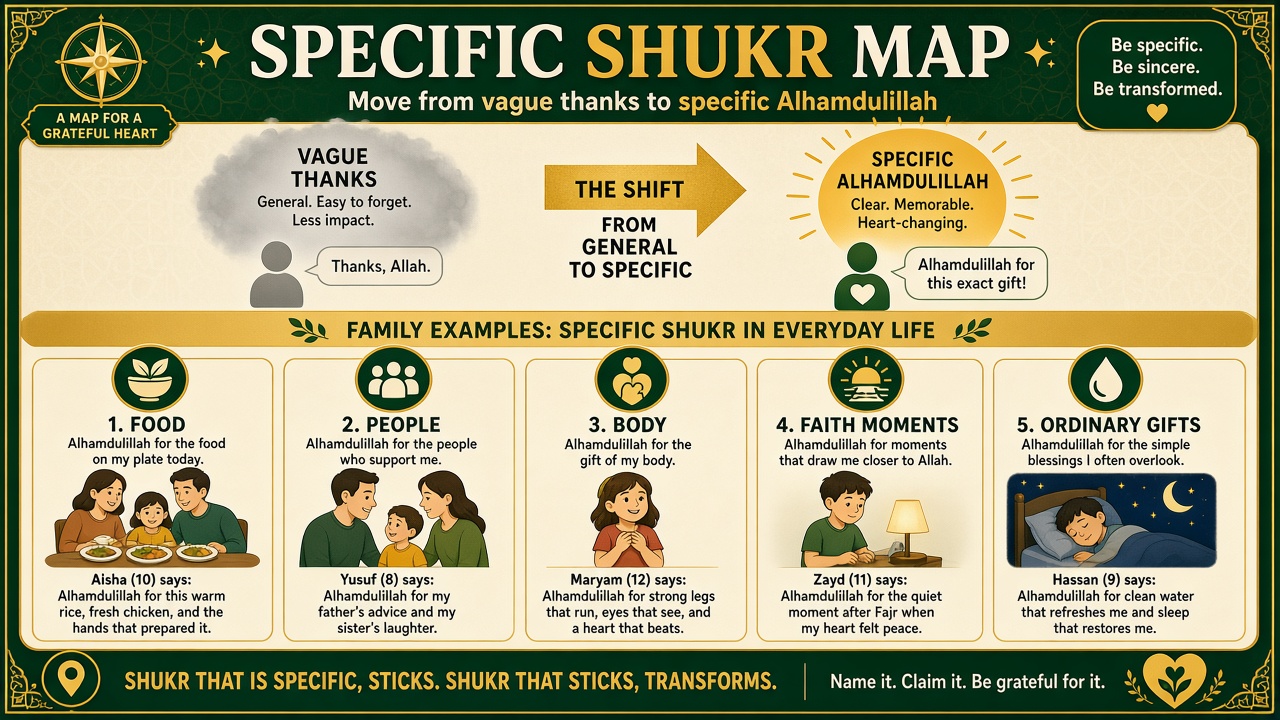
The Big Idea: Specific Thanks Beats Vague Thanks
Vague: “Be grateful.”
Specific: “Alhamdulillah for warm bread, for Baba coming home, for legs that can run.”
Kids learn shukr when gratitude is:
- Named (what exactly?)
- Directed (to Allah—and to people)
- Embodied (care for the blessing)
- Repeated in tiny daily windows
Age Bands for Shukr
Ages 1–2
Model. “Alhamdulillah” after milk, after a fall that ends in cuddles, after rain on the window. They absorb tone.
Ages 3–5
Prompt one specific thanks at dinner. Use pictures. Gratitude jar with drawings.
Ages 6–9
Own-words shukr. Notice complaining patterns without crushing honesty. Link care: “We thank Allah for toys by putting them away.”
Ages 10–12
Deeper: blessings we overlook (safety, teachers, ability to learn). Journal optional. Discuss envy vs shukr gently.
The 14-Day Plan (Overview)
| Days | Focus |
|---|---|
| 1–3 | Install the Alhamdulillah reflex with specificity |
| 4–6 | Dinner gratitude round |
| 7–9 | Bedtime shukr + dua |
| 10–12 | Embodied shukr (care + sadaqah) |
| 13–14 | Review, repair complaining, family celebration |
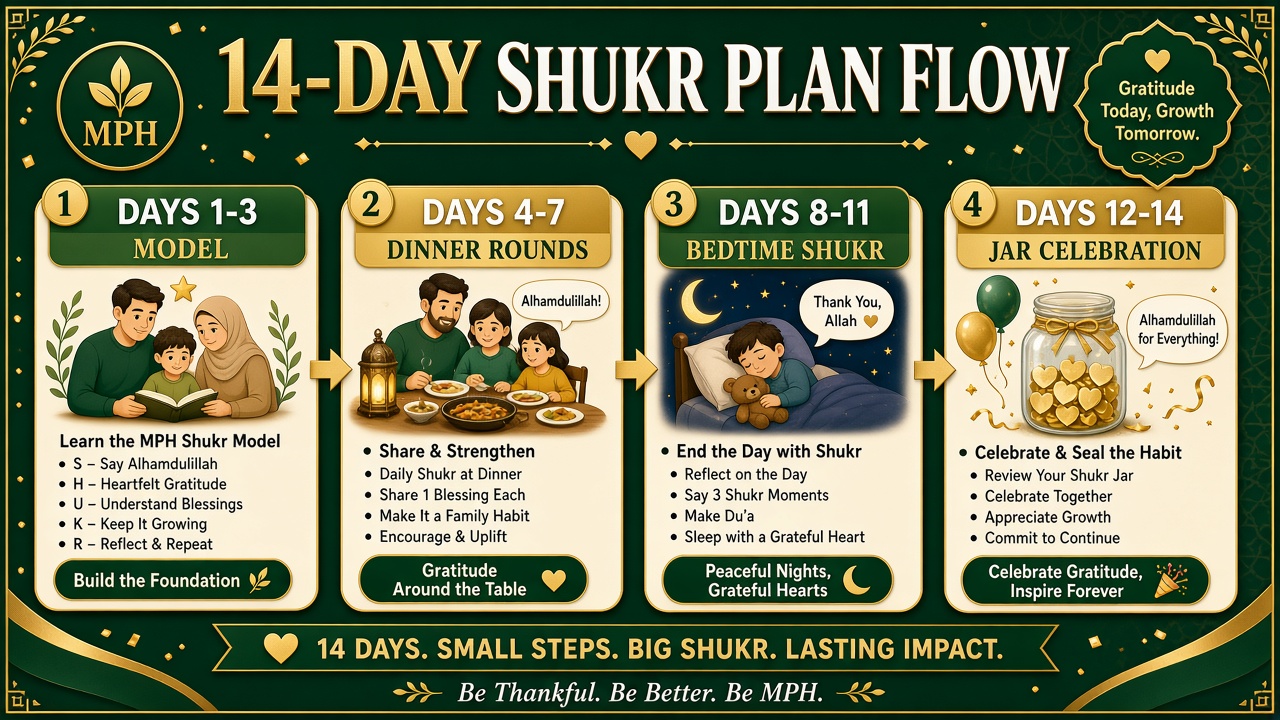
Miss a day? Continue. Shukr plans are not exams.
Days 1–3 — Install the Reflex (Without Nagging)
Goal: Replace empty “Say Alhamdulillah” with modeled specificity.
Parent lines:
“Alhamdulillah for this apple—cool and sweet.”
“Alhamdulillah Allah gave us a home with a door that locks.”
“Alhamdulillah for the adhan reminder—time to pause.”
Child invitation (not order):
“Want to add one Alhamdulillah?”
If they refuse, you still model. Pressure creates parody gratitude.
Mini challenge
Catch yourself saying bare “Alhamdulillah” and add three words of detail.
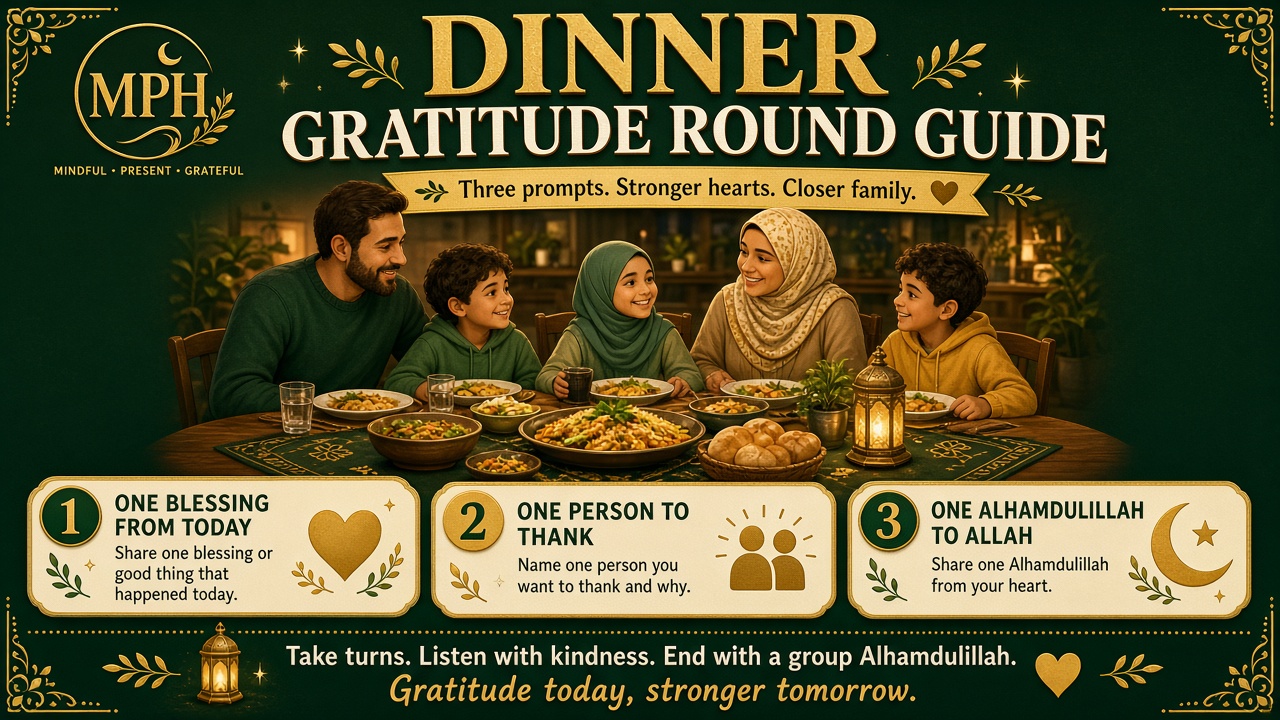
Days 4–6 — Dinner Gratitude Round
Rules that keep it alive:
- Everyone names one blessing (parents included).
- No correcting a child’s “silly” thanks (yes, “Alhamdulillah for slime” counts).
- Optional: second round for a person you thank.
Script:
“Before we clear plates: one shukr each. I’ll start. Alhamdulillah for this meal and for your funny jokes today.”
Edge case: chronic complaining at dinner
Try a both/and:
“You can say the hard thing and name one gift. Both can be true. School was tough—and Alhamdulillah for your friend who sat with you.”
Days 7–9 — Bedtime Shukr + Soft Dua
Bedtime is when fears and envy show up. Keep it short.
3-part close:
1. One gift from today
2. One sorry if needed (repair)
3. One dua: “Ya Allah, thank You. Make us people of shukr. Ameen.”
Link to dua from the heart and toddler bedtime fixes.
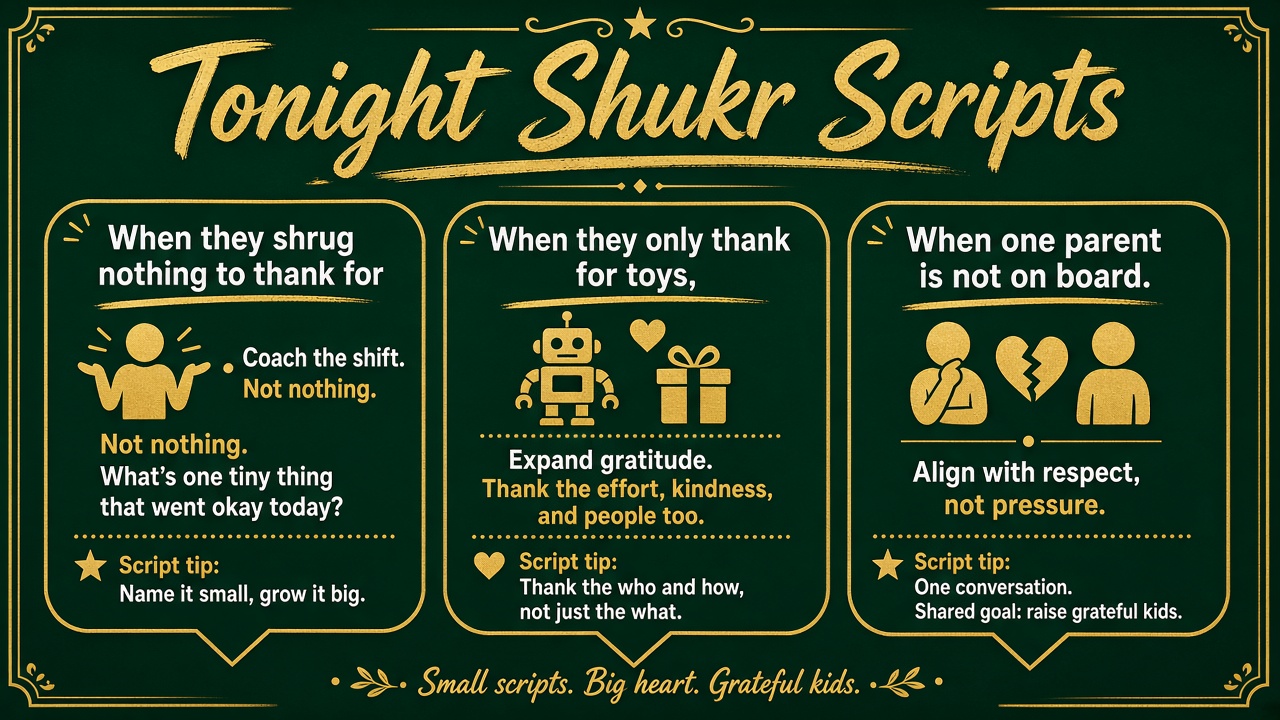
If they only list toys: Gently expand tomorrow: “Toys count. Tomorrow let’s also thank Allah for a person or a strength in your body.”
Days 10–12 — Embodied Shukr (Care Is Thanks)
Shukr includes how we treat gifts.
| Blessing | Embodied shukr |
|---|---|
| Food | Don’t waste; taste before adding sauce complaints |
| Clothes | Laundry hamper aim |
| Body | Sleep, wash, move |
| Home | One chore as service (chores chart) |
| Money/food extra | Micro-sadaqah choice |
Script:
“We say Alhamdulillah with our tongues and our hands. Putting books back is shukr for learning.”
Sadaqah micro-mission
Child chooses one item to give. Narrate: “Thanking Allah by sharing.”
Days 13–14 — Review & Family Celebration
Review questions:
1. Which Alhamdulillah felt real this week?
2. When was complaining loudest? What was underneath (tired, envy, hunger)?
3. What practice do we keep forever—dinner round, bedtime, or jar?
Celebration idea: Gratitude picnic on the floor, or a call to grandparents listing blessings together. Not a shopping reward that teaches “thanks = stuff.”
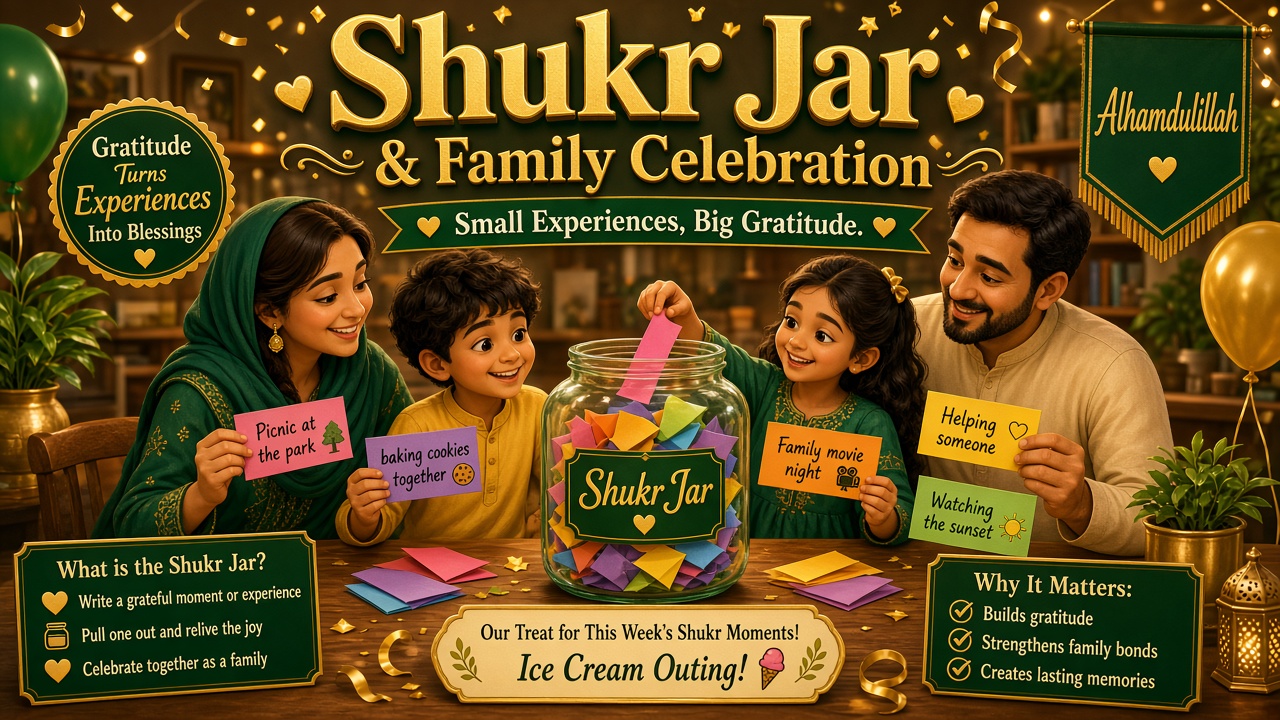
Build a Shukr Jar (Optional Visual)
Same idea as a kindness jar, different label: “Shukr Jar.”
- Paper slips: draw or write a blessing.
- Friday: read three slips aloud.
- When full: family service outing or park time + dua of thanks.
Pair with rahma activities so gratitude and mercy grow together.
Tonight Scripts (Copy-Paste)
| Situation | Script |
|---|---|
| After snack | “Alhamdulillah for food that gives us energy. Want to say it with me?” |
| New toy envy | “It’s okay to want. We also thank Allah for what we have. One shukr out loud?” |
| Complaint spiral | “Pause. Name the hard thing in one sentence. Then one gift.” |
| Refuses | “Okay. I’ll say mine. Alhamdulillah for you—even when we’re tired.” |
| Sibling brag | “We can be glad for them and thankful for our path. Shukr isn’t a contest.” |
Complaining, Envy, and Honesty
Teaching shukr does not mean banning hard feelings. Islamically and psychologically, forced positivity backfires.
Allow:
- “I’m sad we can’t buy that.”
- “Today felt unfair.”
Then add: - “And still—Alhamdulillah for…”
This both/and keeps children’s hearts honest and trainable.
For envy between siblings, also use sibling jealousy guidance.
Tie Shukr to Existing Routines
- Morning: one Alhamdulillah before screens (deen before screen).
- Maghrib: gratitude in the connection minute (Maghrib routine).
- Friday: family gratitude round (Friday night routine).
- Nature walks: “Allah made…” (talk about Allah with toddlers).
Parent Trap Checklist
- [ ] Using “Alhamdulillah” to shut down sadness
- [ ] Only prompting kids, never modeling detail
- [ ] Rewarding gratitude with more stuff every time
- [ ] Comparing “who is more grateful”
- [ ] Skipping your own apology when you nag harshly about gratitude (irony hurts)
The Gratitude-Complaint Ratio (A Gentle Metric)
You will not eliminate complaining—and you should not try. Aim for a healthier ratio.
Practice: For one weekend, notice aloud:
- Every complaint gets one sentence of empathy.
- Then the family still offers one shukr somewhere in the hour—not as a muzzle, as a balance.
Example:
Child: “I hate this rice.”
Parent: “You wanted pasta. That’s disappointing. Next time we’ll rotate. And Alhamdulillah we have food tonight.”
Empathy first keeps shukr from becoming gaslighting.
Classroom / School Tie-Ins
Without turning faith into a show:
- Pack a “shukr slip” in the lunchbox once a week: “Alhamdulillah for your brave try on the spelling test.”
- After school: “One hard thing, one gift.”
- Teachers: thank them with the child present—models shukr to people.
If your child struggles academically, shukr includes thanking Allah for effort and help—not only for high grades.
When Life Is Genuinely Hard
Illness, money stress, grief, immigration loneliness—these are real in many Muslim homes.
Shukr in hard seasons is not fake cheer. It can sound like:
“This week is heavy. Alhamdulillah for the neighbor who brought soup. Alhamdulillah for salah even when we’re tired. Ya Allah, make a way out.”
Teach children that shukr and dua for relief live together. That is honest faith.
Printable 14-Day Checklist (Screenshot-Friendly)
- [ ] Day 1: Model 5 specific Alhamdulillahs
- [ ] Day 2: Invite child once (accept no)
- [ ] Day 3: Detail challenge (add 3 words)
- [ ] Day 4: Dinner round begins
- [ ] Day 5: Include thanks to a person
- [ ] Day 6: Both/and with a complaint
- [ ] Day 7: Bedtime 3-part close
- [ ] Day 8: Body blessing thanks
- [ ] Day 9: Dua of shukr
- [ ] Day 10: One care-chore as shukr
- [ ] Day 11: No-waste meal mindfulness
- [ ] Day 12: Micro-sadaqah choice
- [ ] Day 13: Family review questions
- [ ] Day 14: Simple celebration + keep-one habit
Post this on the fridge. Tick marks beat vague intentions.
Travel and Guest Mode
Road trips and guest stays break routines. Pack a pocket version:
- In the car: each person names something they see that Allah made.
- At a relative’s house: thank the host with the child (“JazakAllahu khairan for lunch”).
- Hotel/new bed: “Alhamdulillah for a safe place to sleep tonight.”
Shukr travels better than complicated charts.
Sample Day of Shukr (Hour-by-Hour Lite)
Use this as inspiration, not a prison schedule.
- Wake: “Alhamdulillah for a new day.”
- Breakfast: Name the food specifically.
- School drop / play: Thank Allah for legs/safe ride.
- After conflict: Empathy + one gift still true.
- Maghrib: Family connection includes one shukr.
- Dinner round: Formal practice.
- Bedtime: Gift + dua.
Even three of these windows change a home’s emotional climate in two weeks.
FAQ
How do I teach shukr without forcing it?
Model specific thanks, invite once, embody care for blessings, and keep short daily windows. Skip public shaming.
What is the difference between manners “thank you” and shukr?
“Thank you” to people matters. Shukr also turns the heart to Allah as the source and includes using gifts responsibly.
My child only thanks Allah for toys. Is that bad?
It’s a start. Expand gently toward people, body, faith moments, and ordinary gifts like water and sleep.
How long until the habit sticks?
Often a few weeks of tiny consistency. Fourteen days is an install period; keep one practice afterward forever.
What if one parent isn’t on board?
Do your window (bedtime or dinner) calmly without policing the other adult. Kids still learn from one steady model.
Can gratitude jar become materialistic?
If every fill = big purchase, yes. Prefer experiences, service, or simple celebrations.
Closing: Raise Noticers
The opposite of shukr is not sadness—it is blindness to gifts.
For two weeks, train noticers. Say the detailed Alhamdulillah. Pass the dinner turn. Care for what you have. Let children hear you thank Allah for them out loud.
That is how shukr becomes family culture—not a lecture after a complaint, but the way your home sees the world.
FAQs
How do I teach shukr without forcing it?
Model specific thanks, invite once, embody care for blessings, and keep short daily windows. Skip public shaming.
What is the difference between thank you and shukr?
Thank you to people matters. Shukr also turns the heart to Allah as the source and includes using gifts responsibly.
My child only thanks Allah for toys. Is that bad?
It’s a start. Expand gently toward people, body, faith moments, and ordinary gifts like water and sleep.
How long until the habit sticks?
Often a few weeks of tiny consistency. Fourteen days is an install period; keep one practice afterward.
What if one parent isn’t on board?
Do your window calmly without policing the other adult. Kids still learn from one steady model.
Can a gratitude jar become materialistic?
If every fill equals a big purchase, yes. Prefer experiences, service, or simple celebrations.