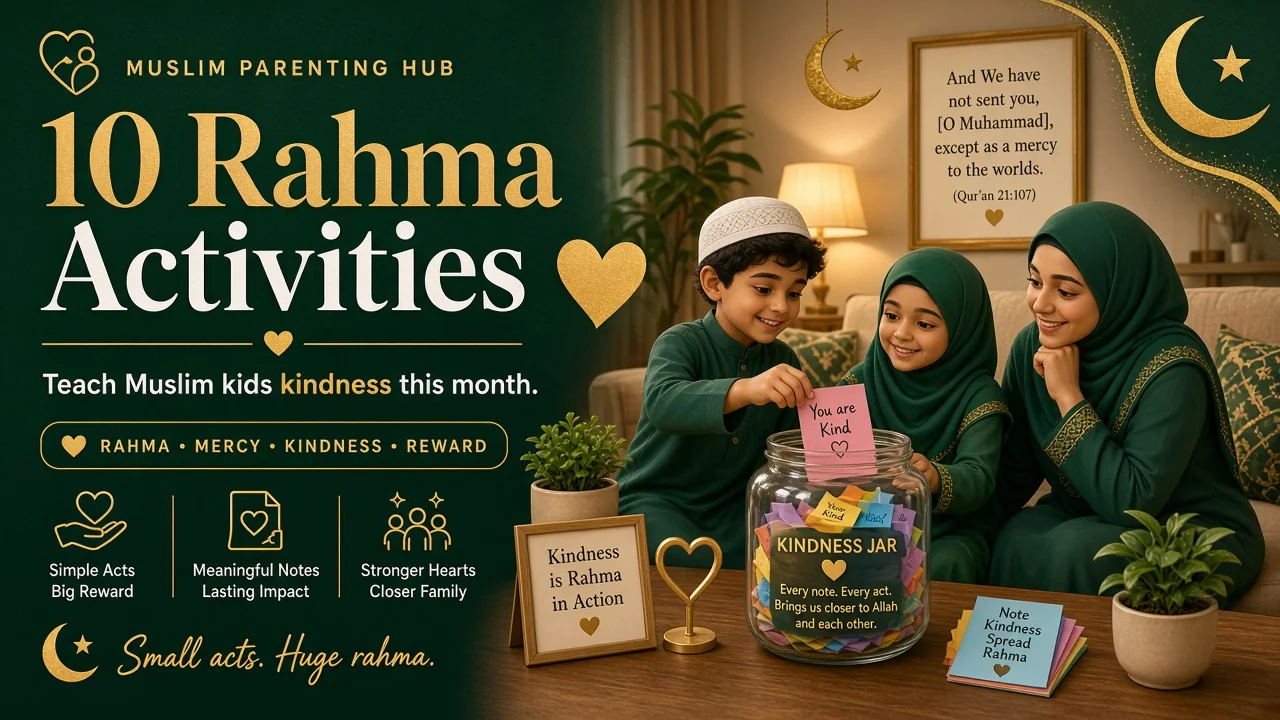
10 Rahma Activities to Teach Muslim Kids Kindness This Month
You want kinder kids. You also live in a real house: siblings squabble, doors slam, someone shouts “Mine!” before breakfast.
Lectures about mercy rarely stick. Practice does.
This guide gives you 10 rahma activities to teach Muslim kids kindness this month—home-sized, age-banded, with scripts you can use tonight. Soft Sunnah inspiration only. Not a fatwa. The Prophet ﷺ was sent as a mercy; we train hands and tongues to look a little more like that mercy at kid scale.
The Big Idea: Rahma Is a Muscle
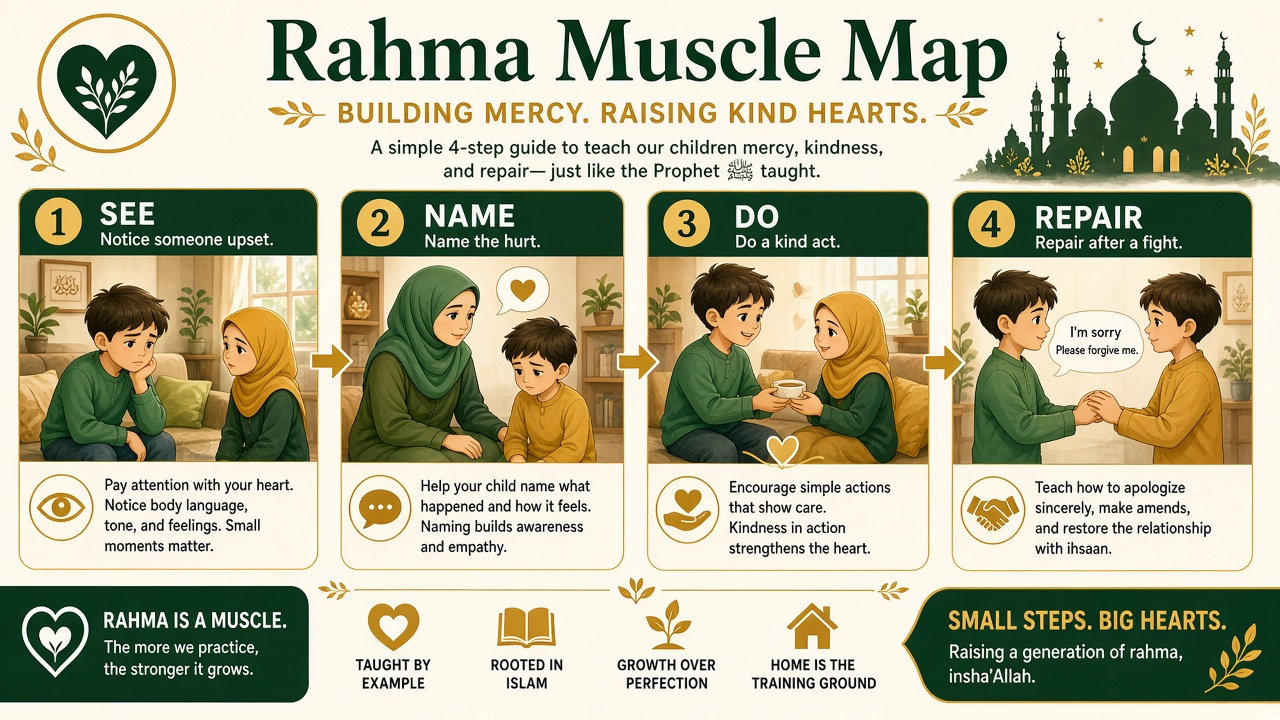
Rahma (mercy/compassion) grows when children:
- See it modeled.
- Name it in simple words.
- Do tiny acts on purpose.
- Repair after hardness (apology + amends).
If your home only punishes meanness but never rehearses kindness, kids learn fear—not mercy.
Age Chart: What Kindness Looks Like
| Age | Realistic rahma | Avoid |
|---|---|---|
| 1–2 | Gentle touch, sharing with help, soft voice modeling | Expecting unprompted sharing |
| 3–5 | Kindness jar stickers, helping a sibling find a toy, neighbor card | Shame for normal possessiveness |
| 6–9 | Independent helper missions, written notes, conflict coaching | Performing kindness only for praise |
| 10–12 | Quiet service, defending someone kindly, digital kindness | Public humiliation as “lesson” |
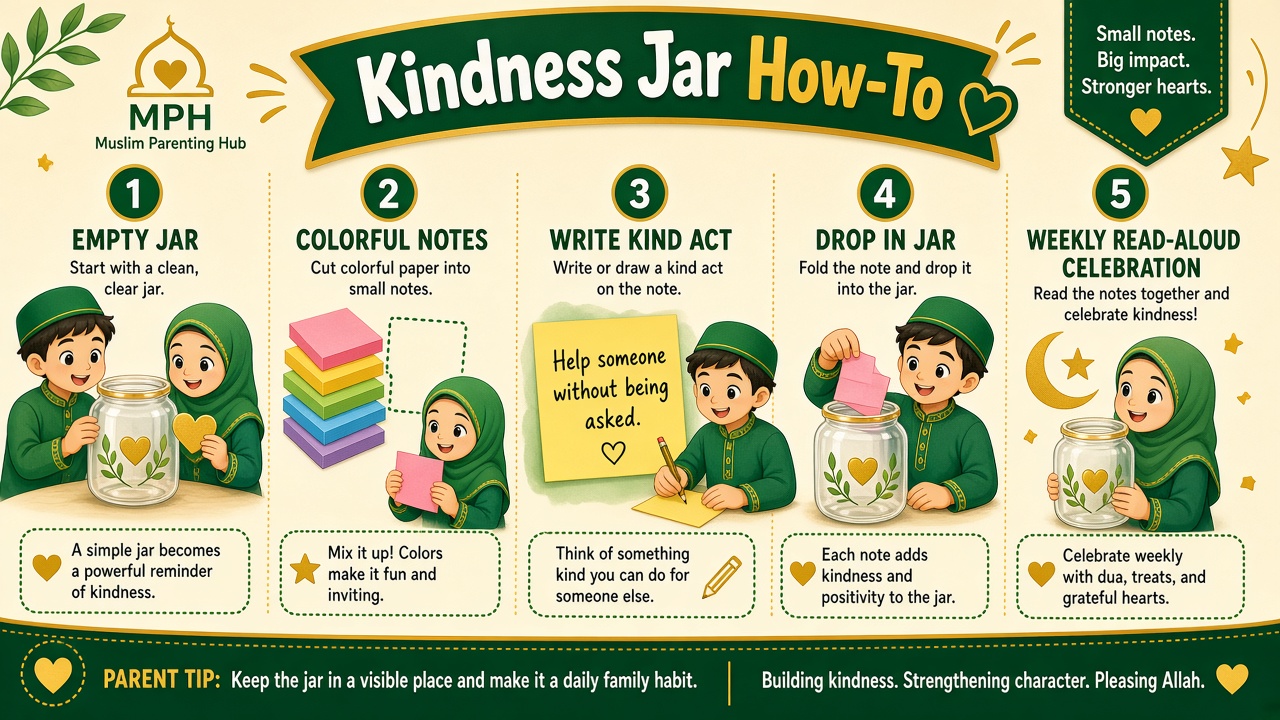
Activity 1 — The Kindness Jar (Family Classic, Islamically Named)
Decorate a jar: “Rahma Jar.” Each kind act gets a bead, stone, or paper heart.
Tonight launch:
“In our home, rahma means soft hearts and helpful hands. When you do a kindness, we add to the jar. When it’s full, we celebrate with a family picnic or charity choice—not candy overload.”
Edge case: Child only does kindness for beads. Narrate the feeling: “You helped your sister. Her face looked peaceful. That’s the real prize.” Still allow the bead—then slowly emphasize internal reward.
Activity 2 — Neighbor Food Drop (Sadaqah With Feet)
Cook or buy something simple. Child helps bag it. Walk together.
Script at the door:
“Assalamu alaykum—we brought a small gift. Ramadan/Friday/just because. May Allah accept.”
If the neighbor is not Muslim, keep it warm and human. Kindness is not a debate club.
Activity 3 — Prophet ﷺ Mercy Story Night (5 Minutes)
Pick one mercy moment parents know well—in gentle language: how he was kind to children, patient with mistakes, gentle at home. Keep age-safe. No graphic battle stories for little ones.
After the story, ask:
“Where can we try that kindness tomorrow—at home, school, or the park?”
Pair with your bedtime storytelling method when you publish prophet story guides; tonight, one story is enough.
Activity 4 — Salam Challenge (Doorway Rahma)
A full week of practicing salam with eye contact and a smile. Link to teach toddlers salam.
Kindness often starts with how we enter a room.
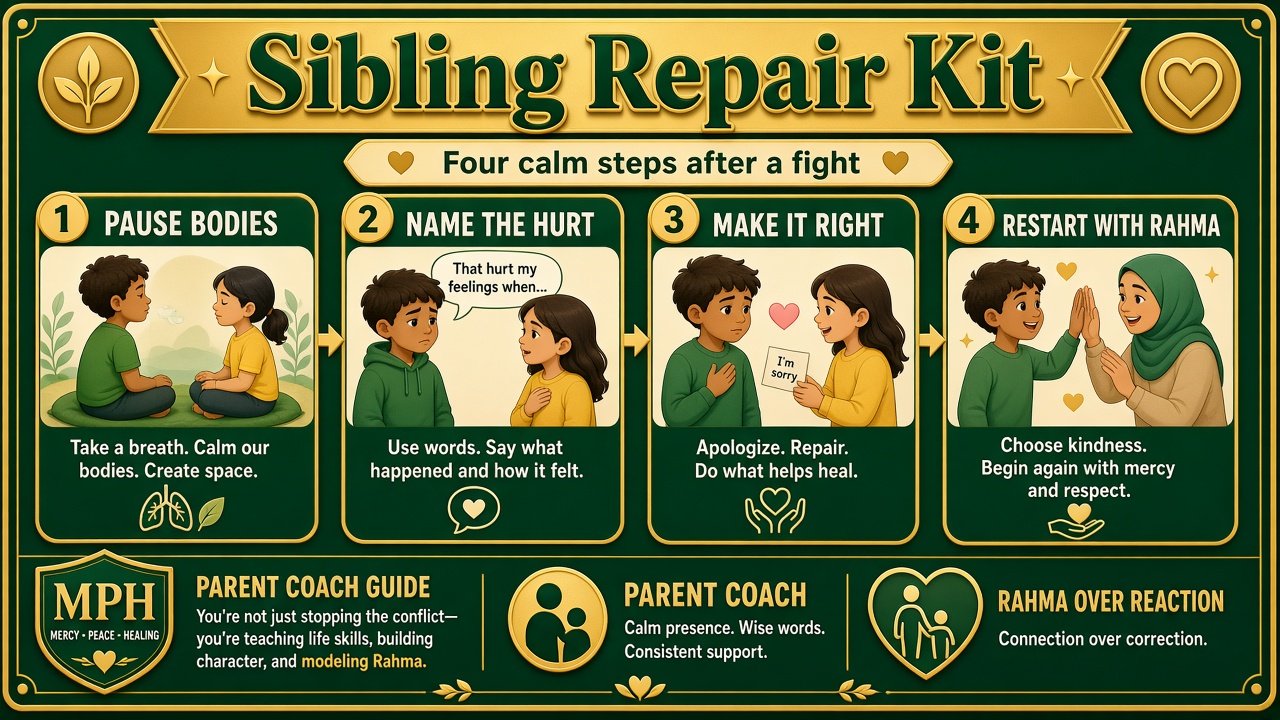
Activity 5 — Sibling Repair Kit
When fighting happens, teach repair—not only “Say sorry.”
Repair steps card:
1. Name the hurt: “I grabbed.”
2. Soft sorry.
3. Ask: “How can I help fix it?”
4. Do the fix (return toy, ice pack, redraw the picture).
5. Parent narrates rahma: “That’s mercy in action.”
See also sibling jealousy scripts.
Activity 6 — Animal & Creation Care
Water a plant. Fill a pet bowl. Put breadcrumbs only where appropriate and safe. Narrate: “Allah made living things. Soft hands are part of rahma.”
Toddlers understand mercy faster with creatures than with abstract lectures.
Activity 7 — Kind Words Bank
Make a poster of phrases:
- “Are you okay?”
- “You can have a turn after me.”
- “I like how you tried.”
- “Do you want help?”
Practice like sports drills for 3 minutes after Maghrib.
Activity 8 — Quiet Service Mission
Older kids: do a kindness without announcing it. Fold laundry. Sharpen a sibling’s pencil. Clear the table.
Debrief privately:
“How did your heart feel when only Allah saw?”
This fights performative kindness.
Activity 9 — Forgiveness Practice (Parent Goes First)
Kids copy what we do after we snap.
Parent script after your own hardness:
“I spoke too sharply. That wasn’t rahma. I’m sorry. I’m going to use a calmer voice. Thank you for forgiving me.”
You just taught more theology than a worksheet.
Activity 10 — Monthly Rahma Theme Days
Assign soft themes:
- Monday: Gentle hands
- Wednesday: Kind words
- Friday: Family rahma night (game + gratitude + short story)
- Sunday: Sadaqah micro-act
Tie Friday to your Friday night routine.
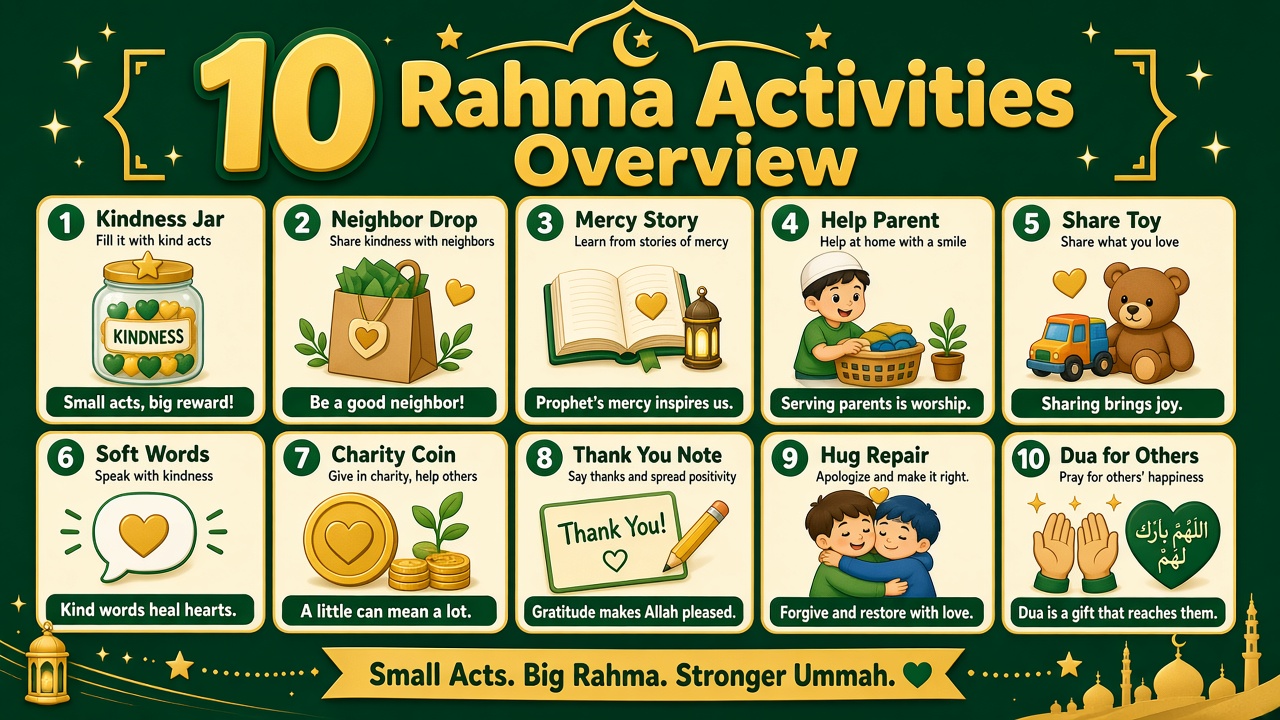
30-Day Light Plan (Not a Guilt Calendar)
Week 1: Jar + salam + one story
Week 2: Sibling repair + kind words bank
Week 3: Neighbor/sadaqah + animal care
Week 4: Quiet service + forgiveness practice + review
Miss a day? Restart without a speech. Rahma includes how parents talk to themselves.
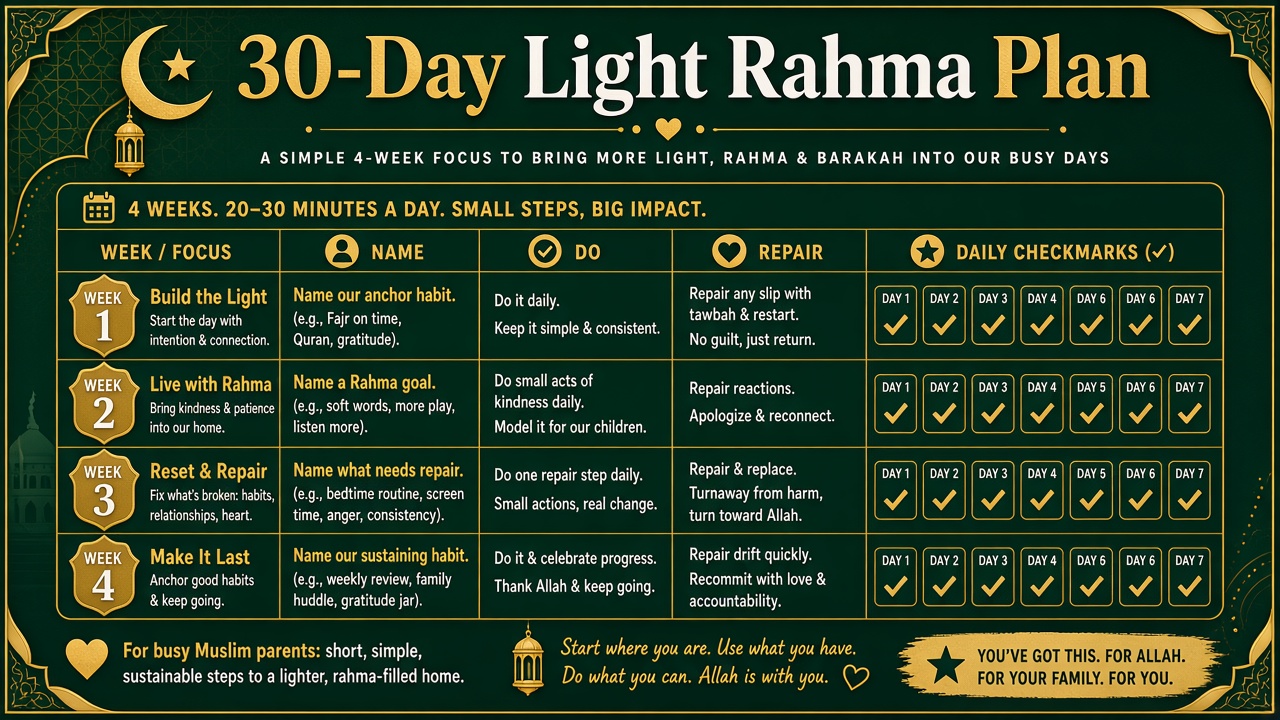
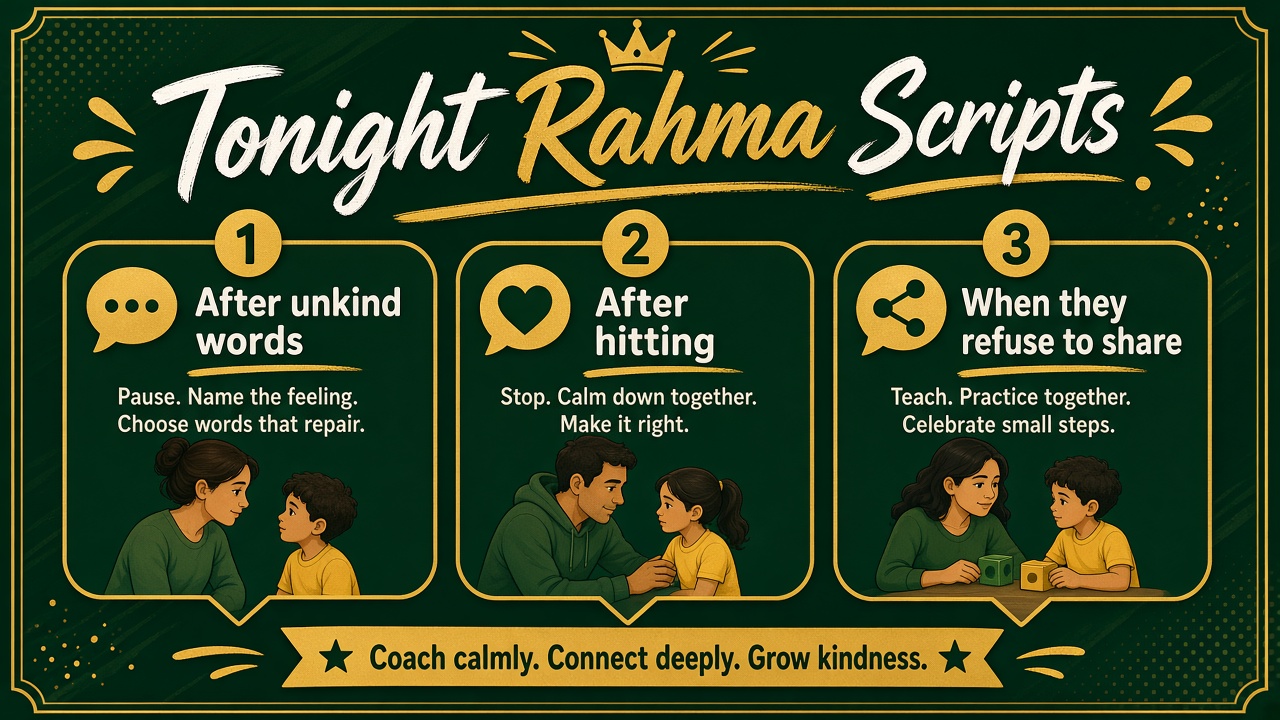
Tonight Scripts Cheat Sheet
| Moment | Say |
|---|---|
| Grabbing toy | “Hands pause. Soft hands. Ask for a turn.” |
| Mocking | “Words can hurt. Try a rahma sentence from our bank.” |
| After apology | “Thank you for repairing. That takes bravery.” |
| Refuses kindness jar | “Okay. Kindness still matters. Jar is a helper, not a boss.” |
| Parent overload | “I need a quiet minute so I can be gentle again.” |
What Not to Do
- Don’t call a child “mean” as their identity.
- Don’t force sharing every toy every time—teach waiting and trading.
- Don’t reward only public kindness.
- Don’t use Allah as a threat (“Allah will be angry if you’re not nice”) as your main tool. Prefer love of Allah + natural consequences + repair.
- Don’t compare siblings’ jar counts.
Link Rahma to Everyday Deen
- After Maghrib connection: one kindness highlight of the day (Maghrib routine).
- Chores as service (Islamic chores chart).
- Dua for a soft heart (dua from the heart).
- Screen speech: kind comments or no comments (video games checklist).
Classroom vs Home: Why This List Is Built for Real Houses
Many “Islamic kindness printables” assume a quiet table and a child who likes worksheets. Home rahma looks different:
- It happens in doorways, bathrooms, and back seats.
- It competes with hunger and homework.
- It includes parents apologizing.
- It survives imperfect weeks.
So every activity above has a 2-minute version. If all you do is narrate one mercy moment a day—“You handed your brother the cup; that was rahma”—you are still teaching.
Micro-versions (sticky-note edition)
- Jar → one bead after dinner
- Neighbor drop → one kind text to a relative with child present
- Story → 3-minute mercy moment
- Salam → doorway only
- Repair kit → one fight, one repair
- Creation care → water one plant
- Words bank → repeat one phrase
- Quiet service → one silent help
- Forgiveness → parent models once
- Theme day → name the theme at breakfast
When Kindness Meets Strong Personalities
Some children are tender; some are intense. Intense kids are not “less Muslim.” They often need:
- Clear body rules (“Hands are not for hitting”)
- More rehearsal of exit strategies (“I need space”)
- Adults who don’t shame intensity but coach it
Script for intensity:
“Your feelings are big. Big feelings still get soft hands. Let’s squeeze the pillow, then use words.”
Rahma includes giving a fiery child tools—not wishing them into a different temperament.
Tracking Without Turning Hearts Into KPIs
A simple weekly review (Friday night works):
- What kindness did we notice?
- Where did we struggle?
- What will we practice next week—one thing only?
Avoid charts that crown a “kindest child.” Prefer a family jar and shared celebration.
Weekly Family Meeting (10 Minutes)
Once a week—Friday works—run a tiny rahma huddle:
- Highlight: Each person names one kindness they saw someone else do. (Notice others, not self-brag.)
- Repair backlog: Any leftover hurt from the week? Offer a repair.
- One practice: Choose a single focus for next week (gentle hands, kind words, or quiet service).
- Dua: “Ya Allah, make our home a place of rahma. Ameen.”
This meeting teaches that mercy is a family project, not a kid-only rule.
Sample dialogue
Parent: “I saw Yusuf refill his sister’s water without being asked. That was rahma.”
Child: “Mama said sorry after she raised her voice.”
Parent: “Yes—and that repair matters. Next week let’s practice ‘Do you want help?’ at homework time.”
Rahma and Screens (Modern Edge Case)
Online life multiplies cruelty: comments, memes, group chats.
House rules of digital rahma:
- No laughing at someone’s body, accent, or mistake on a video.
- If you wouldn’t say it with the person in the room, don’t type it.
- When a harsh video appears, practice the pause: “Is this mercy?”
For gaming friends and chat, use your video games parent checklist. For YouTube, keep Approve Content habits.
Hospitality as Kindness Training
Muslim homes often host. Toddlers can:
- Put dates on a plate
- Say salam to guests
- Offer a guest their drawing
School-age kids can:
- Help clear a corner of the living room
- Pour water (safe cups)
- Write a “welcome” sticky note
Hospitality turns rahma into muscle memory: other people’s comfort matters.
FAQ
How do I teach kindness without lectures?
Short modeling, named moments, tiny repeated acts, and repair after conflict. Activities beat speeches.
What if my child is only kind for rewards?
Use rewards as training wheels. Always narrate the human impact. Gradually move celebration to family experiences and private praise.
Is forcing sharing Islamic?
Forced sharing can breed resentment. Teach waiting, trading, and protecting a few “special” toys while practicing generosity with others.
How do I handle a child who hits?
Safety first: interrupt, separate, calm bodies. Then repair. Hitting is a teaching moment for hands, not a character sentence for life.
Can toddlers do rahma activities?
Yes—at toddler scale: gentle touch, helped sharing, salam practice, sticker jars with you.
How is rahma different from “be nice”?
Nice can be people-pleasing. Rahma includes courage, boundaries, and repairing harm—soft heart and steady principles.
Closing: Make Mercy the Family Accent
For thirty days, let your home’s accent be mercy: in how you open doors, end fights, and recover from your own sharp edges.
Pick three activities from this list. Start the jar tonight. Tell one mercy story. Practice one kind phrase.
That is how Muslim kids learn rahma—not as a poster on the wall, but as the way your family moves through an ordinary Monday.
FAQs
How do I teach kindness without lectures?
Short modeling, named moments, tiny repeated acts, and repair after conflict. Activities beat speeches.
What if my child is only kind for rewards?
Use rewards as training wheels, narrate human impact, and move toward private praise and family experiences.
Is forcing sharing Islamic?
Forced sharing can breed resentment. Teach waiting, trading, and protecting a few special toys while practicing generosity with others.
How do I handle a child who hits?
Safety first: interrupt, separate, calm bodies, then repair. Hitting is a teaching moment for hands, not a lifelong label.
Can toddlers do rahma activities?
Yes at toddler scale: gentle touch, helped sharing, salam practice, and sticker jars with you.
How is rahma different from being nice?
Nice can be people-pleasing. Rahma includes courage, boundaries, and repairing harm—soft heart and steady principles.