

How to Teach Wudu to a Preschooler (Playful Steps Parents Can Use Tonight)
Your preschooler wants to “pray like Mama.” They also want to splash the entire bathroom, taste the soap, and run away mid-rinse.
Teaching wudu to a preschooler is less about perfect fiqh drills and more about joyful competence: body awareness, order, love of purity, and belonging in salah culture at home.
This guide gives playful steps you can use tonight—sink poster, doll practice, sticker chart, scripts, and Maghrib links. Soft Sunnah parenting. Not a fatwa. Follow the wudu rulings of the scholars you trust; we focus on coaching kids with mercy.
The Big Idea: Practice Bodies Before Perfect Rituals
Preschoolers learn wudu the way they learn teeth-brushing:
- Watch you
- Try with help
- Play the sequence
- Own tiny parts
- Grow into fuller wudu over months—not one weekend
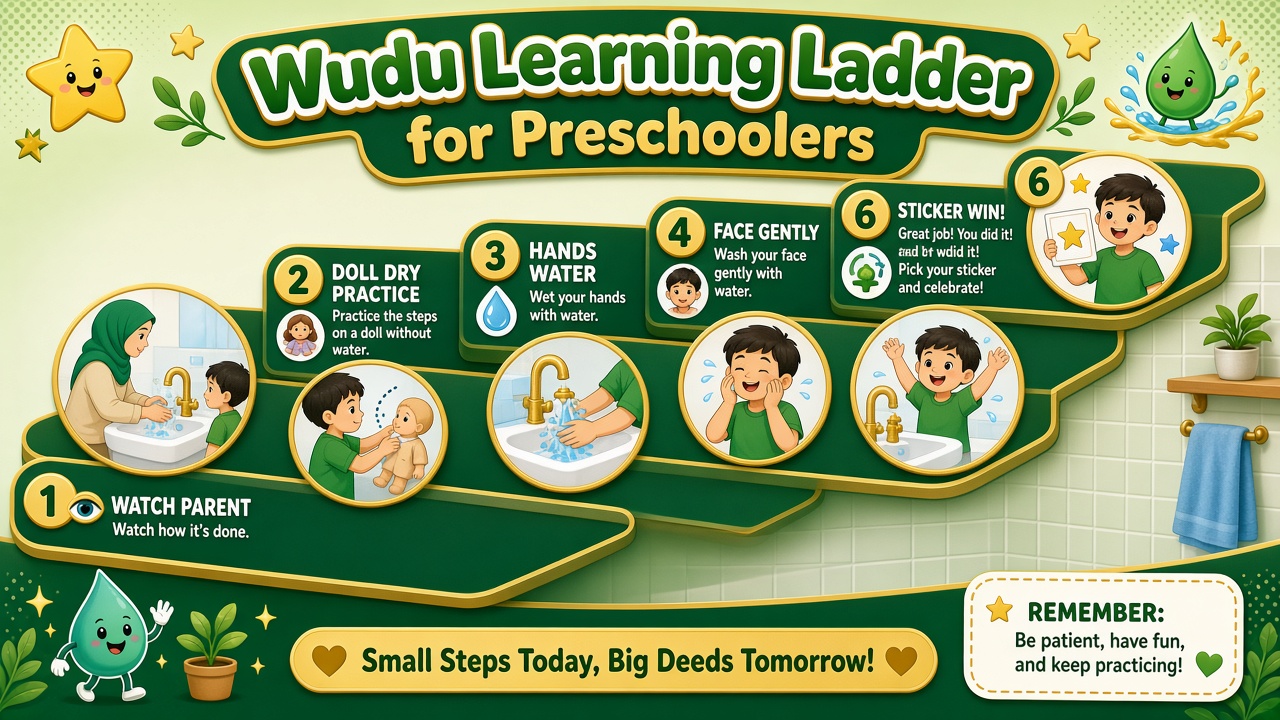
Aim for willingness + order, not adult-level precision on night one.
What Preschoolers Can Realistically Do (Ages 3–5)
| Skill | Emerging (3) | Growing (4) | Stronger (5) |
|---|---|---|---|
| Wash hands | With help | Mostly alone | Alone |
| Face splash | Playful, messy | More controlled | Controlled |
| Arms | Needs guidance | Copies order | Remembers order |
| Wipe head | Soft touch help | Tries alone | Alone |
| Feet | Hard—sit/stool | Better with stool | Often independent |
| Sequence memory | 2–3 steps | 4–5 steps | Most steps |
| Intention language | “For prayer” | Simple Niyyah echo | Short own words |
Feet and thoroughness are hard. Use a stool, sit on the toilet lid safely, or do feet last with a basin if your bathroom setup needs it. Safety first: no standing on slippery edges.
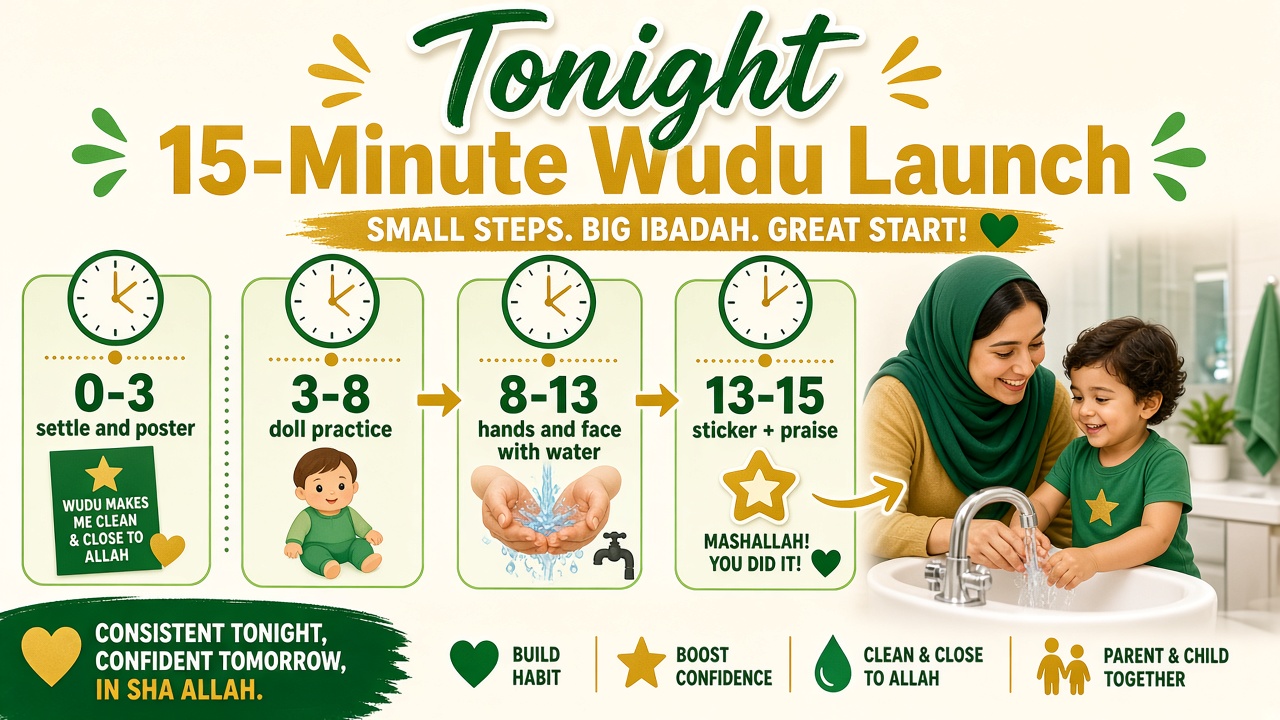
Tonight Launch (15 Minutes)
- Put a stool by the sink.
- Place a child towel within reach.
- Show the sink poster (photo or drawing of steps).
- Parent does full wudu slowly once while narrating.
- Child does hands + face with help.
- Celebrate specifically: “You washed in order—that’s wudu learning!”
- Pray Maghrib; let them join as they can.
Do not correct every drop. End on warmth.
Make a Sink Poster (Bathroom UX)
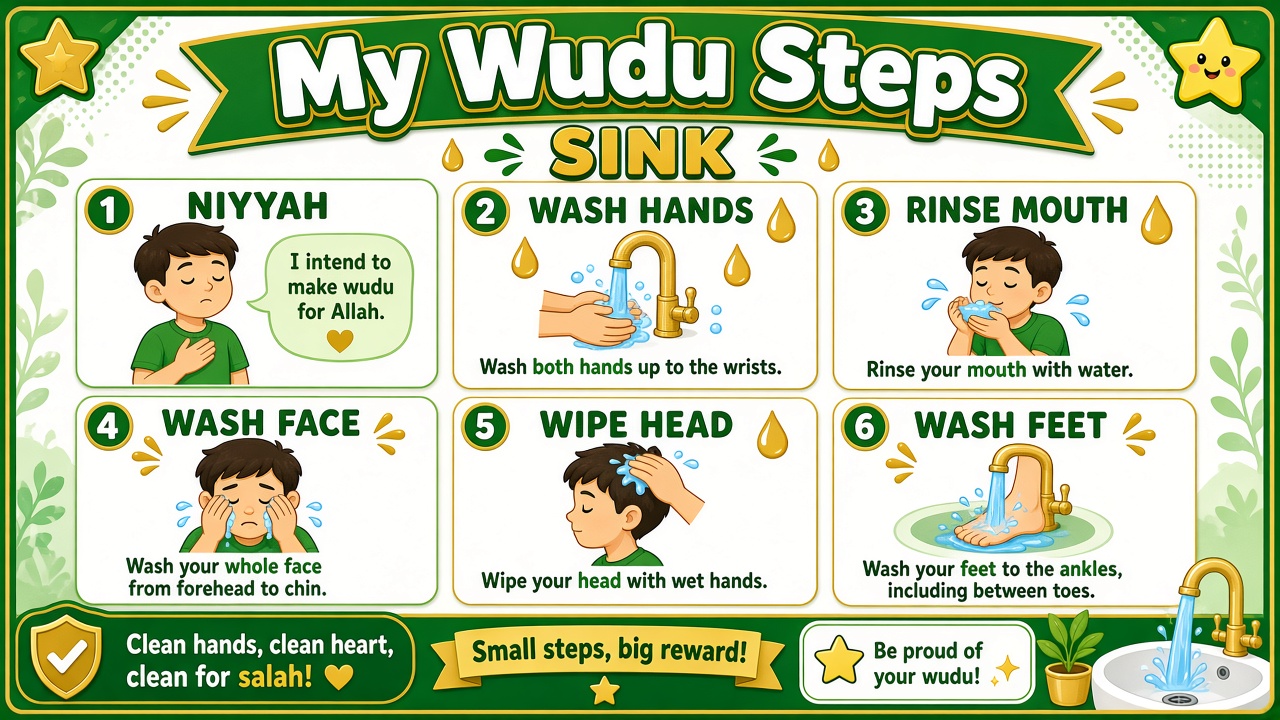
Kids follow visuals better than verbal lists mid-splash.
Poster order (simple English + numbers):
1. Intention (heart): “I make wudu for salah.”
2. Hands
3. Mouth & nose (as your family practices—keep gentle; never force water)
4. Face
5. Arms
6. Head
7. Ears (if you include)
8. Feet
Laminate or put in a cheap plastic sleeve. Place at child eye level.
Coaching note: Teach the sequence your family follows. If a step is sensitive for little noses, go slow and never create fear of water.
Doll / Teddy Wudu (Play That Teaches Sequence)
Before the sink battle, practice dry:
- Teddy “washes” hands, face, arms…
- Child narrates numbers
- Then try water for real
Play reduces power struggles because the lesson isn’t only on the child’s body.
Sticker Chart (Motivation Without Bribery Spirals)
Chart title: “Wudu Helper.”
Stickers for:
- Came when called
- Tried two steps
- Used towel
- Soft feet on stool (safety)
Avoid: stickers only for “perfect adult wudu.” That breeds anxiety.
Weekly celebration: choose the Maghrib adhan caller role or lantern helper—roles beat sugar piles.
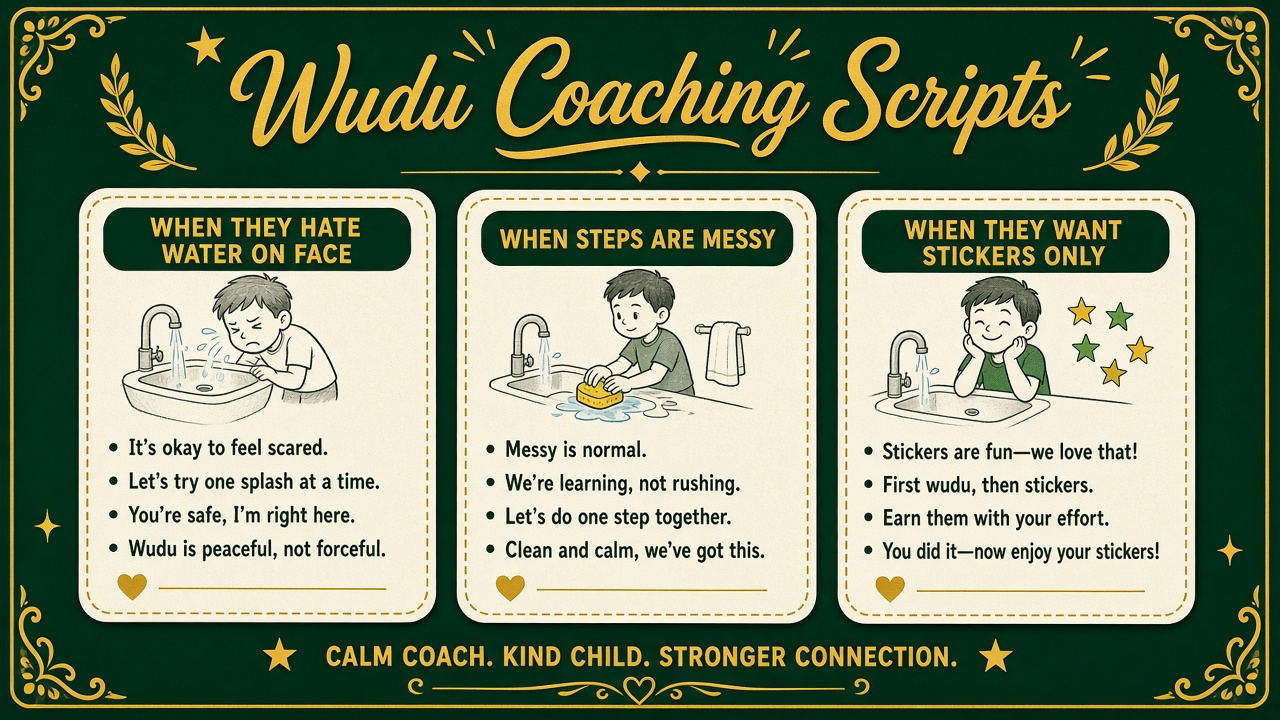
Step-by-Step Coaching Scripts
Calling them
“Wudu time—stool ready. We wash so our prayer feels fresh.”
When they splash wildly
“Water stays in the sink. Fun has a boundary. Hands wash; walls stay dry.”
When they refuse
“You can take one minute, then we do hands together. I’ll help. You’re not in trouble.”
When they rush
“Slow like Mama. One step, then the next. Wudu isn’t a race.”
When they forget feet
“Almost done—feet still. Sit. Wipe carefully. Then towel.”
After mistakes
“We redo the part we missed. Learning. Alhamdulillah for trying.”
Link Wudu to Maghrib (So It Sticks)
Wudu taught in isolation fades. Wudu tied to the after-school Maghrib routine becomes identity.
Family cue: shoes off → snack → stools to sink → Maghrib.
If one parent is still commuting, the home parent starts; the arriving parent joins without shaming the child’s earlier attempt.
Bathroom Setup Checklist
- [ ] Non-slip stool
- [ ] Child towel hook
- [ ] Soap they can pump (supervise)
- [ ] Poster at eye level
- [ ] Extra undershirts if sleeves get wet
- [ ] Basket for hair ties
- [ ] Mat for drips
- [ ] Patience (the invisible tool)
Special Situations
Sensory-sensitive kids
Use warm (not hot) water, soft pressure, shorter sessions. Allow dry practice first. Never force water into nose/mouth. Celebrate partial participation.
Hijab / hair care for older preschool girls (family-dependent)
Keep head wipe gentle; practice with a doll first; protect dignity and calm.
Masjid bathrooms
Practice at home first. In public, do abbreviated help with wet wipes only if that’s your family’s contingency—know your rulings; keep child dignity high; don’t yell in echoes.
Potty-training overlap
If accidents happen around wudu time, stay shame-free. See Islamic potty training. Purity coaching must never become humiliation.
Autistic / ADHD preschoolers
Visual schedule, one step card at a time, countdown timer, reduced verbal load. Same love, different scaffolding.
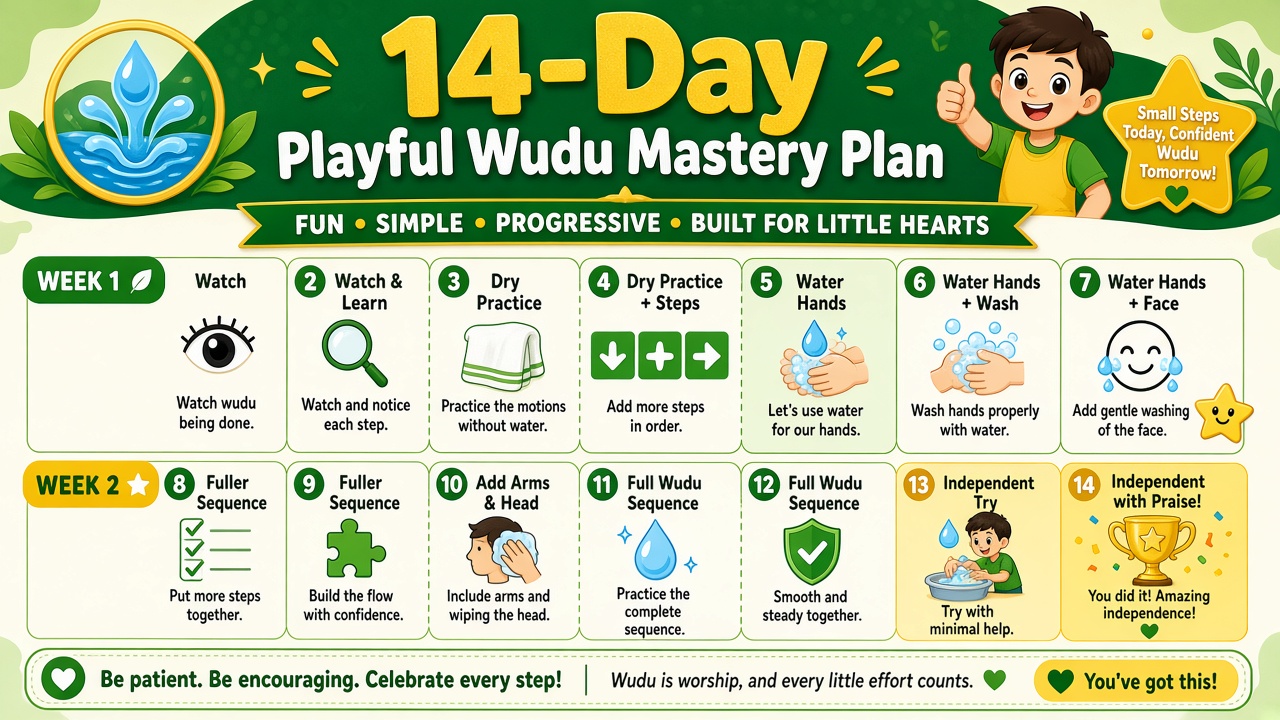
14-Day Playful Mastery Plan
| Days | Focus |
|---|---|
| 1–2 | Watch parent + doll dry practice |
| 3–4 | Hands + face with help |
| 5–6 | Add arms |
| 7–8 | Add head wipe |
| 9–10 | Feet with stool/sit |
| 11–12 | Full sequence attempt once daily |
| 13–14 | Child leads; parent spots; Maghrib link solid |
Common Parent Mistakes
- Teaching all steps with sharp corrections on night one
- Comparing to a cousin who “already does perfect wudu”
- Using Allah’s anger as the main motivator
- Letting wudu become a 25-minute power struggle before Maghrib (then everyone hates salah)
- Skipping celebration of effort
Replace with: short practice, soft voice, Maghrib anchor, specific praise.
Pair With Related Guides
- Maghrib routine
- Deen before screen mornings
- Dua from the heart
- Talk about Allah with toddlers
- Islamic potty / taharah tips
- Islamic chores (hanging towels is a chore!)
Mess Math: Expect Water, Plan Laundry
Preschool wudu produces wet sleeves. Plan for it:
- Keep a dry shirt nearby for Maghrib.
- Roll sleeves before starting.
- Use a hand towel on the counter for drips.
- If hair is long, clip it.
A calm parent with a backup shirt teaches better than a perfect sink and a yelling adult.
Teaching Intention Without Heavy Philosophy
Preschool niyyah can be:
“I make wudu for salah, for Allah.”
Say it together while smiling at the poster’s step 1. You are planting meaning: washing is not only hygiene—it is preparation to stand before Allah.
As they grow, deepen. For now, short and sincere beats jargon.
Group Homes / Multiple Kids at the Sink
Stagger:
- Oldest starts
- Middle dolls while waiting
- Youngest with parent assist
Or: one child full help while others do dry practice on the mat. Parallel stations prevent the “everyone screaming for the faucet” Maghrib.
Two-sink solution
If you have a kitchen sink as overflow for hands-only practice, use it for drills—not replacing bathroom teaching entirely, but reducing traffic.
From Wudu to Love of Salah
Narrate the why:
“We wash so our prayer feels clean and ready. Allah loves that we prepare.”
Then protect the salah moment from criticism. If they wander in prayer, handle gently after salam. Wudu + prayer should remain a magnet, not a minefield. Pair with soft Maghrib connection and, later, Friday night joy.
Troubleshooting Table
| Problem | Try this |
|---|---|
| Runs away | Call earlier; stool novelty; doll first; shorten to 2 steps |
| Soap in eyes | Soft soap; parent controls pump; face cloth option |
| Fear of feet washing | Sit; parent washes while child watches; gradual |
| Perfectionist meltdown | Praise effort; “learning weeks”; stop correcting micro drops |
| Parent lateness | Start without you; join mid-way without scolding |
| Skips Maghrib after wudu | Keep prayer mat visible from sink path; walk together immediately |
Celebrate Without Turning Worship Into a Prize Economy
Good celebrations:
- “You lead the walk to the prayer mat.”
- Choose the adhan device button (if you use one).
- Sticky note from parent: “Wudu helper of the week.”
Avoid: cash for wudu, or candy every time. Keep joy relational and role-based so salah stays worship, not a transaction.
FAQ
At what age should kids learn wudu?
Many families start playful exposure in preschool (around 3–5). Readiness varies. Keep it invitational.
How do I teach wudu steps in order?
Use a sink poster, narrate while modeling, practice doll dry-runs, then add water steps gradually over two weeks.
What if my child hates water on their face?
Go slower, use a wet cloth for practice, keep sessions short, never force. Consult your trusted teachings for valid facilitations when needed.
Should I redo their wudu every time it’s imperfect?
For learning, coach the missed part calmly. Obsessive redoing can create dread. Grow toward thoroughness over months.
How can fathers help?
Same scripts. Kids benefit from seeing both parents make wudu without rushing angrily.
Is a wudu song okay?
If it helps memory and stays respectful, many families use gentle rhymes. Keep the tone reverent, not mockery.
Closing: Make Purity Feel Like Care
Wudu should feel like washing for someone you love meeting—not like boot camp.
Tonight: stool, towel, poster, hands and face, Maghrib together. Laugh once at the splashes. Praise the try.
That is how preschoolers learn wudu—playful steps, patient parents, and a bathroom that becomes a doorway to prayer rather than a battleground.
FAQs
At what age should kids learn wudu?
Many families start playful exposure in preschool around ages 3–5. Readiness varies; keep it invitational.
How do I teach wudu steps in order?
Use a sink poster, narrate while modeling, practice doll dry-runs, then add water steps gradually over two weeks.
What if my child hates water on their face?
Go slower, use a wet cloth for practice, keep sessions short, and never force. Follow trusted guidance for facilitations when needed.
Should I redo their wudu every time it’s imperfect?
Coach the missed part calmly. Obsessive redoing can create dread. Grow toward thoroughness over months.
How can fathers help?
Use the same scripts. Kids benefit from seeing both parents make wudu without rushing angrily.
Is a wudu song okay?
If it helps memory and stays respectful, many families use gentle rhymes. Keep the tone reverent, not mockery.