

Daylight Saving Ends Nov 1: How to Shift Your Family's Maghrib, Homework and Bedtime Routine
On Sunday, November 1, 2026, most of the United States falls back one hour when daylight saving time ends. The extra morning light feels kind. The early evening darkness can scramble Maghrib, homework, sports carpools, and toddler bedtimes—especially if your family anchors the afternoon on salah.
This guide helps US Muslim families shift Maghrib, homework, and sleep without a week of chaos. Use it beside your regular after-school Maghrib routine. Maghrib times vary by city and mosque calendar—always check your local prayer times; this is soft home scheduling guidance, not a fatwa.
Soft guidance for homes—not a fatwa.
What Changes When Clocks Fall Back
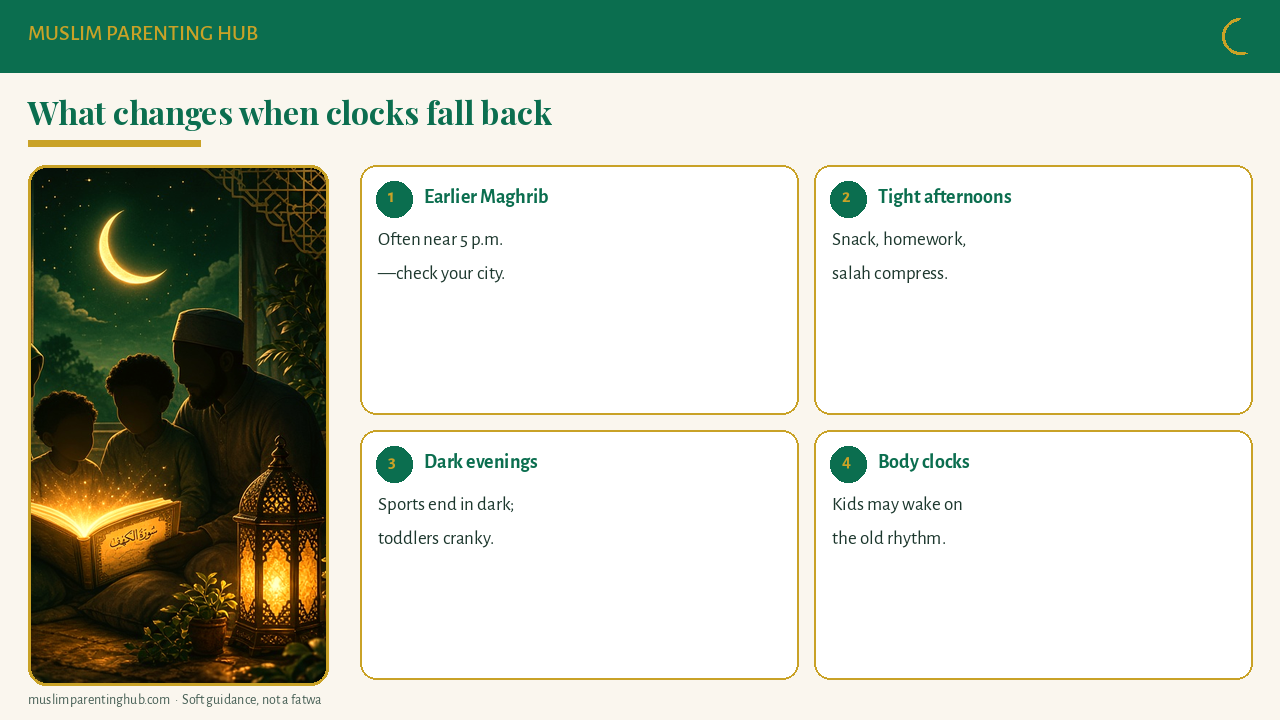
- Clock time: 2:00 a.m. becomes 1:00 a.m. local (most zones). You “gain” an hour of sleep that night—kids may still wake on the old body clock.
- Maghrib: Sunset comes about an hour earlier by the clock. In many US cities Maghrib lands near 5:00 p.m. after the fall-back (sometimes earlier in northern states, later in the South and West—check your city).
- After-school window: Snack, Asr (if not already prayed), homework, and Maghrib compress. Sports practices that used to finish in daylight may end in the dark.
- Bedtime feel: Rooms get dark earlier, so toddlers may ask for bed sooner—or fight more if nap and dinner slide.
Name the change out loud for kids: “The sun is going to bed earlier on the clock. Our Maghrib time moves too. We’ll practice before the big Sunday.”
A Gentle New After-School Order
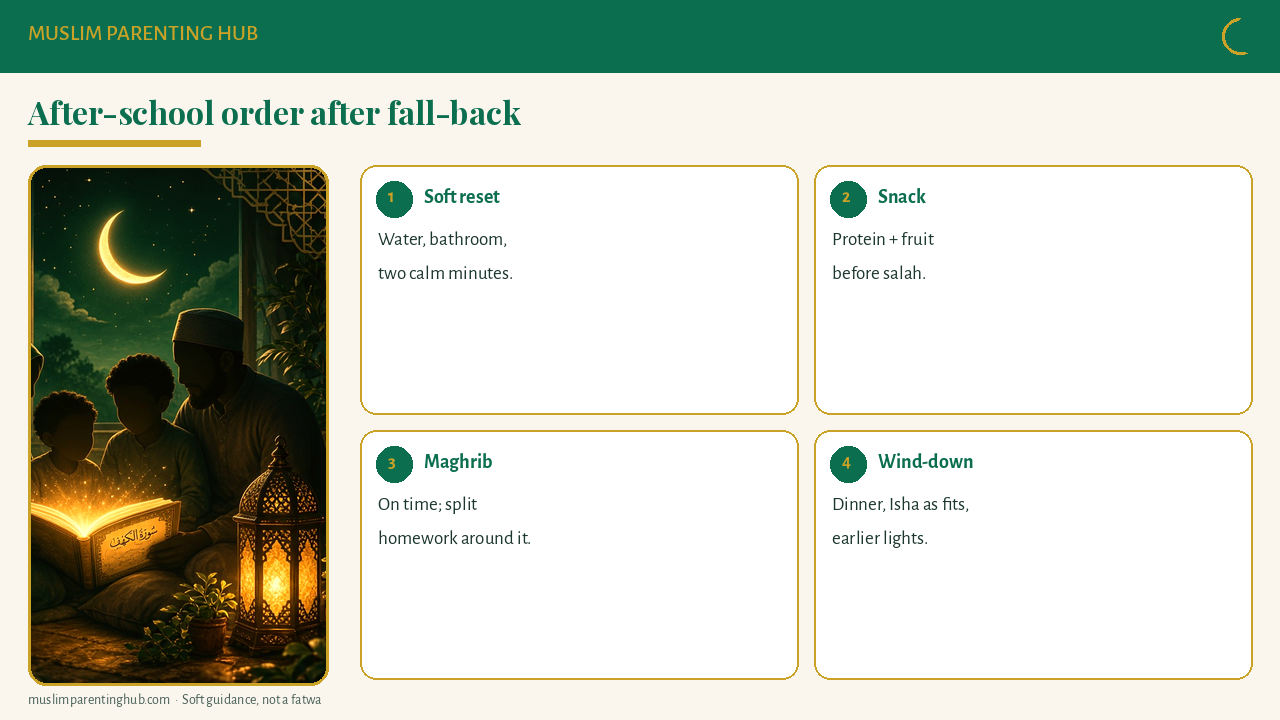
When Maghrib sits near 5 p.m., protect this order more than perfection:
- Arrive & soft reset — shoes, water, bathroom, two-minute quiet or cuddle.
- Snack — protein + fruit; avoid a sugar crash before salah.
- Asr if still due — some kids will have prayed Asr at school or right after pickup; adjust.
- Homework block A — 20–40 minutes of the hardest subject while brains are fresh if Maghrib is not immediate.
- Maghrib together — short, warm, doable (see your existing Maghrib reset).
- Homework block B / reading — lighter tasks after salah.
- Dinner → wind-down → Isha (age-appropriate) → bed
On heavy sports nights, salah still comes before finishing every worksheet. Incomplete homework with a calm heart beats skipped Maghrib and meltdowns.
Week-Before Transition Plan
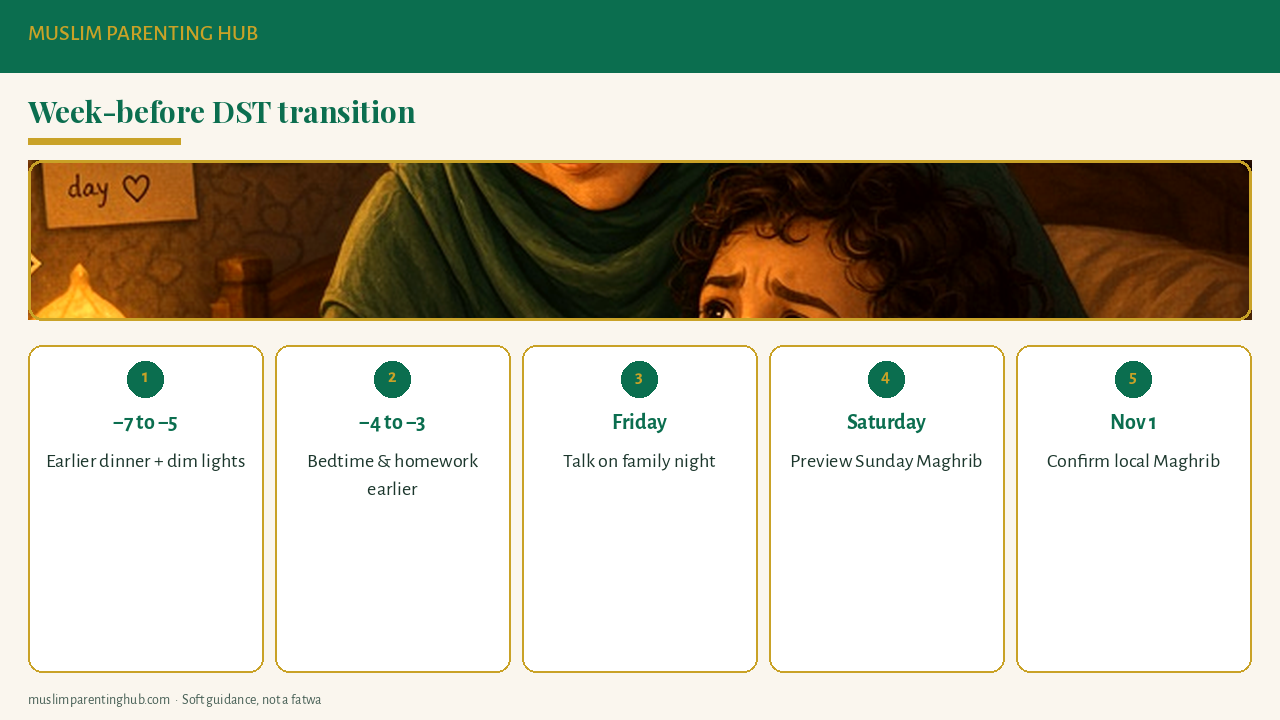
Start the Sunday before November 1 (about October 25) so bodies move gradually.
Day −7 to −5 (early week): Shift dinner 10–15 minutes earlier. Dim lights after Maghrib on purpose even if the sky still looks bright outdoors—practice “evening mode.”
Day −4 to −3: Move toddler bedtime 10–15 minutes earlier. For school-age kids, start homework 15 minutes sooner after pickup.
Day −2 (Friday): Use your Friday night family routine to talk about the clock change. Let kids help change one analog clock or phone display Saturday night for practice.
Day −1 (Saturday): Preview Sunday: “Tomorrow Maghrib will feel earlier. We’ll pray, then have hot chocolate and a short story.” Keep weekend morning calm so Sunday is not exhausted.
Sunday Nov 1: Enjoy the extra hour if anyone sleeps in. Confirm Maghrib on your prayer app for your city. Keep the after-school order simple—snack, Maghrib, gentle evening. Do not stack grocery runs, birthday parties, and deep cleaning on the same day.
Sample Schedule Tables (Steal One)
Sample A — Elementary, Maghrib ~5:05 p.m. (example city)
| Clock | What |
|---|---|
| 3:30 | Pickup / arrive home |
| 3:40 | Snack + soft reset |
| 3:55 | Homework block A (math/reading) |
| 4:45 | Wudu + Maghrib prep |
| 5:05 | Maghrib together |
| 5:25 | Homework B / Quran listening |
| 6:15 | Dinner |
| 7:15 | Wind-down, baths |
| 7:45 | Isha (join what they can) / bedtime story |
| 8:15 | Lights out (adjust by age) |
Sample B — Sports / carpool night
| Clock | What |
|---|---|
| 3:30 | Pickup + snack in the car if needed |
| 4:00 | Practice / activity |
| ~5:00 | Maghrib at home, masjid, or field if your family has a plan—never invent unsafe conditions; prefer a nearby clean place or slightly delayed Maghrib within your trusted teacher’s guidance |
| After | Quick dinner, short homework, earlier lights out |
When in doubt, ask a local teacher about combining travel and salah for your situation—this article stays at home-rhythm level.
Sample C — Toddler-heavy home
Earlier dinner, Maghrib with a soft corner rug, then the sunnah-minded bedtime fixes you already use. Expect a week of weird wake-ups; keep responses boring and kind.
Maghrib Before or After Homework?
Default after fall-back: If Maghrib is around 5 p.m., pray Maghrib when it is due, with a short homework appetizer before if there is a real gap. Do not make kids choose between a full homework stack and salah. Split homework around Maghrib: hard tasks before when possible, lighter tasks after.
Teach kids to answer the adhan at home when the app sounds—even mid-worksheet—using your adhan home practice. The pause trains priorities.
Younger vs Older Kids
Toddlers / preschool: Darkness cues sleep. Watch for earlier crankiness. Offer Maghrib as a cozy “family night start,” not a military drill. Naps may need a slight shift earlier in the week before.
Elementary: Explain clock vs sun. Let them change a wall clock. Protect snack + Maghrib even when friends call for gaming.
Tweens / teens: Respect homework load and sports. Collaborate on a written plan. Shame (“You don’t care about Maghrib”) backfires; shared calendars and rides to the masjid work better.
Sports, Carpools, and Dark Parking Lots
- Confirm practice end times with coaches the week before DST ends.
- Pack a small wudu bottle and prayer rug in the trunk for stuck-in-traffic evenings—used with wisdom and safety.
- Tell carpool parents you may need a five-minute Maghrib window at home before evening activities when possible.
- Reflective gear for kids walking from the driveway in new darkness.
Isha and Early Bedtimes
Early Maghrib often means Isha also arrives earlier by the clock. For young kids who sleep at 7:30–8:00, they may catch only part of Isha or pray a short followed prayer with parents earlier in the evening—follow what your trusted teacher advises for children. Keep the emotional goal clear: kids should feel that night salah is peaceful, not a fight against exhaustion.
Parent Scripts
Sunday morning after fall-back:
“We get a bonus hour. Maghrib will look earlier on the clock. We’ll check the prayer app together after lunch.”
Homework protest at 4:50:
“Two more problems, then wudu. Brains work better after Maghrib anyway—we’ll finish the rest after.”
Toddler bedtime meltdown week:
“The sun went to bed early. Your body is learning the new rhythm. I’ll sit with you; we can try again tomorrow.”
Teen sports conflict:
“Help me build the plan. Salah is non-negotiable; the schedule around it can flex.”
Common Mistakes
- Waiting until Saturday night to mention the change
- Keeping a late summer dinner time when Maghrib is at 5
- Skipping Maghrib “just this week” for homework panic
- Over-correcting bedtime by a full hour in one night for toddlers
- Forgetting that prayer times differ by city—even within the same state
Kitchen Prep the Weekend Before
Cook one freezer-friendly dinner on Saturday so Sunday’s early Maghrib does not collide with raw chicken panic. Pre-cut snack boxes for Monday–Wednesday. Put prayer rugs in the usual spots before the sky goes dark at five—hunting for a scarf while the adhan app beeps raises everyone’s cortisol.
Label a fridge note: “Nov 1 — clocks fall back — check Maghrib app.”
Screens and the Early Dark
Earlier darkness makes TV and tablets glow harder. Keep your Maghrib-after connection time screen-light for the first week of November. Swap one show for a board game or prophet story so the new evening rhythm is not only blue light and homework dread.
If gaming friends play right at Maghrib, coach a polite exit line: “I pray then I’ll be back,” and help them rejoin after salah when that fits your rules.
Carpool Maps and Masjid Options
Print or screenshot Maghrib times for your city for Nov 1–7. If your commute crosses a time when Maghrib falls mid-drive, decide the plan with a trusted teacher ahead of time—home, masjid near work, or another safe option. Kids feel safer when adults are not improvising theology in traffic.
Two-Week Check-In
On the second Sunday after fall-back, ask: Is Maghrib still chaotic? Is bedtime drifting later again? Adjust dinner by ten minutes, not by abandoning the whole plan. Seasonal rhythm is a skill; November is practice for winter Maghrib all the way to spring forward.
FAQ
Should Maghrib come before or after homework when it is early?
Usually Maghrib on time, with homework split around it. A short academic warm-up before salah is fine when the gap allows.
How do I shift toddler bedtime for daylight saving?
Move 10–15 minutes earlier for several nights before November 1. Keep the same wind-down ritual; change the clock time slowly.
What about Isha if kids sleep early?
Follow age-appropriate practice with a trusted teacher. Many young kids join what they can and sleep; avoid turning Isha into a nightly battle.
Do all US cities have Maghrib near 5 p.m. after fall-back?
No. Northern cities may see earlier Maghrib; southern and western cities later. Always check a reliable local timetable.
Should we change clocks Saturday night or Sunday morning?
Follow your household preference for devices (most phones auto-update). Involve kids in one manual clock so the change feels concrete.
What if sports practice overlaps Maghrib all season?
Plan with coaches early, use masjid or safe nearby options when appropriate, and ask a local teacher about your specific recurring conflict—this guide cannot cover every fiqh detail.
Related guides
- After-school Maghrib routine
- Friday night Muslim family routine
- Weekend morning routine
- Toddler bedtime sunnah fixes
Closing
Daylight saving’s end is predictable—you can train for it like a gentle sports season. Start a week early, honor Maghrib near the new sunset, split homework with mercy, and give sleep a soft runway.
Check your city’s Maghrib for November. Put the week-before plan on the fridge. When the sky goes dark at five, your family will already know what to do.
Quick steps
Week-before daylight saving Maghrib transition plan. Gradually shift dinner, homework, and bedtime so Maghrib near 5 p.m. feels calm when US clocks fall back.
- Days −7 to −5 — Shift dinner 10–15 minutes earlier and practice evening dim lights after Maghrib.
- Days −4 to −3 — Move toddler bedtime and homework start 10–15 minutes earlier.
- Friday (−2) — Talk about the clock change during Friday night family time and preview together.
- Saturday (−1) — Preview Sunday Maghrib and keep the weekend morning calm.
- Sunday Nov 1 — Confirm local Maghrib, keep snack–Maghrib–gentle evening, and avoid overloading the day.
Related articles

The After-School Maghrib Routine That Actually Works for Muslim Families
A calm 20-minute after-school Maghrib routine for Muslim families—snack, wudu, pray together, then connect. Age tips, scripts, and a screen rule that sticks.
Read guide →
Friday Night Muslim Family Routine: 5 Simple Steps Kids Look Forward To
Make Jumuah special at home: a 60–90 minute Friday night routine with Maghrib, kid-sized Surah Al-Kahf, a family joy block and dua. Try it this week.
Read guide →
When Your Muslim Toddler Fights Bedtime: Calm Sunnah-Based Fixes
Calm Sunnah-based fixes when your Muslim toddler fights bedtime—stalling, fear, separation, dua, boundaries, and age tips. Soft routines that actually stick.
Read guide →
Gentle Weekend Morning Routine for Muslim Families (No-Rush Saturdays & Sundays)
A gentle Muslim family weekend morning routine—Fajr-friendly pace, breakfast adab, play, and light deen—without weekday rush. Soft Saturday & Sunday plan.
Read guide →